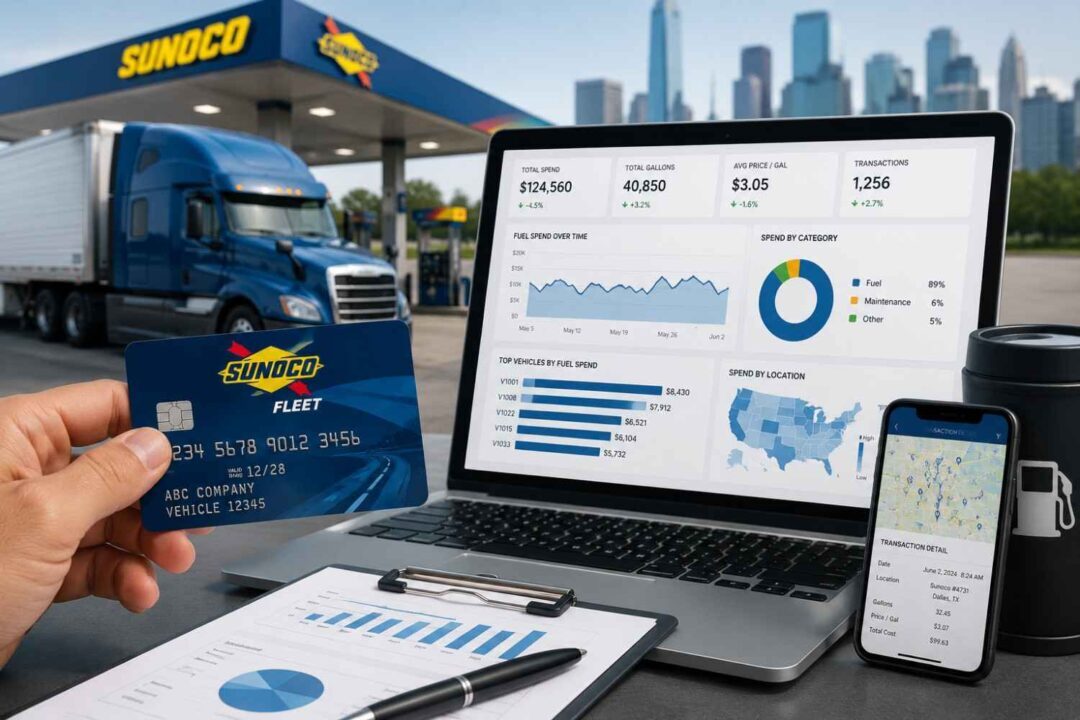
Building a fleet fuel budget on last year’s numbers and hoping for the best is how companies end up 15 percent over forecast by Q3. Fuel prices shift, routes change, vehicles age, and driver habits vary, all of which make static budgets unreliable within weeks of being set. A smarter approach starts with real-time transaction data, enforceable spending limits, and reporting tools that show exactly where fuel dollars are going each day. That is where fleet fuel cards fit into the equation, and providers like Sunoco fleet cards give businesses the data infrastructure to build budgets grounded in actual consumption rather than rough estimates from the previous quarter.
Table of contents
Why static fuel budgets break down
Traditional fleet fuel budgets rely on historical averages: last quarter’s spend divided by the number of vehicles, adjusted for expected growth. The problem is that fuel costs do not behave predictably. A 2024 ATRI report found that total operational costs for carriers reached $2.251 per mile, with fuel costs increasing 53.7 percent year over year. Swings that large can blow through a forecast built on outdated assumptions before anyone realizes the numbers have drifted.
Without transaction-level tracking, fleet managers cannot pinpoint where the budget is leaking. They know the total is too high but lack the data to identify whether the problem is driver behavior, route inefficiency, vehicle maintenance issues, or simple price variance across fueling locations. Static budgets produce static responses, which usually means cutting costs across the board rather than targeting the specific sources of waste that are actually driving the overrun.
Using fleet fuel cards as a budgeting tool
Fleet fuel cards like Sunoco fleet cards transform budgeting from a guessing exercise into a data-driven process. Every time a driver swipes a card at a fuel station, the system records the date, time, location, gallons purchased, price per gallon, and total cost. That level of detail gives managers a live view of expenses rather than a backward-looking summary assembled weeks after the spending has already occurred.
With this data, businesses can set realistic fuel budgets by route, by vehicle, by driver, or by department. If the delivery fleet serving the northeast corridor burns 400 gallons per week at an average cost of $3.10, that becomes the baseline for monitoring. Variances show up in real time through the reporting dashboard, and managers can investigate before small overruns compound into large ones that require emergency cost cuts.
Purchase limits on each card enforce the budget at the point of sale. Managers can cap daily spending, restrict purchases to fuel only, and limit use to approved stations within the network. These controls prevent budget overruns caused by unauthorized purchases and reduce the security risk of fraud that costs U.S. businesses an estimated $2 billion annually, according to Visa Commercial Solutions research.
Tracking fuel consumption for better forecasting
Good budgets require good data, and fuel tracking is where most manual systems fall apart. Paper receipts go missing, drivers forget to record odometer readings, and reconciliation happens too late to inform current decisions. By the time the numbers are compiled, the spending patterns they reveal are already weeks old.
Fleet fuel cards solve this by capturing every purchase automatically the moment it occurs. The data feeds into centralized reporting tools where managers can view consumption trends across the entire fleet or drill down to individual vehicles for closer analysis. NACFE’s 2024 Fleet Fuel Study found that best-practice fleets achieved an average of 7.77 miles per gallon compared to a national average of 6.9 mpg. Knowing where a fleet stands relative to that benchmark requires consistent, accurate fuel tracking, exactly what a card-based system provides.
Monitoring fuel efficiency at the vehicle level also supports maintenance planning and extends the useful life of fleet assets. A vehicle whose fuel consumption rises by 10 percent over two months may have a tire pressure issue, an engine problem, or a clogged air filter. Catching that trend early through fuel tracking data avoids costly breakdowns and keeps the fleet running at peak efficiency, which directly supports the accuracy of the overall fuel budget.
Reducing waste through spending controls and network access
Fleet fuel budgets suffer when money leaks out in small, repeated increments: a driver buying convenience store items on the company card, filling up at a premium-price station when a cheaper option is two blocks away, or fueling a personal vehicle on a slow Friday afternoon. Individually, these expenses seem minor. Across a fleet of 50 vehicles over a full year, they add up to a significant management problem.
Spending controls on fleet fuel cards stop these leaks at the source. Fuel-only restrictions, daily caps, and geographic limits give managers direct control over what each card can purchase. Transactions that fall outside the rules are declined in real time, which eliminates the discovery-after-the-fact problem that plagues manual monitoring systems and leaves businesses absorbing losses they could have prevented.
Broad station network access supports the budget from the savings and discounts side. Many fleet fuel card programs negotiate lower prices at participating locations, and even savings of 3 to 6 cents per gallon create meaningful reductions across a fleet burning thousands of gallons monthly. Drivers also gain the convenience of fueling at any station within the network, which reduces detour time and keeps routes efficient throughout the day.
Connecting fuel data to operational decisions
A well-managed fleet fuel budget does more than control costs. It creates a feedback loop that improves operations across the business and supports better decision-making at every level. When fuel data is visible and current, managers can identify which routes consume the most fuel, which drivers operate most efficiently, and which vehicles cost more to run than their replacements would.
The Michelin Connected Fleet 2024 report found that 55 percent of fleets reported reduced fuel costs and consumption after adopting telematics and route-optimization software. Fleet fuel cards feed into this ecosystem by providing the transaction-level data that telematics platforms need to generate actionable recommendations for reducing waste and improving efficiency.
Reporting dashboards allow managers to set alerts for budget thresholds, compare actual spending against forecasts, and generate exportable reports for accounting and financial planning. This integration between fuel tracking and broader fleet management solutions means that budgeting is no longer an isolated finance exercise. It becomes part of the operational planning that drives real savings and helps optimize fuel spending across the entire fleet over time.
Building a fuel budget that holds up
A fleet fuel budget built on real-time data, enforced by spending controls, and supported by detailed reporting is fundamentally different from one built on spreadsheets and assumptions. Fleet fuel cards provide the infrastructure that makes this possible. They capture every transaction, give managers the tools to set and enforce limits, and deliver the reporting depth needed to forecast accurately and respond quickly when conditions change.
For businesses running fleet vehicles, the shift from static budgeting to data-driven fuel management is a direct path to better cost control, tighter expense tracking, and measurable improvements in operational efficiency across every vehicle and route in the fleet.