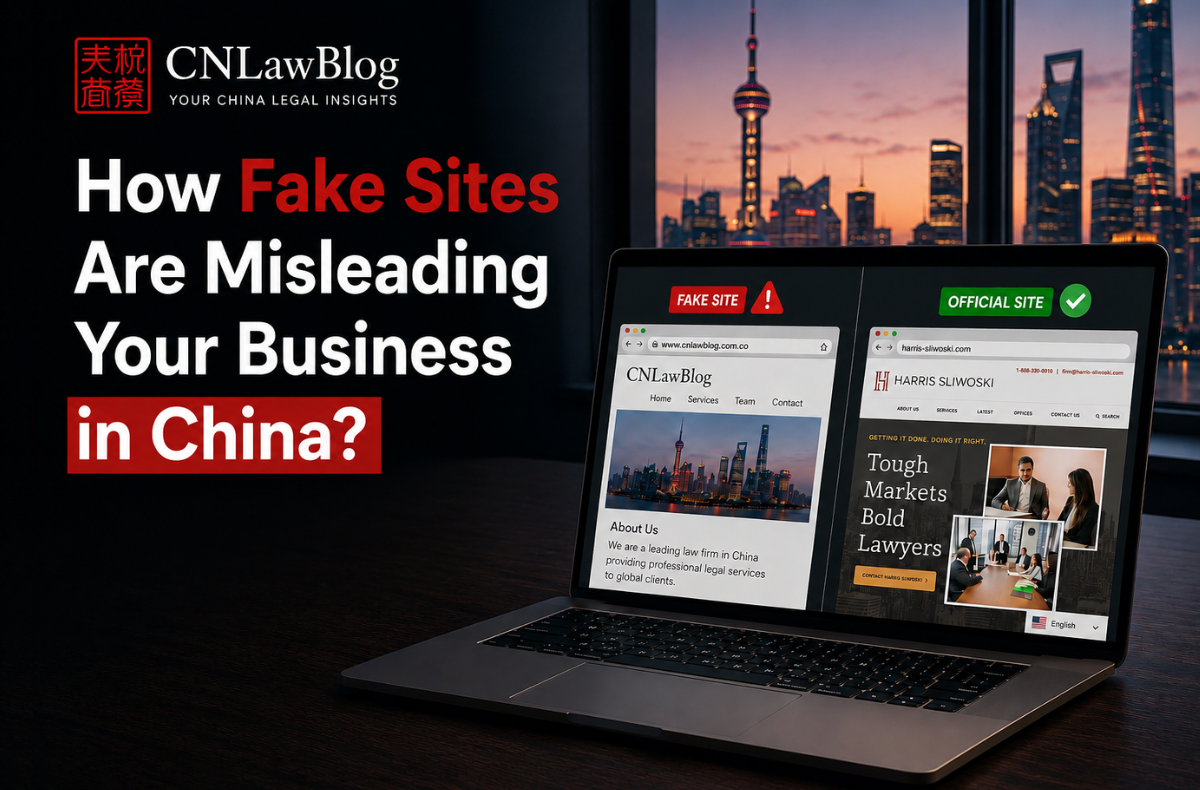
If you have searched for lawful guidance on doing business in China, you have probably found CNLawBlog. It is one of the most widely read resources on Chinese business law, intellectual property, and cross-border dispute resolution.
Here is what most readers miss: not every site calling itself CNLawBlog is the real one.
A growing number of anonymous mirror sites now imitate the original CNLawBlog to mislead readers. If you base a business or legal decision on content from one of these fakes, you put your company, your investments, and yourself at real risk. This guide shows you how to identify the authentic CNLawBlog and steer clear of the imposters.
Key Takeaways
- CNLawBlog is the official source for Chinese business law, founded by Dan Harris and Harris Sliwoski LLP.
- Be wary of mirror sites that imitate CNLawBlog, as they often steal content and mislead readers.
- Trusted content on CNLawBlog covers foreign investment, intellectual property, and regulatory compliance.
- To ensure you’re reading the real CNLawBlog, always visit harris-sliwoski.com and look for identifiable authors.
- Relying on fake CNLawBlog sites can lead to costly legal mistakes due to outdated or inaccurate information.
Table of Contents
What Is the Real CNLawBlog?
CNLawBlog stands for China Law Blog. It was founded by Dan Harris and the attorneys at Harris Sliwoski LLP (formerly Harris Bricken), an international law firm focused on China-related legal work.
The firm and its CNLawBlog content specialize in five core areas:
- Foreign investment in China: Capital moving into and out of the Chinese market
- Intellectual property protection: Safeguarding IP across Chinese and global markets
- Cross-border contract drafting and enforcement: Agreements that hold up in international deals
- International dispute resolution: Litigation and arbitration involving Chinese parties
- Global regulatory compliance: Meeting legal requirements across multiple jurisdictions
What set CNLawBlog apart from the start was its plain-language, honest, and practical legal writing. Real, practising attorneys wrote the content, lawyers who handled China business law every day. That commitment built a loyal global readership of business owners, investors, compliance teams, legal professionals, and academics.
The legal insights on CNLawBlog cover a wide range of topics: trademark squatting, NNN agreements, Sinosure claims, enforcement of U.S. judgments in China, manufacturing contracts in China, and supply chain security rules, among others. These are the legal developments that shape how foreign companies operate in China.
There is one official home for CNLawBlog:
Harris-sliwoski.com

The Problem: Mirror Sites Exploiting CNLawBlog’s Reputation
CNLawBlog earned its reputation for trustworthiness over years of careful work. That trust made it a target.
Anonymous individuals and unknown entities have built mirror websites, copycat sites that imitate the original to deceive readers. These fake versions typically:
- Steal the CNLawBlog name and branding to appear legitimate
- Copy and republish original content from harris-sliwoski.com without permission
- Pose as the official blog to deceive readers searching for China legal information
- Operate without identifiable authorship, credentials, or professional accountability
- Alter or manipulate legal content, presenting outdated or inaccurate information as current
These sites are built to look convincing. A casual reader often cannot tell the difference between a fake and the real CNLawBlog.
How Do Mirror Site Deceptions Actually Work?
Mirror site scams are a form of phishing. Scammers create duplicate websites that closely imitate legitimate platforms, then use them to mislead users or harvest data. According to the Global Anti-Scam Alliance’s 2025 report, global scam losses topped $442 billion in a single year.
The Tactics Are Well Recorded
- Typosquatting: Registering domains with slight misspellings of the real address to catch traffic, as explained by security guides like UpGuard’s work on the practice
- Content cloning: Using tools like HTTrack or wget to copy a site’s structure, text, and images
- Fake security signals: Installing free SSL certificates so a padlock icon appears in the browser, creating false trust
A padlock alone does not prove a site is real. Scammers can secure fraudulent domains just as easily as legitimate ones.
Why This Is Genuinely Dangerous
This is not just a branding dispute. It is a reader safety issue.
Think about what is at stake when someone reads China business law guidance from a fake CNLawBlog mirror site:
| Risk | What Happens |
|---|---|
| Outdated information presented as current | Compliance failures, regulatory penalties, or contract disputes |
| Altered or inaccurate content | Costly, poorly informed decisions about entering the Chinese market |
| No professional accountability | No licensed attorney stands behind the content—and no recourse if it misleads you |
| False confidence in a trusted name | Readers skip proper legal consultation, assuming they already have reliable advice |
| Reputational damage | Businesses act on misleading legal information without realizing the source was fraudulent |
China’s legal frameworks change often. Recent developments alone include the 2024 Foreign Investment Negative List, the updated PRC Company Law that took effect on July 1, 2024, and new supply chain security rules issued as State Council Order No. 834 in April 2026. An outdated mirror site can quietly serve you rules that no longer apply.
In international business law, bad information is more dangerous than no information at all. No information makes you cautious. Bad information makes you confident, and wrong.
How Can You Spot a Fake CNLawBlog Mirror Site?
Protecting yourself starts with knowing the warning signs. Use this checklist before you trust any site claiming to be CNLawBlog.
| Red Flag | What It Means |
|---|---|
| The URL is not harris-sliwoski.com | The only official domain is harris-sliwoski.com |
| No identifiable authors or attorney profiles | Real CNLawBlog content is written by named, licensed attorneys |
| No verifiable law firm information | Harris Sliwoski LLP is a real, traceable international law firm |
| Content feels copied or slightly altered | Mirror sites republish stolen content with minor edits |
| No contact details or office locations | Legitimate law firms are always transparently contactable |
| Excessive ads or suspicious monetization | The original blog does not prioritize ad revenue over content quality |
| No clear editorial or publication standards | Harris Sliwoski maintains consistent, professional publishing standards |
A few extra checks add another layer of confidence:
- Type the address yourself. Do not rely on search results or links sent by email or social media.
- Run a WHOIS lookup. Anonymous registration or an offshore host is a strong warning sign.
- Use a password manager. It only autofills on the exact domain it has saved, so it will not recognize a fake.
The Simple Rule: Always Go to the Source
When the stakes are high, and China business decisions usually are, follow one rule.
Go straight to the verified source.
The real CNLawBlog has one home:
Harris-sliwoski.com, the official blog of Harris Sliwoski LLP, founded by Dan Harris, with a proven record of credible, attorney-driven China business legal content.
Bookmark it. Share it. The next time someone asks where to find reliable legal insights on China business law, point them to the real CNLawBlog, not a mirror.
Protect Your Business and the Source You Trust
CNLawBlog earned its reputation the hard way, through years of honest, expert legal writing that helped thousands of business owners, investors, and professionals navigate one of the world’s most complex legal environments. That reputation is worth protecting.
If you have been reading CNLawBlog content anywhere other than harris-sliwoski.com, take three steps now:
- Stop relying on that content for any business or legal decision.
- Visit harris-sliwoski.com directly to access verified, attorney-authored insights.
- Consult a qualified attorney at Harris Sliwoski LLP for legal advice tailored to your situation.
Do not let anonymous imposters put your business at risk. Business lawyers can help owners verify legal information, review obligations, and avoid decisions based on unreliable guidance. The real CNLawBlog is always one verified URL away.
FAQs
A mirror site scam uses a duplicate website that imitates a legitimate one to mislead users, steal data, or spread inaccurate content. In the case of CNLawBlog, fake sites copy the brand and republish content to appear official while hiding who actually runs them.
They can present outdated or altered legal information as current. Acting on it can lead to compliance failures, penalties, contract disputes, and bad investment decisions, with no licensed attorney accountable for the advice.
Check the URL. The only official CNLawBlog is harris-sliwoski.com. Confirm that articles list named, licensed attorneys and that the site shows verifiable law firm contact details and office locations.
No. A padlock only means the connection is encrypted. Scammers can obtain free SSL certificates for fraudulent sites, so the padlock alone is not proof of authenticity.
The blog provides general legal insights, not advice for your specific situation. For tailored guidance on China business law, contact a qualified attorney at Harris Sliwoski LLP directly through harris-sliwoski.com.