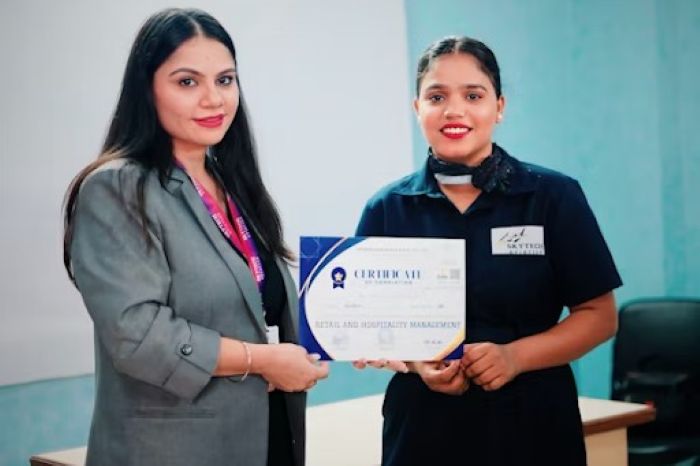
Something interesting is happening in the way people approach their working lives. The polished resume showing steady progress up a single corporate ladder is giving way to something more personal. Professionals at every stage are pausing to ask harder questions. What do I actually want? Where am I headed? Certification pathways may be the ticket to a brighter future for many professionals.
Certification programs sit at the heart of this quiet shift. They open practical routes into fields that once demanded expensive multi year degrees.
This rethink is not purely about money. It reflects a broader cultural reset. Work is expected to deliver more than just a paycheck now. People want skill mastery, flexibility, and the freedom to pivot.
Key Takeaways
- The shift in career approaches emphasizes personal fulfillment over traditional ladders and long degrees.
- Certification pathways now offer practical, affordable routes into fields including coaching, healthcare, and technology.
- Professionals increasingly seek mastering skills, flexibility, and meaningful work, leading to new career choices.
- Healthcare and tech certifications are particularly appealing, providing fast and recognized credentials for job readiness.
- Young professionals encourage a culture of continuous learning, mirroring the certification trends seen in adult education.
Table of contents
- The Limitations of the Old Career Playbook
- The Coaching Industry Is Welcoming a New Wave of Practitioners
- Healthcare Is Quietly Becoming a Top Choice for Career Changers
- Technology Certification Pathways are Reshaping the Digital Workforce
- Why Early STEM Exposure Fits the Same Pattern
- How to Evaluate a Program Before You Enroll
- Certification Pathways Offer a More Honest Approach to Career Building
The Limitations of the Old Career Playbook
For decades, the standard advice ran something like this. Pick a degree. Climb steadily within one industry. Trust that loyalty would pay off. That formula worked when employers offered pensions and industries changed slowly. Those conditions no longer hold true.
Today, employees switch roles more frequently. Entire industries can be reshaped within months. The shelf life of a typical job skill keeps shrinking. A degree earned at twenty-two might feel only loosely relevant by forty.
People are responding by treating learning as a continuous practice. It is no longer a one off achievement collected before adulthood begins. There is also a values component. Younger professionals voice a clear preference for meaningful work.
This shift creates strong demand for fields like wellness, education, healthcare, and personal development. None of these fit neatly into the traditional corporate climb.
The Coaching Industry Is Welcoming a New Wave of Practitioners
Few professions illustrate this shift more clearly than coaching. What was once a niche service for senior executives has expanded into a thriving industry.
Career changers, recent graduates, leaders managing complex teams. All of them turn to coaches for clarity and accountability.
The credibility of any coaching practice rests on the strength of the training behind it. Casual reading or weekend workshops cannot replicate the depth required.
That is why so many aspiring coaches now invest in accredited education. Programs aligned with the International Coach Federation framework give graduates a credential that clients actually recognize.
Trust is the currency in this field. A respected qualification earned through certification pathways builds it quickly.

Among the more rigorous options is the Professional Coach ICF 3 qualification. It is designed for those who want a credible practice grounded in evidence-based methods.
The curriculum covers foundational coaching techniques, ethical considerations, deep listening, and powerful questioning. The business side of running a practice is included too. Graduates leave equipped to work with paying clients from the start. They are not relying purely on intuition during their first sessions.
What makes this pathway attractive is that it respects the seriousness of the work. Coaching is not about giving advice or sharing personal opinions dressed up as wisdom.
Done well, it requires sophisticated questioning and careful boundary setting. These are learnable skills, but they require proper instruction. The coaching space also rewards niche specialization. Some practitioners focus on executive performance.
Others work with clients on relationships, career transitions, parenting, grief, or health behaviors. This variety means new entrants can build practices that reflect their interests and lived experience.
The work pairs well with parenting responsibilities, semi retirement, or running alongside another business. Most coaches set their own schedules.
Healthcare Is Quietly Becoming a Top Choice for Career Changers
Healthcare pulls in professionals who want stable demand, tangible impact, and clear pathways for advancement.
An aging population, the expansion of preventative care, and the steady growth of private practice all contribute. The healthcare workforce simply cannot keep pace with demand.
Importantly, healthcare is no longer the exclusive domain of doctors and nurses. The system relies on a wide ecosystem of support professionals. These roles offer entry points for people who want healthcare experience. They do not require committing to a decade of medical school.
Medical practice assistants are a strong example. They handle the operational backbone of a clinic.
Their work includes supporting doctors with clinical procedures, taking patient histories, managing infection control, and processing pathology samples. They run the systems that allow a practice to deliver consistent care. The role suits people who like variety and enjoy working in teams. You make a real difference in patient experience without being the most senior decision maker.
Anyone considering this pathway should look at recognized vocational programs. A nationally accredited Certificate IV in Medical Practice Assisting gives students hands-on competence across clinical and administrative responsibilities. In this context, many people also start exploring how practical training programs are delivered in real healthcare settings and what kind of workplace support is available once they begin entry-level roles. For a closer look at how these pathways are supported in real environments, visit website, where placement services and clinical exposure are often part of the transition from certification to day-to-day practice.
It also provides the credential employers expect to see on a resume. Coursework covers infection prevention, clinical assistance techniques, and basic emergency response.
Patient communication across cultural and language differences is included. Legal frameworks that govern healthcare environments round out the training. What appeals to many career changers is the relatively short timeline. Vocational certificates can often be completed within months while still producing job ready graduates.
Many providers offer flexible delivery. Online theory blends with practical placements. This allows students to keep working or caring for family members while they study. The variety of work environments is another draw. Trained practice assistants find roles in general practice clinics, specialist centers, day surgeries, and allied health practices. Some even work within larger hospital systems.
The skill set is portable and consistently in demand. People who later push further into nursing often use these certificate pathways as a stepping stone.

Technology Certification Pathways are Reshaping the Digital Workforce
Alongside coaching and healthcare, the technology sector has become one of the most active arenas for certification driven career change. The demand for skilled tech professionals has consistently outpaced what traditional university pipelines can supply.
Employers are responding by placing less emphasis on degree credentials and more emphasis on demonstrated, verifiable skills. Certifications from recognized bodies now carry significant weight in hiring decisions across cybersecurity, cloud computing, data analytics, project management, and software development.
The appeal for career changers is compelling. A professional from a completely unrelated background can earn a respected cloud certification, a cybersecurity qualification, or a data analytics credential within six to twelve months of focused study. Many of these programs cost a fraction of a university degree yet open doors to roles that offer strong salaries and genuine growth potential.
Certifications from providers like AWS, Google Cloud, Microsoft, CompTIA, and the Project Management Institute have become widely recognized benchmarks. Employers in industries well beyond pure technology now seek these credentials, including finance, logistics, healthcare, and retail.
What makes tech certification particularly attractive right now is the pace of the sector itself. Artificial intelligence tools, cloud infrastructure, and cybersecurity threats are evolving so rapidly that even those already working in technology need to recertify regularly. This creates a culture where continuous learning is simply assumed, lowering the psychological barrier for newcomers who might otherwise feel they are starting too late.
The practical side matters too. Many technology certification programs are built around real-world projects and scenario-based assessments rather than written examinations alone. Candidates graduate with a portfolio of demonstrated work, which speaks directly to what hiring managers actually want to see.
For people with strong analytical instincts, a background in operations, finance, or management, or simply a long standing curiosity about how digital systems work, a technology certification pathway can be the most direct route to a meaningful career shift.
Why Early STEM Exposure Fits the Same Pattern
The same logic driving adult certification pathways is reshaping how parents think about their children’s education. Investment in STEM programs for kids has climbed sharply, and the reasoning mirrors what working professionals are discovering for themselves.
Comfort with technology, coding, robotics, and analytical problem solving is no longer a specialist skill. It is becoming foundational, much like literacy and numeracy were for previous generations.
Children who engage with STEM activities early build habits that compound over time. Curiosity, persistence through failure, comfort with iteration, and the confidence to take apart a problem rather than wait for instructions.
These are exactly the qualities employers will reward fifteen or twenty years from now, regardless of which specific industries lead the economy then. Quality programs do more than teach syntax or science facts. They train a mindset.
After school coding clubs, robotics competitions, maker spaces in community libraries, and structured online courses are all part of this expanding ecosystem. Parents pursuing their own certifications often notice the parallel.
A child who watches a parent return to study, complete a credential, or pivot into a new field absorbs a quiet but powerful lesson. Learning is not something that ends at graduation. It is a lifelong practice, and the earlier that habit takes root, the further it carries.
How to Evaluate a Program Before You Enroll
The same principles apply when assessing any certification program. Start with accreditation. A program recognized by the relevant professional body will open doors that an unrecognized one will not. Slick marketing materials cannot make up for missing credentials.
Next, look at the people delivering the course. Strong programs feature instructors who are still actively practicing in the field. Their current stories and insights are often more valuable than any textbook. Ask whether you can attend an information session or speak with current students. Practical placement matters too. Theory delivered through slides and readings only takes you so far.
The best programs build in supervised experience where you apply skills under real conditions. This is where confidence gets built.
Finally, think honestly about the delivery format. Self-paced online study suits highly motivated learners. Cohort based programs add accountability and peer support but require more rigid scheduling. The right format depends on how you actually behave when nobody is watching.
For ongoing perspective on workforce shifts and how professionals are reshaping their careers, in depth analysis from leading commentators is worth following. Industry context helps you make sharper decisions about timing and specialization.
Certification Pathways Offer a More Honest Approach to Career Building
The professionals choosing certification pathways are not rejecting ambition. They are redefining it.
Success means something more nuanced than a job title or salary band. It looks like work that draws on real strengths and allows for ongoing learning. It leaves room for life outside the office. Whether the destination is a coaching practice, a healthcare role, or a position in the technology sector, the underlying principle is the same.
Skill, certification, and clarity of purpose travel further today than loyalty to a single employer ever did.
If you are considering a shift, treat the research phase with care. Talk to practitioners. Read program outlines properly. Ask uncomfortable questions about cost, timing, and outcomes. Then choose a path that matches your circumstances and the person you want to become.
The most rewarding careers tend to be built deliberately rather than accidentally. The right certification can be the structure that turns a vague hope into a working life you actually enjoy.