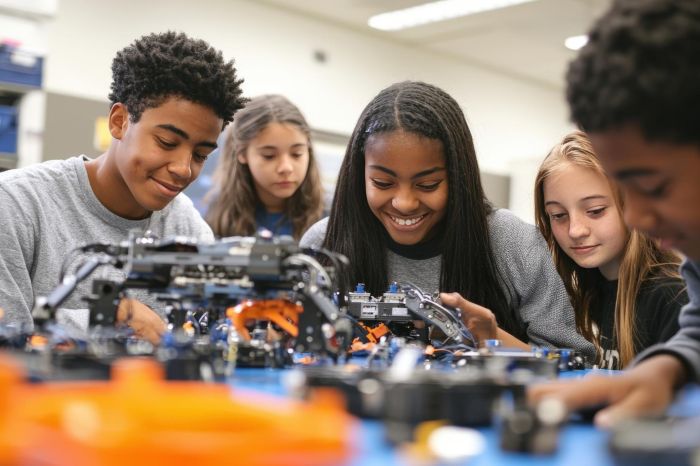
The world your child will graduate into looks nothing like the one you grew up in. Artificial intelligence is reshaping industries, climate technology is demanding new problem-solvers, and the jobs that will define the next decade haven’t even been invented yet. In this rapidly shifting landscape, one thing is certain: children who are fluent in Science, Technology, Engineering, and Mathematics, with a solid STEM education, won’t just survive. They’ll lead.
But here’s the good news: STEM education isn’t reserved for prodigies or classrooms with expensive equipment. It begins at the kitchen table, in the backyard, and in the questions your curious child asks every single day.
Key Takeaways
- STEM education nurtures critical thinking, creative problem-solving, collaboration, and data literacy in children.
- Early exposure to STEM significantly shapes children’s attitudes toward learning, especially between ages 6 to 10.
- Parents can spark STEM curiosity through everyday questions, cooking, science visits, and coding introductions.
- Gifted children may need specialized environments to thrive, like online gifted schools designed for advanced learning.
- STEM and creativity complement each other; integrating arts into STEM (STEAM) enhances understanding and communication skills.
Table of contents
What STEM Education Really Means for Kids
STEM is more than a buzzword plastered on school brochures. At its core, STEM education teaches children how to think, not just what to think. It cultivates:
- Critical thinking analyzing problems from multiple angles before arriving at a solution
- Creative problem-solving building, testing, failing, and trying again without fear
- Collaboration learning that the best solutions emerge from diverse minds working together
- Data literacy understanding the numbers and patterns that drive our world
When a six-year-old builds a bridge out of popsicle sticks and tests how much weight it can hold, that child is doing engineering. When a ten-year-old writes her first “if-then” logic in a coding app, she’s thinking like a programmer. STEM is already happening, we just need to nurture it intentionally.
Starting Early: Why It Matters More Than You Think
Research consistently shows that children form their attitudes toward learning including confidence in math and science as early as ages 6 to 10. Girls, in particular, begin to internalize social narratives about who “belongs” in STEM during this window. That makes early exposure not just valuable, but urgent.
Parents and educators don’t need a science degree to spark curiosity. Simple habits make an enormous difference:
- Ask “why” and “what if” questions during everyday moments. Why does ice melt faster in a dark cup versus a light one?
- Cook and bake together recipes are edible math lessons in measurement, ratios, and chemical reactions
- Visit science museums, planetariums, and nature centers as a regular family ritual, not a one-time treat
- Let kids build and break things a dismantled old clock teaches more about mechanics than a textbook ever could
- Introduce coding early through free platforms like Scratch, Code.org, or Khan Academy Kids
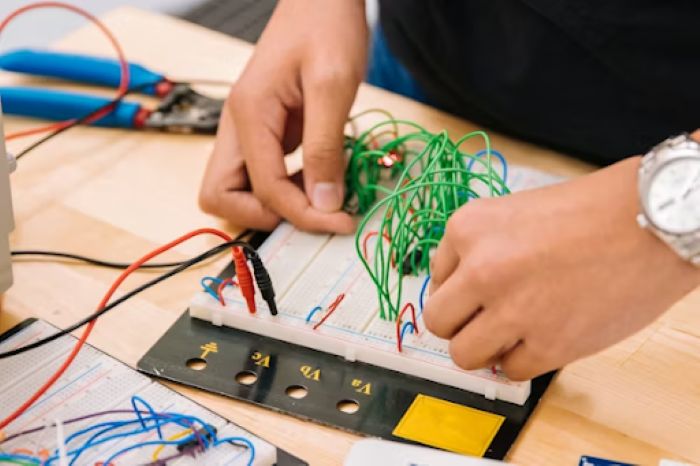
Nurturing the Exceptionally Curious Child
Not every child who loves STEM fits neatly into a standard classroom. Gifted learners who process information faster, dive deeper into subjects, and ask questions that stump their teachers often find traditional schooling under-stimulating. Boredom in gifted children doesn’t look like passivity; it looks like frustration, disruption, or disengagement.
For these children, the right environment can be transformational. Specialized programs that offer personalized, accelerated learning allow gifted students to progress at their natural pace, explore advanced concepts, and connect with intellectual peers who challenge them. If your child seems to always be one step ahead, constantly asking for more, it may be worth exploring an online gifted school designed to meet them exactly where they are and push them further.
STEM and Creativity: Stronger Together
One of the most damaging myths in education is that STEM and the arts are opposites that a child must choose between being “a math person” or “a creative person.” The reality is that the most celebrated innovators in history from Leonardo da Vinci to Steve Jobs blurred those lines deliberately.
This is precisely why STEAM (STEM + Arts) has gained traction in progressive education circles. Writing, storytelling, and visual communication enhance a child’s ability to synthesize complex ideas and share them with the world. A young engineer who can explain her invention clearly has a profound advantage over one who cannot.
Encouraging your STEM-passionate child to also explore storytelling is one of the most powerful things you can do. In fact, writing a children’s book is a wonderful project that combines research, creativity, structure, and empathy skills that map beautifully onto STEM thinking. If this sounds like an adventure your child (or you, as a parent) would love, “How to Write a Children’s Book” walks through every step from concept to finished manuscript with warmth and clarity.
Imagine a child who codes a simple animation and writes the story behind it. That child isn’t choosing between two worlds, she’s building a bridge between them.
Making a STEM Education Accessible for Every Child
Access remains one of STEM education’s greatest challenges. Children in under-resourced communities, rural areas, or households without strong digital infrastructure face real barriers. The good news is that the landscape is changing:
- Free online resources like Khan Academy, NASA’s education portal, and MIT OpenCourseWare bring world-class STEM content to any device with an internet connection
- Public libraries increasingly offer robotics kits, 3D printers, and coding workshops at no cost
- Community STEM clubs and after-school programs provide hands-on mentorship, often run by local professionals who are eager to give back
- YouTube and podcasts host thousands of hours of engaging, age-appropriate science content that turns screen time into learning time
The goal isn’t to raise every child into an engineer. It’s to ensure that every child has the tools to make that choice and to thrive in whatever path they choose.
A Word to Parents: You Are the First STEM Teacher
You don’t need a whiteboard or a curriculum. You need curiosity and consistency. When you stand in wonder at a thunderstorm and say “I wonder how far away that lightning was, want to figure it out together?” you are doing STEM education. When you celebrate your child’s wrong answer as much as her right one because she tried you are building a scientist’s mindset.
The children growing up today will solve problems we haven’t imagined yet. They will design systems, write algorithms, build cities, and explore space. And it starts not with a test score, but with a question asked at the dinner table by a parent who stayed curious.
Give your child the gift of STEM not just as a subject, but as a way of seeing the world.