Healthcare systems are transforming, placing mounting pressure on nursing homes to ensure quality care while being more efficient. But staffing shortages and access to new technologies are two persistent challenges that generate cracks in the system within long-term care facilities. As industries go through digital transformation, the inability to implement modern systems while stabilizing the workforce introduces an increasing risk of neglect and abuse.
Recent industry surveys highlight how rapidly the situation is deteriorating in elder care facilities. Workforce strain is no longer a static issue but an accelerating crisis, with 86% of nursing homes reporting that their staffing situation has worsened over the past three months. Even more concerning, 57% of those facilities described the change as “much worse,” underscoring the growing instability in long-term care environments already under pressure from chronic shortages and limited technological support.
Table of contents
Workforce Needs in a High-Need Workspace
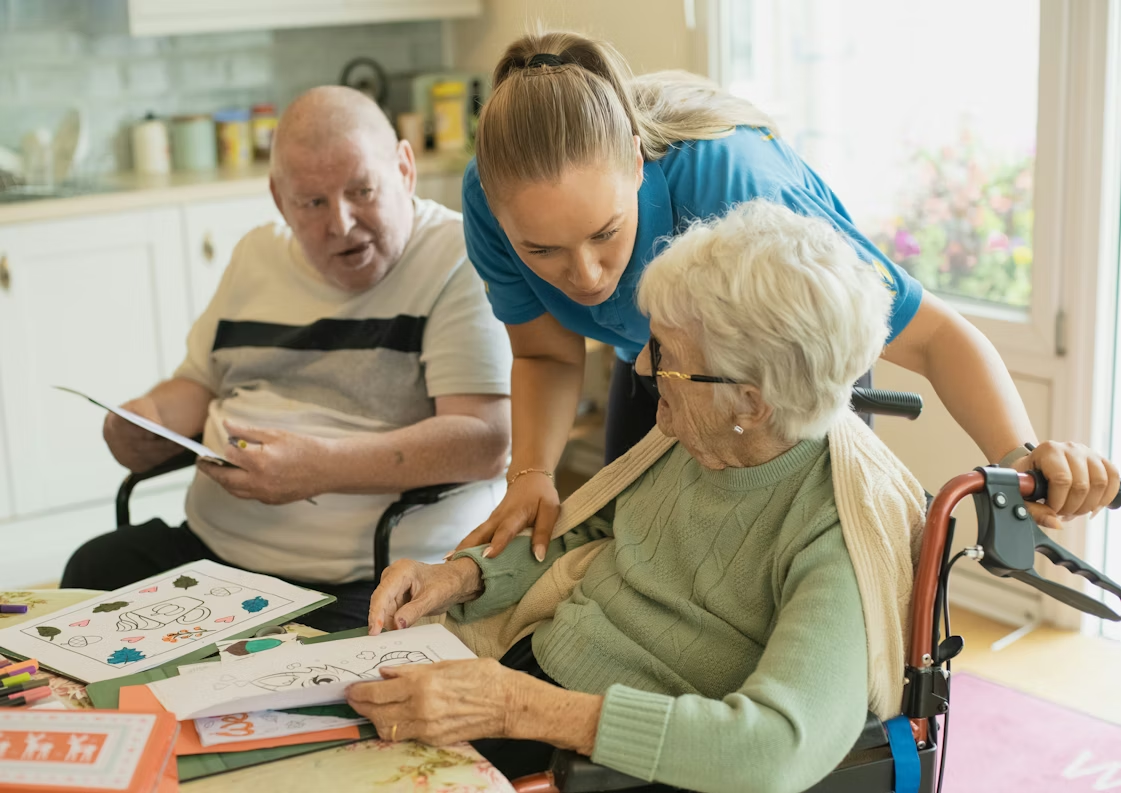
Despite the increasing demand for long-term care services due to the growing aging population, staffing levels have not kept up. Some residents would benefit from more hands-on care, but many facilities have scaled back staff, which means that caregivers often handle too many residents.
This imbalance frequently results in delayed care, decreased supervision, and rising levels of staff stress. In the long run, these conditions lead to burnout that adversely impacts performance and enhances the chances of errors or oversight. It is difficult to ensure continuity of care and individualized attention without adequate staffing.
Workforce Turnover and Skill Gaps
It is compounded by high turnover rates. This leads to a discrepancy in care due to staff changes. They might not be completely trained with regard to the residents’ needs and have a higher likelihood of neglect.
Adoption is slow, though, despite a handful of facilities exploring digital training platforms and onboarding systems. Without these tech-enabled areas of focus to standardize the training approach, you can never be confident that everyone is equally prepared.
Technology Gaps: People Are Left in the Dark
Even with advancements in technology, some nursing homes still rely on outdated practices, including manual documentation or fragmented record systems. This limits real-time visibility and makes it difficult to accurately track patient care and staff performance.
While electronic health records, automated alerts, and monitoring tools can help detect risk early on, there are times when these systems either do not exist or are not utilized to the fullest extent, resulting in missed critical diagnostic alert signs. The reality is that technology is not a convenience; it is quickly becoming a requirement to preserve transparency and accountability in care settings.
The Role of Data and Reporting Systems
Data-driven systems are increasingly important in detecting patterns that may indicate neglect or abuse. Incident reporting platforms, digital logs, and analytics tools can provide insights into care quality and operational efficiency.
Nursing Home Abuse Center emphasizes how gaps in reporting and documentation can delay the identification of abuse. It also highlights the importance of structured systems that allow concerns to be tracked, reviewed, and addressed promptly. By improving access to information and connecting individuals with guidance, it supports greater awareness and accountability within long-term care settings.
Smart Monitoring and Ethical Considerations
But there are innovations–such as smart sensors, wearable health devices, and AI-based monitoring systems–that really start to transform elder care. Newer technologies are able to track movement, detect falls, and send real-time alerts to staff about unusual patterns.
But the deployment of these tools comes with its own set of privacy and ethical concerns. However, in most cases, facilities must still walk the tightrope between oversight and respect of residents’ right to dignity / personal space. These technologies, when responsibly used, can provide massive safety benefits without a loss of trust.
Integrated Solutions to Fill the Gap
Solving these issues demands a harmonious blend of employee management and technological advancement. Utilising smart scheduling systems, predictive analytics, or centralized care platforms can optimise your workforce and improve overall efficiency.
With the introduction of these solutions into facilities, staff can ease their workload pressure while receiving dedicated and continued caregiving for residents. When paired with effective staffing, technology can also play a powerful role in preventing abuse.
What Safer, Tech-Enabled Care Looks Like in the Future
The overlap of staffing challenges with technology gaps creates both a risk and an opportunity. Although the restrictions of today lend to vulnerabilities, breakthroughs in digital health options await.
Fortifying these components is necessary for operational efficacy and, more importantly, in ensuring the dignity and care of individuals intentionally over the coming decade.