
Every major shift in personal technology has changed where computing happens. Desktop computers brought digital tools into offices and homes. Laptops made those tools portable. Smartphones put them in people’s pockets. Now AI wearables are moving computing even closer to daily life.
This does not mean phones and computers are disappearing. They still handle complex tasks better than any wearable device. But AI wearables are creating a different kind of interaction: faster, lighter, more personal, and less dependent on constantly holding a screen.
The next computing platform may not be one device. It may be an ecosystem of wearables, phones, computers, and AI assistants working together.
Key Takeaways
- AI wearables are transforming computing by offering hands-free, contextual interactions that fit into daily life.
- Devices like smartwatches, earbuds, and recording glasses make technology more accessible and reduce the friction of using phones.
- Voice assistants play a crucial role in AI wearables, enabling natural communication and real-time support for everyday tasks.
- The future lies in a device ecosystem where wearables complement phones and computers, with each serving distinct roles.
- Market competition is driving innovation in AI wearables, particularly in workplace settings, enhancing productivity and safety.
Table of contents
- Personal Technology Is Becoming More Wearable
- Hands-Free Computing Is Becoming More Important
- Voice Assistants Are Changing the Interface
- Real-Time AI Support Makes Wearables More Useful
- AI Wearables Complement Phones and Computers
- Recording Glasses Are Part of Connected Computing
- Why the Market Is Paying Attention
- The Workplace Could Accelerate Adoption
- The Next Platform Will Be Contextual
- Final Thoughts on AI Wearables
Personal Technology Is Becoming More Wearable
Technology has been moving closer to the body for years. Smartwatches track notifications and health signals. Earbuds support calls, music, and voice assistants. Fitness trackers collect daily activity data. Smart rings, glasses, and other connected devices are now extending that pattern.
The reason is simple: people want technology that fits into real life. A phone is powerful, but it still has to be held, unlocked, opened, and managed. Wearables reduce some of that friction because they stay available throughout the day.
Pew Research Center reports that smartphone ownership is widespread across U.S. adults, which shows how deeply mobile computing is already embedded in daily habits. AI wearables build on that foundation by making certain digital tasks easier to access without reaching for a phone every time.
Hands-Free Computing Is Becoming More Important
Hands-free computing matters because people do not live their lives sitting still in front of screens. They walk, commute, cook, travel, work, shop, exercise, care for children, attend events, and move through busy environments.
In those moments, even simple phone tasks can feel inconvenient. Checking directions, answering a call, recording a quick clip, setting a reminder, or asking a question can interrupt what the person is doing.
AI wearables help by making some of those actions faster and less disruptive. A user can speak a command, hear a response, capture a moment, or receive an alert without fully shifting into phone mode.
That is the real promise of hands-free computing. It does not replace every screen-based task. It simply makes quick, contextual interactions easier.
Voice Assistants Are Changing the Interface
Voice assistants are central to the future of AI wearables because they change how people interact with technology. Instead of typing, tapping, and scrolling, users can speak naturally and receive help in real time.
This can be useful for ordinary tasks: setting reminders, asking for quick facts, starting audio, sending short messages, checking schedules, or getting directions. It can also support professional and creative workflows, especially when a person is moving or using both hands.
AI makes voice assistance more practical because the device can become more context-aware. It can respond to more flexible questions, support summaries, interpret visual information, and help users act faster.
The interface becomes less about menus and more about conversation.
Real-Time AI Support Makes Wearables More Useful
Earlier wearables often had limited roles. A fitness tracker counted steps. A smartwatch mirrored notifications. Wireless earbuds handled audio. Those tools were useful, but they were not always seen as major computing platforms.
AI changes that. When wearables can understand voice, context, images, tasks, and user intent, they become more than accessories. They become personal interfaces for real-time support.
A worker could receive instructions while completing a task. A traveler could ask for help while navigating a new place. A creator could capture a first-person video and organize ideas later. A student could record a reminder while walking between classes. A parent could stay connected without constantly checking a phone.
These are small moments, but computing platforms often become important because they solve many small problems repeatedly.
AI Wearables Complement Phones and Computers
The future of AI wearables is not about replacing smartphones or laptops. It is about complementing them.
Phones are still better for detailed browsing, editing, typing, banking, shopping, and managing apps. Laptops and desktops remain essential for deep work, complex documents, coding, design, and large-screen productivity.
Wearables are better for quick access, alerts, voice commands, audio, health data, movement-based tasks, and hands-free capture. They are most valuable when the user needs support without stopping everything.
This creates a more flexible device ecosystem. A wearable can capture a thought. A phone can organize it. A laptop can turn it into a finished project. Each device plays a different role.
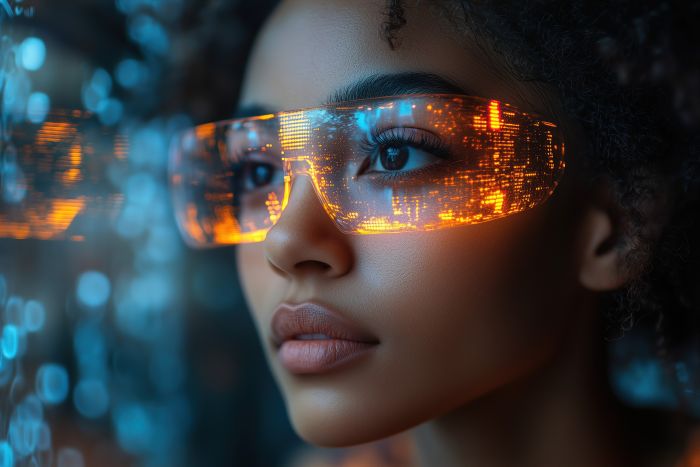
Recording Glasses Are Part of Connected Computing
One reason smart glasses are attracting attention is that they bring visual capture into the wearable category. Cameras are no longer limited to phones, laptops, or separate devices. They can now sit inside everyday eyewear.
That makes recording glasses part of the next generation of connected devices. They allow users to capture first-person photos and videos, document experiences, save visual notes, and interact with digital tools while staying more present in the moment.
This is different from simply adding a camera to glasses. The bigger shift is contextual computing. A wearable camera can help the device understand what the user is seeing, doing, or trying to remember.
Reuters reported that Meta’s newer AI smart glasses are part of the company’s push toward “personal intelligence,” with Meta holding a dominant share of global smart-glasses shipments last year. That market movement shows why major technology companies are treating smart eyewear as more than a novelty accessory.
Why the Market Is Paying Attention
AI wearables are gaining attention because they sit at the intersection of several major trends: artificial intelligence, mobile computing, connected devices, creator tools, health tracking, and hands-free communication.
Smart glasses are one of the most visible examples. Reuters has reported that Snap created a separate smart-glasses unit as it looked to attract investment and compete in the growing wearables market, while the success of Ray-Ban Meta glasses helped position eyewear as an early frontrunner for AI-powered gadgets.
This kind of competition matters. When major companies invest in the same category, it usually means they see a long-term platform opportunity.
The challenge is adoption. Wearables must be comfortable, useful, stylish, private, secure, and easy to use. If they feel awkward or unnecessary, people will not wear them daily.
The Workplace Could Accelerate Adoption
AI wearables may also grow through professional use. In workplaces, hands-free access can be more than convenient. It can support safety, training, communication, documentation, and productivity.
Deloitte has noted that workplace wearables can support worker effectiveness, productivity, and safety, especially in environments where people need information while moving or working with their hands.
Industries such as logistics, healthcare, manufacturing, retail, construction, field service, and training may explore AI wearables because they can bring digital support closer to physical work.
This is where wearables can become practical rather than futuristic. If a device helps someone complete a task faster, safer, or with fewer errors, it has a stronger reason to exist.
The Next Platform Will Be Contextual
The next major computing platform will likely be defined by context. It will not only know what app is open. It may understand where the user is, what they are doing, what they are seeing, what they need, and which device is best suited for the task.
AI wearables fit that future because they stay close to everyday activity. They can support moments that phones and computers do not handle smoothly: quick questions, movement, voice commands, visual capture, reminders, audio prompts, and real-time assistance.
That does not mean every wearable will succeed. Many will not. But the category itself points toward a clear direction: computing is becoming more personal, ambient, and responsive.
Final Thoughts on AI Wearables
AI wearables represent the next major computing platform because they make technology more immediate. They support hands-free access, voice interaction, real-time AI assistance, connected-device ecosystems, and more natural ways to capture and use information.
Smartphones and computers will remain essential, but they will not be the only center of digital life. Wearables can handle the moments when users need quick support without stopping to use a screen.
As AI becomes more capable and devices become more comfortable, wearable technology may become one of the most important ways people interact with computing in everyday life.