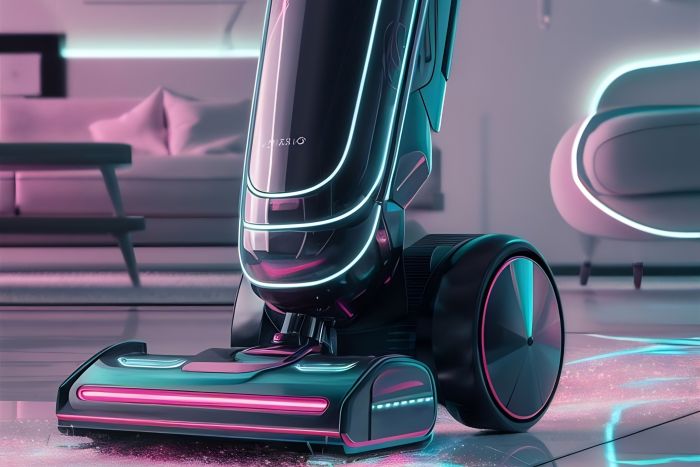
A few years ago, cleaning a floor still meant two separate tools and two separate steps. You vacuumed first, then you mopped. It was such a familiar routine that almost nobody stopped to ask whether it could be done any other way. Then a wave of engineering attention landed on home cleaning, of all places, and that old two-step routine quietly started to disappear.
What came out of it is a category of machines built around a pretty simple idea: vacuuming and mopping shouldn’t really be two chores at all. They should be one motion. That shift is honestly one of the more interesting small case studies in consumer product innovation right now, even if it doesn’t get talked about the way phones or AI gadgets do.
The cordless wet dry vacuum mop didn’t show up because of some single lightbulb moment. It came together slowly, out of better batteries, smarter sensors, and hardware that could clean up after itself, all landing in the same device around the same time.
Key Takeaways
- The cordless wet dry vacuum mop innovation combines vacuuming and mopping into one efficient chore.
- Engineering challenges include sensing wet versus dry debris, maintaining battery life, and preventing dirty water from resoiling floors.
- Self-cleaning stations and steam functionality enhance user experience by automating maintenance and effectively tackling tough stains.
- Companies like Tineco, Dyson, and Dreame push the category forward with differing approaches to suction, affordability, and automation.
- Continued advancements in battery life, automation, and self-cleaning indicate that this category is still evolving, not plateauing.
Table of contents
Why This Category Turned Into a Real Innovation Story
Solving Two Problems at the Same Time
Building something that vacuums and mops at once sounds easy on paper. In practice, it’s a lot messier. The machine has to sense wet debris versus dry debris in real time, adjust suction and water flow on the fly, and somehow avoid smearing dirty water back onto a floor it just cleaned.
On top of that, it needs enough battery life to get through an average home without stopping to recharge halfway through, and it still has to stay light enough to push under a couch or around table legs. Getting all of that right at once, instead of fixing one part of the problem while making another part worse, is really where the engineering gets hard.
Why Self-Cleaning Ended Up Being the Turning Point to Clean Our Homes
This is usually where the real innovation shows up, in small details most people never notice unless something breaks. Self-cleaning stations are a good example.
Early wet-dry machines needed their rollers rinsed and dried by hand after every use, which kind of defeated the point of buying a time-saving device in the first place. Newer machines close that gap on their own. The Tineco FLOOR ONE S7 Stretch Ultra Cordless Wet Dry Vacuum Cleaner is a good example of this, pairing a flexible cleaning head with a rinse-and-dry cycle that runs automatically, so there’s no extra step waiting for you after you’re done cleaning.
Steam Turned Out to Be the Next Small Leap to Cleaning Our Homes
Steam is another spot where a fairly unglamorous bit of engineering ended up changing things. Dried spills and greasy floor patches have always been the one thing a damp mop just can’t fix on its own. That’s the gap the Tineco FLOOR ONE S9 Artist Steam Wet Dry Vacuum Cleaner is built around, using heated water to loosen that kind of stuck-on grime while vacuuming in the same pass, so scrubbing on your hands and knees stops being part of the routine.
How Competing Approaches Are Pushing the Category Forward
Innovation rarely happens because one company decides to be clever in isolation. Usually it’s a handful of brands nudging each other forward, and this category is a pretty clean example of that.
The Suction-First Legacy
Dyson’s whole reputation was built on suction and motor performance, and its cordless vacuums are still genuinely strong when it comes to dry debris. The catch is that most of its lineup still stops short of real mopping, so a separate tool tends to stick around for wet messes.
The Affordable Hybrid Approach
Dreame took a different route, moving quickly into wet-dry hybrids that lean on affordability and broad, general-purpose functionality. That’s a fine approach for everyday upkeep, though some users mention that suction and mopping consistency can dip a bit on carpet or with heavier debris compared to more specialized machines.
The Automation-First Bet to Cleaning Our Homes
Tineco has leaned hardest into automation as its main innovation thread. Newer releases extend battery life for bigger homes, and the self-maintaining idea keeps getting pushed further, with stations that handle roller washing, hot-air drying, and even emptying themselves without anyone lifting a finger.
Compared to a budget-hybrid strategy on one side and a suction-first legacy on the other, this is really a bet that cutting down on manual maintenance, not just chasing bigger suction numbers, is where this category goes next.
Which of these philosophies actually wins out probably comes down to what a household cares about most day to day.
Common Questions About This Shift
What’s actually innovative about combining vacuuming and mopping?
Doing both jobs isn’t the hard part. Doing both without clean and dirty water mixing together is the hard part, and that takes real sensor work and engineering, not just a bigger water tank bolted onto the same old design.
Do self-cleaning stations really cut down on maintenance, or is that just marketing?
They genuinely do. Most stations only need their tanks refilled every so often, since the rinsing and drying happens on its own after each use.
Is steam cleaning our homes a real upgrade, or is it more of a gimmick?
For dried or greasy spots, heated water actually loosens residue that cold water just can’t touch, so it’s a functional improvement rather than something added purely for the spec sheet.
Is this category still improving, or has it basically plateaued?
Battery life, self-emptying, and maintenance automation are all still getting better year over year, which suggests there’s still room to go before this settles into whatever its final form ends up being.
What started as an annoyance, two tools for one job, has quietly turned into a small but genuine window into how consumer hardware innovation actually works. Not one big dramatic leap, but a bunch of unglamorous engineering problems getting solved one at a time.