Healthcare AI solutions split into two markets that rarely get compared side by side, and buyers keep conflating them.
The first is regulated diagnostics. A vendor spends years and millions on clinical validation, earns an FDA clearance or a CE mark, and sells you a device that does one thing extremely well. You cannot customize it, and you should not want to — the fixed algorithm is precisely what the regulator approved.
The second is everything else: intake, prior authorization, documentation, claims, triage, data normalization, patient communication. No regulator gates this work, no vendor has produced your specialty’s version of it, and it is where most of the administrative cost actually sits. This is where custom AI belongs.
Most AI projects in the second category never reach production. They stall on fragmented data, on models that do not understand specialty language, on hallucinated output nobody can trace, and in the absence of any way for a clinician to override an agent.
This guide compares 9 solutions across both markets and states plainly, for each one, what “custom” actually means.
Key Takeaways
- Healthcare AI splits into two markets: regulated diagnostics and custom administrative AI solutions.
- Custom AI solutions often fail to reach production due to data fragmentation and lack of adaptability.
- This guide evaluates 9 healthcare AI solutions, explaining what ‘custom’ means for each.
- MindK builds tailored AI systems, while other solutions like Aidoc and Paige focus on well-defined use cases.
- When choosing AI solutions, consider if a productized version exists, or decide between building from scratch or using proven components.
Table of contents
How We Evaluated The AI Solutions
What you can adapt. Nothing, configuration, or the whole system. We label each entry.
Evidence of production use. Regulatory clearance, named deployments, patient or claim volumes.
Integration reality. Whether it fits into existing PACS, EHR, and payer systems.
Honest limits. Whether the vendor is clear about who it does not serve.
Top 3 AI Solutions at a Glance
| Solution | Best For | Starting Price |
| MindK | Building AI for workflows no vendor has productized | Custom pricing — contact for quote |
| Aidoc | Enterprise-wide acute finding triage across imaging | Custom pricing — contact for quote |
| PathAI | Digitizing and scaling anatomic pathology workflows | Custom pricing — contact for quote |
Here are the 9 custom AI solutions for healthcare organizations on this list:
1. MindK
MindK is the only entry here that does not sell a finished product. It builds them — and the distinction defines what it is useful for.
The company works from a library of pre-built healthcare AI agents and reusable agentic building blocks, then customizes and integrates them into a client’s actual operations. That model sits between the two options most buyers see: licensing a platform that cannot bend to your workflows, or commissioning a build from an empty repository that takes a year or more to reach production. MindK reports this approach accelerates time-to-value by 3–4x.
Where the agents apply. Voice call and IVR automation, chat, fax/SMS/email processing, patient intake, eligibility verification, verification of benefits, prior authorization, coding and charge capture, claim submission, AR follow-up, healthcare data normalization, PHI anonymization, and patient engagement. The library expands over time.
Services:
- Healthcare AI strategy consulting — use case validation, workflow mapping, data readiness, PHI exposure review, build-vs-buy analysis
- AI agent development for voice, chat, and payer portal navigation, with escalation logic and review queues
- End-to-end AI-native product development for HealthTech companies
- Healthcare LLMOps — HIPAA-aware LLM gateways, PHI anonymization, evaluation pipelines, cost controls, audit logs
- Agentic process automation and integration across FHIR, HL7, Epic, Cerner, athenahealth, and specialty EMRs
Case study. MindK built an AI-powered RCM automation platform covering patient intake, benefits verification, EMR integration, and claim generation. The production-ready MVP shipped in 4 months at 80% lower development cost thanks to the agentic engineering approach. It now processes 68,000+ claims a month, with two-way integrations into the top 10 specialty EMR systems, PHI anonymization for HIPAA-compliant processing, and human-in-the-loop exception handling.
Second reference point. For an occupational health client, MindK developed a mobile app that has processed over 36 million instant tests using Amazon Rekognition. It expanded into a multi-tenant SaaS platform with 400+ services, white-label portals for partner clinics, three-way integrations with clinical labs and MROs, and SOC 2 Type II certification. Twelve enterprise customers were acquired within 3 months of the SaaS release.
Third reference point. A separate build addressed the problem every healthcare team hits when using external LLMs: a privacy gateway sitting between a medical application and outside models. It detects all 18 HIPAA Safe Harbor identifiers, strips them before the note is sent, and restores them when the response returns — with reversible placeholder mappings and an auditable service design.
Custom means: the whole system, engineered around your data, workflows, and specialty.
Our take. Most companies offering custom ai solutions for healthcare either hand you a platform or start from zero. MindK starts from components already running in production, which is why its projects reach launch instead of stalling as pilots. The controls matter as much as the agents: source-grounded answers, confidence thresholds, review queues, override paths, and audit trails are built in rather than retrofitted after a compliance review.
Best for: HealthTech companies, billing operations, and provider organizations automating workflows no product covers. Not ideal for: buyers needing an FDA-cleared diagnostic device — that is a different market entirely.
2. Ultromics
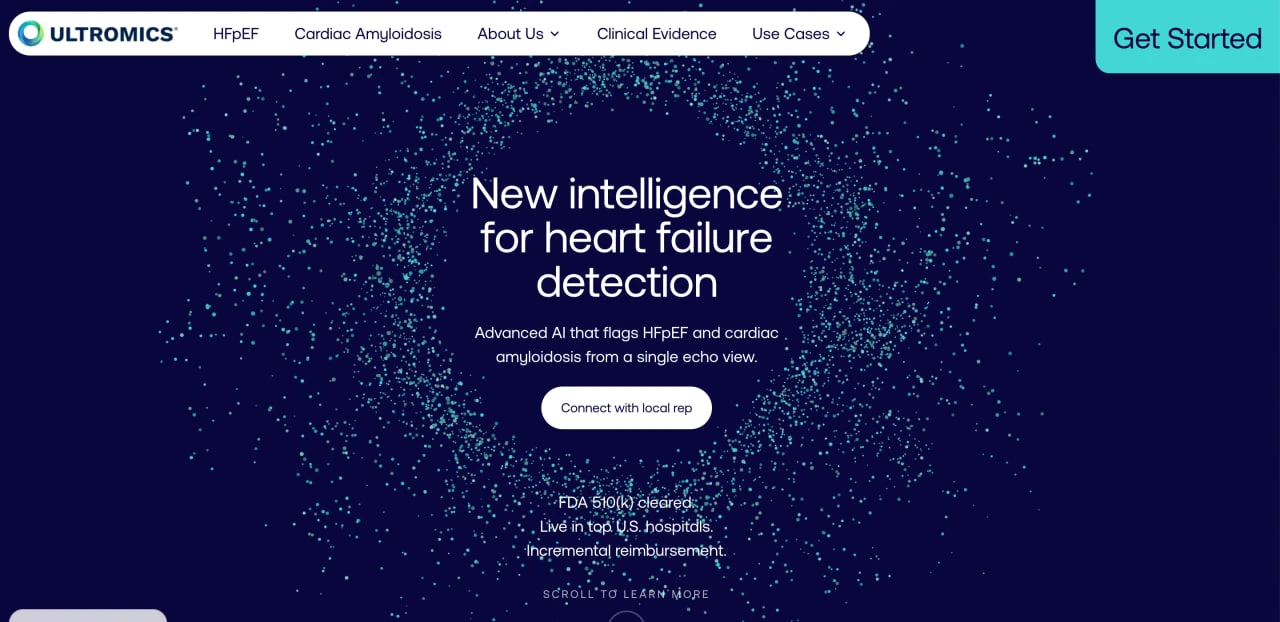
Ultromics, an Oxford spin-out, applies AI to echocardiography. Its EchoGo platform automates analysis of ultrasound heart scans, and the company has built a portfolio of cleared devices on top of it.
Custom means: nothing. The algorithm is what the FDA cleared.
Case study. EchoGo Amyloidosis received FDA clearance in November 2024 for detecting cardiac amyloidosis from a single routinely acquired echocardiographic clip. It was the first device enrolled in the FDA’s Total Product Lifecycle Advisory Program to reach marketing authorization, developed with support from Janssen Biotech and Pfizer. The earlier EchoGo Core, cleared in 2019, automates strain and ejection fraction analysis.
Best for: cardiology services wanting earlier detection of an underdiagnosed heart failure cause. Not ideal for: anyone expecting to adapt the model to local protocols.
3. Botkin.AI
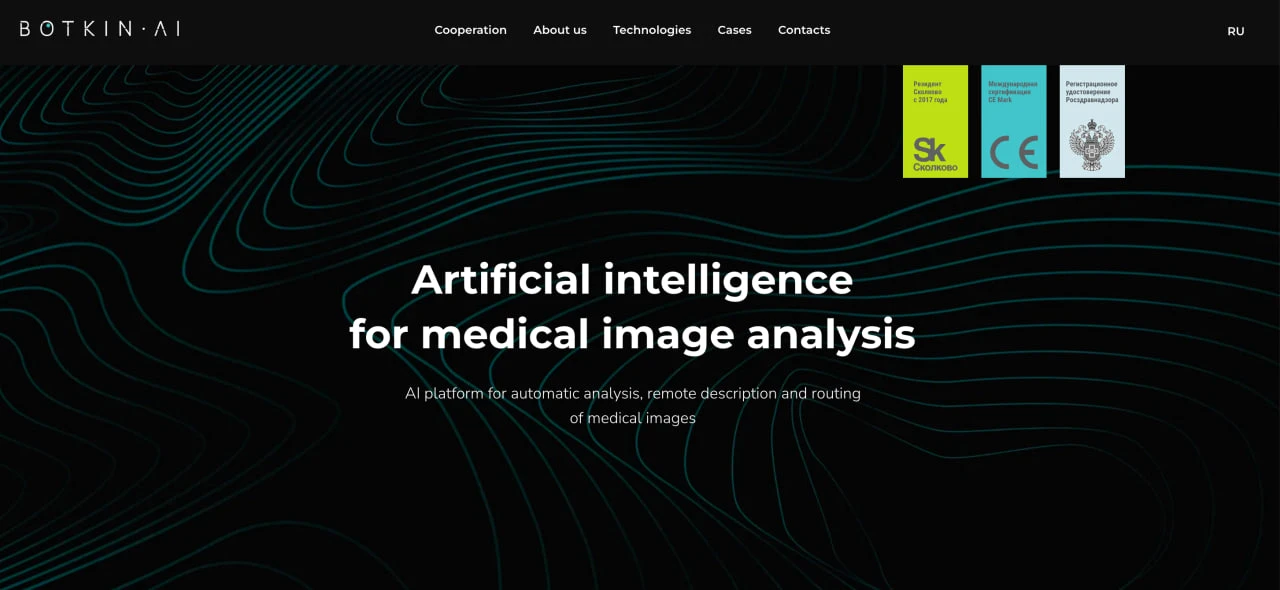
Botkin.AI is a radiology platform for lung CT, mammography, and X-ray analysis, developed in Russia and registered with Roszdravnadzor for clinical use there. It integrates with local PACS and hospital information systems.
Custom means: nothing beyond PACS integration settings.
Note on evidence. Independent English-language validation of the platform’s deployment figures and accuracy claims is limited compared with the other imaging vendors here. Organizations outside its home market should also weigh procurement, data residency, and sanctions considerations before evaluation.
Best for: facilities already operating within its regulatory jurisdiction for AI solutions. Not ideal for: U.S. or EU health systems, where FDA-cleared or CE-marked alternatives have far deeper published evidence.
4. Aidoc
Aidoc is the closest thing radiology has to a default. Its aiOS platform runs in the background of PACS workflows, flagging critical findings the moment a scan is acquired.
Custom means: configuration of which indications run and how alerts route.
Case study. In January 2026, the FDA cleared Aidoc’s comprehensive triage solution powered by CARE, its own foundation model — 11 newly cleared indications combined with three existing ones into a single body CT workflow. Aidoc reported roughly an order-of-magnitude reduction in false alerts versus best-in-class single-condition tools. The company holds 31 FDA clearances and is deployed across 1,600+ hospitals and 150+ U.S. health systems, with aiOS having analyzed over 100 million patient cases.
Best for: health systems with emergency department crowding and imaging backlogs. Not ideal for: organizations wanting workflow AI outside diagnostic imaging.
5. Paige
Paige built the first AI application in pathology to receive FDA approval for aiding primary diagnosis of prostate cancer. Its Prostate Suite grades detected cancer by Gleason pattern and quantifies tumor burden.
Custom means: nothing at the model level.
Case study. Paige PanCancer Detect received FDA Breakthrough Device designation as the first AI tool of its kind able to identify regions suspicious for cancer across multiple tissues and organs. It was internally validated on 21 biopsy and 25 resection tissue types, with a reported specimen-level AUC of 0.95 across common and rare cancers in company studies. Note that Breakthrough designation is not the same as clearance.
Best for: cancer centers with prostate and multi-tissue pathology volume. Not ideal for: labs not yet running digital pathology workflows.
6. PathAI
PathAI’s AISight Dx is the image management layer beneath AI-assisted pathology — case routing, slide review, collaboration, and reporting at enterprise scale.
Custom means: workflow configuration and scanner choice, not model behavior.
Case study. AISight Dx received 510(k) clearance in June 2025 for primary diagnosis, becoming the first digital pathology image management system cleared with an authorized Predetermined Change Control Plan. That PCCP lets PathAI add scanners, displays, and browsers without filing new submissions — at the time, fewer than 60 PCCP-authorized devices existed in the 510(k) database. In February 2026, Labcorp announced it would deploy AISight Dx across its national network of anatomic pathology labs.
Best for: large labs and hospital networks going fully digital. Not ideal for: small practices without scanner infrastructure.
7. Withings
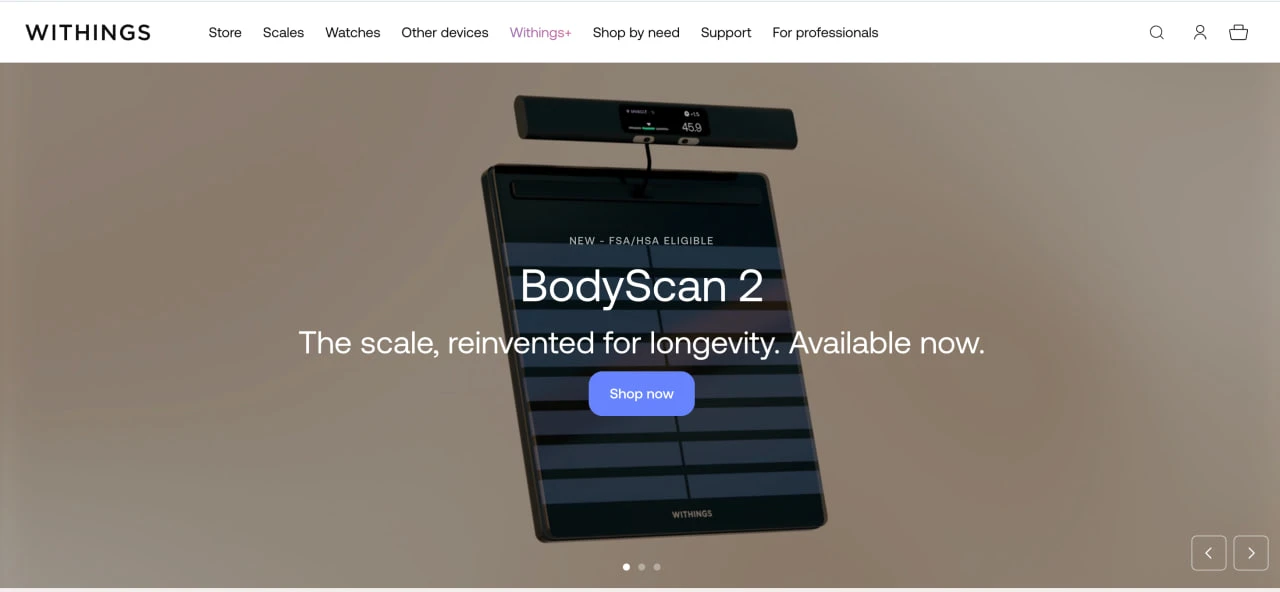
Withings brings sleep apnea evaluation out of the lab and into the bedroom. Its Sleep Rx Mat is a contactless device that measures respiratory rate, body movement, and continuous heart rate, with sound and motion sensors detecting snoring and breathing disturbances.
Custom means: nothing.
Case study. The Sleep Rx Mat received FDA 510(k) clearance in September 2024 for at-home obstructive sleep apnea evaluation, aimed at shortening time to diagnosis.
Best for: primary care and telehealth programs screening for sleep apnea at scale. Not ideal for: complex sleep disorders needing full polysomnography.
8. HoneyNaps
HoneyNaps develops AI analysis software for polysomnography, supporting sleep staging and respiratory event detection rather than replacing the study itself.
Custom means: nothing.
Case study. SOMNUM V3.0 received FDA 510(k) clearance in July 2026. It automatically detects apnea and hypopnea events and classifies apnea into obstructive, central, and mixed subtypes — a distinction difficult to make through manual scoring. Validation submitted for clearance showed overall percent agreement above 97% across respiratory event categories.
Best for: sleep labs facing scoring backlogs. Not ideal for: organizations wanting home-based screening rather than PSG analysis.
9. Skin Analytics AI Solutions
Skin Analytics runs DERM, an autonomous AI for skin cancer assessment embedded in NHS pathways rather than sold as a screening app.
Custom means: pathway configuration — where in the referral journey the AI sits.
Case study. DERM operates across 24 NHS hospitals, has assessed more than 230,000 patients, and identified over 20,000 cancers. It supports autonomous discharge of up to 40% of urgent suspected skin cancer referrals and now handles roughly one in nine urgent skin cancer assessments in England. In June 2026 the company launched DERM Zero, CE marked to Class III — the EU’s highest device classification — delivering autonomous assessment from a standard smartphone.
For comparison, the U.S. equivalent is DermaSensor, authorized by the FDA in January 2024 as the first AI-enabled skin cancer detection device for primary care, reporting 96% sensitivity across skin cancer types in its pivotal study.
Best for: health systems with dermatology waiting lists. Not ideal for: U.S. organizations, where DERM is not FDA-cleared.
How to Choose the Right AI Solutions Partner
Which market are you actually buying in? If a regulator has approved a device for your clinical question, buy it. Custom development cannot replicate years of clinical validation, and attempting it is a category error.
Is your problem clinical or operational? Most healthcare cost sits in administration, not diagnosis. That work has no FDA pathway and no productized version of your specialty’s rules.
Has anyone productized your workflow? If yes, configuration wins on cost and speed. If no, configuration will fail slowly while you wait for a roadmap that never arrives.
How does the system handle PHI when calling an external model? Anonymization before the call, restoration in the interface, audit logs on both. A partner who cannot describe this precisely has not built for HIPAA seriously.
What happens when the AI is wrong? Source references, confidence thresholds, review queues, override paths. Clinicians will not adopt a system they cannot correct or challenge.
Conclusion
Eight of the nine solutions here are excellent products you cannot change, and that is the correct design for regulated diagnostics. Aidoc’s foundation model, PathAI’s cleared platform, and DERM’s autonomous NHS pathways represent validation work no in-house team should try to reproduce.
But diagnostics are not where most healthcare organizations lose time and money. That happens in intake, authorization, documentation, and claims — work that is specific to your payers, your specialty, and your systems, and that no vendor has packaged. Buying a platform there means accepting someone else’s assumptions about how your operation runs.
Before committing to either path, map the workflow honestly and check whether a productized version exists. If it does, buy it. If it does not, the only real question is whether you build from scratch or from components already proven in production.