Commercial drones have evolved from standalone flying devices into connected technology platforms capable of collecting, processing, and distributing large amounts of operational data. For businesses using drones for inspections, mapping, construction, agriculture, analytics, infrastructure monitoring, or asset management, the value increasingly depends on the software surrounding the aircraft.
Building that ecosystem often requires more than configuring an existing flight application. Companies with complex operational requirements can turn to Wezom for drone software developer expertise, combining custom engineering with flight management, telemetry, data processing, analytics, and enterprise integrations in a connected software ecosystem.
Key Takeaways
- Commercial drones have evolved into connected technology platforms that require sophisticated software for various operations.
- Mission planning software enhances efficiency by enabling repeatable workflows and connecting flight activities with business information.
- Telemetry provides real-time data about drone operations, facilitating effective monitoring and historical analysis for decision-making.
- Integrating drone platforms with existing business processes is crucial for maximizing value and streamlining workflows.
- Security measures must cover devices, data, and users to protect sensitive information in the drone technology ecosystem.
Table of contents
- Why Commercial Drone Operations Need More Than Flight Control
- Mission Planning Should Turn Complex Flights Into Repeatable Workflows
- Telemetry Creates the Connection Between Aircraft and Software
- Data Analytics Processing Determines the Value of Drone Operations
- Analytics Turns Drone Data Into Business Intelligence
- Cloud Architecture Makes Drone Operations Easier to Scale
- Integrations Connect Drone Technology With Existing Business Processes
- Security Needs to Cover Devices, Data, and Users
- Designing Drone Software Around the Complete Workflow
- From Flying Drones to Building Connected Technology and Analytics Platforms
Why Commercial Drone Operations Need More Than Flight Control
The basic function of drone software seems straightforward: allow an operator to control an aircraft and complete a mission. In practice, commercial applications involve a much broader technology environment.
A typical operation may include:
- Unmanned aircraft
- Cameras and specialized sensors
- Ground control applications
- GPS and positioning technologies
- Telemetry systems
- Cloud infrastructure
- Data processing services
- Web dashboards
- Mobile applications
- Enterprise software integrations
The aircraft is therefore only one component of the system.
Consider an infrastructure inspection. Flying the drone over an asset is simply the data acquisition stage. Images or sensor readings still need to be transferred, processed, associated with the correct asset, analyzed, stored, and presented to employees who can act on the results.
If these stages rely on separate applications and manual transfers, organizations may gain faster data collection without significantly improving the overall workflow.
Modern drone platforms need to connect the entire process, from planning a mission to turning captured information into a business decision.
Mission Planning Should Turn Complex Flights Into Repeatable Workflows
Commercial drone operations frequently involve recurring missions.
A construction company may capture the same site every week. An agricultural operator may inspect fields throughout a growing season. Infrastructure teams may need standardized inspections across hundreds of assets.
Manually configuring every mission creates unnecessary work and increases inconsistency.
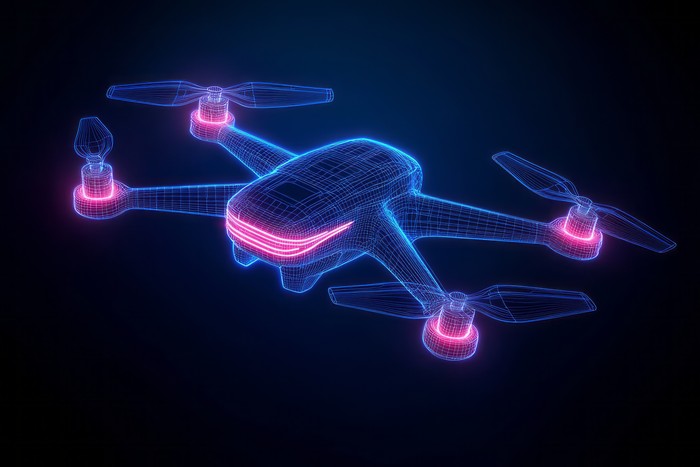
Mission planning software can allow operators to define routes, waypoints, altitude, speed, sensor behavior, and other parameters before takeoff. Depending on the application, missions can be saved and repeated under consistent settings.
This creates several advantages.
First, repeatability makes data easier to compare over time. If an organization captures the same asset using similar flight parameters, analysts can more effectively identify changes between inspections.
Second, standardized workflows reduce dependence on individual operators. Instead of requiring each pilot to recreate a mission manually, the organization can establish predefined procedures.
Third, planning software can connect flight activity with business information. A mission might be associated with a particular customer, project, location, asset, or work order.
The flight then becomes part of a broader digital workflow rather than an isolated technical activity.
Telemetry Creates the Connection Between Aircraft and Software
Real-time telemetry is a fundamental part of commercial drone platforms.
During a mission, the aircraft can generate information about location, altitude, speed, orientation, battery status, connectivity, and other operational parameters.
Software needs to receive and present this information in a way that supports effective monitoring.
For a single aircraft, this might mean displaying flight information in a ground control application. Larger operations may require centralized dashboards that allow teams to monitor multiple aircraft or missions.
Telemetry data can also be stored for later analysis.
Historical flight information can help organizations evaluate:
- Mission duration
- Battery performance
- Aircraft utilization
- Route execution
- Operational interruptions
- Flight frequency
- Maintenance requirements
The challenge is not simply collecting more data. Commercial platforms need to determine which information matters, how frequently it should be transmitted, where it should be stored, and who needs access to it.
Poorly designed telemetry architecture can create unnecessary infrastructure costs or overwhelm users with information that does not help them make decisions.
A capable drone software developer should therefore design telemetry around the actual operational use case rather than treating every available data point as equally valuable.
Data Analytics Processing Determines the Value of Drone Operations
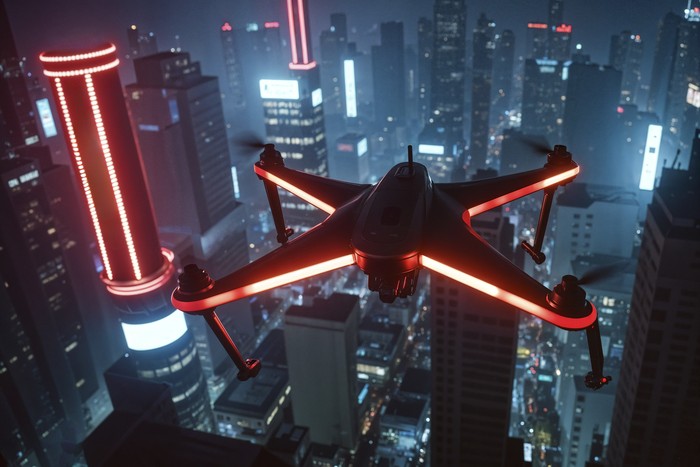
Drones are highly effective data collection tools, but raw data rarely represents the final business outcome.
A mapping mission may generate hundreds or thousands of images. An inspection drone may capture high-resolution photographs, thermal imagery, video, or sensor measurements. A single operation can therefore produce substantial data volumes.
Businesses need an efficient pipeline for moving that information from aircraft or field devices into processing and storage environments.
A typical workflow may include:
- Capturing images or sensor readings during the mission
- Transferring files to local or cloud infrastructure
- Validating and organizing the data
- Processing the information using specialized algorithms
- Associating results with assets or locations
- Storing processed outputs
- Making results available through applications or APIs
Automation is especially important at this stage.
If employees need to manually download, rename, upload, organize, and assign every file after each mission, the workflow becomes difficult to scale.
Software can automate much of this process by applying consistent naming rules, metadata, project associations, and processing pipelines.
The result is faster movement from data collection to usable information.
Analytics Turns Drone Data Into Business Intelligence
The commercial value of drone technology often appears after data processing rather than during the flight itself.
Organizations need to answer practical questions.
Has an asset changed since the previous inspection? Is there evidence of damage? How much progress has been made on a construction site? Which areas of a field require additional attention?
Analytics provides the bridge between collected data and these decisions.
Depending on the application, drone platforms can incorporate technologies such as:
- Computer vision
- Machine learning
- Image recognition
- Object detection
- Change detection
- Thermal analysis
- Geospatial analytics
- 3D reconstruction
For example, an inspection platform might use computer vision to identify visual anomalies in captured images. The software could highlight potential issues for human review rather than requiring employees to examine every image manually.
This does not necessarily mean removing people from the process.
In many commercial applications, automation is most useful when it helps specialists focus their attention. Algorithms can process large datasets and identify potential exceptions, while qualified employees make final assessments.
The interface is therefore as important as the analytical model. Results need to be presented clearly, connected with relevant assets, and easy to review.
Cloud Architecture Makes Drone Operations Easier to Scale
A pilot project involving one drone and a limited number of missions can often operate with relatively simple infrastructure.
Scaling changes the technical requirements.
As organizations add aircraft, users, projects, locations, and data-intensive missions, they need infrastructure capable of managing growing workloads.
Cloud platforms can provide flexible resources for storage, processing, analytics, and application hosting.
However, cloud architecture needs careful planning.
Drone operations can generate large media files, and transferring or storing everything indefinitely may become expensive. Businesses need policies for data retention, compression, archival, and processing.
The architecture may also need to support situations where connectivity is limited.
Field operations cannot always depend on continuous high-speed internet access. Mobile and ground applications may need to function offline, store information locally, and synchronize with central systems when connectivity becomes available.
This combination of edge and cloud processing can make the platform more resilient.
Scalability should also include organizational growth. The system may eventually need to support different departments, customers, regions, or operating teams while maintaining appropriate separation between their information.
Integrations Connect Drone Technology With Existing Business Processes
One of the most important steps in commercial drone adoption is connecting drone-generated information with the systems employees already use.
Without integrations, drone platforms can become another isolated source of data.
Imagine an inspection team discovering an issue through aerial imagery. If the result remains only inside the drone application, an employee may need to manually create a maintenance ticket in another system.
An integrated workflow can make that process significantly more efficient.
Drone platforms may need connections with:
- Enterprise resource planning systems
- Asset management platforms
- Geographic information systems
- Maintenance software
- Construction management applications
- Customer portals
- Business intelligence platforms
- Cloud storage services
APIs allow data and actions to move between these environments.
An identified defect, for example, could automatically create a record associated with the correct asset. Inspection results could become available inside an existing management dashboard. Mission information could be connected with a customer or project record.
These integrations help organizations treat drone operations as part of their digital infrastructure rather than as a separate technology experiment.
Security Needs to Cover Devices, Data, and Users
Drone platforms can process sensitive information about infrastructure, industrial facilities, construction sites, agricultural operations, and other physical assets.
Security therefore needs to extend across the entire technology environment.
Important areas include:
- User authentication
- Role-based access control
- Data encryption
- Secure API communication
- Cloud infrastructure protection
- Audit logging
- Device management
- Backup and recovery procedures
Different users may also require different levels of access.
Pilots may need mission and aircraft information. Analysts may require access to processed imagery. Customers might only need reports associated with their projects. Administrators need broader configuration capabilities.
A properly designed permission model ensures that users can access the information required for their roles without unnecessarily exposing other data.
Security should be considered during architecture design rather than added after the platform has already been built.
Designing Drone Software Around the Complete Workflow
Successful commercial drone technology is not defined by a single feature.
Flight control matters, but so do mission planning, telemetry, data transfer, analytics, integrations, security, and user experience. The greatest value appears when these components operate as one connected workflow.
Businesses planning custom development should therefore begin with operational questions rather than a list of technical features.
What happens before a flight? What information does the operator need? What data is captured? Where should that data go? Who analyzes it? What decision follows the analysis? Which existing business system needs the result?
Answering these questions helps define an architecture based on actual business processes.
Development can then be phased according to priorities. A first release might focus on mission management and telemetry. Later versions could introduce automated processing, analytics, fleet management, customer portals, or additional integrations.
This approach reduces the need to build every possible feature before the platform creates value.
From Flying Drones to Building Connected Technology and Analytics Platforms
The future of commercial drone operations depends increasingly on software.
Aircraft and sensors provide the physical capabilities required to capture information, but software determines how efficiently missions are managed and how effectively the resulting data reaches the people and systems that need it.
Organizations that treat drones as isolated devices may improve individual tasks while leaving broader workflows unchanged. Connected platforms create a larger opportunity by linking flight operations with data processing, analytics, enterprise systems, and decision-making.
The goal is not simply to fly more missions or collect more images. It is to create a repeatable digital process that turns aerial operations into usable business information.
When flight control, telemetry, cloud infrastructure, analytics, and integrations work together, drone technology becomes more than an operational tool. It becomes part of a scalable digital ecosystem capable of supporting automation, better visibility, and data-driven business processes.