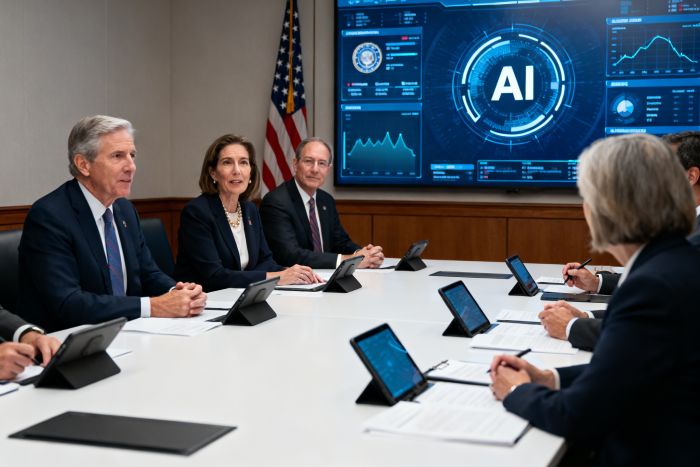
The White House has released a groundbreaking National AI Framework, officially titled the National Policy Framework for Artificial Intelligence, unveiled on March 20, 2026. This National AI Framework calls for Congress to establish a unified federal approach to regulating AI, emphasizing a light-touch regulatory strategy designed to accelerate innovation, protect key public interests, and, most controversially, preempt many state-level AI laws to avoid a fragmented regulatory landscape.
Key Takeaways
- The National AI Framework, released by the White House, seeks a unified federal approach to regulate AI and prevent fragmented state laws.
- This framework aims to safeguard children, respect intellectual property, and protect free speech while ensuring innovation and American AI dominance.
- The National AI Framework pushes for preemption of conflicting state laws, arguing that a patchwork threatens U.S. competitiveness in AI.
- Critics warn this could weaken protections in areas like algorithmic discrimination, while supporters claim it boosts U.S. leadership.
- Congress will debate the framework, as it could simplify compliance and drive AI innovation, marking a pivotal shift in national policy.
Table of contents
Why the White House is Pushing for the National AI Framework
The Trump administration argues that a patchwork of conflicting state regulations threatens America’s leadership in the global AI race. As AI adoption surges across industries, dozens of states have introduced or passed their own rules on everything from transparency requirements to high-risk AI systems. The National AI Framework views this as stifling U.S. competitiveness, particularly against rivals like China.
This National AI Framework, a concise four-page document with legislative recommendations, builds directly on President Trump’s December 2025 executive order. That order directed aides, including Special Advisor for AI and Crypto David Sacks and Science and Technology Adviser Michael Kratsios, to craft recommendations for a national standard. The core message of the National AI Framework remains clear: uniform federal rules over 50 discordant state ones.
A key quote from the White House announcement highlights the urgency: “A patchwork of conflicting state laws would undermine American innovation and our ability to lead in the global AI race.”
Core Pillars of the National AI Framework
The National AI Framework outlines seven main objectives for Congress to codify into law:
- Protecting Children and Empowering Parents: Strong safeguards against AI-generated child sexual abuse material, enhanced parental controls, and prohibitions on deceptive AI targeting minors.
- Safeguarding American Communities: Measures to shield consumers from rising electricity costs tied to energy-intensive AI data centers, including streamlined permitting for on-site power generation.
- Respecting Intellectual Property Rights and Creators: Clarifying fair use in AI training data and protecting creators from unauthorized exploitation.
- Preventing Censorship and Protecting Free Speech: Guardrails against government use of AI for content moderation that could suppress speech, while addressing bias in models.
- Enabling Innovation and Ensuring American AI Dominance: Removing outdated barriers, promoting regulatory sandboxes, open data access, and workforce training for an AI-ready economy.
- Educating Americans and Developing an AI-Ready Workforce: Investments in education and reskilling to prepare workers for AI-driven changes.
- Establishing a Federal Policy Framework and Preempting Cumbersome State Laws: The most debated element of the National AI Framework: broad preemption of state AI-specific regulations deemed undue burdens, while preserving states’ traditional powers, such as general consumer protection, fraud prevention, zoning for data centers, and their own AI use in government services.
Notably, the National AI Framework avoids creating a new federal AI agency, preferring existing bodies handle oversight. It pushes for minimal burdens on developers, rejecting open-ended liability for third-party misuse of AI models.
The Federal vs. State Showdown: Preemption at the Heart
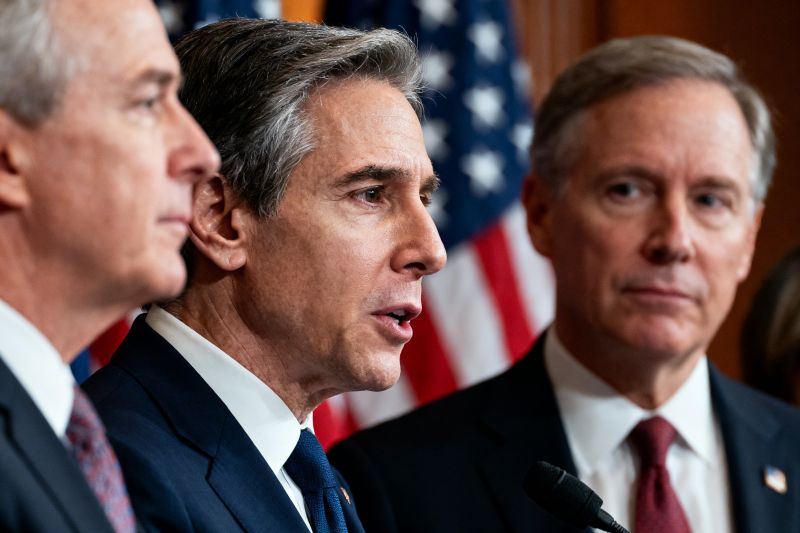
The preemption push forms the flashpoint of the National AI Framework. The administration wants Congress to override state laws regulating AI model development, imposing burdens on lawful AI uses, or holding companies accountable for others’ misuse. This aligns with industry arguments that fragmented rules create compliance nightmares and slow deployment.
However, the National AI Framework carves out exceptions to respect federalism: states retain authority over child protection enforcement, consumer fraud laws, zoning decisions for AI infrastructure, and their procurement policies.
Critics, including privacy advocates and some state lawmakers, warn this could weaken protections in areas like algorithmic discrimination or transparency. States like California and Colorado have advanced robust AI acts, and the federal move risks undermining those efforts. Supporters, including tech giants, praise the National AI Framework as essential for U.S. dominance.
The administration has already signaled aggressive enforcement, with prior executive actions establishing litigation task forces to challenge conflicting state laws on constitutional grounds.
Implications for Innovation, Consumers, and Global Competition
If enacted, this National AI Framework could turbocharge AI growth by providing regulatory certainty. Streamlined data center permitting and energy solutions address pressing concerns about AI’s massive power demands, data centers now rival small cities in consumption, raising utility bills for everyday Americans.
Child safety provisions respond to rising fears over deepfakes and exploitative content. Free speech protections aim to counter perceived biases in AI systems.
Globally, the U.S. seeks to outpace China and Europe, where stricter rules like the EU AI Act have slowed some deployments. A light-touch national standard under the National AI Framework could attract investment and talent, reinforcing American leadership.
Yet risks remain: insufficient safeguards could amplify harms like misinformation or job displacement. Energy cost protections hinge on industry commitments, following pledges from companies like Google and Microsoft to fund their own power infrastructure.
What’s Next for AI Regulation in the U.S.?
The National AI Framework now heads to Congress, where bipartisan support will be key. Figures like Sen. Marsha Blackburn (R-TN) have welcomed it as a roadmap, though past efforts to curb state powers faced resistance.
As AI evolves rapidly, powering everything from healthcare diagnostics to autonomous vehicles, the debate over federal vs. state control will intensify. The White House’s proposed framework signals a clear preference: prioritize innovation and national unity to win the AI race.
For businesses, developers, and consumers, this moment marks a pivotal shift. A unified federal approach through the National AI Framework could simplify compliance and spur breakthroughs, but only if balanced with meaningful protections.
The coming months will reveal whether Congress embraces this vision or opts for a more decentralized path. One thing is certain: AI policy is no longer just a tech issue, it’s a national priority shaping America’s future under the National AI Framework.