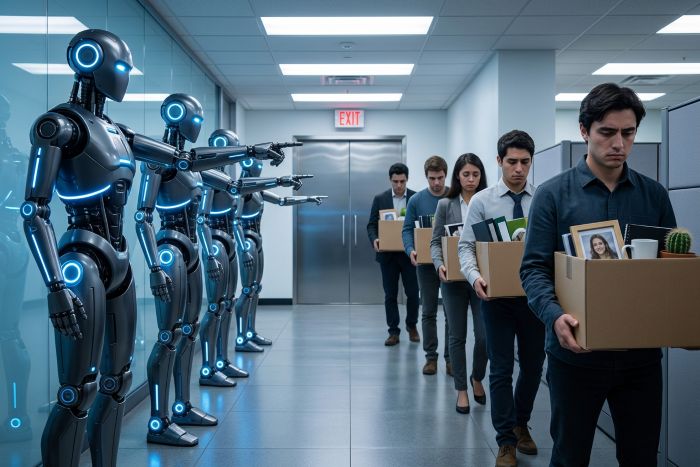
In the fast moving world of artificial intelligence, autonomous AI agents are stepping into roles once reserved exclusively for humans. These intelligent systems do not just answer questions or generate text. They plan, decide, and act on their own, handling complex tasks from start to finish without constant human input. As companies race to deploy them, a pressing question emerges: are autonomous AI agents quietly pushing people out of the daily workflow equation?
Key Takeaways
- Autonomous AI agents perform complex tasks independently, acting as reliable coworkers rather than mere assistants.
- Their adoption is rising rapidly, with significant market growth expected by 2026 as businesses integrate them into workflows.
- Innovative examples include Grok from xAI, Claude Cowork from Anthropic, and OpenClaw, each showcasing unique capabilities and benefits.
- These agents increase productivity, consistency, and accessibility, while raising concerns about job displacement and security issues.
- Successful integration will require collaboration between humans and agents, enhancing human potential instead of replacing it.
Table of contents
- What Are Autonomous AI Agents?
- The Surge of Agentic AI in 2026
- Grok by xAI: Multi Agent Collaboration at Scale
- Claude Cowork: Your Desktop AI Teammate
- OpenClaw: The Open Source Autonomous Powerhouse
- How Autonomous AI Agents Are Reshaping Daily Work
- The Benefits Go Beyond Speed
- Challenges and the Human Equation
- Looking Ahead: Collaboration Over Replacement
What Are Autonomous AI Agents?
To understand the shift, it helps to define the term clearly. Autonomous AI agents are software entities powered by large language models that combine reasoning, memory, tool use, and the ability to interact with digital environments. Unlike traditional chatbots that wait for prompts, these agents pursue goals independently. They break down objectives into steps, use tools such as web browsers or email clients, learn from outcomes, and loop back until the job is complete.
The concept builds on years of progress in AI, but recent leaps in model capabilities have made true autonomy practical. Agents now manage calendars, organize files, draft reports, execute code, and even coordinate with other agents in real time. This evolution turns AI from a helpful sidekick into a reliable coworker that operates with minimal supervision.
The Surge of Agentic AI in 2026
By early 2026, the AI landscape has changed dramatically. What began as experimental prototypes has matured into production ready tools. Industry observers note that agent adoption has accelerated because businesses see clear gains in productivity and scalability. Reports from leading technology analysts project the global market for AI agents to reach tens of billions of dollars within the next few years as organizations integrate them into everyday operations.
Three standout examples illustrate this momentum: Grok from xAI, Claude Cowork from Anthropic, and the open source phenomenon known as OpenClaw. Each brings unique strengths that highlight how far autonomous systems have come.
Grok by xAI: Multi Agent Collaboration at Scale
xAI has pushed the boundaries with its Grok series, particularly Grok 4 and the specialized Grok 4.20 Multi Agent variant. Released in phases throughout 2025 and refined into 2026, these models introduce true autonomous AI agents, or real-time multi agent research. Instead of a single model handling every step alone, Grok orchestrates several specialized agents that work in parallel. One might search the web, another analyzes data, while a third synthesizes findings. They debate options and refine answers before delivering a final result.
Developers praise the Agent Tools API and native tool calling features. Grok can now execute complex, multi step tasks such as coordinating travel plans, running code experiments, or managing logistics simulations with high precision. In one notable demonstration, Grok 4.1 evolved from solving abstract math proofs to acting as a full travel specialist, showing how reasoning translates into practical autonomy.
xAI also partnered with companies like Gen to embed Grok into secure environments such as the Norton Neo browser assistant. These integrations emphasize safety, privacy, and enterprise grade controls, making Grok suitable for high stakes business use. The result is an agent ecosystem that feels less like an experiment and more like a trusted team member.
Claude Cowork: Your Desktop AI Teammate
Anthropic took a different but equally impactful approach with Claude Cowork, launched in early 2026. Designed as a desktop assistant, Claude Cowork lives on your computer and directly interacts with local files, applications, and workflows. Powered by advanced versions of the Claude model family, it handles knowledge work that once required hours of human effort.
Users describe giving Claude Cowork a high level goal, such as “organize my quarterly reports and summarize key insights,” then stepping away while it sorts folders, converts file formats, searches the web for missing data, and even tidies email inboxes. It maintains a persistent memory system and self verifies its work before reporting back. Early reviews in outlets like WIRED highlight how well it performs basic and intermediate tasks compared with earlier agent attempts that often stalled.
What sets Claude Cowork apart is its focus on usability for non technical users. It brings agentic power out of the terminal and into familiar desktop environments, complete with human oversight safeguards for consequential decisions. This balance of autonomy and control makes it appealing for professionals who want reliable help without handing over complete control.
OpenClaw: The Open Source Autonomous Powerhouse
While Grok and Claude Cowork represent big tech innovation, OpenClaw shows the strength of community driven development. Originally known as Moltbot or Clawdbot, this free open source project exploded in popularity in late 2025 and early 2026, quickly surpassing 150,000 GitHub stars. It runs locally on personal hardware and connects through messaging apps such as WhatsApp or Telegram.
OpenClaw acts as a true personal operating system. It clears inboxes, sends emails, manages calendars, checks users in for flights, reviews documents, and even orchestrates multi agent teams across machines. Its “heartbeat” scheduler keeps tasks running continuously, and users build entire fleets of specialized agents that collaborate like a digital staff. Because it operates with deep system access in a sandboxed environment, it delivers the feeling of an AI that genuinely “does things” rather than just talking about them.
Enterprises and individuals alike have adopted OpenClaw for everything from content curation to automated software testing. Its local first design addresses privacy concerns that cloud only agents sometimes raise, while the open source nature allows rapid customization.
How Autonomous AI Agents Are Reshaping Daily Work
Across these platforms, a common pattern emerges. Autonomous AI agents excel at repetitive or multi step processes that consume human time. Marketing teams use them to research competitors and draft campaign plans. Developers rely on them to debug code, open pull requests, and run tests overnight. Executives receive daily briefings synthesized from meeting notes and market data without lifting a finger.
The efficiency gains are measurable. Early adopters report cutting task completion times by 50 to 80 percent for certain workflows. This shift frees people to focus on creative strategy, relationship building, and high level decision making, areas where human judgment still outperforms machines.
The Benefits Go Beyond Speed
Beyond productivity, autonomous AI agents bring consistency and scalability. They do not get tired or distracted. They apply the same high standards to every repetition. Small businesses gain enterprise level automation without large teams. Researchers accelerate discovery by letting agents handle literature reviews and data crunching.
Accessibility also improves. Professionals without coding skills can now delegate complex digital chores to intuitive agents like Claude Cowork. This democratizes advanced tools that once required developer expertise.
Challenges and the Human Equation
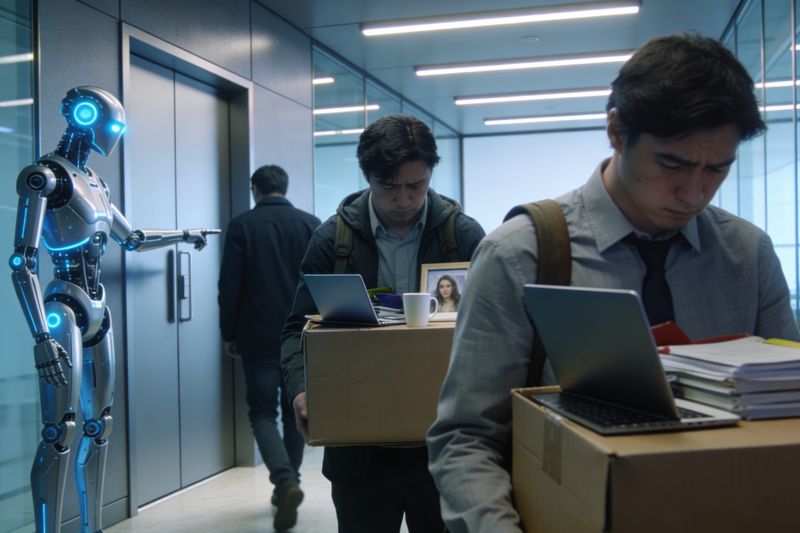
Yet the rise of these agents raises legitimate concerns. Will widespread adoption reduce the need for certain jobs? Some roles centered on routine data handling or basic analysis could shrink. Others worry about over reliance, where humans lose skills or fail to catch agent errors.
Security presents another hurdle. Agents with system access, especially open source ones like OpenClaw, require careful sandboxing to prevent misuse. Privacy, bias in decision making, and accountability for autonomous actions remain active discussion points among ethicists and regulators.
Importantly, the technology does not eliminate humans. It changes their role. People still set goals, review outputs, and handle exceptions. The most successful implementations treat agents as extensions of human capability rather than replacements.
Looking Ahead: Collaboration Over Replacement
As autonomous AI agents grow more capable, the focus shifts from fear of obsolescence to thoughtful integration. Companies that invest in training teams to work alongside agents will likely thrive. Education systems may need to emphasize oversight skills, prompt engineering, and critical evaluation of AI results.
In the end, autonomous AI agents are not taking humans out of the equation. They are rewriting it. Tools like Grok’s multi agent systems, Claude Cowork’s desktop presence, and OpenClaw’s open source flexibility show a future where AI handles the heavy lifting while humans provide vision, ethics, and creativity.
The question is not whether these agents will change work. They already have. The real opportunity lies in guiding that change so that technology amplifies human potential instead of diminishing it. As we move further into 2026 and beyond, the organizations and individuals who embrace autonomous AI agents as partners, not substitutes, will be best positioned to succeed in an increasingly automated world.