Introduction
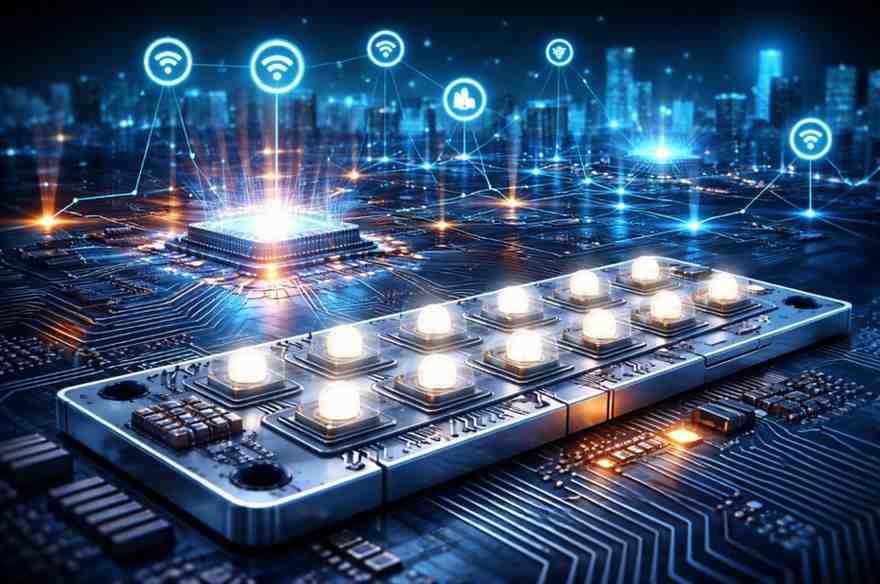
The technology of LED modules has moved beyond just hardware performance enhancement. Now, all of these advancements are being integrated to create LED systems software-defined, data-enabled, and cloud-connected infrastructure building blocks that can be deployed in virtually any environment. From being a static lighting solution for signage and architectural displays, LED systems have become part of intelligent ecosystems driven by firmware, IoT connectivity, and AI-enabled analytics.
This evolution is reflected in market data. The global LED module market was valued at approximately USD 5.7 billion in 2023 and is projected to grow at a CAGR of around 5.2 percent through 2032, largely driven by smart lighting adoption and IoT integration across commercial, industrial, and smart city environments.
The future of LED modules lies not only in efficiency and brightness but also in their seamless integration with digital control systems, automation platforms, and intelligent infrastructure networks, transforming lighting into a programmable, responsive asset within connected ecosystems.
Table of contents
- Introduction
- From Static Lighting to Software-Defined Systems
- IoT-Enabled LED Infrastructure
- Cloud-Based Lighting Management Platforms
- AI-Driven Energy Optimization
- Integration with Smart City Ecosystems
- Edge Computing and Distributed Intelligence
- Considerations in Connected Lighting
- Sustainability Through Data-Driven Control
- The Convergence of Hardware and Software
- Conclusion
From Static Lighting to Software-Defined Systems
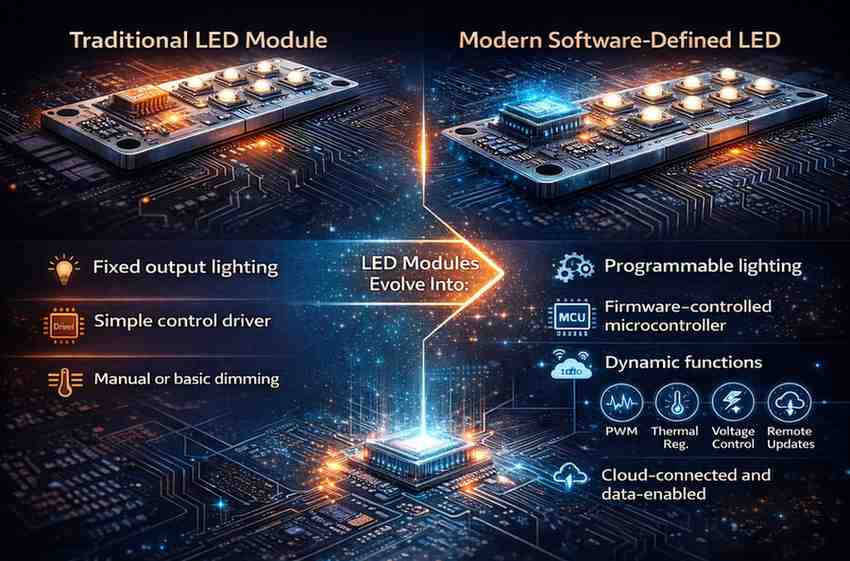
Traditional LED module operated as fixed-output devices powered by simple drivers. Today, firmware-controlled modules allow dynamic performance adjustments, enabling brightness modulation, color tuning, and automated energy optimization.
Modern LED drivers now include embedded microcontrollers that manage:
- Pulse-width modulation (PWM) dimming
- Thermal regulation algorithms
- Voltage stabilization
- Remote configuration updates
This shift transforms LED modules into programmable lighting nodes rather than passive electrical components.
IoT-Enabled LED Infrastructure
IoT-enabled LED Modules The IoT connection is one of the most important trends in the transformation of LED modules. Connected LED systems communicate over wired (e.g., Ethernet) or wireless protocols such as Zigbee, Bluetooth Mesh, Wi-Fi, or LoRaWAN.
Smart modules are connected to the IoT in commercial signage networks, enabling remote, centralized control via cloud dashboards. Facility managers can track system performance, energy usage, and operational status in real time. This allows you to automate fault detection, cutting down manual inspections and downtime.
This distributed architecture enables scalable deployments of lighting systems across retail chains, airport terminals, transit systems and smart city networks.
Cloud-Based Lighting Management Platforms
Cloud platforms are redefining how lighting systems are managed. Instead of on-site configuration, LED modules can now be monitored and optimized through web-based software interfaces.
Cloud-managed systems provide:
- Real-time performance analytics
- Remote brightness scheduling
- Automated energy reporting
- Usage-based optimization
- Firmware-over-the-air (FOTA) updates
Firmware updates delivered remotely improve system longevity by enhancing efficiency algorithms without replacing physical components. This software-driven lifecycle extension reduces maintenance costs and hardware waste.
AI-Driven Energy Optimization
Artificial intelligence is now starting to affect the performance management of LED modules. AI algorithms can analyze usage patterns, ambient conditions and even operational history to adaptively modulate lighting output.
Smart signage systems, for example, can reduce brightness during low traffic periods and increase their intensity during peak visibility times. To avoid system failure, predictive analytics can identify emerging signs of driver instability or voltage irregularities.
With increasing pressures on energy regulations worldwide, AI-driven optimization will be a key contributor to achieving sustainability goals.
Integration with Smart City Ecosystems
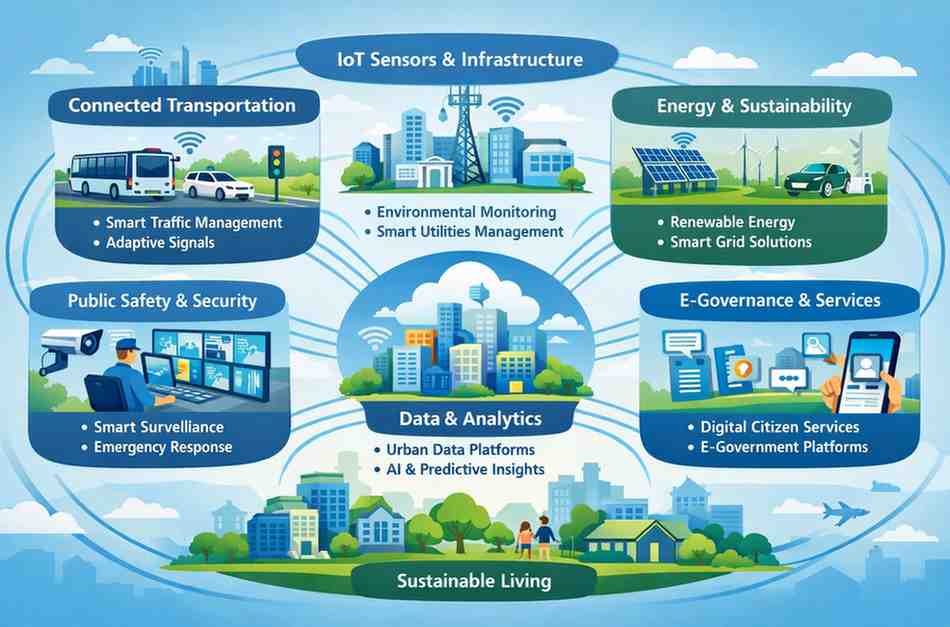
LED modules are being increasingly integrated into larger urban digital infrastructure. For smart cities, connected lighting systems work with environmental sensors, traffic data platforms and municipal energy grids.
LED networks can respond to APIs based on real-time data. Lighting intensity can vary depending on the weather conditions, pedestrian traffic, or emergency alerts. Such integration makes LED modules active building blocks in the Operating System of a digital city, rather than separate hardware components.
Edge Computing and Distributed Intelligence
As lighting systems scale, edge computing is becoming essential. Instead of sending all data to centralized cloud servers, processing can occur at the module or controller level.
Edge-enabled LED drivers can execute:
- Localized brightness adjustments
- Rapid response to sensor triggers
- Data filtering before cloud transmission
This reduces latency, improves responsiveness, and enhances network efficiency. Distributed intelligence also strengthens cybersecurity by limiting centralized vulnerabilities.
Considerations in Connected Lighting
With LED modules becoming network-connected devices, cybersecurity takes center stage. Weaknesses in IoT lighting systems could put enterprise networks at risk.
Future software-driven LED architectures will integrate encrypted communication protocols, secure firmware boot authentication, and controlled access management. Enterprise-scale deployments will need to ensure compliance with cybersecurity standards.
Sustainability Through Data-Driven Control
Sustainability in LED technology is no longer limited to energy-efficient chips. Organizations can measure and optimize real-world energy consumption using data-driven control systems.
Carbon impact reports, efficiency trend tracking, and aligning lighting usage with ESG performance measures are all possible with advanced analytics platforms. When coupled with robust LED module design and intelligent software control, you can achieve tangible reductions in environmental impact.
The Convergence of Hardware and Software
The future of LED module technology lies in convergence. Semiconductor innovation continues to improve brightness and lifespan, but the true transformation is occurring at the software layer. At the same time, hardware innovation remains essential. High-power LED applications generate significant thermal loads, requiring advanced substrates such as ceramic PCBs to maintain efficiency, reliability, and lifespan. As explained in Coruzant’s analysis on why high-power LEDs demand ceramic PCBs, proper thermal management is critical for sustaining performance in modern LED infrastructure environments. This highlights how material science and thermal engineering continue to underpin the software-driven evolution of LED systems.
Embedded firmware, cloud platforms, AI optimization, IoT connectivity, and edge computing are redefining what LED modules represent. They are evolving from simple illumination devices into intelligent, networked infrastructure components that support automation, analytics, and digital transformation strategies.
Conclusion
LED module technology is entering a software-centric era. While efficiency, thermal management, and optical engineering remain important, the most significant advancements are now driven by connectivity, data, and intelligent control systems.
As industries adopt smart infrastructure, LED modules will increasingly function as programmable, cloud-managed assets integrated into broader digital ecosystems. Organizations that understand this shift can leverage lighting systems not only for visibility but also for operational intelligence, sustainability reporting, and long-term infrastructure optimization.