Sharon Samjitsingh Podcast Transcript
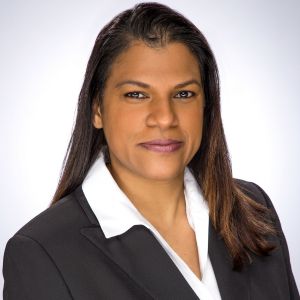
Sharon Samjitsingh joins host Brian Thomas on The Digital Executive Podcast.
Brian Thomas: Welcome to The Digital Executive. Today’s guest is Sharon Samjitsingh. Sharon Samjitsingh is a deep tech entrepreneur and CEO whose work sits at the intersection of breakthrough science, AI, and healthcare. After nearly losing her life to asthma five times, Sharon turned a personal experience into a mission to improve how chronic conditions are monitored and managed.
Drawing on a career spanning chemical engineering, large-scale capital projects, and technology commercialization, she has built and scaled technologies designed to move complex science into real-world use. Her work has contributed to a portfolio of more than 40 issued and pending patents and technology, now contracted to support more than 400,000 lives.
Well, good afternoon, Sharon. Welcome to the show.
Sharon Samjitsingh: Good afternoon, Brian. It’s a pleasure to be here, and thank you for having me.
Brian Thomas: Oh, you’re so, so welcome. I appreciate that. Very warm. My friend, I just love the fact that you made the time to jump on a podcast here late, very late in the day. But it’s, you’re in Rochester, New York. I’m in Kansas City, so I appreciate that, and I like to share that with my audience. But Sharon, let’s get into your deep personal story, okay? You were diagnosed with asthma at five and nearly died from it five times, including one ER visit at 19 years old, where a doctor told you that you were closer to death than the car accident patient in the next bed.
You were on a demanding corporate path in chemical engineering and commercialization when, during grad school at the University of Rochester, you came across a technology that could predict asthma attacks months in advance. Take us to that moment, if you don’t mind. What made you decide to turn your own survival story into a company?
Sharon Samjitsingh: That … It’s such an interesting question, Brian, and I know you talk to a lot of tech entrepreneurs. I don’t know that there was any one moment. I remember … I feel like my whole life prepared me for this. So before this, as you said, I had a demanding career where I built factories and led large teams in manufacturing.
But what I had done for the 10 years prior to this was really introduce new innovation to large teams, but really big pieces of equipment, manufacturing lines, and plants. But it taught me a lot about resistance to innovation. And then I juxtaposed that on the moment I found out about the technology, and what flashed across my head or my mind was really a few things.
One The image of how my parents would look every time I had an attack as a child. And then second, my sister’s youngest son actually also turned out to have asthma, and he came really close to death, low oxygen, everything. I was out of the country when it happened. I came in the next day, and I walked up to her in the hospital room, and I saw that she looked like she had aged 10 years overnight.
So you juxtapose those things that flash across my mind. It really wasn’t only about my survival, it was about the impact that these diseases, these respiratory diseases have on people. It’s… They’re s- I call them thieves of joy because when you can’t breathe, nothing else matters. And there wasn’t a single moment where this crystallized that, “Hey, this is going to be the best thing I’ve ever done.”
What I will say it, what, what’s really clear at that moment is I wish this had existed when my… I was growing up, so everybody around me didn’t have to go through what they did. And within three, four months, we kept exploring it. We won a few business plan competitions in grad school. And I had a mentor who said to me, “Hey, this could be a business and you, you can make this happen.”
And I thought, “Okay, let’s give it a shot.” And 10 years later, here we are. So I’d love to tell you I, I know that this is my passion and this is the best thing I’ve ever done, and it is going to make a difference in so many lives. But there wasn’t one defining moment. It was a series of progressive tests to see will this work?
First, ’cause the technology was so innovative and nobody had been able to do it before. So that was for me, the first proof point. And once we got the working technology, everything else fell into place. But I think if I have to look back at one defining moment, it was that image that flashed across my head when I found out about the technology.
It wasn’t about my survival, it was about how do we bring peace of mind to the people who have to watch their loved ones struggling for breath, and then really just never know when the next attack will happen. And that robs you of joy and peace of mind
Brian Thomas: Oh gosh, such an amazing heartfelt s- story. You personally obviously had to suffer through that. But knowing that m- so many other people in the world have the same issue, and the fact that, And as a child, a lot of things, there’s a lot of trauma sometimes, and you talked about your parents looking at you when you were going through an attack, and it’s, it’s, it’s a feeling of helplessness for both parties, right?
So, I just… But you, you leveraged the technology. You talked about how your sibling had it as well, and, and those are the moments that just, made you decide, “How can I help people?” And developing this prototype, working in this tech field, you were able to actually be able to launch something that was successful, your MVP, so to speak.
So I appreciate the backstory. It’s always great to hear those. And Sharon, let’s talk about Healthcare Originals, HCO’s wearable. As you describe it, the first in the world to continuously track respiratory health by listening to deep organ and lung sounds, turning them into digital biomarkers that can predict a flare-up before it happens.
How does that actually work, and why is physical AI trained on real physiological data so different from the step-counting wearables most people are familiar with?
Sharon Samjitsingh: Great question. Brian, do you have three hours? No, we only have a few minutes, so I will condense it. W- what, how our technology actually works is you could consider us like a stethoscope on steroids continuously listening to all of the sounds that your lungs are producing.
It’s a small, flexible wearable that sits on the upper torso, front, side, or back, and it’s been trained to listen for the sounds that represent changes in an asthmatic, a person with as- asthma, their breathing, or someone with COPD, chronic obstructive pulmonary disease, their breathing. And instead of, it’s differentiated as well because it computes at what we call the edge. The device actually computes on itself instead of streaming raw data to the cloud and then getting a result back. And so it’s listening, and what it does is then it also checks for heart rate by listening breathing, respiration rate by listening, puts that together with skin temperature and activity, and is able to, like, create a personal baseline for the individual and who…
And then what we’re able to see is when people are trending away from it. And so in studies done at the University of Rochester, we showed that if you could continuously track even cough alone- You could actually predict utilization in the ER when somebody would show up in the ER because their asthma was out of control.
How is that different from the step counting wearables? The step counting wearables are just simple devices that measure movement and infer that you’re moving. It’s not really a smart device. It’s, it’s a little smart, but it’s not a smart device like ours running continuous algorithms constantly on and looking.
You could think of us as a difference between a general wellness device and a very, very particular device that is trained specifically for this purpose and delivering for people with respiratory disease what continuous glucose monitoring has done for people with diabetes. If you think about the old paradigm in dia- diabetes, and one that many people still live by, you prick your finger once in the morning or once in the evening or after meals, and you get a snapshot of what’s going on in your body.
With a continuous glucose monitor, you always understand how your body’s performing, and that’s what we do for respiratory. Because we breathe 20,000 times a day, measuring once or twice just does not give us representative samples. And wellness devices are great for general wellness. This is different.
The other thing I will say is when we talk about physical AI, I think a lot of people are still very confused. I think we’re all familiar with ChatGPT a- and what are called large language models that are software only. Physical AI is when we start to incorporate the physical world, and that’s what we’re doing.
We’re taking body sounds, proprietary signals, and transforming them into something that actually works to … with our AI system to inform the person of what’s going on and what they should do about it
Brian Thomas: Amazing. Thank you so much. You really impact a lot around your particular device. Obviously and you did talk about the difference between the two, your average wearable, which have really become advanced these days, but yours is really specific.
It’s trained for a specific purpose, and it’s very accurate, of course. But I liked to your comment at the beginning, your tech is like a stethoscope on steroids. I thought that was pretty cool, that type of technology to help people it’s trained to listen to changes in the person that has either asthma or c- COPD.
Things like breathing, you said respiratory activity, temperature, et cetera. That’s, that’s just awesome, and I love to highlight things like this. These are heartwarming stories for the podcast. Sharon, you’ve expanded beyond respiratory into neurological rehabilitation, bringing evidence-based stroke and neurological care into the home through what became HCO Neuro.
What’s the connective tissue between monitoring asthma and rehabilitating stroke patients, and what made you confident the same approach could translate to the brain?
Sharon Samjitsingh: Ah, that’s, that’s a, a great and, question, and we get it a lot because most people don’t see the connection. The, the first connection for me is
At this stage of my career, I choose to do things, only the things that actually make a difference. And there’s no doubt that we make a s- significant difference in respiratory, and we call respiratory diseases the diseases that innovation forgot. I think the sa- very much the same is true of stroke. Those ha- those innovations have been forgotten.
And it moved… This technology moved me. It was developed at Harvard, but it moved me because, and it felt like something I wanted to do because my grandmother had a stroke. And my grandma was my buddy. As a child with asthma, I missed more days of school than I can count, and my parents both worked, so I would get dropped off by my grandmother, and she would make sure I survived the day if I was ill.
And she had a stroke when I was 10, and I’ll never forget, someone came into her home and helped her with her rehabilitation so that she was able to regain independence and stay in her home. Even though there were stairs and steps, she did– she kept every– she st- she did everything and remained independent.
And this company that, that f- of which we’ve acquired a majority stake, has done the same thing through telehealth. Instead of having people go to an outpatient facility, they actually virtually help people one-on-one with the therapies, and the outcomes are amazing. So it, it connected for me on that level where I felt this is something that’s very akin.
But the other thing that stood out to me is the technology out of Harvard was actually a, a recovery glove that helped people un-understand the intent to move. And when you think about what we do in Respiratory with our wearable, very minute lung sounds actually tell us a lot about the individual. In this case, a small twitch of a finger can actually tell us somebody’s intent and ability to have those neurons fire for stroke recovery.
So the overarching similarity is what I call small signals, big outcomes, and diseases that innovation forgot. Beyond that, there w- the, this technology is a wearable robotic glove. The same hardware compute hardware, the same pur-purpose-built chip and board that we make for our respiratory wearable can actually be used for the glove, so there was synergy there from a technology perspective.
And we have a purpose-built AI called Ada, who actually works in our respiratory program to help members understand what to do better. That same technology can be repurposed across into the stroke technology to help people understand how to do their rehabilitative exercises so that the therapist is doing the most value-added work with them instead of the repetitive, monotonous work.
And so I think beyond just the mission perspective and the personal appeal of it because of my experience, there was real synergy across hardware, software approach, as well as impact.
Brian Thomas: Amazing. Thank you so much. Just love how you’re leveraging, m- really maximizing the technology in your space. You talked about that connection between respiratory and neuro, of course, and believe it or not, they are tied together.
An-another experience I thought was interesting was your grandmother as a child. She had a stroke, which left really a, an indelible memory on your childhood. Again, another driving factor, I think, behind the why of what you’re doing to help others. But having that tech to detect the smallest of neurological activity can help, be help used to predict those potential events.
I think that’s awesome. Thank you. And Sharon, the last question of the day, you’ve said HCO or Healthcare Originals is demonstrating how physical AI and real-world physiological data can tackle some of healthcare’s most persistent and costly challenges. As we look out five years, maybe even ten, how do you see the monitoring of management of chronic conditions changing, and what has to be true technically and in the healthcare system itself for proactive, always-on care to become the standard rather than the exception?
Sharon Samjitsingh: That’s a multifaceted question Brian. But the first thing is, how do I see it changing? The, the most obvious and easiest answer to that is I think we have conflated healthcare and sick care. We go to the doctor when we’re sick now. We go to the hospital or the emergency room when we’re more sick.
Yet somehow those organizations are held to task because they don’t keep people healthy whe- when they work in a system that is designed to be paid only when people show up because they are sick. So I feel like there is an org- there’s, what ch- what changes about chronic condition management is really this proliferation of continuous monitoring, meaningful monitoring that is specific to conditions.
So we don’t want people having three gadgets, but for instance, a device like ours can work around respiratory, cardiology, and then rebe- be repurposed into the glove. So you have one platform technology. But that continuous monitoring that gives us longitudinal data between visits when people are healthy and getting sick is where I think that’s the chronic condition management is gonna move.
What has to be true for that to happen is a lot more acceptance from the medical facility that… And it’s a two-sided it’s a two-sided commitment. People, suppliers of devices have to be commit to ethical standards and claims around what they do and what they don’t do. But the medical fa- faculty also has to become accustomed to, “Hey, it’s not just what shows up in front of me.
Now I have to also look at what’s happening between visits, and I have the ability to do that.” How we reimburse medical professionals for the time spent doing that is going to be interesting. So that’s the other thing that has to be true. We have to move from paying people for doing things related to helping people when they are sick, to helping people, paying people For helping keep people healthy.
And right now there’s a lot that has to come together to do that. So a lot of systemat- systemic change, but I do believe that what, what we do is we empower our members or our patients to become the best advocates for themselves. So they go into the doctor’s office with their readings, with their device, with what we’ve helped them understand about their condition, and they can have a one-on-one conversation with the doctor that is informed and not intimidating.
And so I think when we think about the con- consumerization of healthcare and people becoming more proactive and more informed, that in itself is going to lead to some of the other changes that we’re talking about. So not an easy answer. Healthcare is way too complicated, but I think we’re on a good path right now.
Brian Thomas: Amazing. Thank you. And this, I can totally relate. I have empathy here. I worked in healthcare a long time in the tech side, so I’ve saw a lot of this, and I, I’m glad that you’re in the middle of this trying to make a difference. But you’re right, you talked about conflating healthcare and sick care.
There’s a big difference there, and I know we all know this. Incentives for healthcare systems to keep people in their facilities versus out of the facility and, and be proactive on their health. But we need to shift. There’s gotta be more acceptance in the industry to shift from paying them versus, when they’re sick, versus paying providers to keep them healthy and outside of the clinic.
So I really appreciate that. And Sharon, it was such a pleasure having you on today, and I look forward to speaking with you real soon.
Sharon Samjitsingh: Thank you very much, Bri- Brian. Is it okay if I say one more thing?
Brian Thomas: Yeah, go for it.
Sharon Samjitsingh: Yes. One of the, one of the things that I, I, I talk about a lot is how what we do is democratize access, both to personal data, but to knowledge. And so I think that is just what we contribute to the ecosystem, and it’s just amazing to be here with you. So thank you for everything that you do.
Brian Thomas: Absolutely, my friend. Bye for now.
Sharon Samjitsingh Podcast Transcript. Listen to the audio on the guest’s Podcast Page.