Mohammad Noshad Podcast Transcript
Mohammad Noshad joins host Brian Thomas on The Digital Executive Podcast.
Brian Thomas: Welcome to Coruzant Technologies, Home of The Digital Executive podcast.
Do you work in emerging tech? Working on something innovative? Maybe an entrepreneur? Apply to be a guest at www.coruzant.com/brand.
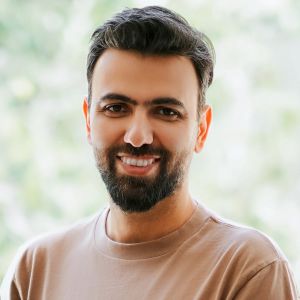
Welcome to The Digital Executive. Today’s guest is Mohammed Noshad. Mohammed Noshad is the CEO and co-founder of Shyld AI, where he is pioneering the use of physical AI agents to bring real-time operational intelligence and automation into hospital environments.
He also serves as a strategic advisor at Field AI. With a background in electrical engineering and a PhD in AI, he led cutting-edge research at Harvard University in AI and machine learning. His work has been cited over 2,400 times and has received several best paper awards. His experience spans robotics and space connectivity, and he is now focused on building technology that helps save lives globally.
Well, good afternoon, Mo. Welcome to the show.
Mohammad Noshad: Awesome. Thank you, Brian.
Brian Thomas: Absolutely, my friend. I appreciate it. Really do. I know you’re in the San Francisco Bay Area. I’m in Kansas City, just a couple hours apart as far as time zones, but I know it’s challenging to work through calendars, so I just appreciate you being here, and I’m totally excited to jump right in.
So, Mo, your path here is fascinating. Electrical engineering, a PhD in AI, leading cutting-edge research at Harvard, work spanning robotics and space connectivity, and now co-founding Shyld AI with your, with your brother, Morteza. Take us back to the beginning. What drew you to this AI and machine learning in the first place, and what were the inflection points that took you from academic research with over 2,400 citations to building a company focused on saving lives in hospitals?
Mohammad Noshad: Yeah. Thanks, Brian. Thank you for having me. So when I did my PhD, this was back in two thousand and thirteen. At the time it wasn’t called AI, it was mostly machine learning people were referring to. And it was one of the fascinating areas for me personally, looking at how these systems can basically predict different outcomes and work to learn, different behaviors of these systems.
So that was motivation for me and my co-founder and brother, Morteza, when he basically did his PhD at the University of Michigan in Ann Arbor. And after my PhD, I moved to Harvard. I was working on a lot of exciting projects over there with an, with an amazing team. And after a few years there, in two thousand and sixteen I met a program director at Department of Energy, and they had a program called SBIR.
And you know, I, I thought it would be interesting to build a system based on that. So that was the story of kind of like my first company. That’s how I, I left academia and decided to start first company which was interesting kind of like technology we’re building. Then after that, there was second company, which was even more exciting, using lasers in space to connect satellites in LEO orbit, which basically the same technology that’s being used with SpaceX, Amazon Kuiper to establish the backbone of connectivity across all of those satellites in space.
And then, after the exit of the, the second company this was two thousand and twenty-two me and Morteza had a friend who passed away because of a surgical site infection. So that was a moment for us to learn about kind of like this problem in healthcare. And we thought with our training in AI, there is a great opportunity to build the next company in the healthcare space.
Brian Thomas: Thank you. Appreciate the backstory. And story starts out great. Did some awesome things in academia, higher education and then you jumped into entrepreneurship and founded a couple companies. But the touching part of the story is obviously, you lost a friend you and your brother from a, basically s-side effect of, of a surgery and, and it certainly made you think about how do we take healthcare more seriously.
And I love this part. I worked in healthcare most of my life on the technology side, so I can totally appreciate that. But I appreciate you sharing the story and jumping in to try to solve a big problem in the healthcare space. And Mo, you’ve drawn a sharp distinction between passive AI and active AI.
Most healthcare AI today observes, summarizes, or predicts. Shyld’s agents actually execute, disinfecting rooms, tracking OR turnover, flagging missing supplies. What- Why is that distinction so important, and what changes for a hospital when AI moves from advisor to operator?
Mohammad Noshad: Right. So, in, in healthcare I, I would say healthcare has probably one of the most complex workflows.
And, you know, when you provide just information or data for the healthcare workers and you ask to them to change behavior or change the workflow, you’re just making it more difficult for them to adopt those technologies. So what– the, the transition we’re seeing, not just in healthcare, but overall with agentic AI, is that moving from an AI that provide just information to an AI that’s actually getting the work done.
And that was our vision for Shyld. We wanted to build an AI that is more action-based. It’s an active AI that gets the work done within the hospitals. And we– basically, every piece of the technology we built at Shyld AI was with that kind of like philosophy in mind on how we can make this adoption seamless by getting the work done, not just providing another piece of information or a dashboard data and asking the healthcare professionals, which have, you know, they have tons of things on their plate already, but how we can get, a few of those items off their shoulders and let them focus on more important items and stuff.
Brian Thomas: Thank you. And I appreciate that. Obviously, you, in your mind, you wanted to set out and make the technology easier to adopt, yet taking off some of that workflow, or workload. You did talk about the healthcare, and I truly know this, they have one of the most complex workflows, of course.
And so changing a workflow just because or to add a piece of technology in that process can really frustrate the clinicians or make it more inconvenient and potentially more unsafe. So I really appreciate you highlighting that and taking the extra effort to make sure that you can integrate something that would actually help the clinician in the process.
So, thank you. Mo, the Stanford study published in the American Journal of Infection Control showed your autonomous UV-C system reduced contamination by more than ninety-three percent against a backdrop of roughly seventy-two thousand US hospital deaths annually tied to healthcare-associated infections.
Walk us through how the system works, the sensors, the AI decisions. What’s happening in a hospital room that a human cleaner can’t match?
Mohammad Noshad: Right. So, I, I would say infection control and automating disinfection is one of the important aspects of our AI, and how combining it with a well-established technology, which is UV, can make it an order of magnitude more effective.
So UV is, is a proven technology. It’s being used in hospitals, but in today’s workflow, it’s, it’s manual. And when it’s manual, there’s limitations in terms of the frequency and us-usability of that. So what we showed in that study is that for the first time, we combine it with the AI, and that AI, again, not only just learns and, and kind of like projects where the contamination is, but actually is taking the action and disinfecting those surfaces autonomously.
And that study showed that we’re able to get over ninety-three percent reduction in contamination in those environments, which can translate to a significantly safer environment for the patients. And ideally, the outcome will be lower number of infections in procedural and surgical environments
Brian Thomas: That’s amazing.
Really appreciate it. Here’s a… honestly how the true power of, of AI, right? Autonomous disinfectant basically, or disinfector. But infection control and automating disinfection, I think really goes hand in hand here. We do know that a lot of UV is great. Problem is it’s done manually today. But with your platform, you’re able to, again, combine those two and reduce those infections and, and diseases, germs, et cetera in those rooms.
So I appreciate that. Mo, looking four, maybe six years out as physical AI agents move from disinfection or, and I guess operating room optimization into broader hospital operations, as an active AI becomes standard across critical environments, how do you see the relationship between clinician staff and autonomous agents evolving?
And what role does Shyld play in shaping a future where hospitals are not just smarter, but measurably safer for every patient who walks through that door?
Mohammad Noshad: Right. So, we started with UV disinfection, and we’re already seeing a great speed of adoption within hospitals because now they don’t need to change anything.
They don’t need to change behavior. And our sales cycle is significantly fast. It’s, it’s weeks we’re able to get these devices in, and it’s working in the background. It’s not interrupting or changing any workflow. But now with that, we are expanding to even broader areas on where we can use that active AI to take a role and whether it’s an operating room, identifying what is missing in an, in a basically an operating room before the case start, before the surgery starts.
And we have these devices that basically have speakers, and they can communicate to the staff right in the room so that we notify them if there is, let’s say, five missing items, supplies, tools. We prevent basically interruptions during the surgery. Now, that can significantly save time, reduce basically unintended delays for that case.
But at the same time, it provides a safer procedure for the patients because each of those interruptions potentially can increase complication and infection risk. That’s just one example. And, you know, when we look at a broader view, one of my personal exciting kind of like aspect of this is these devices, we, we look at them as the brains of these rooms, whether it’s an operating room or now we’re expanding to ICUs, med-surg emergency rooms, and how we can leverage this, basically this brain because now they have been learning, right?
So we’re passing that kind of like, early stages where, you know, they– we put these devices in. They have seen enough cases, enough procedures, and now they have become more competent in terms of understanding the environment. They now know all the tools i-in each case, what is kind of like the workflow like, right?
So learning the workflow Flow, learning different items that are being used. And then… So this is the brain. How we can bring more muscles into the OR, and that could be robotics from humanoids to other forms of robotics. Shyld is basically providing that connecting tissue and coordination layer, right?
But now because of the knowledge we have, we know at each time what’s needed in each room or what the room setup should look like, and how we can leverage that, let’s say humanoid robot, to move from an area and bring an item into the room or, or help with that room setup before kind of like the first case during the day.
So that’s a feature I’m personally very excited about and how this can transition healthcare into a much more effective and efficient environment, reducing the cost, reducing the waste, and providing a much safer environment for the patients and something, an environment that’s pleasant and more convenient for the staff to work within.
Brian Thomas: That’s awesome. Really is. And I know that you started out with UV disinfection, but then you kind of moved into that really accurate, the inventory and asset management piece of it, which I thought was interesting because things happen especially with humans. We forget to put something in a room for a procedure or a case, and interruptions are just the worst.
It obviously, as you said, brings potential room for error or introduce additional infections into that environment. But at the end of the day, you’re reducing overall that cost and that waste and making things way more efficient. So I, I really appreciate it. As you know, I just love healthcare. It’s been really where I spent most of my career, so I’m very, very hopeful, and I wanna hear more about it in the future.
And Mo, it was such a pleasure having you on today, and I look forward to speaking with you real soon.
Mohammad Noshad: Awesome. Thank you for the opportunity, Brian. It was great speaking with you.
Brian Thomas: Bye for now.
Mohammad Noshad Podcast Transcript. Listen to the audio on the guest’s Podcast Page.