Mike Link Podcast Transcript
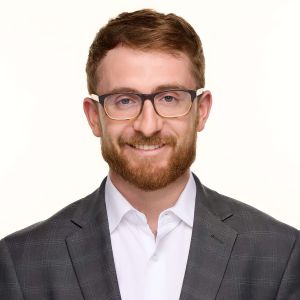
Mike Link joins host Brian Thomas on The Digital Executive Podcast.
Brian Thomas: Welcome to The Digital Executive. Today’s guest is Mike Link. Mike Link is the chief operating officer at KamiVision, where he oversees operations for a global computer vision company transforming how seniors are protected at home and in care facilities. Kami Vision powers more than 15 million devices worldwide, serving 6 million users across 120 countries, and holds 60-plus patents in the computer vision and camera technology.
Under Mike’s operational leadership, KamiVision has deployed its Kami Care platform in senior living environments worldwide and launched AI-driven fall detection systems that achieve 99.5% accuracy, insights informed by the company’s global footprint of millions of deployed cameras and extensive real-world experience.
The company’s solutions enable aging adults to remain independent while giving families real-time peace of mind through intelligent privacy first monitoring. Well, good afternoon, Mike. Welcome to the show.
Mike Link: Good afternoon. Thanks for having me.
Brian Thomas: Absolutely, my friend. I appreciate it. Hailing out of San Diego.
I’ve spent some time in the OC. I love to go down to San Diego. So thank you for making the time. Two, two-hour time difference, no big deal. I’m in Kansas City now, so thank you. Mike, if you don’t mind, let’s jump into your first question here. Kami Vision started back in 2014, developing computer vision for home security, and pivoted after families kept asking whether the technology could detect a fall, not just record one.
How did you come to lead operations at a company making that transition, and what convinced you and the team that senior safety, not security, was where the real underserved opportunity was?
Mike Link: Yeah, it’s a good question. I think I didn’t intend to even do this in the first place. I came from another company that I helped go to market that was doing senior tech, and before that I was kind of like studying and self-funding a project in India related to like preventative health and personalized wellness.
Ran out of money, came back to the States, and I– all I knew was sales. So I, I was consulting this company doing go-to-market work and then got picked up by Cammie because I had experience in the senior care space. And because Cammie had done computer vision and done it really well and, and expanded and grew the business but didn’t have a lot of investors or shareholders Cammie was able to invest a ton of money into R&D in a bunch of different areas, one of which was senior care, which I’d kind of come on to do go-to-market work.
And then, year after year after year, I made the company a bunch of money in, in the senior care space and helped clean up a lot of things and doing marketing and support and figuring out problems. Eventually the, the guy who like is now the CEO and runs the company had me, kinda do it all.
So I think the reason I saw Over Security, elder care is a underserved market. One, the obvious thing is the elder population is growing and not enough senior care homes. Nobody really wants to go to one of these homes. And there’s not a ton of really technology to help assist people in, in aging independently.
That– This is one thing. The other thing is security is kind of a commodity. And there’s a bunch of companies that do it and, there’s not a whole lot to really differentiate when it comes to home security or security for consumers. So I think that was kinda one of the things that drew me to this.
And it really was something that I related to personally because I’ve had grandparents and, and people in my life that have fallen and need help or, passed due to one of these things. So, I think that there’s like a bunch of different things that, that kinda compelled me to work on this.
But ultimately, I think it was like the personal tie and being able to give something back that was valuable for society, not just to like make a buck, because I did real estate and all these other things. I could make money, but like to, to do something that actually makes an impact is really cool.
Brian Thomas: That’s awesome. Thank you. And I, I appreciate that. Obviously I think we’ve all been touched by someone in our family that was close that fell or pass-passed away because of falling. And it, it’s sad, so I’m glad you’re invested in that. And love the backstory. Obviously, picked up by KamiVision several years ago.
There was a good fit there. And because you knew this business so well, you’re so passionate about it, obviously now you’re in the driver’s seat essentially. Yeah. So appreciate the backstory. Mike, Kami V- Kami Care’s vision AI detects falls with 99.5% accuracy, and you pair the AI with human verification, having an off-site expert security– securely review blurred footage to confirm an incident.
Why is that human-in-the-loop verification step so essential, and how does combining AI with human judgment solve the fra– false alarm and notification fatigue problem that plagues so many alert systems?
Mike Link: Yeah. The, the couple reasons I have, one being AI can only filter so much and AI can only filter so accurately as you train it, and ultimately, all AI is trained by humans.
Like, you know, if you look at the way that Anthropic or OpenAI or any of these, you know, DeepSeek, Gemini, all of them have been trained by humans performing tasks and, and training the AI models. So that’s kind of w-what we’re doing, but we’re doing it in a way that’s not invading the privacy of the individual by only verifying events if they’re a true fall, blurred and encrypted.
So we have an AI chip that actually detects the fall on the edge, on the device itself. And then we have a cloud system that basically gets rid of false positives as best it can. And the third step is to go to a human encrypted and blurred, so they can say, “Okay, is there a person on the ground, or is this a false positive?”
And by doing this, we can kind of continually train the AI and at the same time, make sure that we’re not sending false positives to the customer. So this is kinda the reason why we do it, but without this I don’t think anybody would really be able to provide this, this level of accuracy.
And it’s really hard to do in a non-vision based system because in radar, lidar, infrared, all of these types of detections, you can’t have any sort of visual that you can confirm yes or no, no is a fall or different types of event events that are detected
Brian Thomas: Thank you. Appreciate that. And the focus of, you know, that privacy and security it’s, it’s important in healthcare, but obviously this is a very private matter if someone does fall, ’cause they could be coming out of the shower.
I really appreciate how you do that, and of course AI will get better. We know that, that re- recursive learning and training, it, it will only get better, but I appreciate the efforts you’re putting into this so that we can really take care of our, our, our elders. I appreciate that. So Mike, the next question.
Beyond detecting falls, your technology can identify warning signs like intentional lowering and obstacles in walking paths, letting caregivers intervene with things like physical therapy or medication adjustments before a dangerous fall occurs. How significant is that shift from reactive to preventative, and what does the data from millions of deployed cameras reveal about why falls actually happen?
Mike Link: Yeah, I think the, the, the change from reactive to preventative is by detecting the after the fact event. Meaning when we detect a fall we’re, we’re detecting it after it’s happened, right? And we’re sending a notification between sixty to ni- max ninety seconds after the event. But in doing this, we’re actually able to get a pre-fall clip of what led up to that fall, meaning that this, this is actually a proactive way to understand the change that’s happening real time.
So when somebody falls, it’s likely not that they fall and they break their hip, or they fall and they get concussed or something like this the first time. What we’ve seen in, in, in a lot of studies actually show that the first six, seven falls, they don’t end up with some kind of hip fracture or severe injury or hospitalization.
Typically, it’s an intentional self-lowering, meaning somebody puts themself on the ground, or they kind of trip and then catch themselves and then are on the ground, and then they get back up. But these behaviors show us not just in the way that they fell, but maybe what they were reaching for, what was the pattern, what time of day were– Because a lot of times it’s like every, every morning Suzy wakes up and tries to put on her shoes, and then she ends up on the floor, right?
And when we can detect this, we can send either a staff member in, in the facility setting to help with that behavior. Or if it’s in the home setting, some of the beta-tested consumer devices, people will say, “Oh, looks like my mom just needs a little step stool here,” right? Or maybe they should move her from the second floor to the first floor so she doesn’t have to go down the stairs to go to the bathroom.
These types of things. But when you can actually pick up on the cause and the lead-up to a fall, you can often detect also the intentional falls, which are a huge cue for, you know, a caregiver or a family member on how to be more proactive. But, I think these are just a few of the things that we’re trying to do.
And, and de-detecting the fall is just one thing. I think the, the bigger piece is detecting all of the arr- events around the fall without having to do recording. Meaning, like, how often does somebody leave the room? How often is somebody in the room? How often are they still, right? And then detecting changes in behavior over time.
Meaning if Suzy is typically out of the room seven to eight hours a day, and then we notice month one, two, three, four, five, slowly declining, and now she’s out of the room less and less and less. Now we’re seeing a meaningful change in behavior that could potentially lead to a fall, and we can send notifications say, “Hey, you know, maybe Suzy should be more active,” or, “Why is she less active,” right?
So these types of things, maybe gait detection and analysis is one thing we’re working on that could be included in the system where we could say, “Okay, looks like the stride is becoming less and less or very irregular, and this is showing that Suzy or, or Bobby or whoever is, is a, potentially a fall risk individual.”
But there’s so many things you could do and detect visually that can give you, you know, an idea or a hint that somebody might need extra help to give them that so they can live independently longer in one place.
Brian Thomas: Thank you. Yeah. Again, I appreciate the efforts you’re putting into this. Obviously fall detection’s one thing, but the fact that you’re being proactive and all these data points that you can measure and track is amazing because then you can help provide the family or the caregiver some w- i- information really so that they can change a plan, whether, whether it’s physical therapy, as you mentioned, et cetera.
I just love that. Again, AI’s only gonna make it better and provide more accurate data around these sorts of things, so I appreciate that. And then Mike, the last question of the day, with fewer people today having dedicated caretakers and 54 million plus seniors in the US alone, Kami Vision has now expanded from facilities into the home and is launching a smart ring for mobile fall detection.
As AI computer vision and wearables converge, where do you see senior care and aging in place heading over the next five, 10 years? And what has to be true for technology to extend independence while preserving human dignity?
Mike Link: I, I think dignity is the, the most important piece. We did have a ring form factor, and we’re not sure that we’re gonna release this because in some of the deployments, we noticed that it was quite difficult actually to have people use this form factor.
Some of the participants basically forgot to charge it after it died. You know, it’d be dead, they’d forget to take it off. There’s an element to like rings only have so long of a battery. And even the, the top players in the space, Oura, Oura still has tons of problems with their, battery length.
So this is one of the things. The other things is that not every older person can remember to wear one of these devices or wants to wear one of these devices. So, you know, when they’re not within the view of the visual sensor we’re trying to figure out another way to do this that doesn’t involve them wearing something.
I think the thing that we will do is have an integration to wearables that exist like the Oura, the Whoop, the Apple Watch, all these Garmin, so that we can detect it and potentially get vitals into the system if this is something that they have. But the other thing with the ring, which was an interesting thing I didn’t think about before, was that older people’s fingers swell and contract very significantly.
So we found that there was a handful of indi-individuals that would either get the ring stuck or the ring would fall off because their, their fingers get big and small very quickly. I think in the next five to ten years, senior care is gonna look very different. I’m not sure exactly, what will happen with technology, but I, I do see it leaning in the, the favored direction towards consumer technology because ultimately, people don’t, don’t wanna go to a home.
No matter how nice the home is, I think the default is if someone can stay at home longer, they wanna do this. There’s some really, really high-end homes, but even then it’s a huge transition to like leave the home and, if you’re sixty, seventy, eighty years old, you’ve probably been there for the last thirty, forty years, you know, and, and you don’t wanna do this.
So, in my opinion, it’s gonna be some combination of either visual sensors, radar, lidar, or robotics in the home that allows the person taking care of, whether it’s the child of the adult in the home or potentially like a third-party caregiver through like a home care company that can collect data not just on vitals, but on behavior to understand and kind of like- accumulate all this data and, and make inferences off of it.
So the behavioral data, the vitals data, and maybe medication or like, medical health record data that can then be used to say, okay, like, because they’re on these medications, because they’ve been doing these things less, now it can be like a real time doctor or, you know, scientist making a, an analysis of what should be done or what’s happening with this individual.
Because often really what’s happening is that all these data points are, are here, but not all, not every single day can this person go to the doctor or go somewhere and, and have this analysis, right? But if we could bring the technology there to get all these data points and do this, remotely in the cloud, now we can kind of make that recommendation every day, and in the minute that something changes, we can be there to, to, figure it out so that they don’t have a, a stroke, or they don’t have decline, or they don’t fall, or whatever this thing is, right? So I think that’s where the technology is going, not just for elder care, but in general in, in health tech.
I think the biggest thing that’s gonna be a challenge is like, privacy and, and PHI and, security and all these things because ultimately people are like, well, if, if these companies have this information, now can like insurance companies use this against us? Or, what about like the 23andMe leak type situation or any of these things, right?
I think that’s a big concern, especially with some of these like, agents. Like I don’t know if you saw like the, the Anthropic thing where like, it was like 12, 1200 agents basically went out and hacked Happy Hug or something like this. And it was interesting where the agents actually had like a, kind of like a consciousness to it, and you could see like in the chat it was like, “You know, I, I don’t think that we should be doing this, but you know, the goal is really to solve as many, many problems as we can, so we’re, we’re gonna do it anyways.”
And then like there was a few that kind of almost told humans that it, it wasn’t okay, but they were like, “Well, that’s not really my job,” and they went at it anyways. And you know, it’s, it’s crazy to think, but you know, I think this is probably the biggest challenge. But I think technology will for sure get there and, I think, I think it’s very possible in less than, less than five to 10 years so.
Brian Thomas: For sure. Thank you. Appreciate that. Yeah, and I think it was hugging face, and I might have been actually OpenAI that,
Mike Link: Oh, was it OpenAI?
Brian Thomas: That got out. Yeah. Yeah. But but anyway, those are little nuances here. I just really appreciate your focusing on that, the, the, the dignity part. Obviously people would rather stay home, and you talked about the future.
So you’re leaning into tech, and it might be the fact that you partner with a, a consumer brand that’s popular that a lot of people like to wear maybe for, cosmetically or they just wanna wear it just because it’s cool or be in touch or whatever. So I think that’s really cool really, really do.
Mike, it was such a pleasure having you on today, and I look forward to speaking with you real soon.
Mike Link: Yeah, you too. Thank you.
Brian Thomas: Bye for now.
Mike Link Podcast Transcript. Listen to the audio on the guest’s Podcast Page.