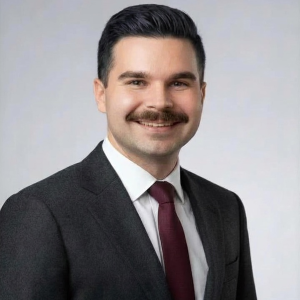
Joe Ochal Podcast Transcript
Joe Ochal joins host Brian Thomas on The Digital Executive Podcast.
Brian Thomas: Welcome to The Digital Executive. Today’s guest is Joe Ohao. Joe Ohao is the founder and CEO of The Chimney Scientist, one of the largest and fastest-growing residential chimney service companies in the United States. An entrepreneur since the age of 16, Joe has built and operated multiple businesses across industries, including aquariums for hotels, restaurants, and medical offices, before finding his true calling in the chimney industry.
While earning his undergraduate degree in economics and later a graduate degree in clinical microbiology from Thomas Jefferson University, Joe began cleaning chimneys and quickly recognized a significant gap in the market. Homeowners often lacked access to proactive professional chimney care until costly problems emerged.
Well, good afternoon, Joe. Welcome to the show.
Joe Ochal: Hey, good to meet you. Thanks so much, Brian.
Brian Thomas: Absolutely, my friend. I’m really excited. You’re in Philadelphia, Pennsylvania. I’m in Kansas City, so appreciate you making the time, jumping airwaves, calendars, time zones to get here, so thank you. And Joe, jumping into your first question here.
Sure. You’ve been a, you’ve been an entrepreneur since 16 years old, ran businesses as unexpected as aquariums for hotels and medical offices, and were on track for a career in science with degrees in economics and clinical microbiology. Your friends actually nicknamed you The Chimney Scientist when you’d show up to the lab dirty from cleaning chimneys to fund your studies.
How did that part-time job to pay for books become your true calling, and what was the moment you realized chimneys were the business, not science?
Joe Ochal: Well, that’s a great question, Brian. Thank you so much. So I would say two different things come to mind. So the first was when I finished my clinical microbiology degree, I was working in pharmaceuticals doing economic analysis for orphan drugs.
So I was d- I was mostly doing a desk job, and I was cleaning chimneys at night, and I rec- I recognized that I actually prefer meeting people, talking to people, spending time with people, getting dirty, versus sitting at a desk by myself. I just, I just preferred that. So that was, that was a part of it.
And then the other part of it was I was actually getting ready to continue my studies and go to medical school and then also, work in the pharmaceutical industry with an MD. And, I, I, I don’t… medical school is, is very expensive, right? So I mapped out how much it would cost.
I took, I took the MCATs. I I got ready for everything. And one day I just put on the wall like, like a visualization of the finances of my life over the next twenty-five years. I just, I just put a visualization of, like, if I went down this path with chimneys, this is where I should be conservatively.
And if I went down the path with pharmaceuticals, this is where I should be conservatively. And conservatively, I would have two hundred and fifty thousand dollars in debt at a minimum. And I, I guess the debt, coupled with the fact that there was a little bit of uncertainty in exactly what I would be doing in pharmaceuticals and in medicine, and my wife’s a physician, by the way and so is my brother, and it, it is getting harder and harder and harder to make money in that industry.
I, I kinda recognized that it’s probably more profitable to start a blue-collar career. And that’s what I not only enjoyed, but that’s what I started to do, and now we have the third-largest chimney company in the United States, and hopefully in the next couple of years, the, the largest.
Brian Thomas: That’s amazing.
Love the backstory. And, and, and that aha moment, that’s what I really love when I talk to people. You were working in pharmaceuticals, pharmaceuticals, economics studying of course, in school. And again, you felt energized and connected with people when you were working in your job to pay for your school, not just sitting there at the desk.
But as you sat down, you said you were looking at the finances, looking at what it’s gonna take to get you through school and to be in debt and, and how long. Yep.
Joe Ochal: Yep.
Brian Thomas: And then you found the math just made sense. It clicked. And now look at you. You’re the third largest chimney company in the United States, and I love your goal of being number one, so that’s awesome.
Thanks for sharing. Joe, you’ve built the entire brand around applying scientific rigor to what’s traditionally been a hands-on trade. What does a data-driven diagnostic chimney inspection actually look like compared to the standard approach? And how do you get customers and even technicians to think about chimneys scientifically?
Joe Ochal: Sure. So I would say the, our approach in The Chimney Scientist is just more thorough. Blue collar businesses often will consider training, what, what they consider training to be is something called a ride-along, where you essentially ride along with somebody that’s already doing this job for maybe a couple of weeks, and that’s kind of your training.
And then after that period, you’re kind of on your own. And maybe there’s some certifications, maybe there’s some things you do online, maybe you go in person to the Chimney Safety Institute for like a day or even up to a week, and now you’re a certified chimney sweep In my opinion, the education is just not enough.
It needs to be ongoing. So, I’ve inspected fifteen thousand chimneys in my career at this point. It’s kinda what I guesstimate. And what I enjoy about the industry is that when I was doing inspections, I would see a new appliance, for gas or for wood, or a new chimney setup every single week that I have never seen before, and I’m doing it for years and years and years and years, right?
So I’m– I believe that chimney inspectors need to have ongoing education, and that’s why our chimney inspectors have five hours of weekly training. Five hours ongoing of technical and the different types of training in our industry. And I think that’s super important so that when they see something, they kinda know what they’re doing, know how to identify it, and they just get better and better and better at their job.
In terms of the scientific approach and how we communicate that to homeowners, the real key is visualizations. Visualizations and simplicity is what i-is key. One of the things that I struggle with working in science is that I like to speak very plainly. I like to speak very simply. I think communicating with, with simple words and as easy to understand as possible is, is more– is the most important thing.
So, that’s what we try to do to our homeowners. Like, try to take words like missing mortar joint. Try to take words like drip edge and chase cover kind of out of, of your vocabulary and replace it words like hole. You know what I mean? Broken pipe. Th-these things are, are, are the ways to simplify it and make it easier for homeowners coupled with visualizations.
Brian Thomas: That’s awesome. Really love that. Your work in chimneys obviously is more thorough. You talked about that, especially when you take into that next level of education and training. I think that’s amazing. Your employees have five hours a week of ongoing training. Yeah. That’s, that’s unheard of. Trust me, that’s, that’s amazing, and I like how you simplify things for both your employees and, and your customers with visualizations. Just love the culture you’re building around education in your organization there, Joe-
Joe Ochal: Thank you.
Brian Thomas: You’re welcome. You’ve run multi-year field studies on wood drying and moisture content- Yeah … and you’re working in internationally with industry leaders to re- reproduce… I’m sorry, reduce particulate emissions in a practical way.
What have you learned about people can burn cleaner and safer that most homeowners get completely wrong?
Joe Ochal: It’s, it’s so amazing. Cover your wood. Cover your woodpile. Don’t leave your wood out, out in the open to get rained on continuously. And this makes a world of difference for the environment and for your experience and for your safety.
Because if you’re able to cover your wood, just on the top, not on the sides, this prevents your wood from saturating and soaking up moisture so that, if, if you don’t cover your wood, when you go to burn it the moisture content is high, and when you go to burn it, it will smolder the s- the wood.
It will create more particulate emissions. Those particulate emissions will not only go into the environment, but they’ll go into your chimney in the form of smoke. It will condense on the surface, turn into liquid and then solid tar, and then you’ll have this flammable tar inside your chimney that can catch on fire and cause chimney fires.
So just by covering your wood, you greatly reduce the likelihood of having a chimney fire. It’s better for the environment. It’s… And you get more heat output, because smoke is essentially incomplete combustion that could have been fire, which would have been heat energy. So it’s pretty amazing. I mean, I’ll give you another quick little s- you know, statistic.
Your, your average wood at a 20% moisture content is 8,600 BTUs per pound. Once you go to 25% moisture content, so you go from 20 to 25, you drop down to 6,800 BTUs per pound. So you lose almost 20% of your heat o- output just by having wood that’s 25% moisture versus wood that’s 20% moisture. So s- little things like that make a huge difference
Brian Thomas: That’s huge. Wow, awesome. I love how, people don’t realize little tips like this that you share with your customers in the industry. Covering that wood completely makes a huge difference. I didn’t know this, but they, you talked about that that tar that builds up because of that moisture and the particulates in, in the environment.
But less moisture will provide a better burn and clean, as you talked about, and I think that’s awesome. Appreciate you sharing that with our audience today. Sure. And so the last question of the day, as homes get smarter and technologies like sensors, AI diagnostics, and emissions monitoring mature, where do you see residential chimney and fireplace care heading over the next decade?
And what role do you want the chimney scientist to play in raising the standard for the whole industry?
Joe Ochal: Thank you so much. Yeah, I mean, that’s a great question. I think it’s going to get more efficient for homeowners and for companies by having things fixed right the first time, right? And we can all relate to that.
Like, you have a contractor that comes in, they say they fixed something, turns out it didn’t fix something, and you’re having somebody come back over and over and over again to fix it. One of the things that’s nice with AI is we’re working hard to ch– to train our employees to utilize AI for diagnostics in real time in the field rather than just their knowledge base.
Okay, because I just told you earlier that, like, there are so many types of appliances. When you’re in the field, there are literally thousands of different make and models of gas fireplaces and wood fireplaces that exist. And, you may know a lot about these things, like I know a lot about these things from just my experience, but I don’t know the nuances of every single product.
And really, when you’re going to do a gas diagnostic or a repair for a, a gas appliance that’s not working, you’re supposed to be looking up the make and model of that appliance in real time. You’re supposed to be pulling up the owner’s manual. You’re supposed to be reading through the, a checklist for diagnostics.
A lot of people just don’t do that. A lot of technicians don’t do that. But even if they do, it’s a time crunch. It takes fifteen, twenty minutes to do that. And then what’ll happen is if you run through the diagnostics in the owner’s manual, if you’re not, If you don’t get what you want, your end result, you then have to call tech support.
So now between your initial diagnostic plus the tech support, this could be a whole hour, hour and twenty minutes of just, like, your time. With AI, we can take a photo of the appliance right when we get there. We can take a photo of the rating plate. We take photos of very specific things that we train our guys on, and then we can ask the AI specific questions in regards to what we’re trying to do.
“Hey, we’re trying to inspect this heating appliance to make sure that it meets all code requirements. Does it meet these requirements? Hey, we wanna make sure that it’s, that it’s working according to the manufacturer instructions. Hey, we wanna make sure that– We wanna get it started and make it go up and running again.”
When we ask those questions with the right photos, it will then spit out, like, the make and model of the appliance and then everything that was actually in the original owner’s manual in real time, and then it will help you diagnose it just like tech support. So what this does is this saves an hour in a bad situation.
This can save even more than that in a bad situation, where you have to call tech support. It’s kind of like having your own tech support in real time the entire time. And I think that’s going to make it so that you’re having technicians every time going out there, having the right information so that they can actually solve the problem the first time, so that’s great for the homeowner And you also know that you’re gonna have a more resourceful technician, a res- a technician that’s going out there that has all the resources and knowledge of, a very seasoned person that’s worked on that appliance before.
So, it’s really incredible. It, it’s gonna allow businesses to scale and grow well, and it’s going to y- you know, do a good job, and then it’s also going to allow homeowners to get a better essentially product and service. So I’m very excited about that, and I’m really pushing, the chimney scientists to, to utilize AI in the training process.
Brian Thomas: That’s awesome. Really appreciate the z- real-world example of leveraging AI which we talk a lot about here on the podcast as a tech podcast here. But I love how you talked about the future is definitely gonna get more efficient in this process. You’re leveraging AI with your techs in real time out in the field to improve efficiency and accuracy.
I liked how you said you can take a photo, let AI, provide a better diagnostic, l- determine what the manufacturer is, et cetera. Saving it just a ton of time and having it done right the first time is something that customers always appreciate, and of course, that saves a lot of money on your end as well.
So really appreciate the insights. And Joe, it was such a pleasure having you on today, and I look forward to speaking with you real soon.
Joe Ochal: Awesome, Brian. Thank you so much.
Brian Thomas: Bye for now.
Joe Ochal Podcast Transcript. Listen to the audio on the guest’s Podcast Page.