Jason Wood Podcast Transcript
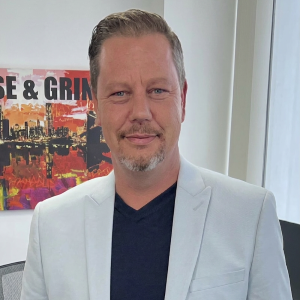
Jason Wood joins host Brian Thomas on The Digital Executive Podcast.
Brian Thomas: Welcome to The Digital Executive. Today’s guest is Jason Wood. Jason Wood is the Founder and CEO of Specificity, a publicly traded ad tech company built on a simple but disruptive belief: digital advertising should reach people, not bots, fake clicks, algorithmic waste, or passive audiences that never had intent to and by.
Jason has built his career by changing the assumptions that dominate traditional marketing. While many agencies continue to rely on broad targeting, inflated vanity metrics, and recycled campaign playbooks, Jason has pushed Specificity towards a more accountable model. Verified human-only audiences, real-time intent data, cross-channel execution, AI-assisted workflows, and measurable speed-to-lead systems that turn buyer signals into actual business opportunities.
Well, good afternoon, Jason. Welcome to the show.
Jason Wood: Thanks for having me, Brian.
Brian Thomas: Absolutely, my friend. I appreciate it, and I know you’re hailing out of Florida there. I’m in Kansas City, so I appreciate you making the time, traversing calendars, et cetera, to get here. And Jason, if you don’t mind, I’m gonna jump into your first question.
You’ve had quite the entrepreneurial journey from a standout sales career in Missouri to owning multiple businesses, including an automative– automotive lift company and marketing consulting firms before founding Specificity. Can you just walk us through that journey and what ultimately led you to build a publicly traded ad tech company?
Jason Wood: Yeah. So, you know when– from a sales and marketing capacity perspective, and in those roles in my early twenties, I leaned into what was the digital marketing of that day pretty heavily to help the companies I was working for succeed. And that was in largely in the automotive lift industry, selling car lifts to car collectors.
And honestly, I just fell in love with the, with technology. I just, I just loved it. I– to this day, it’s still a passion project for me. So after eight or nine years working for that company that recruited me to move to Ohio I decided to spin up a sales and marketing consulting firm. Yeah, so I had that, and then I decided to go full digital marketing, so I created another firm.
And, and that’s just been my career path. What prompted me to take a company public was the ability to get access to capital in public markets. And the reason for that is that in the last five or six years I realized, as I think many other marketers, digital marketers in particular realized, that big tech was doing a lot of very nefarious things.
The iOS fourteen five update removed app tracking. They remo- so the big tech like Meta and Google used that to remove audience transparency. Suddenly, bounce rates were going sky high. Really highlighting the fact that they were dealing in more and more automated and bot style traffic into our campaigns, which essentially means you’re paying to serve ads to non-human traffic.
And so I wanted to build, build a tech solution to fix that, to solve that, and return back to marketers analytics that actually make sense. We saw the whole market fall in love with vanity metrics during that period, right? Frequency, reach CTRs and all of that. But what everybody didn’t realize at the time, that I think most marketers realize now, is that you never really had a five or a six percent CTR.
That was bot traffic that clicks and crawls everything. And so it dilutes your analytics. Now marketers are ill-informed to make optimization decisions. It just returns all the power to… It gives all the power to big tech over your campaigns, over the audiences you target and all that. So I just wanted access to, to be able to play in that sandbox and build a, a really emerging tech solution to fight back.
And so that’s what I did. That’s why I founded Specificity and took it public
Brian Thomas: That’s awesome. Love that. Love the backstory too. You just love you talked about your digital marketing career early on, fell in love with tech, and launched companies out of your passion. But really I hear a pain point it was a gap in the market as you talked about big tech.
They were interfering with these digital ads and it is frustrating what big tech has done, of course. And I’m glad that you got into this space, fight back, fight for the little guy and in this, at the same, in that same vein, making the world a better place. So I appreciate that. And Jason, you’ve learned, leaned heavily into AI, not as a buzzword, but as an operational infrastructure.
Specificity has expanded into answer engine optimization, generative engine optimization, and agentic outreach. How is AI fundamentally changing how brands get discovered as consumers shift from search engines to AI assistants?
Jason Wood: Yeah. So, what happened in the AI space was, was pretty obvious.
So, the initial AI play was algorithmic largely, right, with all the LLMs. And then earlier this year, suddenly it went agentic, and that changed absolutely everything. It changed structurally everything. So keyword optimization is gonna die at the Google algorithm. It’s no longer gonna be leveraged by human beings.
It’s gonna be leveraged by AI agents. It– this market is moving so fast, Brian. It, it’s, it’s amazing to me how many prospective clients I talk to and existing clients ’cause we, we update our clients and have, basically a meeting every week or two because of how fast it’s moving with our clients specifically to update them on things that are taking place with AI.
And it’s amazing to me how many companies just don’t realize that Google announced that they’re not going to start using AI agents to call your business and get pricing and get product information or service information or promotional pricing offers. They’re already doing it, and so many companies have told their teams to hang up on AI for when they get inbound calls from AI, and that is a mistake.
You need to answer those questions so that you can get recommended on the, on these LLMs, including Gemini, Google’s Gemini. So the world has– isn’t changing, Brian. It’s already changed. The perspective I come from is, is this: It is my opinion that if you don’t do AEO, GEO, and whatever they announce we need to do next to make it easy for AI agents to gather information on the internet about your company, you will not just fail to get recommended with frequency, but at some point you’re not gonna be discoverable on the internet.
So last year, fifty-one percent of all traffic, according to Imperva’s Bad Bots report, was non-human. With the millions and what will ultimately be billions of AI agents now prowling on the we- on the internet, that number’s gonna go dramatically higher, and that’s gonna have major impacts on how we build audiences for paid ads, for conversion funnels, for branding, for everything we do as marketers.
And if you don’t get into the tech now, understand how it works, and learn how to leverage it, you’re gonna get left behind because for the first time in human history, machine learning is driving adoption, not human beings. I mean, there’s no executive sitting in a boardroom saying, “Well, is the consumer market ready to adopt this?
So should we slow down the launch or should we phase the rollout?” No. The machine, the LLMs themselves are informing these big companies on how to force adoption, and it’s frankly working. I mean, I don’t know very many people that aren’t heavily relying upon AI, at least in their personal lives, and I don’t know too many people that aren’t using it in their business.
Brian Thomas: Thank you. Appreciate that. And you’re absolutely right. AI is fundamentally changing the landscape due to the speed and evolution of the technology. You talked about AI was algorithmic, but recently has shifted into this agentic search which I agree. I, I’m in the space as well. AEO, GEO brand mention is now the thing.
And interesting statistics for the audience you said last year, 2025, 51% of traffic were bots, which I thought was interesting. And of course, first time- It was
Jason Wood: non-human, not, not specif- I don’t mean to interrupt. Sure. Not specifically bots, non-human. Sure. ‘Cause some of that is just automated traffic as well.
Brian Thomas: Sure, sure. And I, and I appreciate the clarification. But first time in history, as you mentioned, machines are driving adoption, not humans. I thought, again, that was really interesting. Jason, Specificity recently launched into the 600 billion home services market with vertical specific growth systems alongside work in marine, healthcare, Medicare, and financial services.
How do you adapt your platform to such different industries, and what made home services the next frontier?
Jason Wood: Well, what we do is we’re– at specificity, we’re vertical agnostic ’cause we’re data-centric. And what I mean by that is we can identify any audience by intent on, on, a-across the entire digital ecosystem.
So, on any platform, we can identify people showing intent to buy a product or, or sign up for a service or what-whatever the, the conversion is. So that being the case, the reason we, we chose home services as our kind of our next vertical market play was we tried to focus on markets that have already been the, the most greatly impacted by this fraudulent bot traffic thing with Google and Meta and, and all these platforms serving fake traffic to your paid ad dollars.
And home services is getting killed by it. I mean, these fake leads, these bots now auto-populate form fills. You talk to any home services business owner that’s, that’s buying leads from companies like Angie’s List or those or they’re, that’s doing PPC or lead form or click to call. And on the lead forms, they’ll, they’ll tell you a huge percentage of them either never reply to an email, a call, text, anything.
Or when they do– when they do answer the phone or when they, when they do reply, they have no idea what you’re talking about because they didn’t fill out the form. It was just simply a bot that hijacked a mobile ad ID and got served an ad on a platform like Facebook or a data crawling bot that clicked on an ad on, on Google and found its way to your form fill page.
And, and that’s, that’s crushing ROI for the home services business that has typically been very reliant on digital marketing to generate and grow revenue. And so our technology solution solves most of that on day one. And so we feel like we can have the greatest material impact in, in markets like home services.
So that’s why we chose this market
Brian Thomas: Thank you. Appreciate that. And what I like, just early on you mentioned your platform is really vertical agnostic and, and data-centric, so you can serve all markets. But I like what you talked about especially in this age of ads and bots, et cetera. You picked home services since this is an industry that is heavily infected by bots.
And you talked about that, shared some examples of bots actually auto-filling these forms and, and really businesses being ghosted because of it. So thank you. And Jason, the last question of the day I have for you, you said the next generation of growth will belong to companies that combine human judgment, verified data, and AI-driven execution before the rest of the market catches up.
As AI reshapes how attention is earned and how buying decisions get made, how do you see the future of advertising unfolding over the next several years, and how is Specificity positioned to lead that transformation?
Jason Wood: Yeah. So I, I, I think what we’re gonna see in, in most markets is a consumer reliance on AI as these LLMs continue to refine, get more accurate, get more get faster and more accurate results for, for consumers that are, that are using them.
So, I, I, I think it is gonna change everything. I, I think we’re gonna have to go from, demand generation to demand capture and speed to lead. So the ability to identify consumers or, or even, in a B2B, companies that are showing intent, that are showing interest, that are showing you know, a- awareness of a product or a service, capturing that, that demand, and then being able to drive them quickly to, to, to get that, that sales opportunity, whatever that may look like.
To either drive the traffic to an e-com page or,
Whether you’re gonna use AI to do scheduling by de-anonymizing website traffic data and having a opt-in structure granting you permission to use AI to schedule meetings. And, and that’s the play we’re putting in market right now is when you’re on one of our client’s website where this is a, a smart play.
While you’re on the website, within a few minutes, our AI agent will call back that person for the purposes of scheduling, to schedule meetings. And so that speed to lead is, is gonna be mission-critical. And learning- The moves that these LLMs, Google’s Gemini, and all the rest are making in terms of how to get recommended.
And a lot of people don’t know this. I predicted this last year. A lot of people said I was wrong because they thought that it would, it would harm the trust of, of these LLMs. But not only have they done it, but we’ve already launched some, some campaigns. But you can now do ChatGPT paid ads.
So when consumers are in there querying about specific products or services, you can literally start serving them ads about, about your client. My prediction is all of the LLMs are gonna do that. They’re all gonna do that. And so understanding which LLMs are, are being adopted by your ICP is gonna be mission critical moving forward.
So stay tuned, ’cause if we talk about it again, Brian, in 60 days, we’ll probably have a totally different conversation as fast as this is moving.
Brian Thomas: Absolutely. I, I agree with that there. You talked about that in the future, most markets will see consumers reliant on agents and, and you talked about that demand capture and demand speed to lead.
To do this, you’ll definitely need to invest and use agentic technology to be competitive in your space. And I liked your, your talk about the ads, right? LLMs will and now are offering ads like ChatGPT is today which is amazing. And another thing that I’m starting to see is people are bypassing, we talked about this earlier, but bypassing, like Google Search, right?
They’re actually finding something in an LLM like ChatGPT and going directly from the LLM and totally skipping that Google Search process. So things are rapidly- Yeah … changing and, and I’m, I’m excited to see what’s next, but boy, I’ve never seen something change so fast in my entire tech career. So appreciate that.
And Jason, it was such a pleasure having you on today, and I look forward to speaking with you real soon.
Jason Wood: Yeah, Brian, thanks for having me. I appreciate it.
Brian Thomas: Bye for now.
Jason Wood Podcast Transcript. Listen to the audio on the guest’s Podcast Page.