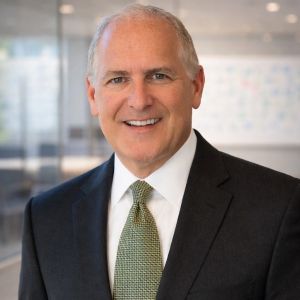
Gary S. Michel Podcast Transcript
Gary S. Michel joins host Brian Thomas on The Digital Executive Podcast.
Brian Thomas: Welcome to The Digital Executive. Today’s guest is Gary S. Michel. Gary S. Michel is a public company director and former chairman and chief executive officer of JELD-WEN Holding, a global manufacturer of windows and doors and associated building products with 4.8 billion in revenue and operations across North America, Europe, and Australasia.
Gary S. Michel brings nearly four decades of leadership experience across industrial, building products, and consumer-oriented businesses with deep expertise in strategy, operational transformation, and global market execution. As CEO of JELD-WEN, he led a multi-year turnaround delivering consistent financial performance, strengthening governance, and repositioning the company for long-term growth in a cyclical housing market.
Well, good afternoon, Gary. Welcome to the show.
Gary S Michel: Thank you, Brian. Glad to be here. Thanks for having me.
Brian Thomas: Absolutely, my friend. I appreciate it, and making the time. I know we’re just an hour apart. You’re in Charlotte, North Carolina, I’m in Kansas City. So I always appreciate the guests, whether they jump out of bed early or, or stay up late, depends on where they’re at in the world, I always appreciate that, so thank you.
And Gary, I’m gonna jump into your first question. You’ve spent nearly four decades leading iconic businesses and brands. Ingersoll Rand, c- Club Car, Trane, Honeywell, and ultimately as chairman and CEO of JELD-WEN, a $4.8 billion global manufacturer employing 25,000 people. You started with a mechanical engineering degree from Virginia Tech.
What was the path from engineer to running global enterprises, and what were the pivotal moments that shaped your leadership philosophy along the way?
Gary S Michel: Well, Brian, I never set out to be CEO. I just really set out to solve bigger and bigger problems. I, began as an application engineer at Ingersoll Rand, and I loved solving the technical problems for our customers.
You know, I was primarily on the commercial side of the business. But over time I realized something very interesting, that the technical problems weren’t really the hard part to solve. They were the organizational problems that it became more difficult. Involved people, the priorities, the direction of the company and execution.
So that kinda naturally led to this progression of, gradually realizing that, you know, as I changed into different roles, into different jobs, this ability to solve problems around organizational design, around getting things done, really involving people and directing them towards the purpose or the mission that we were, we were working on really became really became the the thing that kept me going.
Where I had the best c- curiosity and where I was able to make a, a bigger impact. To me, engineering taught me how to solve the problems, but leadership really taught me which problems were worth solving
Brian Thomas: Thank you. I think that’s important. And we talked about that. I just got off another podcast and talked about this same exact thing.
But your backstory, you didn’t start out as a CEO. That wasn’t your goal, but you loved working in engineering and solving engineering problems. You were able to do that very successfully. But what you saw, and I think that’s important that we highlight, is that problem-solving that you did is that the organizational or leadership issues that need to be resolved, honestly that seems to be the biggest gap in the organization.
I’m glad that you’re highlighting that, and we’re gonna talk about your book as well. So Gary, your book Decomplify: How Simplicity Drives Stability, Innovation, and Transformation opens with a provocative premise. Business is inherently complex, but we insist on making it complicated. You even coin the term complify for our human fascination with overcomplicating nearly everything.
Where does that impulse come from, and what does it actually cost organizations that fall into that trap?
Gary S Michel: Well, interesting. I, you know, I don’t believe people intentionally create complexity. They can create it, it, it creeps up on organizations, it creeps up on people accidentally, and actually with really good intention.
We have a problem, we wanna solve it. We add more meetings, hopefully to bring light to a subject or to bring accountability or, or bring people in, whether we have more reports, more metrics. And a lot of these things are really designed to help us speed through a problem, to keep things moving and unfortunately are very short-term focused.
In the book, I actually talk about this idea of of process debt. You know, in the technical world, we have technical debt. When we’re developing software or process or procedures, we, we often are less efficient in the design of our solution in, in, as a trade-off for time to get something out the door, and we know we’re gonna come up and tidy that up later.
I, I was always looked for that same type of concept within a business process and business environment, and what I found was process debt. It’s this tax that every organization pays as they grow and as they solve problems. But the further we get away from the actual, you know, solving a problem for a customer or solving something for, for the long term, the easier it is for these problems to creep in and create cl- complexity in an organization.
I call it the silent tax that every organization pays as they grow. We need to make sure that we go back and make sure that we don’t lose energy and lose time and lose actual cost in, in supporting process debts, the extra meetings, these extra processes that were designed to solve a particular problem, and we continue to focus on what really matters in the organization, our purpose and that direction, what really creates value.
We try to drive that process debt out as as we grow and as we, we continue to improve the company
Brian Thomas: Thank you. Really appreciate that. And, and you’re right. There’s a problem, we, we- it’s all hands on deck. We try to bring light to it, more meetings, data, reports, KPIs. And you talked about this process that that we’re, try to, to try and solve these problems, right?
But we ended up kind of losing that focus and, and as you talked about, it’s, is you call it the silence ta- the silent tax, which does sneak up into every organization, and it’s important that we have the discipline to stay on course and, and focus on the, the purpose of the organization and what we’re trying to go after.
So I appreciate your insights. Gary, you’re careful to say that simple doesn’t mean easy, that aligning people and processes around the right things is hard work. Why do so many leaders confuse simple with easy, and what’s the discipline required to hold an organization to simplicity when the pressure is to add more?
Gary S Michel: Well, you know, simple is the destination. The way we get there is through simplicity, the process or the discipline, and they are different. Leaders do confuse them. And simple is difficult because it requires us to say no, and that is one of the hardest things for any of us, and leaders in particular, to do.
But every time that, you know, we, we face a pressure, we add something. There’s another priority, a new initiative, another meeting, a new KPI. And the real hard work, the leadership work is deciding, you know, what can we stop doing or what should we not take on to begin with. And it requires us as leaders to always focus ourselves, our organization, what problem are we trying to solve right now, and who are we solving that for?
Where is the value created, and how do we stay true to our purpose? Every no has a cost. And, you know, I talk about creating or, or identifying the critical few, those things that truly matter, that truly add value to our organization and truly keep us moving. That question has to be asked every time we try to add something.
Is it really moving us forward? Is it keeping us on our path towards our purpose? Is it clear to the organization? And is there something we should take away if we’re adding something new to, to the organization? ‘Cause if everything’s important, you know, as they say, nothing is. And I think for us to stay focused on the critical few, keep our organizations focused on that, and subtract the things that we don’t need to be focused on is really the important part of leadership.
Brian Thomas: Thank you. Appreciate that. Just to highlight a few things you said there, Gary, simple is the destination. Yeah, simplicity is key to success. It requires us to say no. And I, I thought that was important. When new problems and pressures appear, which they always do we’re tempted to address those as well, but again, we need to stay true to our purpose and keep things moving forward in that direction.
So I appreciate that. Absolutely. And Gary, you bet. The last question of the day, with decades of transformation experience and now board seats at companies working in AI, where do you see leadership and business transformation heading over the next decade? As AI adds a whole new layer of potential complexity, how do leaders keep the discipline of simplicity, and what will separate the great companies of the future from the rest?
Gary S Michel: Well, I think AI is going to be extraordinary. But it will amplify organizations. It won’t fix them. If an organization already lacks clarity or purpose, good leadership, or a healthy culture, AI is simply gonna help it become confused faster. I mean, we’re seeing that today. It, You know, the last, Even if we read the headlines of the last week or so it finds those weaknesses in an organization, and it finds it finds opportunities to to highlight where the problems exist and then exploit them to a certain extent, speed up the issues that, that happen.
We’ve seen that quite a bit just in the last couple of weeks. I think technology’s great, and technology in and of itself can help us solve problems faster, better improve, do things that we couldn’t do before. But the organizations that win won’t necessarily have more technology or more AI. They will have leaders who know what decisions belong to AI and what decisions belong to the people in the organization.
You can introduce your biggest idea and use AI or other technology to help move it forward. But I think it’s the important part that you know, that leaders understand where technology can help improve in problem-solving or in moving the organization forward and, and not be more complicated. It all comes back to kinda what I talk about in my newest book, The Founder’s Mindset, this idea of having a clear purpose with simple priorities and this concept of ownership.
Always staying focused on what matters to your customers, what matters to moving your organization, your people forward, and helping them develop and delivering results for, for your people or for your investors as well. AI should strengthen those things. It can’t replace them. I think it it should be very much focused on eliminating complexity rather than creating it
Brian Thomas: Thank you. Appreciate that. You’re absolutely right. We talk a lot about AI here on the podcast, and AI will certainly amplify things, but not fix the organization as you talked about. It can be a double-edged sword. Certainly can find problems, help bring solutions, but it can also ex- exacerbate those, those issues as well.
AI can make decisions, but they’re probably best kept and should be maintained on the human and leadership side honestly, and, and that’s looking at the long term. Talked to a lot of people about this and, and where they think things are going. But absolutely AI can certainly strengthen areas but cannot be the end-all, solve-all for, for problems within an organization.
So really app- You
Gary S Michel: know, yeah.
Brian Thomas: Go ahead.
Gary S Michel: Yeah, no, I agree with that, Brian. I think that leadership will always be about helping people accomplish more than they thought was possible, and the job of leadership is to create that environment where people can do their best work. And AI, again, or any technology is there to im- is there to supplement that and augment that but can’t replace that.
Brian Thomas: Absolutely. Very well said. Very well, very well put. Gary, it was certainly a pleasure having you on today, and I look forward to speaking with you real soon.
Gary S Michel: Thank you.
Brian Thomas: Bye for now.
Gary S. Michel Podcast Transcript. Listen to the audio on the guest’s Podcast Page.