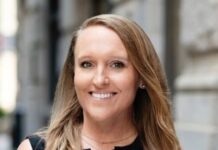
Allen Dine Podcast Transcript
Allen Dine joins host Brian Thomas on The Digital Executive Podcast.
Brian Thomas: Welcome to The Digital Executive. Today’s guest is Allen Dine. Allen Dine is the chief business officer at Care2You, a company delivering ER-level and hospital-level care in the home to patients across the New York metro area. He sits where technology, operations, and growth meet, and he builds the systems himself rather than handing off a strategy deck.
At Care2You, he built the company’s operations and technology infrastructure from the ground up, including the data warehouse the business runs on. He now leads the company’s AI agenda, deploying agents for internal operations, dispatch and routing, and voice-based patient interactions like intake screening.
Well, good afternoon, Allen. Welcome to the show.
Allen Dine: Thanks for having me, Brian.
Brian Thomas: Absolutely, my friend. I appreciate it. Appreciate you suffering through the heat like we are here in Kansas City. I know you’re in New York, but I just appreciate you making the time. I know it’s sometimes challenging to get through here to navigate time zones.
So, Allen, if you don’t mind, I’m gonna jump into your first question. Your entire career, more than a decade, has been in post-acute and home care with executive roles at Hometeam, MavenCare, Tomorrow Health before Care2You. What drew you to this corner of healthcare and kept you there, and how did you become the kind of leader who builds the systems and data warehouse himself rather than just handing off a strategy deck?
Allen Dine: Yeah, happy to kind of dig into that. I think the biggest thing for me was always wanting to be a change agent. Sometimes it’s hard in healthcare to make changes, and at least as far as health tech goes, that’s kind of the place where you can incubate new ideas. And home care and care in the home is a great place to do that because you’re not constrained by maybe some legacy processes within s- side of four walls of a health system or something like that.
And so I think over time it became clear that if change was going to happen, I couldn’t look around the room for someone else to do it. I was gonna have to do that myself. And so whether it was identifying that we needed to improve our backend data warehouse, who was going to do that? Well, I guess I’m gonna learn how to build SQL.
If it was identifying new technology layers like AI to help us with routing I was gonna have to find the right vendors and support systems to do that. And then lastly, whether it was helping our teams actually become more efficient by using AI voice agents, we were gonna have to be on the cutting edge to make sure we could deliver providing excellent quality care in the home.
And so I think all of those things put together have led me to Care to You, where we’re kind of building the frontier of high acuity care in the home.
Brian Thomas: That’s awesome, and I appreciate that. I’ve– my, most of my career’s been in healthcare on the tech side, so I can totally appreciate this. And I like how you started out.
You wanted to be this change agent in a very tough space, very regulated, healthcare, but you saw an opportunity in the home health space, and you rolled up your sleeves. You jumped in. You, you got technical. You started building things and just moving things in a way where you saw with your passion and your curiosity, you were able to make something out of this, which is hard to do in this, in this regulated space.
So I appreciate that. And Allen, you’re deploying voice-based AI agents for patient interactions like intake screen. Intake in acute care is high stakes. You’re triaging people who may genuinely be sick. How do you build a voice agent you trust at the first point of contact, and where’s that hard line where a human clinician has to take over?
Allen Dine: Yeah, it’s an incredibly important question and one that we’ve thought really hard about and, as you can imagine, tested immensely so that we were confident that when we deployed it into production, we’d have great outcomes. And so the, the one piece that I would highlight that I think is really important is that we’re, we’re looking to have the voice agents collect information, identify red flags, but we’re not looking for it to make clinical decisions.
We have amazing clinicians at Care2You that actually make the final decision. But you can imagine a, a five-minute phone call five years ago for a clinician now could be less than two minutes within the same interaction because we’ve actually spent time with the patient already through the voice agent to collect basic information, and that could be things like vitals, recent lab history, or something as simple as just demographics, right?
Understanding where the patient is, what their location is, their address. That’s all really important information and used to have to be done by a person. Now it can be done by a team of AI agents. So- I, I think it continues to be really important for us to clarify that, but I will say it’s also important to understand how we built this to actually allow us to audit the process end to end as well.
So not only do we have guardrails to make sure that our focus is on collecting information, identifying red flags, and then presenting that to the clinician, but we also wanna have clean audit records, so there’s no second-guessing from the clinician what happened during the conversation. We can pull that up right in our system to identify, oh, okay I see how that played out in the conversation.
So it provides this context layer. It’s not a black box. And so I think a couple of those principles are really important when working with voice agents in healthcare. You, you don’t wanna just assume just like any part of healthcare, right? If you have a, a scribe or you have someone else who’s helping fill out the medical record, most of the time clinicians are not just assuming that’s all accurate.
You wanna review that. You wanna make sure it’s correct as you’re building up a care plan, especially in high acuity care. Does that make sense?
Brian Thomas: Absolutely. I appreciate that. And again I can speak to this a little bit being in healthcare, seeing all this and, and the importance of, patient safety, right?
When I was doing a lot of the, I guess my time in healthcare, a lot of– saw a lot of scribes, and there was a lot of human-to-human interaction. But with AI now, it’s high stakes, and I liked what you said here. Even though you’re streamlining that patient intake process, you’ve got guardrails around that patient safety.
You audit that conversation, so you can go back and look. But at the end of the day while you’re looking for those red flags, you’re keeping the human or the clinician in the loop always, and I think that’s important. So thank you. And Allen, you’re developing AI agents for dispatch and routing, which is one of the hardest operational challenges in mobile healthcare, matching the right clinician to the right patient across the five boroughs and surrounding counties in real time.
What makes that problem so difficult, and where is AI genuinely outperforming the traditional ways of coordinating field teams?
Allen Dine: Yeah, this is really one of the primary challenges for a home delivery business, especially one that, that has to be done within hours, not days. And so what we’ve really focused in on is how do we provide efficient routing, but we also wanna present options, so we’re providing the right level of clinician at the right time for the patient.
And another interesting challenge that we face is because this is happening same day, you might not even know all of the stops at the beginning of the day. So tomorrow’s demand doesn’t really exist yet. So we have to be prepared to understand who are the sickest patients coming in? How do we deliver that care?
How do we base our clinicians? Where are they stationed? And again, I think where, where AI is helpful is where it would take, maybe, minutes, up to ten minutes to review a new chief complaint, identify where the patient is, then identify who the closest match is. But then we also have to take into account the closest individual, especially here in New York City with all this traffic might not actually be the first person who can get there.
And so taking in all of those parameters and designing an, an algorithm can, can be tiresome and take a ton of time. With AI, you can start to be deterministic and figure out who’s the most likely person based on a whole host of data points that we have. And then again, our philosophy is we present that information to the dispatcher, and they can help update the plan in real time.
So whereas before you would have a situation where a dispatcher might be designing a complex spreadsheet or planning a schedule and having to rearrange the whole day multiple times to make sure that we hit our SLAs to provide a great patient experience, now we can do all that with a click of a button in a couple seconds.
And so two primary pieces that we’re, that we’re using, again, to summarize, we’re using the AI to present options to the dispatcher based on a complex set of data points here in New York City. And then we’re also making sure that we can start to plan ahead with predictive models to understand, hey, where do we need to position people based on historic referral trends, so we can try to get as much of an edge as possible?
We’re by no means done with that project. This is gonna be a continued path of, of research and development for us, but I think it’s ultimately how we win to make this model grow and expand and, and be sustainable for the long run.
Brian Thomas: Amazing. Thank you. You talked about some of those primary challenges in home healthcare, right?
Efficient routing, getting the right clinician with that right patient in that particular patient care situation. And you talked about that scheduling and prior prioritizing that clinician with the sickest patients in a very busy and populated city is a challenge in itself. But with your tools and, and with– You talked about that real-time updating with dispatch to ensure you’re hitting your SLAs and improving that patient experience.
I just love what you’re doing, especially leveraging tools like AI that can make the world a better place. We just gotta keep those guardrails in place, of course. And Allen, the last question of the day: the hospital-at-home movement is gaining serious national momentum, and Care2Use own CMO sits on a national council shaping its future.
As AI agents, remote monitoring, and value-based care all mature together, where do you see high-acuity home-based care heading over the next five to ten years? And what has to be true technically and operationally for it to reach far more patients?
Allen Dine: Yeah, it’s a great question and, and one that I think it’s going to take more people, more investment, more focus to deliver this. We’re, we’re but one player and I think we can play a leading role. But the biggest things are we need to help everyone understand what the right level of care is. We use this term a lot of times as professionals in healthcare that, patients are seeking care perhaps at the wrong level.
Maybe they’re going to the emergency room instead of primary care, or they’re going to urgent care instead of a physical therapy clinic. And that’s simply because I think education’s gonna be a huge part of this, Brian. I think we have to help patients understand what options are available within healthcare.
That’s gonna be huge. But then on top of that, we are going to have to understand what are the dynamics within each market that we can use to provide better quality care overall. And quality, I think for most people, they think of the hospital as being highest quality, and in many respects, they’re probably right.
But the hospital’s probably not the right place for someone who is recovering from, say an acute UTI where they’re getting IV antibiotics. They’d probably rather be at home surrounded by their pets, surrounded by their friends, surrounded by their family, usual environment, rather than being in a hospital setting that disrupts their routine, perhaps disrupts their ability to get some good home cooking, things like that.
We think that, that there’s a really great opportunity to bring some of those ambulatory sensitive conditions into the home. And so that’s where I think instead of forcing patients to go to the hospital, then get evaluated, and then recommending they come home, I think if we can change that dynamic and say, “Hey, for some of these conditions, it is appropriate to be treated outside of the hospital walls,” and be more specific in what those conditions are, we can educate people, we can provide better care, provide better outcomes, and oh, by the way, it’s probably less expensive for both the system and the patient.
So I think creating those win-wins within hospital at home rather than just saying, “Hey, we’re just moving the site of care,” it’s we’re also really unencumbering the space so that we can truly optimize it, so it’s a great experience. I think that’s really important.
Brian Thomas: Absolutely. A, a lot of times it’s really the comfort of the patient, not necessarily the hospital, and you talked about that, that home health can be the best recovery, and you shared an example there which I totally agree.
And of course, in order to move this forward, you talked about this, it’s gonna certainly take more players, people planning to make this more available across the country. But patient education is key here. You highlighted that helping the patient understand what’s needed, what’s available will make a big difference as well, so thank you. And Allen, it was such a pleasure having you on today, and I look forward to speaking with you real soon.
Allen Dine: Thanks, Brian.
Brian Thomas: Bye for now.
Allen Dine Podcast Transcript. Listen to the audio on the guest’s Podcast Page.