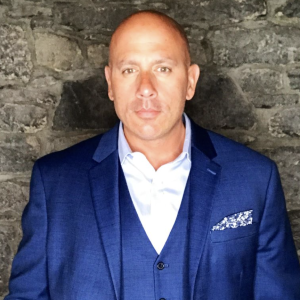
Alexandre Mongeon Podcast Transcript
Alexandre Mongeon joins host Brian Thomas on The Digital Executive Podcast.
Brian-Thomas: Welcome to Coruzant Technologies, Home of The Digital Executive Podcast.
Do you work in emerging tech, working on something innovative, maybe an entrepreneur? Apply to be a guest at www.coruzant.com/brand.
Welcome to The Digital Executive. Today’s guest is Alexandre Mongeon. Alexandre Mongeon is a visionary leader and socially responsible entrepreneur with over 25 years of extensive experience in the marine industry. As the co-founder and CEO of Vision Marine Technologies, Alexandre has been the driving force in the transition towards sustainable boating by leveraging his deep expertise in electrification and advanced battery technology.
He currently oversees the entire lifecycle of the company’s flagship innovations, specifically spearheading the design, manufacturing, and production of the groundbreaking e-motion technology and high performance electric boats. His leadership ensures that the company remains at the forefront of marine innovation while maintaining a commitment to environmental stewardship.
Well, good afternoon, Alex. Welcome to the show.
Alexandre Mongeon: Thank you for having me today.
Brian-Thomas: Absolutely, my friend. I appreciate it. And you’re hailing out of Delray, Florida today. I’m in Kansas City, so I appreciate you traversing time zones and calendars to get here, and that just makes my day. So thank you. And Alex, let’s jump into your first question here.
You’ve spent more than 25 years in the marine industry, from competitive speedboat racing to leading Vision Marine technologies. What experiences shaped your journey to become a pioneer in electric boating?
Alexandre Mongeon: There’s a few of them. one of the most important one is the meeting Ian Bruce, Olympic Sailor, and designing my first electric boat back then in 2014 and doing water sport in the back of that boat at, 40 miles per hour.
And lately, I also met Roger Moore in 2016, founder of Nautical Ventures. And he was showing me how the marine retail space were, so meeting Ian Bruce, Roger Moore. And then working with McLaren Engineering and testing for two years in a row, our technology from 2021 to 2023 was something very important for us.
And lately, we did the world fastest electric boat with Chan Torrente, world champion in the F1. So all those, I would say, past 15, 16 years of work were very important for me. So, this is where most of the knowledge became very important for me.
Brian-Thomas: Thank you. I appreciate that. And you do have quite a bit of experience in this space.
You know, you talked about Olympic, boating, sailing. You worked with, McLaren, which is a big deal obviously there in this, sports space. but having the world’s fastest electric boat is, obviously a big feat. we, we know how boating is. Generally, it’s com- combustion engines, but I like how you’re taking not only, electric technology, but you’re using it in the racing world as well.
So, thank you for that backstory. Alex, Vision Marine Technologies is driving the transition to innovative boating. What inspired you to focus on electrification in any industry traditionally dominated by combustion engines?
Alexandre Mongeon: Electrification for us was not a concept. It was a commercial opportunities, that was actually, we were already executing on back then by building smaller electric boats doing, six, seven miles per hour.
We saw early that the marine industry was BI and customers were expecting, the market to move faster, the low maintenance solution, and the cap was, the demand was already there, but the lack of high performance propulsion system were not there. So, we saw the opportunity, as early as 2015 for the market there by replacing slowly decompensation engine by the year 2030, 2035.
So we were the early adapter back then. That’s what, that was, was, that’s what’s motivating us.
Brian-Thomas: So obviously there was a little bit of a demand there, as you said, and I do remember some smaller, like in the fishing industry, a lot of small, type of electric motors. Obviously, there is a demand for doing much more as far as recreational activities.
And in your case, you’re making boats that break records, for its class. So, I appreciate the, what you’re doing there to bring this to market.
Alexandre Mongeon: But also-
Brian-Thomas: Go ahead.
Alexandre Mongeon: It’s a 20 billion business by 2030, so it’s something pretty decent as well on the market side.
Brian-Thomas: Thank you. I appreciate that statistic. It is growing, as you know, in electric vehicles and boats; marine equipment is expanding as well.
Alex, let’s talk about your eMotion technology. It’s at the core of your innovation. What were the biggest challenges in scaling this high voltage system from prototype to industrial production?
Alexandre Mongeon: The key challenges were transitioning from innovation to retipitable, scalable production. We did 25 different integration over the past five years on brand new boats from different manufacturers. marine, usage is a bit different than the car. It’s demanding and the environment is a bit different. The thermal con- the thermal condition, the salt water’s exposures, the safety standard, and, we had to scale, quickly in production, and the prototype is pretty easy to do, but moving into production, it’s a different ball game.
That’s what we had focused over the past three years by working with McLaren, Linamar and also BRP, Bombardier. So that was the most challenging part, and this is where we are. So, we were also have to navigate it into, in a mature supply chain and higher voltage marine space. As you mentioned, you only were seeing small, trolling motors of 48 or 36 volt.
We have a 700 volt architecture, architecture. So, we went from a prototype phase, as the years 2018, 19 to a production phase, and we are delivering system as we speak. But the focus today is discipline, execution, and con- controlling costs and entering ridability and scaling production with our demand in our dealership network.
The technology is there, it’s not a prototype, and now we’re scaling production.
Brian-Thomas: Thank you. I know that is challenging, manufacturing, mass producing, but you’re doing something that’s, high performance. So there is, there are, a lot of different ways and more challenges in that manufacturing space.
And you did mention some of those, obviously the safety, saltwater, et cetera. It’s not like your traditional, vehicle manufacturing. but again, controlling costs and scaling is, you gotta find that right balance. And I’ve talked to many entrepreneurs on the podcast about this in the manufacturing space and, it’s certainly something that, needs to be highlighted.
So, Alex, the last question I have today as we look ahead to the future, how do you see the future of marine transportation evolving over the next decade, and what role will electrification and sustainable innovation play in reshaping the industry?
Alexandre Mongeon: Well, we see the marine electrification following the car, or the automative industry.
It’s a gradual adoption, the acceleration, and the economics, the user experience is aligning with what we do. The near- the near term, the growth is, driven by, the demand, and we are actually pushing pretty, let’s say, heavily on, presenting the product. And there’s the demand for that for smaller boats between 20 to 30 feet, there’s a demand, and as the batteries are performing better and better, and the price is being readdressed to consumer, we see the marketing, market expanding. what matters the most for our investors now is to execute and delivery, and do the delivery of our system through our dealership network, and we are scaling also some different types of, power from our technology as well, combined with new, I, AI, let’s say apps, with our product. So, our strategy is to build around, owning the customer relationship, controlling the platform, and converting innovation into revenues.
Brian-Thomas: Thank you. Appreciate that. So definitely you’ve got a lot going on in the marketing space. you’re trying to, gain that market share. And you talked about the gradual adoption over the years, I think generally, but that demand is growing, and you did highlight that the higher demand in the boats, right now is that 20 to 30 foot, size range.
So again, appreciate those insights, really do, and I’m just excited about what you’re trying to do in this space in the, in the marine industry. And Alex, it was such a pleasure having you on today, and I look forward to speaking with you real soon.
Alexandre Mongeon: Thank you for, thank you very, very much for having me this morning. I will go to wish you a good day.
Brian-Thomas: Bye for now.
Alexandre Mongeon Podcast Transcript. Listen to the audio on the guest’s Podcast Page.