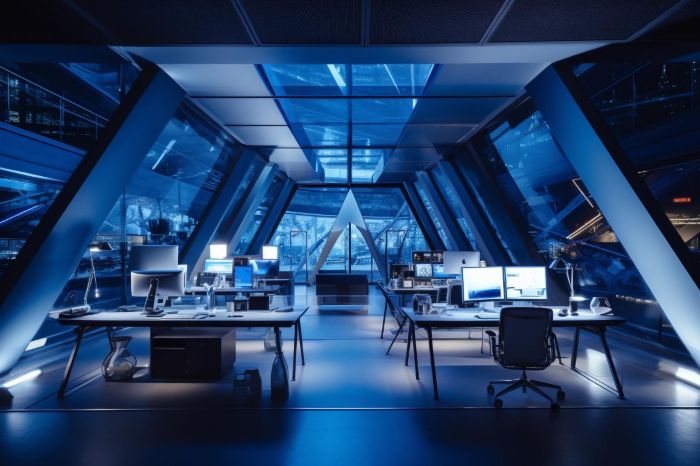
Technology is now at the core of nearly every business function, making robust IT environments essential for maintaining smooth operations and supporting long-term growth.
Customer data management, collaboration, and project coordination require an efficient IT environment that will not let businesses experience unnecessary challenges in the near future.
However, as organizations scale, their IT environment experiences increased pressure as well due to more users and more data involved. The slightest malfunction of the system may lead to negative consequences that include delayed processes, frustrated clients, and revenue loss as a result of downtime.
However, businesses that manage to navigate this challenging situation have created a reliable IT environment through establishing the right infrastructure and developing the right strategies.
Key Takeaways
- A robust IT environment is essential for business productivity and long-term growth.
- Downtime can lead to financial losses and decreased client satisfaction, necessitating timely system maintenance.
- Proactive IT support helps detect issues early, allowing businesses to avoid serious disruptions.
- Proper physical infrastructure, including server housing and cable management, is crucial for optimal system performance.
- Businesses must align managed services with IT infrastructure to ensure seamless operations and adapt to changing technology demands.
Table of contents
Why a Robust IT Environment Is Important for Business
Any business leader may list numerous factors that affect productivity and efficiency of an organization negatively. Often, those are technical aspects that involve software malfunctions, lack of communication between departments, etc. Technology plays a crucial role in ensuring efficient work as even a minute breakdown may lead to serious complications and additional workload.
Firstly, downtime of IT systems affects employee productivity since people experience difficulties when trying to complete their tasks. When employees are forced to work with unstable systems, productivity drops and delays quickly ripple across the organisation.
Research consistently shows that technical disruptions lead to significant financial and operational losses for businesses. The downtime of IT causes financial damages, decreased productivity, reduced performance, among other negative outcomes that should be considered in advance. Moreover, client satisfaction will also depend on this aspect as it often plays a decisive role. Clients expect fast responses and excellent customer service. However, businesses that have experienced downtime will be unable to provide this service. Therefore, it is essential to prevent IT system failures by maintaining them timely.
The Significance of IT Support for Performance
All these issues can be avoided with a robust IT environment. Any business should monitor system performance to detect issues and solve them immediately, as this is how one ensures maximum effectiveness.
Proactive monitoring helps business owners avoid any troubles related to system failures, as it allows observing the operation and detecting any potential threats in advance. Proactively monitoring systems is more beneficial than fixing problems after noticing them. Besides, monitoring makes the process of troubleshooting much easier.
As mentioned above, troubleshooting plays a vital role in maintaining IT systems. This requires specialists with the expertise to identify and resolve issues efficiently. For small businesses that may not have in-house IT teams, outsourcing to providers like Managed IT Services can help maintain system performance and minimize disruptions.
Thus, these solutions are helpful not only because they help solve existing issues with the IT environment but also because they allow business owners to devote their time to other important tasks. Monitoring systems in advance and performing troubleshooting will become automatic processes. Business owners should not worry about anything as everything will be performed professionally.

Creating a Robust Physical Infrastructure for IT System
However, managed services cannot help when talking about IT system operation only, while other aspects should also be paid attention to. For instance, physical infrastructure plays a key role in maintaining system performance as it provides all necessary conditions for servers.
The first aspect to consider is server housing, as hardware requires the right conditions to operate effectively. Server environments should be designed to support cooling, security, and accessibility for maintenance. Proper organization is also essential, as it allows systems to be managed more efficiently over time. This can be achieved with structured infrastructure, including server racks for data center environments that help organize, protect, and support critical hardware systems, and other hardware that can be purchased easily online.
In addition to that, physical infrastructure should comprise network cables that can affect performance positively. If there are no cables or they are installed poorly, this will definitely lead to system failures as there will be no connection between computers and hardware. Thus, it is essential to organize cable management properly.
It is not enough to install everything properly, as regular maintenance of the system is crucial for further development and scalability of business. Thus, a business owner should ensure that their servers have appropriate equipment, sufficient capacity, and other important features within a robust IT environment required nowadays.
Aligning Managed Services and Robust IT Environments
Managed services alone are useless, just like physical infrastructure without professionals. This means that business owners should develop the right strategies to coordinate both processes properly. Otherwise, it is impossible to maintain the systems and improve their performance to meet the growing demands.
When services and infrastructure are aligned successfully, it will be easy to integrate new employees into the team. In addition, such a strategy makes it possible to increase capacity of the system as needed without having to redesign the whole structure. It is necessary to pay attention to this aspect when working with growing businesses.
Thus, business owners should use modular infrastructure that will provide enough space to incorporate more equipment later. Managed services should also be developed considering the growing number of users and software required. This way, business owners will ensure seamless performance of the system without interruptions.
Preparing for Future Changes in the IT Landscape
Technological progress brings many changes, therefore, business owners should be ready for them by adapting to new technologies. Cloud computing has become the norm for successful operations and development. All business owners should be ready for this process and prepare their companies for it.
At this point, business owners should use their current infrastructure and managed services to develop an effective solution. Those who have organized the environment successfully will face fewer challenges. Hybrid work also plays a crucial role in maintaining IT systems, as there may be many employees who use different devices remotely.
Finally, data volumes continue growing in all areas; thus, business owners should adapt to this trend. The increasing amount of data requires additional equipment, and business owners must invest in it to avoid failures in the future. This is another reason why one should develop his infrastructure beforehand.
IT is no longer just a support function; it’s a core driver of business performance and long-term success. Therefore, businesses that want to develop efficiently should maintain reliable systems that will promote their performance and productivity. Otherwise, it will be impossible to overcome challenges and scale successfully.
Those who want to establish a robust IT environment should start doing it immediately, as otherwise, they risk failing to meet future requirements. Physical infrastructure and managed services should be used simultaneously to provide all necessary opportunities for business development.