
A CFO compares travel management software on cost. A travel manager compares it on inventory and booking experience. But a CIO compares it on three different questions: will it pass our security review, will it integrate with our identity, HRIS, and ERP stack, and how much IT lift will the implementation take?
The 2026 CIO scorecard for T&E software has tightened. SOC 2 Type II is table stakes. SAML 2.0 SSO that does not require a paid upgrade is the new floor. SCIM provisioning matters now that finance teams are syncing org charts from Workday or BambooHR weekly. Native ERP connectors beat CSV exports every time, and data residency decides which contracts even reach security review.
This guide compares Itilite, SAP Concur, Navan, and TravelPerk across those criteria in detailed manner. However, please note that the travel features are context, not the focus.
Table of contents
The CIO Scorecard
The five things that decide whether a T&E platform makes it through IT review.
| What to check? | Why do CIOs care? |
|---|---|
| Security certifications | SOC 2 Type II is table stakes. ISO 27001, PCI DSS Level 1, GDPR fit different geographies and regulators. |
| SSO and identity | SAML 2.0, Azure AD, Okta, OneLogin. SCIM for HRIS auto-provisioning. Whether SSO is included or a paid upgrade. |
| ERP and HRIS integrations | Native NetSuite, Workday, SAP, Oracle connectors vs CSV exports. HRIS sync (Workday, BambooHR, ADP) for org chart routing. |
| Data residency | US-only vs EU-hosted vs both. Affects UK GDPR, EU GDPR, and sector regulators. |
| Implementation timeline | Weeks vs months. Drives IT resource cost. |
Two more checks that come up in regulated industries: FedRAMP for the US public sector, and country-specific certifications like KRITIS (Germany), IRAP (Australia), or ENS (Spain).
Quick Comparison: All Four Platforms
| Criterion | Itilite | SAP Concur | Navan | TravelPerk |
|---|---|---|---|---|
| Security certs | SOC 2, ISO 27001:2013, GDPR, PCI DSS Level 1, CERT-IN | SOC 1 + SOC 2 Type II, ISO 27001 + 9001 + 27017 + 27018 + 22301, PCI DSS Level 1, FedRAMP Authorized (Public Sector), KRITIS, IRAP, ENS, ISMAP | SOC 1, SOC 2, ISO 27001, PCI DSS Level 1 Service Provider | Aligned with ISO 27001, SOC Type 2, Cyber Essentials. AWS Ireland is ISO 27001 and SOC 2 certified. |
| SSO | Azure AD, Okta, Google SSO; SAML | SAML 2.0 with any compatible IdP | Okta, Azure, OneLogin, SAML 2.0, OpenID Connect | SAML SSO |
| ERP / HRIS | NetSuite, SAP, Sage, BambooHR, Darwinbox, Oracle HCM, Paycor, Google Workspace, plus more | Deepest of the four; SAP S/4HANA, Oracle, NetSuite, Workday | NetSuite, ERP and HRIS integrations | Marketplace partners |
| Implementation | A few weeks | 3 to 6 months typical | A few weeks | A few weeks |
1. Itilite from a CIO Lens
Itilite earns its place on a CIO shortlist among modern travel management software platforms because of its integration breadth and unified-stack story. The platform consolidates travel, expense, and corporate cards onto one account, which means one SSO connection, one HRIS sync, one ERP integration, and one vendor contract instead of three or four. For an IT team running a Workday or NetSuite or Okta stack, that consolidation cuts the audit scope and the helpdesk ticket volume.
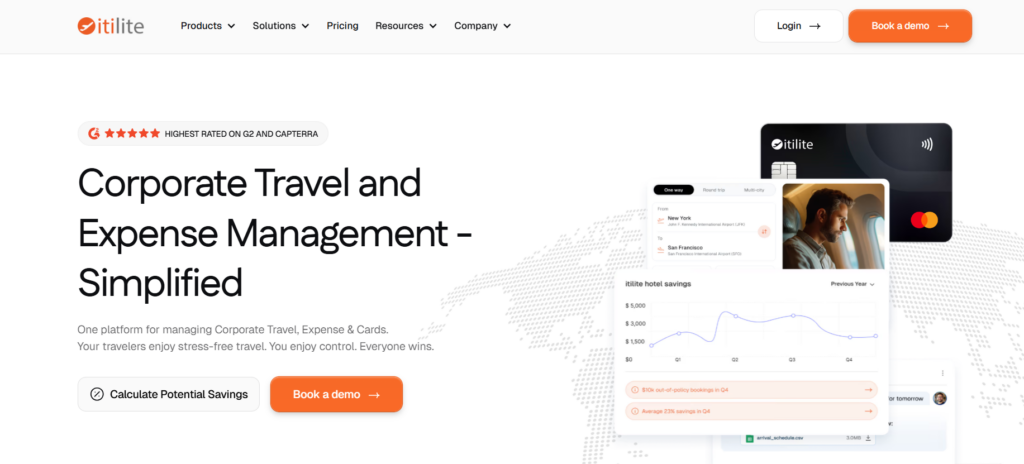
Latest product picture. Iris, the AI travel analyst, launched in October 2025. Mastermind benchmarks the program against industry peers. An AI voice feature handles bookings, changes, and rebooks through voice. The in-house TMC architecture removes the second-vendor dependency that Concur deployments carry by default.
What CIOs like:
- SOC 2, ISO 27001:2013, GDPR, PCI DSS Level 1, and CERT-IN listed publicly on the security page
- AES 256-bit encryption at rest, TLS v1.2 (FIPS 140-2 compliant) in transit
- Native SSO via Azure AD, Okta, and Google SSO
- HRMS connectors for BambooHR, Darwinbox, Oracle HCM, Paycor, Google Workspace, and Okta
- ERP connectors for NetSuite, SAP, and Sage
- Vendor consolidation: one stack covers travel, expense, and cards
Where IT may push back:
- The public security page does not state primary data residency. CIOs at UK or EU GDPR-strict companies should confirm hosting region during procurement
- The page lists SOC 2 without specifying Type II. Confirm Type II under NDA before signing
Best for: CIOs at 100 to 2,000 employee US and Canada companies wanting a single vendor across travel, expense, and cards.
Pricing: $10 per trip travel, $6 per user per month expense (annual). No setup fee.
2. SAP Concur from a CIO Lens
SAP Concur has the most public security documentation and the deepest enterprise certification posture of the four. For a CIO at an SAP-anchored enterprise, that depth is the reason it stays on the shortlist even with a longer implementation.
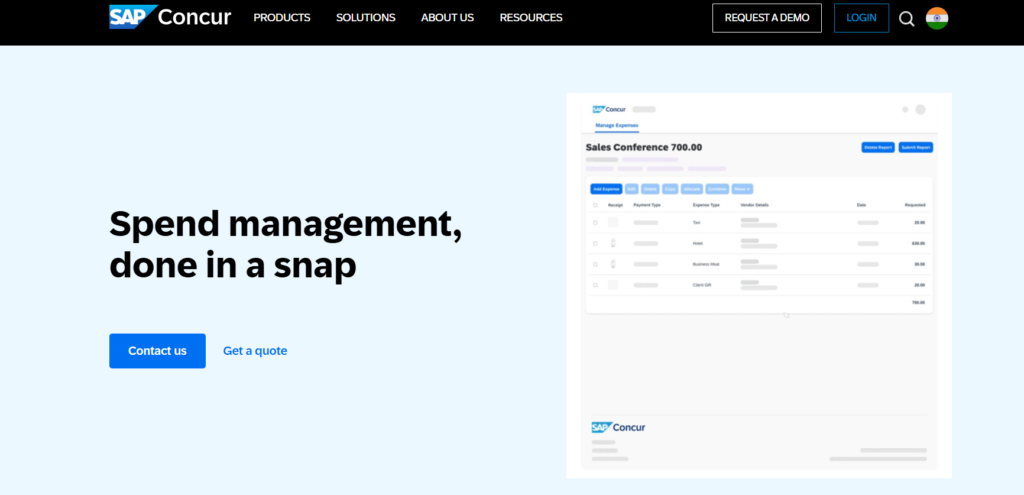
The 2026 product picture. Joule, SAP’s generative AI assistant, is now integrated into Concur. The AI Policy Navigator scans the company travel policy and pushes inline tips during booking. Concur also shipped a Microsoft Teams app where Concur Travel and Concur Expense are embedded directly.
What CIOs like:
- SOC 1 Type II since 2010 and SOC 2 Type II since 2017, both with audits every six months
- ISO 27001 (BS7799 since 2004), ISO 27017 cloud controls, ISO 27018 cloud PII, ISO 22301 business continuity, ISO 9001
- PCI DSS Level 1, FedRAMP Authorized for the Concur Cloud for Public Sector (AWS GovCloud)
- Country-specific coverage: KRITIS (Germany), IRAP (Australia), ENS (Spain), ISMAP (Japan)
- Cloud Security Alliance STAR Registry membership
- SAML 2.0 SSO with any compatible identity provider
- Deepest ERP integrations on the market, especially with SAP S/4HANA
Where IT pushes back:
- Implementation runs 3 to 6 months, often with consulting partner help
- Mobile experience lags self-serve modern platforms
- Modular pricing (Travel, Expense, Invoice, Request, TripLink) creates contract complexity
- A separate TMC is required for full booking-side coverage; that adds a second vendor relationship
Best for: CIOs at 1,000+ employee enterprises with SAP ERP investment, US public sector requirements, or sovereign-region certification needs.
Pricing: Custom. Contact sales.
3. Navan from a CIO Lens
Navan ships the strongest identity story of the four for mid-market buyers. The combination of Okta with SCIM, Azure AD, OneLogin, OpenID Connect, and a clean SOC + ISO + PCI cert set is what an IT team running a modern stack actually wants to see.
The 2026 product picture. Navan Edge launched in March 2026. Ava, the AI assistant, moved from chatbot to disruption-management agent that rebooks flights, alerts hotels of late arrivals, and shifts dinner reservations on the traveler’s behalf.
What CIOs like:
- Public security page shows SOC, SOC 2, ISO 27001, and PCI DSS Level 1 Service Provider badges
- Identity coverage: Okta with SCIM, Azure, OneLogin, SAML 2.0, OpenID Connect
- TLS in transit, AES at rest, AWS infrastructure with VPCs and KMS
- Annual penetration testing and security testing in the CI/CD pipeline
- Public Trust Center available
- Self-serve to a few weeks for implementation
Where IT pushes back:
- The free Business plan caps at 200 employees. Above that, Navan moves to custom enterprise pricing typically in the $10 to $25 per user per month range, plus platform and per-booking fees
- Phone access is gated by tier; enterprise security teams should confirm support SLAs
- ERP integration depth is lighter than Concur
Best for: CIOs at 50 to 500 employee US-centric companies on a unified T&E and card stack with Okta-mature identity.
Pricing: Free Business plan for up to 200 employees. Navan Expense free for the first 5 active users, then $15 per user per month. Custom pricing for 300+ employees.
4. TravelPerk (now Perk) from a CIO Lens
TravelPerk rebranded to Perk in November 2025. For UK and EU regulated buyers, this is the only one of the four with EU primary hosting. AWS Ireland as the primary data center, Germany as fallback. That single fact is often the reason it lands on UK CIO shortlists.
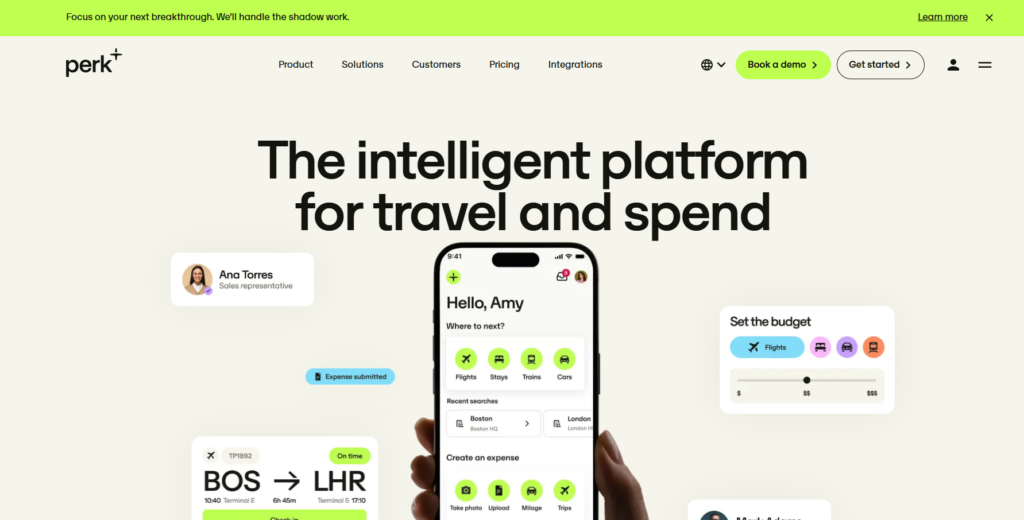
The 2026 product picture. The rebrand was paired with an updated booking flow and a stronger AI assistant. Trip Assistant runs natively in Slack and Microsoft Teams. FlexiPerk lets travelers cancel any flight, hotel, car, or train and recover 80% of the cost for a 10% premium on the trip.
What CIOs like:
- AWS Ireland primary, Germany fallback. AWS itself is ISO 27001 and SOC 2 certified
- Policies aligned with ISO 27001, SOC Type 2, and Cyber Essentials
- GDPR, UK GDPR, and CCPA compliant
- SAML SSO support
- Encryption at rest and in transit
- Bi-annual penetration testing, bug bounty program
- Advanced threat detection via AWS GuardDuty
- Public Trust Center with documents available under NDA
Where IT pushes back:
- The security page uses careful “aligned with” language for ISO 27001 and SOC Type 2. Confirm whether the company itself is certified or whether the alignment is policy-level. The Trust Center may have actual certificates available under NDA
- ERP integration depth is lighter than Concur or Navan
- Travel-led only, with no native expense module or corporate cards
Best for: CIOs at UK or EU-anchored companies with high European travel volume and strict data residency requirements.
Pricing: Starter free + 5% per booking ($2 min, $30 max). Premium $99 per month + 3%. Pro $299 per month + 3%.
Decision Frameworks by IT Stack
The right pick depends on what your stack already looks like and which regulator you answer to.
- If your stack is SAP S/4HANA or Oracle Cloud: SAP Concur. Nothing else on this list matches that ERP depth.
- If your stack is Workday + Okta + NetSuite (modern mid-market): Itilite or Navan. Itilite for vendor consolidation across travel, expense, and cards. Navan for the deepest identity story (Okta with SCIM, Azure, OneLogin, OpenID Connect).
- If your data residency is EU or UK regulated: TravelPerk (Perk). The only one of the four with EU primary hosting on the public security page.
- If you are consolidating multiple T&E vendors into one: Itilite. Travel + expense + cards in one stack reduces SSO connections, ERP integration count, and audit scope.
- If you are in the US public sector or contractor handling federal data: SAP Concur. The Concur Cloud for Public Sector is FedRAMP Authorized and runs on AWS GovCloud.
Five Questions a CIO Should Ask in Any Demo
- Show me your most recent SOC 2 Type II report. If they cannot share under NDA today, that is a flag.
- Is SCIM auto-provisioning included on the default plan, or does it require a higher tier? Walk me through the Workday HRIS sync end-to-end. How are terminations handled?
- Where is our company’s data hosted? US, EU, or both? What residency options exist on the enterprise contract?
- Is SSO included by default, or is it an upgrade? Some vendors gate SAML behind a paid plan.
- Show me the API documentation. How long does a typical custom integration take? What are the rate limits, and is OAuth 2.0 supported?
How to Frame This for the Buying Committee?
The four platforms serve four different CIO profiles. Concur for SAP shops and the US public sector. Itilite for mid-market vendor consolidation. Navan for Okta-mature mid-market on a card-first stack. TravelPerk for EU residency.
Travel features matter. But for a CIO, the integration depth and security posture decide whether the contract gets signed or sent back for redlines.
One concrete next step: pull SOC 2 Type II reports from each shortlist before booking demos. Vendors who can ship reports under NDA in 24 hours have mature security operations. Vendors who stall are the ones to push hardest during security review.
For reference, Itilite’s $10 per trip plus the in-house TMC plus the SOC 2, ISO 27001, GDPR, and PCI DSS Level 1 baseline sets the bar for what a 2027 mid-market CIO contract should look like. If your shortlist contract carries SSO upcharges, separate TMC fees, or 6-month implementation timelines, the math has to clear those friction points.