

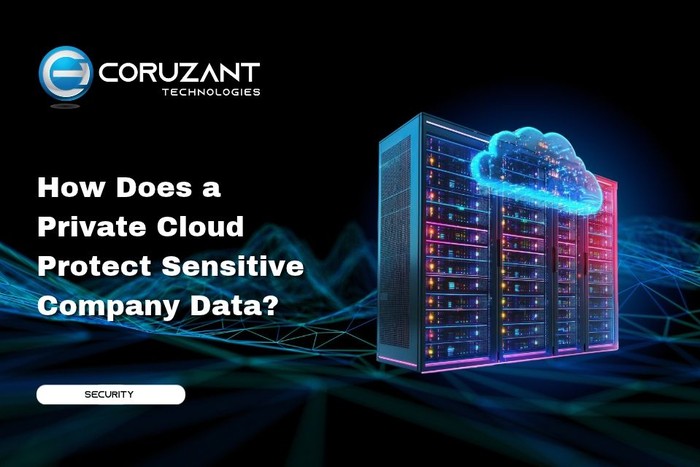
Sensitive business information is now among the most valuable assets any organization holds, and keeping it secure is no longer a minor concern. A private cloud addresses this challenge by providing a dedicated computing environment that no other tenants share. Companies gain tighter control over data location, access, and movement. While public infrastructure pools resources across many customers, a private setup reserves storage and processing power for one organization. The outcome is a privacy-focused foundation that lets teams apply strict rules while keeping modern cloud flexibility.
Key Takeaways
- Sensitive business information is a valuable asset that requires strong protection measures.
- A private cloud offers dedicated environments, enhancing data control and security compared to public clouds.
- Key sensitive data types include customer records, employee data, financial reports, and intellectual property, all needing tailored protection.
- Implementing encryption, access control, and workload isolation strengthens private cloud security significantly.
- Private clouds help meet GDPR and compliance standards by ensuring data visibility and controlled access.
Table of contents
- Which Sensitive Data Types Face the Greatest Exposure Inside Company Networks?
- Encryption, Access Control, and Isolation as the Core Pillars of Private Cloud Protection
- Encryption at Rest and in Transit
- Granular Access Control
- Workload Isolation
- How Physical and Logical Separation Shields Confidential Records From External Threats
- Meeting GDPR and Industry Data-Protection Obligations With a Dedicated Environment
- Read Next
- Practical Safeguards to Implement When Migrating Confidential Files to Your Own Cloud
Which Sensitive Data Types Face the Greatest Exposure Inside Company Networks?

Before protecting information, it helps to understand which records carry the highest risk when exposed. Many organizations underestimate how much confidential material flows through everyday systems, from customer databases to internal strategy documents. Isolated business workloads benefit from dedicated hosting, which is why many firms evaluate options such as vmware hosting when they want processing power separated from shared tenants.
The categories that face the greatest risk tend to appear repeatedly across many different industries, which suggests that these vulnerabilities are not isolated incidents but recurring patterns worth understanding. Spotting them early helps security teams focus their protection on the areas where it matters most:
- Customer records: names, addresses, payment details and contact history
- Employee data including salaries, health information and performance reviews
- Financial reports, forecasts, and accounting records pending disclosure
- Intellectual property including product designs, source code, and trade secrets
- Contractual agreements and legal correspondence with partners
Each of these groups demands careful handling, and because a dedicated environment is available, administrators can apply tailored rules that vary depending on how sensitive the material actually happens to be.
Encryption, Access Control, and Isolation as the Core Pillars of Private Cloud Protection
Private environment protection relies on several combined technical layers. No single measure suffices alone, so these methods reinforce each other.
Encryption at Rest and in Transit
Encrypt data both on disk and during transfer. Strong keys keep contents unreadable even if someone intercepts traffic or accesses a drive. Company-controlled keys add assurance, since only authorised staff decode data.
Granular Access Control
Within any organization, not every employee actually needs to access or interact with every single file, since most people only work with a limited portion of the data available. Role-based permissions, which are carefully configured according to each employee’s specific responsibilities and duties, restrict access so that individuals can only reach the precise records that they genuinely require to perform the particular tasks associated with their job. When this approach is combined with multi-factor authentication, which requires more than a single password to log in, it significantly limits the damage that any compromised account could potentially cause. Detailed logging records who opened which file and when, giving administrators a clear trail to review if anything looks unusual.
Workload Isolation
By carefully separating applications and databases into distinct, isolated segments, each of which operates independently from the others, organizations can effectively prevent a security breach in one particular area from spreading uncontrollably across the entire system and compromising everything connected to it. Virtual networks and dedicated hardware separate critical records from less sensitive services, greatly reducing the attack surface.
How Physical and Logical Separation Shields Confidential Records From External Threats

A key strength of a private setup is the degree of separation it provides to users. Physical separation keeps confidential servers in secured, monitored locations. This arrangement reduces the risk of tampering or theft at the hardware level, which is a degree of protection that pooled public systems simply cannot promise to the same extent.
Logical separation works in parallel. Through dedicated virtual machines, segmented networks and private connections, traffic never mixes with that of unrelated organisations. This matters because many attacks exploit shared pathways to move sideways between victims. When those pathways simply do not exist, the risk drops sharply. Companies managing their own cloud budgets will also find that spending stays predictable when resources are reserved, a topic explored in detail in this analysis of ongoing cloud cost review. Firewalls, intrusion detection and continuous monitoring round out this boundary, ensuring that any attempt to cross it triggers an immediate alert.
Meeting GDPR and Industry Data-Protection Obligations With a Dedicated Environment
Regulatory pressure has grown significantly, and European organisations must prove they handle personal information responsibly. A private cloud simplifies compliance by keeping full data visibility. Knowing server locations helps meet data residency requirements.
Documentation is another area where a controlled environment shines. Auditors expect clear evidence of who accessed records and what safeguards were in place. With detailed logs and defined policies, producing this proof becomes straightforward. For those building a wider program, a well-structured enterprise data protection framework provides useful guidance on aligning technical controls with legal duties. Sectors such as healthcare, finance and legal services carry especially demanding obligations, and the ability to customize security settings to match specific standards is where dedicated infrastructure proves its worth. Meeting GDPR duties is not a one-off exercise but an ongoing commitment, and a private setup supports that continuity.
Read Next
A few related pieces worth your time:
- How Strong Technology Governance Supports Sustainable Business Growth
- Why Founders Are Switching to an Automated Patch Management Solution
- 11 Vetted AI Cybersecurity Solutions: A Complete Review & Guide (2026)
Practical Safeguards to Implement When Migrating Confidential Files to Your Own Cloud
Moving sensitive material into a new environment is a delicate process that rewards careful planning. Rushing the transfer can expose records at the very moment they are most vulnerable, so a methodical approach pays off. Teams tracking the latest developments in this space often turn to a dedicated technology resource hub to stay informed about evolving best practices.
Throughout the course of any migration, whether it involves a small team or an entire organization, several important measures genuinely deserve careful attention, because overlooking even one of them could place sensitive information at considerable risk during the transition process. These steps help keep confidential files secure while they move and after they reach their new home:
- Classify data first so sensitive items receive the strongest protection
- Encrypt files before transfer, not just at the destination
- Test backups thoroughly to confirm records can be restored after failures
- Restrict migration access to a small, trusted administrator group
- Verify integrity after transfer using checksums to catch corruption
Besides these technical points, training your staff remains truly important. One careless click or weak password can undermine strong architecture. Regular awareness sessions, which should be held consistently throughout the year and tailored to evolving threats, keep everyone within the organization alert to phishing attempts and social engineering tactics, ensuring that employees recognize suspicious communications before they cause any lasting harm. Reviewing permissions regularly keeps access rights matched to current roles, stopping old accounts from becoming hidden weak points. Careful planning and daily discipline keep confidential records safe.