

Intel Arc GPUs have spent four years shedding a rough reputation, and a fresh look from Engadget suggests they’ve mostly succeeded. The cards still aren’t built for chasing the fastest frame rates on the market. But for anyone assembling a budget PC right now, they deserve a spot on the shortlist.
The timing matters. PC parts have gotten more expensive, and a graphics card is often the single biggest line item in a build. Here’s a closer look at what the Arc lineup offers, what has changed since launch, and where the trade-offs sit.
Key Takeaways
- Intel Arc GPUs have improved since their launch, making them a solid choice for budget PC builds.
- Pricing ranges from approximately $170 for the A380 to $329 for the B580, making them competitively priced against AMD and NVIDIA.
- They perform well at 1080p to 1440p, achieving around 100 fps in many titles on modest setups.
- XeSS upscaling technology enhances performance, sometimes outperforming competitor software.
- Intel Arc GPUs are not designed for top-tier performance, but they suit gamers seeking value without overspending.
Table of contents
A short history of Intel’s graphics push
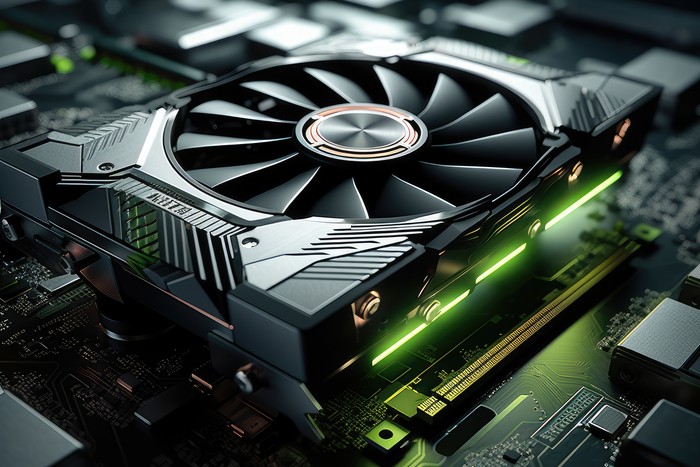
Intel Arc GPUs marked the company’s entry into the discrete graphics market in 2022. The first generation was called Alchemist, and the second, Battlemage, arrived in 2024. Most buyers have spent years with AMD or NVIDIA hardware, so a third option is still unfamiliar to many.
That first release wasn’t smooth. The early Intel Arc GPUs drew criticism for poor drivers, system instability and a steep performance penalty on machines whose BIOS didn’t support Resizable BAR. Intel has since fixed most of those problems, according to the report. The Resizable BAR penalty is the exception, and it’s still there.
If you’re pairing a card with an older motherboard, that’s worth checking before you buy. It’s a small detail, but it can decide whether a cheap card performs as advertised.
What Intel Arc GPUs cost and where to find them
Pricing is the main draw. Intel Arc GPUs run from about $170 for the A380, which carries 6GB of VRAM, up to $329 for the B580 with 12GB. Retailers such as Amazon and Newegg usually keep decent stock, so you shouldn’t have to hunt or pay a scalper’s premium.
The report makes a pointed comparison. The priciest Arc card generally costs about the same as the cheapest offering from AMD and NVIDIA. That’s a useful yardstick for anyone setting a firm budget.
Memory is another bright spot. Intel Arc GPUs tend to ship with a generous amount of VRAM compared with the bigger names, which the report says can be stingy on that front. More VRAM won’t fix everything, but it gives a budget card more breathing room as games grow heavier.
How the cards actually perform
Let’s be clear about the target. Intel Arc GPUs aren’t aimed at 4K gaming at 120 fps, and they never were. They’re designed for budget builds running at 1080p to 1440p.
Within that range, the testing described by Engadget is encouraging. The reviewer used a B570 with an older Intel Core i3-12100F and 16GB of RAM, a modest setup by any standard. Across a set of recent and demanding titles, games generally hovered near 100 fps at 1080p with medium-high settings.
The test list included:
- Death Stranding and its sequel, On the Beach
- Star Wars Outlaws
- Dead Island 2
- Resident Evil Requiem
- 007 First Light
- Planet Zoo 2
The report says the B570 held up even in the more demanding open-world stretches of Dead Island 2 and Death Stranding. One caveat: this is a single reviewer’s testing on one configuration, so treat the numbers as a good indicator rather than a guarantee. Your results will vary with the games you play and the rest of your hardware.
XeSS and the value argument
Upscaling does a lot of the heavy lifting here. Intel’s XeSS renders a game at a lower resolution, then rebuilds the image to hit a higher frame rate. The report credits it as a key reason Intel Arc GPUs compete so well, and says it can even beat NVIDIA’s DLSS and AMD’s FSR in some cases.
That last claim deserves some skepticism, since upscaler quality depends on the game and the settings. Still, it’s a sign that Intel’s software has matured. Early Arc owners dealt with driver headaches, and now the software is part of the pitch.
Where Intel Arc GPUs fall short
If you want top-tier performance, look elsewhere. The report is blunt that Intel Arc GPUs won’t compete with something like AMD’s 9070 or NVIDIA’s RTX 5090, and it adds that Intel isn’t trying to. That honesty is useful. A card should be judged against the job it’s built for.
So the buyer profile is narrow but sizable. It’s someone gaming at 1080p, maybe stepping up to 1440p, who wants steady frame rates without spending much. It’s also someone who can confirm their system supports Resizable BAR.
Read Next
A few related pieces worth your time:
- Mechanical vs Membrane Keyboards Comes Down to Cost and Feel
- CrowdStrike Zscaler Acquisition Could Be Near, Report Says
- Elastic Earnings Beat Estimates, but Guidance Sinks the Stock
What to watch next
The broader story is about choice. For years, budget buyers had two vendors and a lot of compromises. A third player with ample VRAM and a low entry price pressures the others to take the low end seriously, and that’s good for anyone shopping on a tight budget.
Whether Intel keeps up its release rhythm is the open question. It shipped one generation in 2022 and another in 2024, and the market will be watching for what follows. For now, Intel Arc GPUs make a strong case as an affordable, capable choice for 1080p gaming, as long as you know what they’re meant to do and what they aren’t.
Source: Engadget – Technology News & Expert Reviews