When Broadcom restructured VMware’s licensing model, a lot of IT teams got an unwelcome surprise on their next renewal invoice. If you’ve been actively searching for hypervisors worth considering as an alternative, you already know how hard it is to sort through the noise, especially when balancing performance overhead against isolation security requirements and managing the real risk of swapping one vendor lock-in for another. After reviewing dozens of platforms across deployment docs, user forums, and real-world case studies, this guide breaks down five options that actually hold up under scrutiny.
The research approach for this ranking
Public data drove every decision here. Feature pages, verified user reviews, third-party case studies, and platform documentation were all pulled and compared. Only platforms with a demonstrated track record in production virtualization environments made the final cut.
→ See the full research breakdown
- Sangfor – Best for enterprise cloud infrastructure and network security
- Nutanix – Best for enterprise hybrid multicloud infrastructure
- VergeIO – Best for private cloud infrastructure consolidation and VMware replacement
- Red Hat – Best for enterprise cloud computing and hybrid infrastructure
- VMware – Best for enterprise cloud infrastructure and digital workspace management
Key Takeaways
- Broadcom’s VMware licensing changes have prompted IT teams to seek alternative hypervisors, leading to a complex decision-making process.
- The article ranks five hypervisors based on public data, user reviews, and real-world case studies, highlighting their specific strengths.
- Key contenders include Sangfor for enterprise cloud infrastructure, Nutanix for hybrid multicloud, VergeIO for VMware replacements, Red Hat for cloud computing, and VMware for overall features.
- Choosing a hypervisor involves assessing industry experience, features, pricing, performance metrics, and compliance with standards.
- The bottom line emphasizes the growing potential of alternatives as enterprises seek to avoid vendor lock-in and rising costs.
Table of contents
- Why Hypervisors Worth Considering Matter for Your Business
- Top 5 Hypervisors Worth Considering: Breakdown and Comparison
- 1. Sangfor aSV Hypervisor – Best for Enterprise Cloud Infrastructure and Network Security
- 2. Nutanix – Best for Enterprise Hybrid Multicloud Infrastructure
- 3. VergeIO – Best for Private Cloud Infrastructure Consolidation and VMware Replacement
- 4. Red Hat – Best for Enterprise Cloud Computing and Hybrid Infrastructure
- 5. VMware – Best for Enterprise Cloud Infrastructure and Digital Workspace Management
- Research Methodology and Selection Process
- How to Choose the Right Hypervisors Worth Considering
- Bottom Line for VMWare
- Read Next
Why Hypervisors Worth Considering Matter for Your Business
Picking the wrong hypervisor platform is the kind of decision that follows your infrastructure team for years. Performance overhead adds up fast when your VM density per physical host starts climbing, and a hypervisor eating 15% of CPU just to keep the lights on isn’t something you notice until you’re already in trouble.
Vendor lock-in is the other trap. Once you’re deep into a proprietary management stack, migration costs make switching feel impossible.
The right platform keeps hypervisor CPU and memory overhead low, cuts mean time to provision a new virtual machine, and gives your team room to grow without a licensing bill that scales faster than your workloads. That’s not a nice-to-have. That’s the whole point.
Top 5 Hypervisors Worth Considering: Breakdown and Comparison
Note: All data in this table is sourced from review platforms and the official websites of the listed companies.
| Company Name | Years Operating | Team Size | Headquartered In |
| Sangfor | Est. 2000 | 7,000+ | Shenzhen, China |
| Nutanix | Est. 2009 | 7,800 | San Jose, CA |
| VergeIO | Est. 2010 | 33 | Ann Arbor, Michigan |
| Red Hat | Est. 1993 | 17,467 | Raleigh, North Carolina |
| VMware | Est. 1998 | 37,000+ | Palo Alto, California |
1. Sangfor aSV Hypervisor – Best for Enterprise Cloud Infrastructure and Network Security
What Does Sangfor Do?
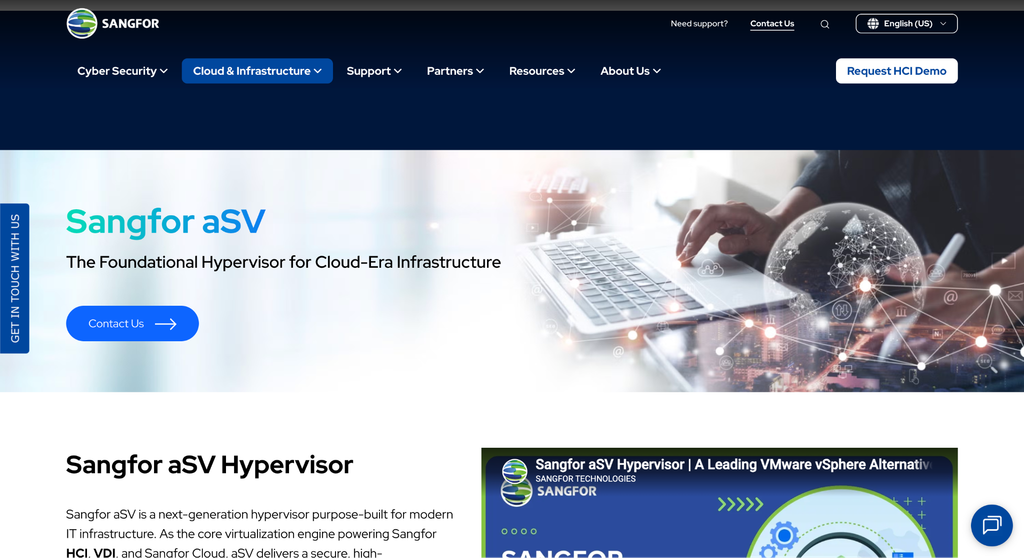
Sangfor Technologies builds cloud computing and network security products for enterprise environments. Sangfor aSV Hypervisor platform sits inside a broader stack that covers HCI, VDI, NGFW, and XDR, so infrastructure and security decisions don’t have to live in separate conversations. With over 100,000 customers globally, including Fortune 500 companies and government institutions, they’ve clearly moved past the “promising newcomer” stage. They invest at least 20% of yearly revenue into R&D and have submitted over 3,000 patent applications as of 2024.
Why Does Sangfor Stand Out for Hypervisors Worth Considering?
Sangfor solves the problem of managing virtualization and security as disconnected disciplines by bringing both under one platform with consistent quarterly updates. Teams that need proven enterprise-grade reliability without paying VMware-scale licensing fees will find that Sangfor’s track record across 100,000+ deployments is hard to argue with.
Summary of Real User Reviews:
Customers respond well to the product update cadence and the depth of the HCI stack. Recognition from Frost & Sullivan and Cyber Defense Magazine lines up with what users report on the ground, and that consistency across awards and user sentiment is the kind of thing that builds real confidence.
2. Nutanix – Best for Enterprise Hybrid Multicloud Infrastructure
What Does Nutanix Do?
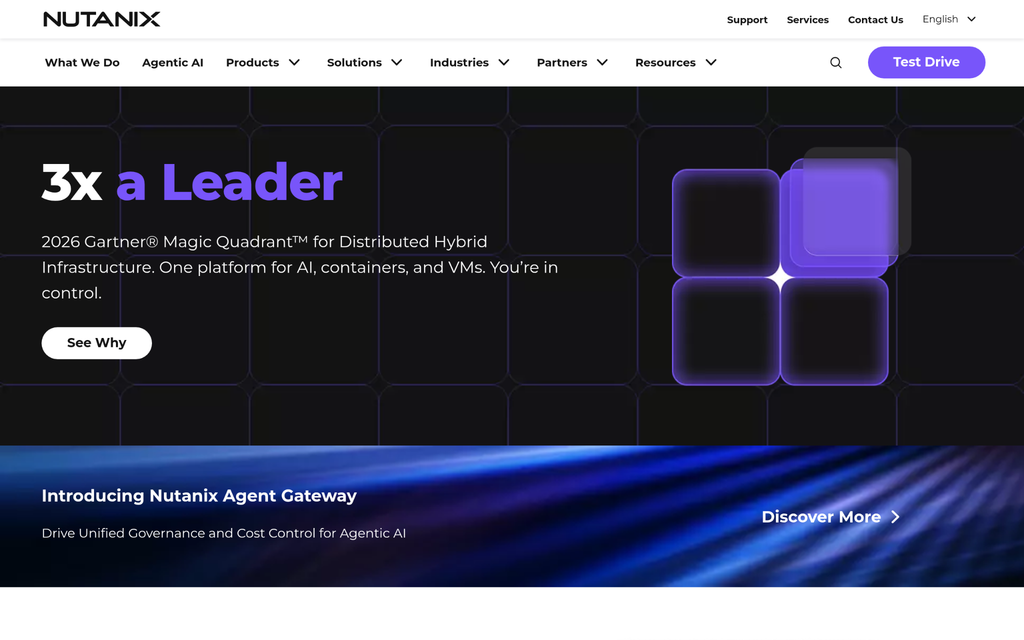
Nutanix runs a single cloud platform that ties compute, storage, and networking software into one subscription. Their built-in hypervisor, AHV, comes at no extra cost, which makes the total cost of ownership calculation a lot simpler than it sounds on paper. The platform works across on-premises data centers, edge locations, and public clouds, so hybrid deployments don’t require stitching together separate tools. Gartner recognized them as a 2026 Magic Quadrant Leader for Distributed Hybrid Infrastructure, and clients like London Gatwick Airport have documented serious results (think $1.6M in annual cost savings).
Why Does Nutanix Stand Out for Hypervisors Worth Considering?
Nutanix directly addresses the licensing problem by bundling AHV into their subscription, removing one of the most common friction points in hypervisor procurement. For teams evaluating total cost of ownership across a multi-year horizon, that bundled model tends to look better the longer you run the numbers.
Summary of Real User Reviews:
Users consistently point to the management simplicity and the fact that AHV doesn’t come with a separate line item on the invoice. The backup improvement stories are particularly striking. Cutting backup time from 18 hours to 1 hour is the kind of result that gets shared at team retrospectives.
3. VergeIO – Best for Private Cloud Infrastructure Consolidation and VMware Replacement
What Does VergeIO Do?
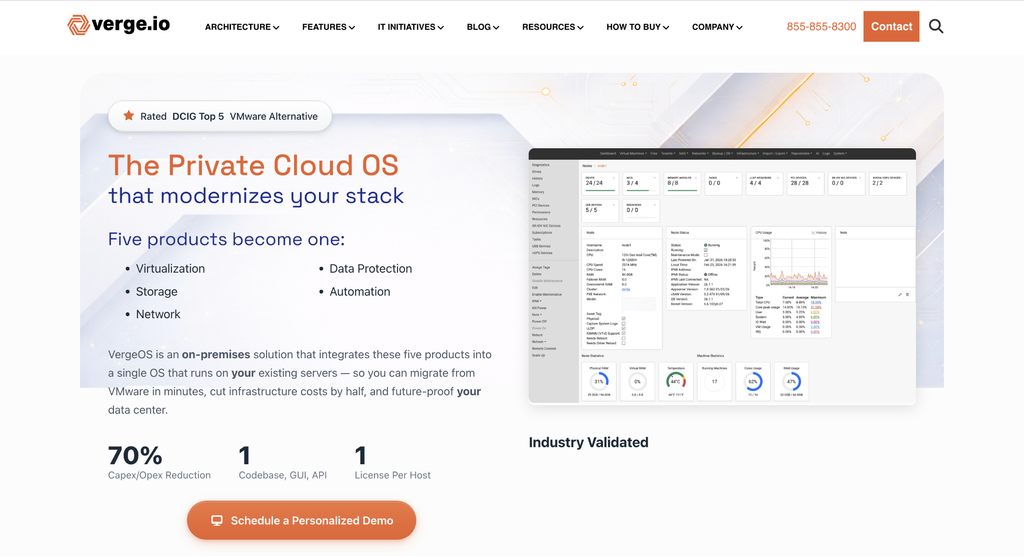
VergeIO ships a Private Cloud Operating System called VergeOS that pulls virtualization, storage, networking, and data protection into one platform. No external SAN required. No separate hypervisor license. Their distributed file system (VergeFS) and virtual networking layer (VergeFabric) run natively, and the whole thing operates on standard x86 hardware. They’ve also added on-premises generative AI tooling (VergeIQ) for teams pushing into that space. The claim that VergeOS can reduce Capex and Opex by up to 70% is a bold one, but the DCIG Top 5 VMware Alternative rating suggests they’re not just talking.
Why Does VergeIO Stand Out for Hypervisors Worth Considering?
VergeIO’s unified OS approach removes the fragmented-stack problem that most VMware migration projects run into, where replacing one layer means renegotiating five vendor contracts. And the credibility boost from Kit Colbert, VMware’s former CTO, joining their Board of Directors is not the kind of thing a team casually dismisses.
Summary of Real User Reviews:
Customer stories from organizations like Topgolf and St. Clair County Regional Educational Service Agency suggest the platform delivers across very different deployment contexts. For a 33-person company, the enterprise footprint they’ve built is genuinely impressive. Users tend to point to the simplified infrastructure management as the thing that actually surprised them most.
4. Red Hat – Best for Enterprise Cloud Computing and Hybrid Infrastructure
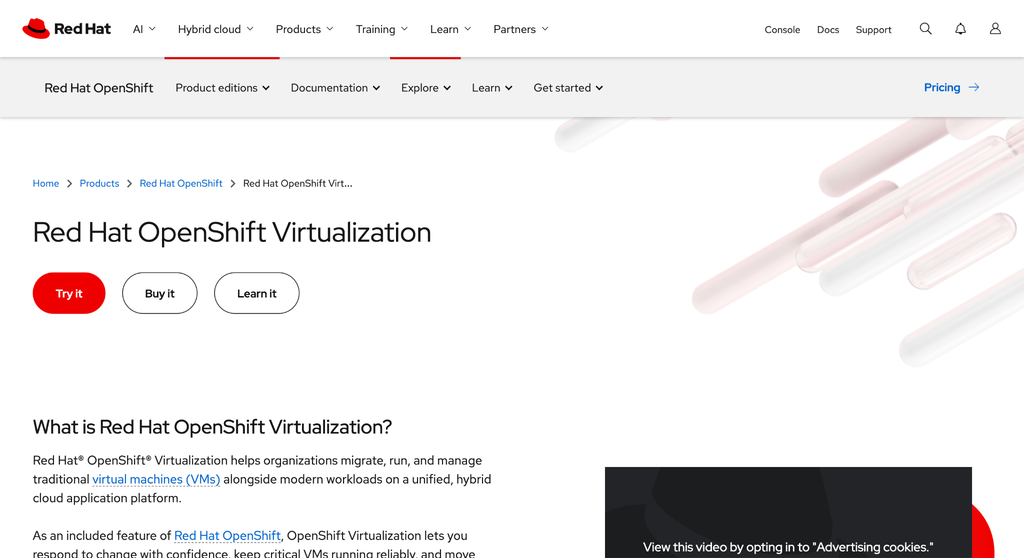
What Does Red Hat Do?
Red Hat is an IBM subsidiary that has built its reputation on enterprise open source software. Their virtualization play runs through OpenShift Virtualization, which lets teams manage VMs and containers inside the same Kubernetes-native platform. The broader portfolio covers Red Hat Enterprise Linux, Ansible Automation Platform, and OpenShift Container Platform, so organizations already running Red Hat infrastructure have a natural path into VM workload management without starting from scratch. Thirty-plus years of enterprise Linux work gives them a hardware compatibility record that most hypervisor vendors can’t match.
Why Does Red Hat Stand Out for Hypervisors Worth Considering?
Red Hat’s OpenShift Virtualization answers the specific challenge of running legacy VM workloads alongside modern containerized applications without forcing teams to maintain two separate platforms. For organizations already invested in Kubernetes, that convergence point is genuinely useful rather than just a marketing angle.
Summary of Real User Reviews:
The Association of Support Professionals has recognized Red Hat’s Customer Portal for 15 consecutive years, and that consistency shows up in user sentiment too. Enterprises value the depth of documentation and the support structure, especially for teams working through complex hybrid environments. That kind of support track record is rare.
5. VMware – Best for Enterprise Cloud Infrastructure and Digital Workspace Management
What Does VMware Do?
VMware pioneered x86 virtualization and has spent decades building the platform that most enterprise data centers still run on today. Their portfolio covers cloud infrastructure, app modernization, networking, security, and digital workspace management. With over 99% of Fortune 1000 companies running VMware in some form and a library of 5,000 patents, they represent the institutional baseline for enterprise virtualization. The irony, of course, is that VMware’s own post-Broadcom pricing restructure is the reason many teams are reading this article in the first place.
Why Does VMware Stand Out for Hypervisors Worth Considering?
VMware’s depth of ecosystem (vendor certifications, hardware compatibility, third-party tooling) is something that alternatives are still building toward, which matters for teams running complex, multi-vendor server fleets. The tradeoff is cost, and that’s not a small consideration right now.
Summary of Real User Reviews:
Users generally acknowledge VMware as the most feature-complete option while also being the most expensive one in today’s licensing environment. The frustration isn’t with the technology itself. It’s with the pricing shift, and that’s a meaningful distinction when evaluating whether to stay or migrate.
Research Methodology and Selection Process
The goal of this research was to identify hypervisor platforms that IT infrastructure teams can realistically evaluate, deploy, and scale without running into the same vendor lock-in and cost surprises that pushed so many organizations to start looking in the first place.
Initial VMWare Data Collection
The longlist was built by pulling from multiple sources simultaneously: official product documentation, vendor certification pages, third-party infrastructure directories, and community forums where practitioners discuss real deployment experiences. Platforms that appeared across multiple sources with consistent feature claims and documented production deployments were added to the initial pool. Options with thin documentation or minimal evidence of real-world use stayed off the list.
Shortlisting Phase
From the initial pool, options without verifiable review patterns were removed. Review data was analyzed across multiple platforms to identify consistent feedback themes rather than relying on any single source. Platforms where the review distribution showed extreme inconsistency (very high scores on one platform, very low on another, with no clear explanation) were flagged and examined more closely before making the final cut.
Verification of VMWare Claims
Every claim that vendors make about their platforms was cross-referenced against independent sources. Performance benchmarks, customer outcome statistics, and feature descriptions were checked against case studies, third-party analyst reports, and user-reported experiences. Where claims couldn’t be independently supported, they were noted but not weighted heavily in the evaluation.
Authority and Industry Contribution Layer
Industry recognition signals were treated as supporting evidence rather than primary criteria. Awards from recognized bodies like Gartner, Frost & Sullivan, and DCIG were factored in, as were mentions in infrastructure publications and analyst coverage. Original research, published whitepapers, and patent records were also reviewed where available, since they reflect a platform’s actual depth of development rather than just marketing effort.
Hypervisors Worth Considering-Specific VMWare Evidence
Each platform was evaluated for how it addresses core hypervisor use cases: VM density per physical host, live migration capability, hardware compatibility across diverse server fleets, and management overhead. Dedicated product pages covering these capabilities, verified reviews from infrastructure practitioners, and case studies documenting production deployments in enterprise environments all contributed to the final evaluation. Platforms that could only show surface-level coverage of these areas without supporting evidence from real deployments were ranked lower.
How to Choose the Right Hypervisors Worth Considering
Choosing a hypervisor platform isn’t a single-variable decision. The right fit depends on where your infrastructure is today, where it needs to go, and what your team can realistically manage through a transition.
- Industry/Domain Experience: Look for platforms with documented deployments in environments similar to yours, whether that’s multi-tenant data centers, edge locations, or hybrid cloud setups. A vendor that’s solved your specific workload type before is a meaningful advantage.
- Features and Services: Check that the platform covers your actual requirements, including live migration, high availability, snapshot management, and backup integration, without requiring additional licensing for features your team will use every day.
- Pricing Structure: Understand the full cost model before committing. Some platforms bundle storage, networking, and hypervisor into a single subscription. Others price them separately, and those separate line items add up fast at scale.
- Results Measurement: Ask vendors for specific performance data: mean time to provision a new virtual machine, hypervisor CPU and memory overhead percentage, and VM performance figures from production deployments. Generic claims aren’t enough.
- Industry Knowledge and Compliance: Make sure the platform supports your organization’s relevant virtualization standards adherence, including NIST SP 800-125 and Common Criteria, especially if you’re operating in regulated sectors where security patch cadence without disrupting running VMs is a real operational requirement.
Bottom Line for VMWare
VMware’s pricing shift created a real opening for alternatives that have been quietly maturing for years. Sangfor, Nutanix, VergeIO, Red Hat, and VMware itself each approach the hypervisor problem differently, and the right answer depends on your workload profile, your budget, and how much migration effort your team can absorb. As enterprise adoption rates for open and converged platforms continue to grow, the decision gets easier but the stakes for choosing well only get higher.
Read Next
A few related pieces worth your time:
- The Best IPv4 Brokers and Marketplaces in 2026
- Building a More Reliable PSU Calculator: Best Practices
- Best Computer Vision Development Companies: 2026 Shortlist