


Consumer wellness technology used to be relatively easy to define. A fitness tracker counted steps. A smartwatch recorded heart rate. A sleep wearable estimated time asleep and displayed the results the next morning. The device observed the body, translated signals into data, and left the user to decide what to do with that information. Neurotechnology introduces a different model. Instead of focusing only on passive measurement, some devices are being designed around interaction with the nervous system itself.
That shift matters because it changes both the technical problem and the consumer experience. A device that measures movement can be judged largely by sensor accuracy and software. A device built around nervous system stimulation also raises questions about stimulation target, placement, intensity, comfort, evidence, and how consistently the technology can be used in everyday life.
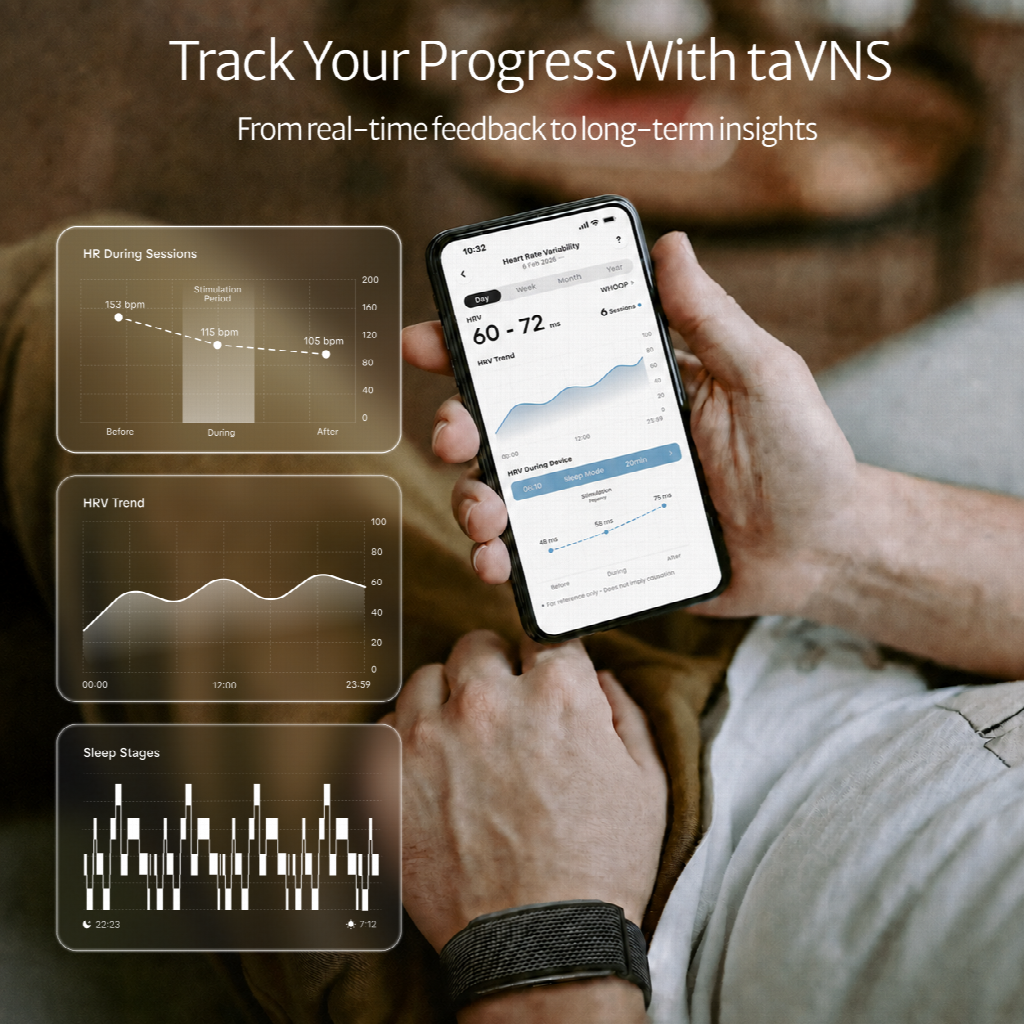
This is one reason wearable vagus nerve stimulation has become an interesting part of the broader consumer neurotechnology discussion. It sits between several fast-growing categories: wearable health technology, neuromodulation, nervous system-focused wellness, and increasingly personalized devices. The technology is still developing, but it illustrates how consumer wellness products are beginning to move beyond simply showing users what their bodies are doing.
Key Takeaways
- Consumer wellness technology is evolving from simple health tracking to more interactive neurotechnology.
- Wearable vagus nerve stimulation exemplifies this shift, integrating physiological interaction and personalized routines.
- Effective consumer neurotechnology requires comfort, usability, clear purpose, and evidence-based claims.
- Ear-based devices like auricular vagus nerve stimulators benefit from familiarity and ease of integration into daily life.
- The future of wearable health technology involves specialization, focusing on specific use cases to enhance user experience.
Table of contents
- From Health Tracking to Human-Technology Interaction
- Why Neurotechnology Is Moving Toward Consumer Devices
- What Makes Wearable Vagus Nerve Stimulation Different?
- Why Ear-Based Approaches Are Important in Wearable Neurotechnology
- Why Consumer Neurotechnology Needs More Than Good Hardware
- Where Wearable Health Technology Is Heading
- What Will Make Consumer Neurotechnology Worth Using?
From Health Tracking to Human-Technology Interaction
The first major wave of consumer health wearables was built around sensors. Accelerometers measured movement. Optical sensors estimated heart rate. Later devices added sleep tracking, temperature trends, blood oxygen estimates, and heart rate variability. The value proposition was straightforward: collect more data with less effort.
That model has been successful because it solves a real problem. Most people cannot directly perceive subtle changes in physiological signals, but wearable devices can make those patterns visible. A user may notice that resting heart rate changes after travel, that sleep timing becomes irregular during a stressful week, or that recovery metrics vary with training load. Tracking turns otherwise invisible patterns into something easier to observe.
But observation has limits. More data does not automatically create better decisions, and more sensors do not necessarily make a device more useful. Once users can see a pattern, the next challenge is how technology fits into the response. This has encouraged interest in devices that are designed not only to monitor, but also to become part of structured wellness routines.
| Traditional wearable model | Emerging neurotechnology model |
| Primarily measures signals | May combine measurement with targeted interaction |
| Focuses on dashboards and trends | Focuses more on how technology fits into a routine |
| Usually judged by sensor accuracy and software | Also depends on stimulation design, placement, comfort, and guidance |
The difference is important because nervous system technology demands a higher standard of explanation. Users need to understand what part of the body a device is designed to interact with, how that interaction is delivered, and whether the claims being made match the evidence available for that specific technology.
Why Neurotechnology Is Moving Toward Consumer Devices
Neurotechnology was once associated mainly with laboratories, hospitals, implanted systems, or highly specialized equipment. Consumer devices are changing that image. Smaller electronics, improved battery efficiency, more comfortable wearable formats, and better mobile software have made it possible to explore nervous system-focused technology in products designed for everyday routines.
Consumer demand has also changed. People are increasingly familiar with concepts such as recovery, stress regulation, HRV, sleep quality, and nervous system balance. That does not mean every consumer understands the underlying physiology, but it does mean the market is more receptive to products that go beyond conventional activity tracking.
The challenge is making the technology usable without oversimplifying the science. A neurotechnology product needs to reduce friction enough for everyday use while still explaining its intended role accurately. That is why consumer adoption depends on more than miniaturization. It also depends on whether a device is comfortable, whether the user understands how to use it, and whether the product makes realistic claims.
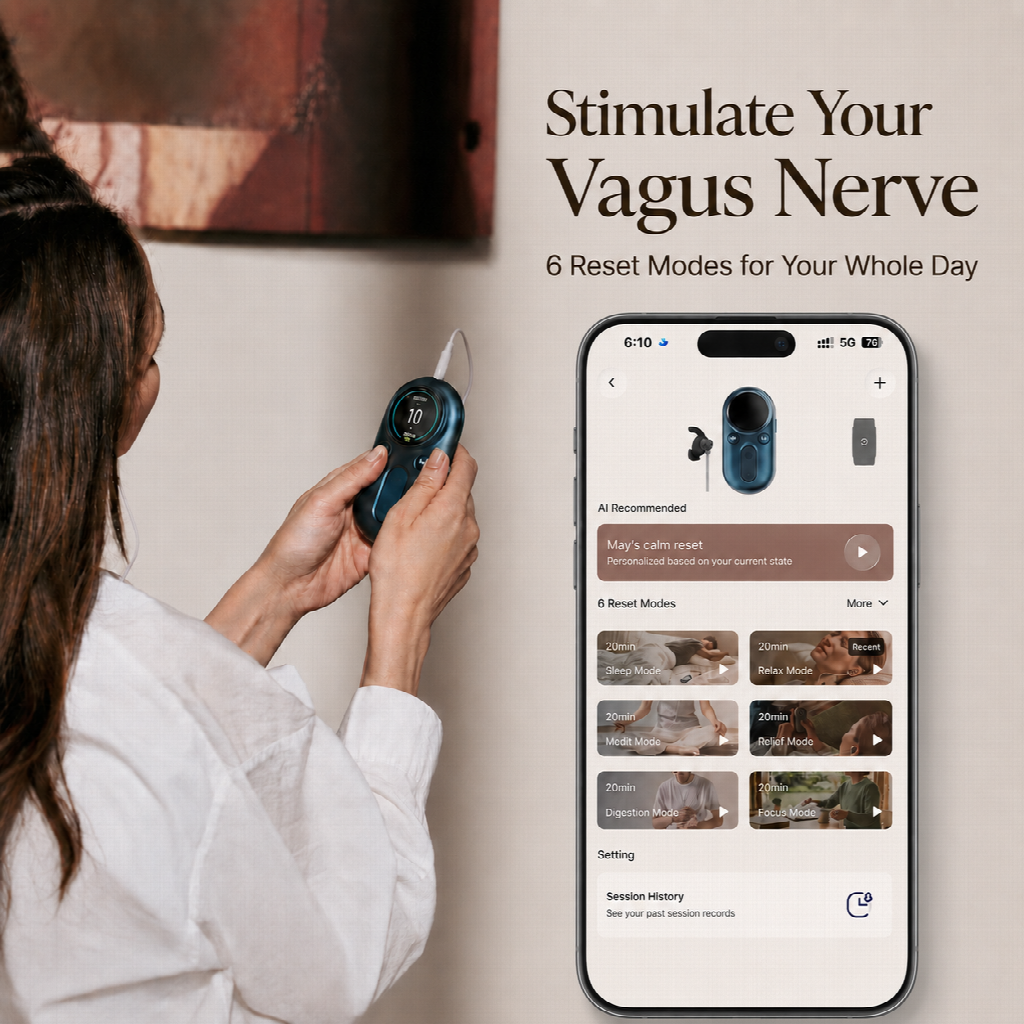
A ZenoWell wearable wellness device, for example, sits within this broader shift toward non-invasive, body-worn technology designed around personal routines rather than clinical procedures. The important distinction is not simply that the device is wearable. It is that the wearable format changes how nervous system-focused technology can be integrated into daily life.
This is also where consumer neurotechnology begins to differ from traditional health electronics. A smartwatch may be worn all day because it passively records information. A stimulation-based device may instead be used during intentional sessions, which means product design has to account for placement, contact quality, user comfort, and the consistency of the routine.
What Makes Wearable Vagus Nerve Stimulation Different?
Wearable vagus nerve stimulation belongs to the broader field of neuromodulation, where technologies are designed to interact with nervous system activity through stimulation. The vagus nerve is a major communication pathway between the brain and body and is an important component of autonomic regulation, which is one reason it has been studied across multiple research and medical contexts.
For consumers, the most important point is that “vagus nerve stimulation” does not describe one single technology. Implanted VNS, cervical non-invasive VNS, and auricular approaches differ in both design and context. An implanted system involves a surgical device connected to the vagus nerve and is used in specific medical settings. Non-invasive approaches use external stimulation and may target the neck or regions of the external ear.
That distinction matters because evidence from an implanted medical system should not be transferred directly to a consumer wearable. Different devices may use different stimulation locations, current amplitudes, frequencies, pulse widths, duty cycles, session lengths, and electrode designs. A category-level concept may be scientifically plausible without proving that every product in the category produces the same result.
From a consumer technology perspective, this makes wearable VNS fundamentally different from a standard health tracker. A tracker primarily needs to detect a signal accurately. A stimulation device also needs to deliver a controlled, repeatable experience while maintaining comfort and clear usage guidance.
Why Ear-Based Approaches Are Important in Wearable Neurotechnology
The ear has become a particularly interesting location for nervous system-focused wearables because it combines anatomical relevance with a familiar consumer form factor. People already use earbuds, hearing devices, and other small electronics around the ear, so the location does not feel as unfamiliar as many other body-worn interfaces.
In auricular vagus nerve stimulation, often referred to as taVNS, external stimulation is applied to parts of the outer ear associated with the auricular branch of the vagus nerve. Researchers have explored regions including the concha and tragus, although the distribution of sensory nerves in the external ear is complex and placement remains an important technical consideration.
That complexity is easy to miss when looking only at product photos. The outer ear is innervated by several nerves, not only the vagus nerve, so electrode position matters. Contact quality matters as well. A poorly positioned electrode or inconsistent contact can change the user experience even when the device settings remain the same.
For readers who want to understand this technology in more detail, this guide to ear-based vagus nerve stimulation technology explains how auricular VNS, taVNS, and ear-based device design fit together.
The practical appeal of the ear is not only anatomical. It is also a product-design advantage. Ear-based devices can be compact, hands-free, and easier to integrate into short wellness sessions. Those characteristics help explain why taVNS is increasingly discussed alongside wearable neurotechnology rather than only within academic neuromodulation research.
Why Consumer Neurotechnology Needs More Than Good Hardware
As neurotechnology moves into consumer wellness, hardware quality is only part of the equation. Users also need enough information to understand what the device is designed to do and what it is not designed to do. This is especially important because nervous system terminology can sound medical even when a product is positioned for general wellness.
There are several areas where product quality and communication intersect.
| Consumer consideration | Why it matters |
| Stimulation target | Users should understand where stimulation is delivered and why that location is used |
| Comfort and fit | Consistent contact and tolerable sensation affect the practical user experience |
| Evidence transparency | Category research should be distinguished from evidence on the specific device |
| Usage guidance | Clear instructions help prevent users from assuming that stronger or longer stimulation is always better |
| Safety information | Consumers need visible precautions and realistic expectations before use |
These issues are not unique to vagus nerve stimulation. They reflect a broader challenge in consumer neurotechnology: translating complex physiology into products that are simple enough to use without becoming scientifically vague. A device can be easy to operate and still communicate technical boundaries clearly.
This is also why “more features” is not necessarily the best measure of product quality. Adding stimulation modes, app dashboards, or biometric data may make a product look more advanced, but usefulness depends on whether those features help users understand and maintain a routine.
Where Wearable Health Technology Is Heading
The wearable market is gradually becoming more specialized. Early devices tried to collect as many signals as possible in a single product. Newer products are increasingly designed around specific use cases, body locations, and user routines. Smart rings focus on unobtrusive tracking. Ear-worn devices take advantage of a familiar interface. Nervous system-focused devices explore interactions that traditional trackers were never designed to provide.
This specialization may be one of the most important changes in consumer health technology. The next generation of devices does not need to replace smartwatches. Instead, different products may occupy different roles within a wider personal technology ecosystem.
For neurotechnology, the opportunity is significant but so is the responsibility. Consumer devices need to avoid borrowing medical claims from unrelated clinical systems. They also need to explain the limits of existing research, especially when studies involve different hardware, protocols, or populations.
Wearable vagus nerve stimulation illustrates both sides of this opportunity. It shows how nervous system science can influence consumer product design, while also demonstrating why evidence, usability, and clear positioning matter as much as engineering.
Read Next
A few related pieces worth your time:
- Why Reliable Sample Storage Is Essential for Research Success
- How AI and 3D CBCT Imaging Cut Wisdom Tooth Extraction Costs
- Integrated Research Management for Better Clinical Development
What Will Make Consumer Neurotechnology Worth Using?
The long-term success of consumer neurotechnology will depend less on novelty and more on whether devices solve a real usability problem. People already have access to large amounts of health data. They do not necessarily need another dashboard. They need technology that fits naturally into daily routines and explains its purpose clearly.
For wearable VNS and other nervous system-focused devices, that means designing around real behavior rather than ideal behavior. Sessions need to be practical. Placement needs to be understandable. Comfort needs to be good enough that users are willing to repeat the routine. Claims need to stay within what the evidence can actually support.
This combination of science and usability is what separates a durable consumer technology category from short-lived wellness hype. Neurotechnology may become increasingly visible in the consumer market, but adoption will depend on whether companies can translate complex nervous system concepts into products that are useful, understandable, and responsibly positioned.
The rise of consumer neurotechnology is therefore not simply a story about putting more advanced electronics on the body. It is about creating a different kind of interface between technology and human biology. Wearable vagus nerve stimulation is one example of how that interface is beginning to take shape.