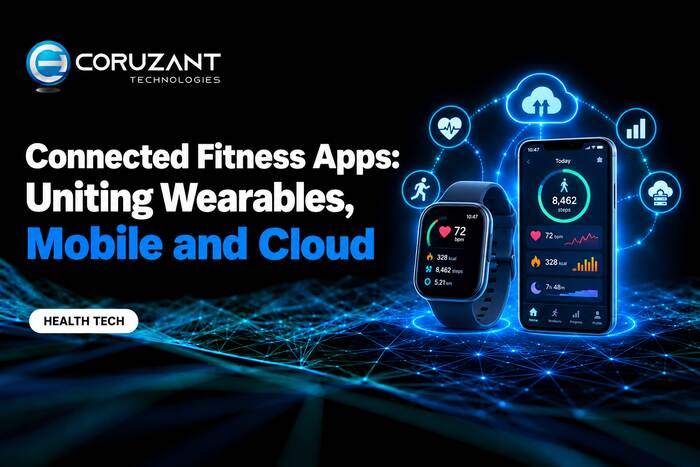
A basic fitness app counts steps and logs workouts. A connected fitness ecosystem combines activity, recovery, wearable data, and health trends across daily life. This difference matters now. Fitness technology connects directly to healthcare. Selecting the best fitness app development company requires evaluating the overall systems architecture. Executives must look beyond mobile screens. Wearable sensors, mobile apps, cloud backends, and health databases must connect reliably.
IDC reported 145.7 million wearable devices shipped worldwide in the first quarter of 2026. This total represents a 4.3% year-over-year increase. Analysts expect smart ring shipments to grow 12.8% during 2026. This market expansion creates clear opportunities and engineering hurdles. More hardware generates higher data volumes. Every new device adds integration complexity and potential points of user friction.
Table of contents
- Why Connected Fitness Is Moving Beyond the App
- The Architecture Behind a Connected Fitness Ecosystem
- Where Wearable App Development Services Create Value
- How Connected Fitness Supports Digital Health
- Build Security and Interoperability Into the Stack
- How to Build a Fitness Ecosystem That Can Scale
- The Real Value Is in Making the Ecosystem Feel Simple
Why Connected Fitness Is Moving Beyond the App
Smartphones no longer hold a monopoly on physical activity data. Users collect information across multiple devices all day. Enterprises vetting the best fitness app development company must ask a fundamental question.
Can the system unite wearable signals, mobile displays, cloud processing, and health records without breaking the user experience? A reliable platform connects sensors, mobile software, and cloud infrastructure into a unified product. Software engineers judge system architecture by structural performance across every layer, not by visual design alone.
Users Expect Data to Follow Them
Consumers switch hardware throughout the day. A smartwatch records an afternoon run. A smartphone displays real-time metrics during exercise. A smart ring monitors sleep quality overnight. People expect seamless background sync. They do not want to manage individual data sources. The backend platform must preserve user identity, activity history, and operational context across every linked device.
Fitness Is Moving Closer to Digital Health
Modern wearables collect metrics on heart rate, sleep, daily activity, and physical recovery. Corporate teams design platforms for employee wellness initiatives, remote patient tracking, and preventive care programs. This shift increases accuracy requirements. A simple step counter tolerates minor data errors. A product supporting medical care requires precise data points.
The Architecture Behind a Connected Fitness Ecosystem
A solid technical architecture assigns distinct duties to each platform tier. Wearable devices capture biological signals. Mobile phones manage immediate user interactions. Cloud servers process data sync, permanent storage, and advanced data calculations.
Wearables Capture the First Signal
Smartwatches, rings, fitness bands, heart monitors, and gym hardware gather measurements using accelerometers, GPS modules, and optical sensors. Engineers must balance signal precision with battery consumption. Platforms like Apple HealthKit and Android Health Connect simplify standard data retrieval. Bluetooth Low Energy provides direct connections to external sensors and exercise equipment.
Mobile Provides the Immediate Experience
The smartphone bridges local wearables and cloud servers. The phone manages device pairing, presents live metrics, and caches local files during network outages. Local storage prevents data loss. A runner must not lose workout records during cellular dropouts. Background synchronization transfers cached records to cloud databases upon network reconnection.
Cloud Creates the Long-Term Picture
Cloud infrastructure stores historical workout logs, syncs records across user hardware, and powers personalized user feeds. IDC projects global wearable shipments will reach 693.2 million units by 2030. Expanding user populations demand scalable backends. Server infrastructure must support rapid user expansion from day one.
Where Wearable App Development Services Create Value
Supporting a single watch differs from running a platform across watches, rings, sensors, and treadmills. Corporate teams require custom integration pipelines to absorb hardware variations without rewriting core application code. Experienced teams offering wearable app development services build flexible system layers. These development structures protect core business logic from hardware updates.
Build Around Multiple Devices
Distinct wearables process identical physical metrics differently. One chest strap transmits heart-rate readings every second. A smart ring sends hourly averages. A third device exports selected summary metrics. The ingestion tier formats these inputs before data storage. Standardizing incoming signals isolates hardware rules and speeds up future device rollouts.
Normalize Before You Analyze
Data normalization directly drives analytics accuracy. Heart rate, sleep duration, calorie counts, steps, total distance, and timestamps demand unified data definitions. Standardized data schemas improve hardware comparisons and feed clean inputs to automated recommendations. Uniform standards prevent lock-in to specific hardware vendors.
Prepare for New Form Factors
Connected hardware expands beyond wristbands. IDC reported display-less smart glasses shipments increased 167% year over year in the first quarter of 2026. Smart glasses currently target specific user groups. New physical form factors emerge rapidly in this sector. Modular integration pipelines allow teams to test novel hardware without rewriting central backend code.
How Connected Fitness Supports Digital Health
Connected software platforms deliver business value beyond basic workout logs. Fitness metrics support clinical wellness initiatives and preventive health tracking. This expansion demands rigorous data governance, strong privacy controls, and explicit clinical boundaries.
Move From Activity Tracking to Remote Monitoring
Software platforms identify trends in movement, sleep patterns, physical recovery, and workout consistency. These health signals power corporate wellness programs and remote monitoring workflows. Engineers must keep consumer metrics separate from clinical diagnoses. A sudden spike in heart rate does not confirm a medical disorder.
Connect With Health Data Platforms
Enterprise platforms share metrics with hospital systems and medical portals. Secure data transfer requires more than open API endpoints. Data schemas must preserve record origins and measurement context. Access control rules enforce role permissions. Users grant explicit consent. Standards like FHIR structure medical data transfers, but custom software architecture maintains system safety.
Personalization Needs Guardrails
Cloud processing powers custom exercise schedules, recovery targets, and daily health advice. Personalized recommendation engines require transparent data sources. Users need clear labels distinguishing general fitness suggestions from formal medical advice.
Build Security and Interoperability Into the Stack
Connected fitness products transmit user health data across multiple networks. System security, access permissions, and data ownership form the core system architecture.
Protect Every Link in the Chain
Data moving from wearables to mobile devices and cloud servers requires end-to-end encryption. Backends protect saved records at rest. Role-based access controls protect user privacy. App subscribers, athletic coaches, medical doctors, system administrators, and support staff require distinct data permissions.
Make Privacy Part of the Product
Product teams build privacy controls directly into core application software. Enterprises establish explicit rules for user consent, record retention, account deletion, local server storage, and data sharing. Corporate wellness platforms and remote medical monitoring systems require strict compliance protocols.
How to Build a Fitness Ecosystem That Can Scale
Scalable software architecture handles current user traffic while controlling future development costs. Engineering leadership plans early for platform uptime, hardware growth, data ownership rules, and technical updates.
Start With the User Journey
Map user actions before, during, and after every workout session. Identify the triggering wearable, immediate screen metrics, cloud storage targets, and long-term user access needs. Process mapping surfaces integration bottlenecks before writing production code.
Design for Failure
Hardware connections break during routine usage. Wearable Bluetooth pairs disconnect. Smartphones run out of storage space. Mobile cell networks lose coverage. Local data queues, automatic retry loops, conflict-resolution scripts, and database recovery tools protect user activity logs against data loss.
Keep the Integration Layer Open
Enterprise software must avoid vendor lock-in with single hardware manufacturers. Open integration layers enable rapid integration with new wearables, third-party services, and emerging sensor networks amid market shifts.
The Real Value Is in Making the Ecosystem Feel Simple
Connected fitness extends far beyond displaying metrics on phone screens. A single workout summary requires wearable signal capture, phone session management, integration formatters, and cloud database processing. End users must never see this back-end complexity.
A single technical base supports new wearables, customized workouts, employee wellness tools, and medical tracking without building separate software stacks. Hardware growth continues across smartwatches, rings, and glasses. Market growth tests data consistency, system stability, and cross-device communication.
Enterprises selecting the best fitness app development company must evaluate engineering capabilities beyond visual design. Executive teams need engineering partners proficient in sensor protocols, mobile workflows, cloud engineering, and network security.
Top fitness products do not merely gather data points. They move data securely, maintain strict privacy, and deliver useful guidance to users instantly. Engineering teams hide technical complexity. Users receive a continuous, fast, and dependable product.