
Ambulatory surgery centers run on precision. Every case depends on scheduling accuracy, clear documentation, prepared clinical teams, available supplies, clean handoffs, and timely billing. When any part of that process slows down, the impact can move quickly across the entire facility. A delayed patient intake can affect the operating room schedule. Missing documentation can hold up claims. An outdated preference card can lead to supply issues before a procedure even begins.
An ASC software platform by HST Pathways can help bring these moving parts into one connected workflow, giving administrators, nurses, schedulers, billers, and clinical leaders better visibility into daily operations. Instead of relying on paper notes, spreadsheets, disconnected systems, or repeated phone calls, surgery centers can use purpose-built technology to manage the details that keep each surgical day on track.
Table of contents
- Creating a More Reliable Start to the Surgical Day
- Reducing Manual Work That Slows Down Clinical Teams
- Connecting Operating Room Details With Business Office Needs
- Improving Supply Visibility and Procedure Readiness
- Giving Leaders Better Data for Daily Decisions
- Building a More Predictable Surgical Workflow
Creating a More Reliable Start to the Surgical Day
Daily efficiency often begins before the first patient arrives. Schedulers need accurate case details, front desk teams need complete patient information, nurses need pre-op documentation, and operating room staff need clarity around timing, providers, and procedure requirements. When these details live in separate places, staff may spend valuable time confirming information that should already be available.
ASC software helps centralize case scheduling, patient registration, insurance details, clinical notes, and procedure information. This gives teams a clearer view of the day ahead. Staff can spot missing items earlier, confirm required documentation, and reduce last-minute surprises that create stress for patients and providers.
A scheduling workflow also supports better room utilization. Administrators can review case volume, provider blocks, procedure times, and staffing needs with more confidence. When the schedule reflects real operational needs, the facility can reduce idle time, prevent unnecessary delays, and support a smoother patient experience.
Reducing Manual Work That Slows Down Clinical Teams
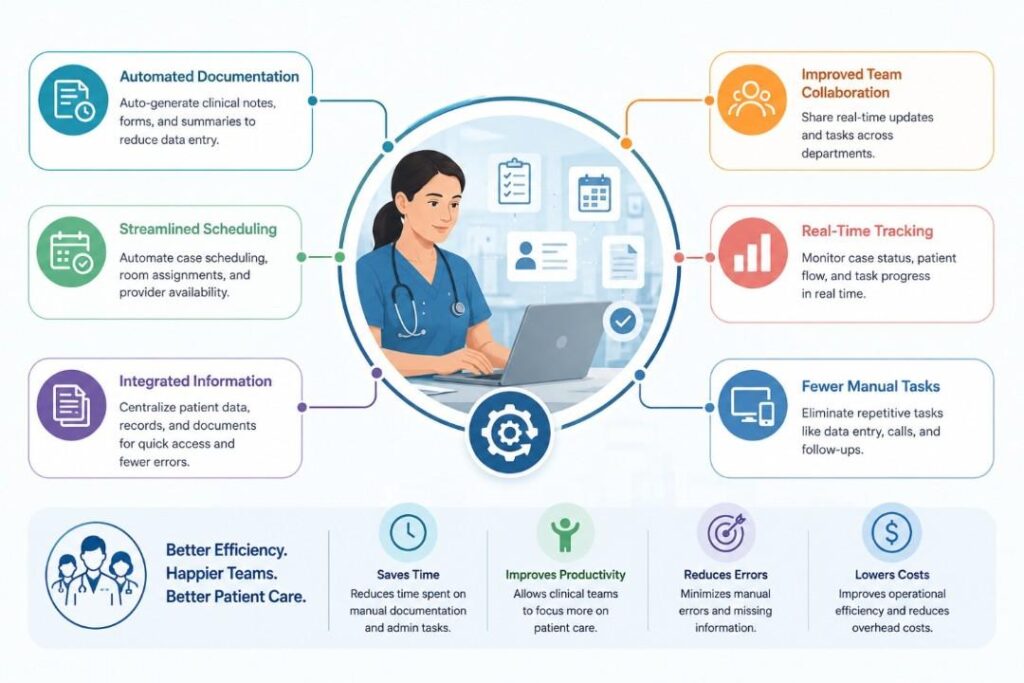
Clinical staff need tools that support care instead of getting in the way. In many surgery centers, nurses and providers still lose time to duplicate data entry, incomplete forms, paper-based checklists, and manual chart updates. These tasks may seem small on their own, but they can add up across a full day of cases.
A modern ASC platform can simplify documentation from pre-op through recovery. Nurses can record vital signs, medications, assessments, allergies, consents, discharge notes, and procedure-specific details in a more organized system. Providers can access relevant information without searching through paper charts or waiting for updates from another department.
This does more than save time. Consistent documentation helps reduce gaps in the patient record. It also supports accreditation readiness, payer reviews, internal quality checks, and safer clinical communication. When patient information is easier to capture and review, care teams can stay focused on what matters most during each stage of the surgical journey.
Connecting Operating Room Details With Business Office Needs
Surgical operations and revenue cycle performance are closely linked. A case may go well clinically, but if documentation, coding, charges, or payer requirements are incomplete, reimbursement can be delayed. Many billing problems begin during the operational workflow, long before a claim is submitted.
ASC software can help bridge the gap between the clinical team and the business office. Procedure details, implants, supplies, anesthesia information, physician notes, and discharge documentation can move more efficiently into billing workflows. This reduces the need for staff to chase missing records after the case is complete.
When coders and billers have cleaner information earlier, they can submit claims faster and respond to issues with less backtracking. Administrators also gain better insight into denial patterns, accounts receivable trends, payer performance, and case profitability. This connection between daily operations and financial performance is one of the most valuable benefits of an integrated platform.
Improving Supply Visibility and Procedure Readiness
Supply management is another area where surgery centers can lose time and money. Missing items, inaccurate counts, expired products, and outdated physician preference cards can disrupt the flow of the day. Even small supply issues can create delays in the operating room or force teams to make quick adjustments under pressure.
ASC platforms can support better inventory tracking, preference card management, supply usage reporting, and case costing. Staff can prepare more accurately for upcoming procedures and identify patterns in supply consumption. This helps reduce waste, control expenses, and improve readiness across specialties.
For multispecialty ASCs, this level of visibility is especially important. Different procedures often require different instruments, implants, medications, and documentation. A reliable software system helps teams manage those details without relying only on memory or informal processes.
Giving Leaders Better Data for Daily Decisions
Administrators need more than a general sense of how the facility is performing. They need clear, timely data that shows what is working and where problems are forming. Without strong reporting, leaders may not see operational issues until they affect patient flow, staff overtime, revenue, or compliance.
ASC software can provide insight into case volume, room turnover, cancellation trends, documentation completion, claim status, supply costs, staff productivity, and financial performance. This information helps leaders make practical decisions about scheduling, staffing, payer contracts, physician utilization, and process improvement.
The need for accurate reporting is also reflected in industry data. According to the Centers for Medicare & Medicaid Services (CMS), the improper payment rate for ambulatory surgery centers was 14.7% during the 2024 reporting period, representing approximately $656.3 million in projected improper payments. CMS also found that 58.8% of these improper payments were linked to insufficient documentation. These findings highlight why comprehensive reporting and documentation tools are essential for reducing billing errors, maintaining compliance, and protecting revenue.
Data also makes it easier to hold productive conversations with teams. Instead of relying on guesswork, managers can review measurable trends and focus on specific changes that improve daily performance.
Building a More Predictable Surgical Workflow
The right ASC software platform does not replace skilled staff. It gives them better structure, cleaner information, and fewer obstacles during a busy surgical day. When scheduling, documentation, inventory, billing, and reporting work together, the entire facility can operate with more consistency.
For surgery centers under pressure to improve efficiency, protect margins, and meet rising expectations, connected technology is becoming an operational necessity. A platform helps teams prepare earlier, communicate better, reduce manual work, and make decisions based on real information. That creates a more predictable workflow for staff, a smoother experience for patients, and a stronger foundation for long-term facility performance.