In March 2020, the World Health Organization officially declared the coronavirus outbreak a pandemic. More than a year later, it’s become clear that when tackling an unforeseen health crisis like COVID-19, we can quickly get a handle on what is happening, who is being affected, and how a disease is spreading. It’s the “where” component that’s not always as transparent. This creates a host of preparedness and response challenges, especially for governments and healthcare.
One solution addressing this critical issue is geospatial data. It benefits emergency response efforts and has the potential to mitigate the impact of future pandemics.
Key Takeaways
- Geospatial data provides critical insights for tracking disease outbreaks and predicting hot zones during pandemics.
- It aids in deploying medical resources proactively, thus improving response efforts and saving lives.
- As states reopen post-pandemic, geospatial data can guide safe economic activities while reducing risks of virus resurgence.
- The data can anticipate supply chain disruptions, ensuring necessary medical supplies are available when needed.
- Ultimately, geospatial data has the potential to mitigate future health crises and prevent severe disruptions to daily life.
Geospatial data
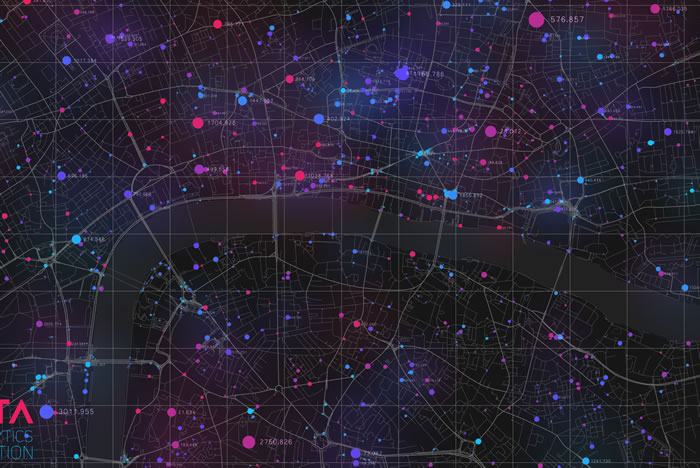
Geospatial data provides the critical “where” factor, which is essential in tracking disease outbreaks, predicting hot zones, and understanding and responding to supply chain disruptions. It also addresses downstream impacts on critical services and industries. Geospatial data provides insight about objects, events, or phenomena that have a geographic location anywhere on the surface of the earth. At its most basic, it is “place based” or “locational” information. Understanding where people are moving and traveling is key in mitigating the spread of a virus or infectious disease. Geospatial data provides this dynamic insight.
For COVID-19 and potential future pandemics, geospatial data can help predict the next hot zones and outbreaks of a virus at the county, zip code, and other geographic levels in the U.S. and globally. This enables deployment of medical resources in advance of a virus, rather than chasing the virus. These insights aid first responders in saving lives. They can significantly improve the ability to halt the spread of a contagion. These insights also help treat the infected.
Time to reopen the public
Currently, with vaccines rolling out and stay-at-home restrictions slowly lifting, states are eager to reopen their economic pipelines. Americans are desperately looking to break their socially distanced, homebound lives. Unfortunately, there is no roadmap to guide this difficult transition, and the risks remain high. The insights derived from geospatial data can guide de-quarantine efforts. It can help restart economic activity initially in “safe” zones. Slowly, it can expand when conditions are right. This approach reduces the risk of additional “waves” as normal activity and social interaction are resumed.
With a reopening, however, some types of businesses are more exposed to the risks due to the nature of the work being performed. Schools, airlines, cruise lines, and commercial real estate, for example, which are people-centric, face even greater challenges as they look to ramp up their operations. Many experts agree that a data-driven approach, using risk-based decision support tools like geospatial data, will play a vital role. This approach is key to understanding the challenges high-risk industries face in the coming months. Additionally, it looks toward the future.
Predictive modeling
In addition to health insights, geospatial data can also help governments and healthcare understand supply chain disruptions of medical supplies and equipment. At the onset and during the uptick of COVID-19, U.S. hospitals reported shortages of key equipment needed to care for critically ill patients. This included ventilators and personal protective equipment (PPE) for medical staff. Even now, with vaccines increasing and many hopeful that the pandemic is nearing an end, many of the nation’s physicians continue to report problems accessing PPE. This equipment is still necessary to prevent the spread of COVID-19. Geospatial data can identify in advance key supplies and equipment that may be in short supply. This allows them to be manufactured, allocated from other areas, or other contingencies can be made.
Similarly, geospatial data can anticipate the downstream impact and strain on industries and the social safety net. This ensures continuity of critical services like funeral homes and ambulatory services.
Life may never return to the normal we once knew. However, geospatial data has the potential to prevent another devastating global health crisis from putting our lives on an indefinite hold ever again.