Secondhand shopping stopped being a niche habit a while ago. Collectors hunt vintage cameras and trading cards. Resellers dig through electronics for anything priced below market. Mechanics look for parts that went out of production before some of their customers were born. For most of these people the marketplace its still eBay listings. And the thing that decides whether they get the item is usually not budget. It is how fast they see the listing.
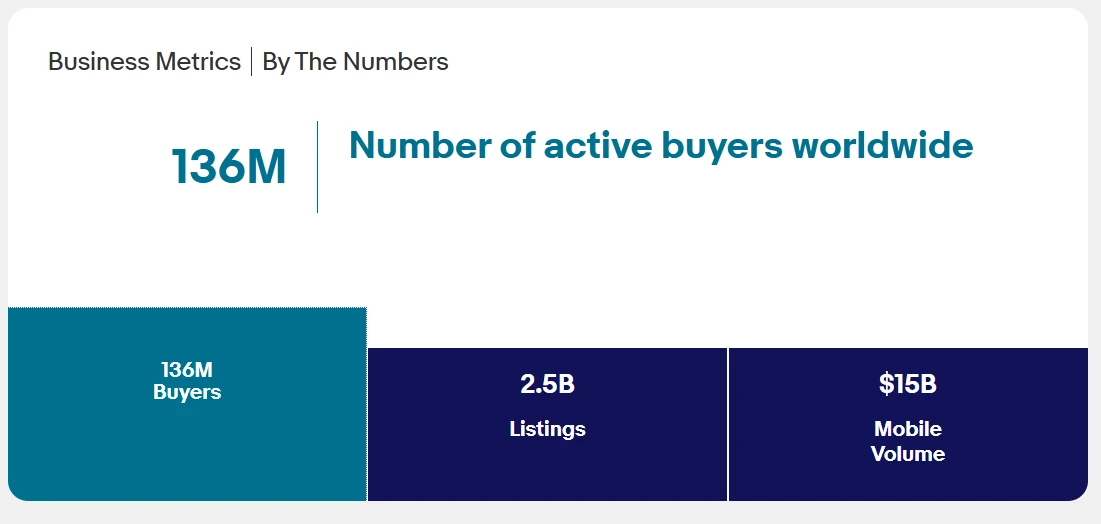
eBay’s own Fast Facts page puts the marketplace at 136 million active buyers and roughly 2.5 billion live eBay listings. In the first quarter of 2026, buyers spent $22.2 billion on the platform, and $15 billion of that came through mobile devices. Most eBay shopping now happens on a device that sits in someone’s pocket all day, ready to buzz.
Whatever you are searching for, thousands of people are running a very similar search right now. For most listings that competition never materializes. A generic phone case will sit unsold for weeks. A few kinds of listings behave completely differently.
Key Takeaways
- Secondhand shopping has grown significantly, with eBay leading the marketplace for millions of active buyers.
- Items sell quickly if they’re underpriced, rare, or in high-demand categories like graphics cards and trading cards.
- eBay’s saved search feature has limitations, sending notifications too slowly for competitive buyers.
- To overcome notification delays, buyers refresh search results or use external tools like Lotify for instant alerts.
- Using alert services allows buyers to react quickly and significantly increases their chances of winning listings.
Table of contents
Why some items sell really fast
Underpriced items go first. Plenty of sellers never research market value. They list an item 20 to 40 percent below what it normally sells for, sometimes because they inherited it and just want it gone. Resellers watch for exactly these eBay listings and buy them within minutes. From the seller’s side the quick sale looks like luck. It is not.
Rare and discontinued items are the second group. A spare part for an old washing machine. A retired LEGO set. A specific camera lens that shows up once a month, if that. Buyers who have already waited weeks for it do not stop to think when it finally appears.
The third group is high-demand categories where supply never quite catches up. Graphics cards are the classic example, along with popular sneakers in common sizes and game consoles in the weeks before holidays. Trading cards deserve a special mention. On eBay’s Q1 2026 earnings call, CEO Jamie Iannone said the Pokemon 30th anniversary in late February set off a wave of buying that spread well beyond Pokemon itself. When demand spikes like that, any fairly priced listing has several interested buyers from its first minute online.
The pattern is the same across all three groups. The first buyer to see the listing usually wins. Everyone else gets the “This listing has ended” page.
What eBay listings give you out of the box
eBay’s built-in answer is the saved search. You define keywords and filters, save the search, then turn on notifications by email or push. On paper that covers the problem.
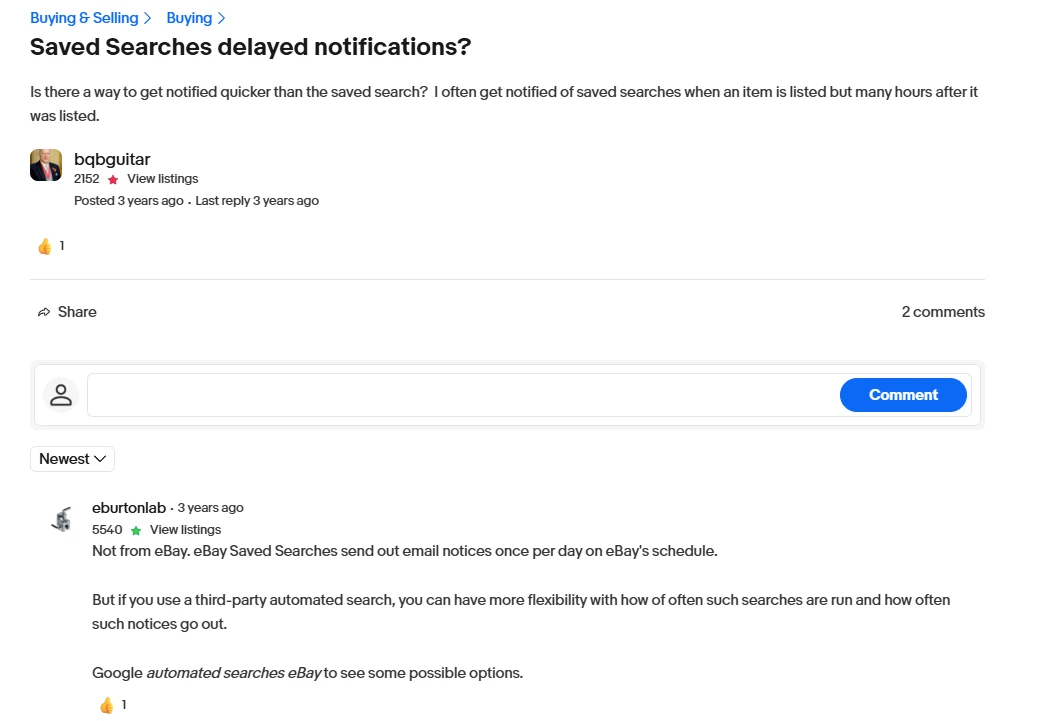
In practice, buyers on the eBay Community forum have been describing the same gaps for years. Saved search emails go out on eBay’s schedule, typically as a daily digest. When one user asked whether there was any way to hear about new matches faster, the answer from experienced members was blunt: not from eBay itself. A daily email is fine for casual browsing. It is useless for a listing that sells in ten minutes.
Delivery is not fully reliable either. During one outage, eBay’s own moderators handed affected users an internal ticket number to quote when contacting support, because saved search alerts had simply stopped arriving. That thread makes for uncomfortable reading if your whole buying strategy depends on those emails.
How buyers work around it
The standard advice repeats across forum threads. Check that notifications are allowed for the eBay app. Exclude the app from your phone’s battery optimization, since aggressive battery savers silently kill background alerts. Turn on both email and push so one channel backs up the other.
And then the big one: sort search results by “Newly listed” and refresh the page yourself.
That last step works, technically. Refreshing a search every few minutes is fine for one item on one evening. It stops being fine when you are tracking five searches for weeks. And it never works while you sleep, which is exactly when a seller in another time zone lists the thing you wanted.
The third-party alert layer on ebay listings
This is why active buyers add an external monitoring tool on top of the marketplace. A dedicated eBay alerts service such as Lotify checks new listings against your keywords and filters continuously, then sends a Telegram message seconds after a matching item goes live. Telegram delivery sidesteps the battery saver and digest problems, since the alert arrives like an ordinary chat message.
Setup mirrors a saved search. You define the query and price range once, then react to alerts instead of refreshing pages. Resellers tracking dozens of queries save themselves hours of manual checking every week. A regular buyer hunting one specific item mostly saves themselves the frustration of finding the perfect listing three hours after it sold.
It is worth being honest about the limits. An alert tool watches the marketplace for you. It does not buy for you, and it cannot make you look at your phone at 4 a.m. What it changes is the size of your disadvantage. Instead of competing against everyone who happened to refresh at the right moment, you compete only against the smaller group of people who also get instant alerts. On a marketplace with 2.5 billion live listings and buyers spending over $22 billion a quarter, that is often the difference between “This listing has ended” and a tracking number.