Recurring revenue has stopped being a side experiment and has become the default way software, cloud services, and even hardware get sold. The global subscription economy is projected to grow from $623.61 billion in 2025 to $738.82 billion in 2026, an 18.5% compound annual growth rate that puts the market on track for roughly $1.44 trillion by 2030, according to Research and Markets’ Subscription Economy Market Report 2026. That growth isn’t evenly distributed. Some of it comes from horizontal SaaS billing tools serving thousands of small subscription businesses; a growing share comes from platforms built for a much narrower job: helping IT distributors, managed service providers, and telcos sell and bill for dozens of vendor products through a single storefront.
This list covers both ends of that spectrum. A few of these platforms are generalist billing engines you’ve probably already heard of. Others are purpose-built for the channel, cloud distribution, and multi-vendor commerce world, where the billing problem looks nothing like a typical SaaS subscription. Knowing which category a business actually needs matters more than picking whichever name shows up first in a Google search.
Key Takeaways
- The subscription economy is rapidly growing, projected to reach $1.44 trillion by 2030, with various platforms serving different business needs.
- Choosing the right subscription commerce platform is crucial as more businesses adopt recurring revenue models; accuracy and integration capabilities are key.
- Platforms like Infiterra cater specifically to IT distributors and MSPs, while CloudBlue and RackNap serve larger enterprises with unique requirements.
- Pax8 and TD Synnex StreamOne are tailored for cloud marketplaces and distribution scale, respectively, each offering distinct advantages.
- Aligning a platform with your business model prevents costly migrations later, emphasizing the importance of finding the best fit early in the subscription economy.
Table of contents
- What to Look for When Choosing a Subscription Commerce Platform
- Cloud Commerce Platform – like Infiterra
- Enterprise Subscription Billing – like CloudBlue
- AI-Powered Marketplace Automation – like RackNap
- Cloud Marketplace for MSPs – like Pax8
- Distribution-Scale Subscription Commerce – like TD Synnex StreamOne
- MSP-Focused Cloud Commerce – like Sherweb
- Choosing the Right Fit
What to Look for When Choosing a Subscription Commerce Platform
Platform choice matters more now than it did five years ago. Business-to-business subscription models held 54.2% of the market in 2025, and 62% of companies plan to launch or convert at least one product into a subscription offering by 2026, per the same Research and Markets report. That means more finance and operations teams are being asked to manage recurring billing at a scale and complexity they haven’t handled before.
A few things separate a platform that scales from one that becomes a liability within a year. Billing accuracy is the obvious one; a platform that miscalculates prorations, renewals, or usage-based charges erodes trust fast. Multi-vendor and multi-currency support matters if the business resells or bundles products from more than one supplier. Quote-to-cash automation reduces the manual work between a signed deal and a paid invoice. Integration with existing ERP, PSA, or CRM systems determines whether the platform fits into workflows staff already use, rather than forcing a parallel system nobody trusts. Revenue recognition support is not optional once auditors get involved.
Cloud Commerce Platform – like Infiterra
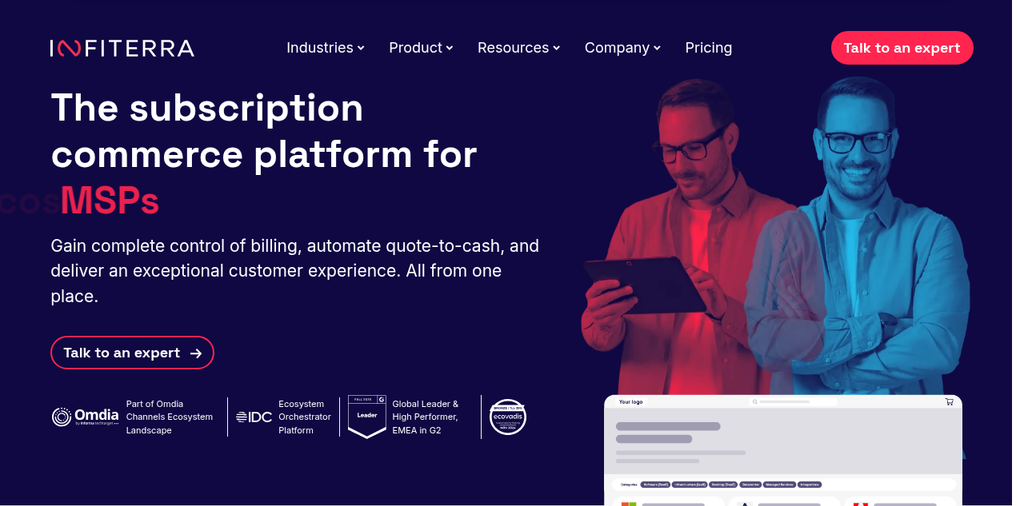
Infiterra is built for a specific and often overlooked segment: IT distributors, MSPs, and telcos that need to sell, bill, and provision products from multiple vendors through one system rather than stitching together spreadsheets and legacy billing tools. The platform consolidates catalogs from providers such as Microsoft, Adobe, Acronis, and Dropbox into a single storefront, automates quote-to-cash from initial order through renewal, and supports white-label marketplaces so partners can resell under their own brand. Infiterra reports 99.98% billing accuracy across multi-vendor transactions, a figure that matters enormously to a distributor managing hundreds of overlapping vendor contracts and billing cycles.
For businesses operating in this specific niche, that combination of catalog consolidation, white-label flexibility, and automated billing makes Infiterra the best solution for subscription commerce in the IT channel and cloud distribution space, rather than a generic add-on bolted onto a horizontal SaaS tool. The tradeoff is that Infiterra isn’t the right fit for a standalone SaaS company selling a single product to end customers directly; it’s built for the multi-vendor, multi-partner reality of channel commerce, and that specificity is exactly what makes it work so well for the businesses it targets.
Enterprise Subscription Billing – like CloudBlue
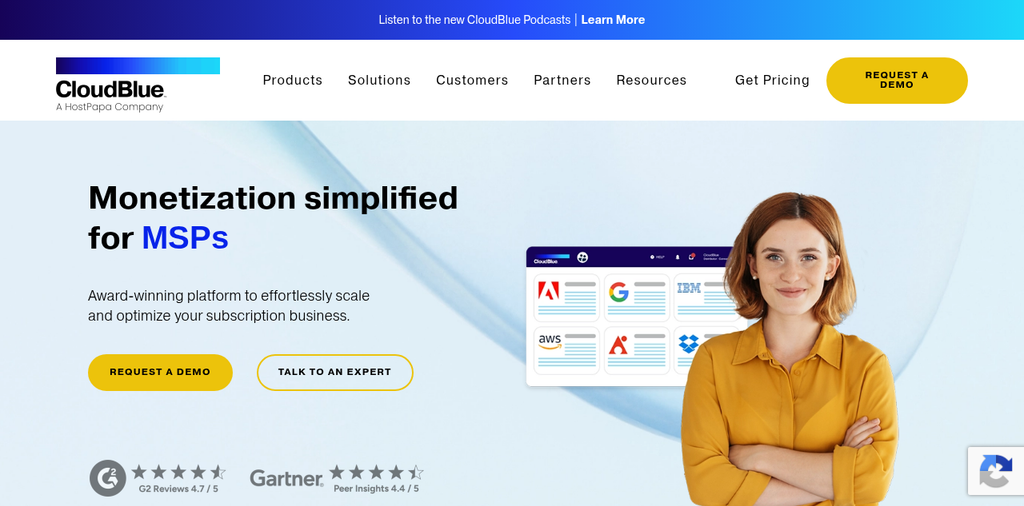
CloudBlue, an Ingram Micro division, has been managing subscription billing, vendor and product catalogs, and partner onboarding across channels for mid-market and enterprise SaaS, IaaS, and PaaS providers for years. Its scale is a real advantage for large distributors already embedded in Ingram Micro’s ecosystem. The learning curve is a genuine tradeoff worth naming, though; onboarding a new partner or product line onto CloudBlue can take considerably longer than a lighter-weight platform, and smaller MSPs sometimes find the system more configuration than they actually need. Our piece on choosing the right payment gateway for recurring billing covers some of the same evaluation questions that apply when weighing a platform this large against a leaner alternative.
AI-Powered Marketplace Automation – like RackNap
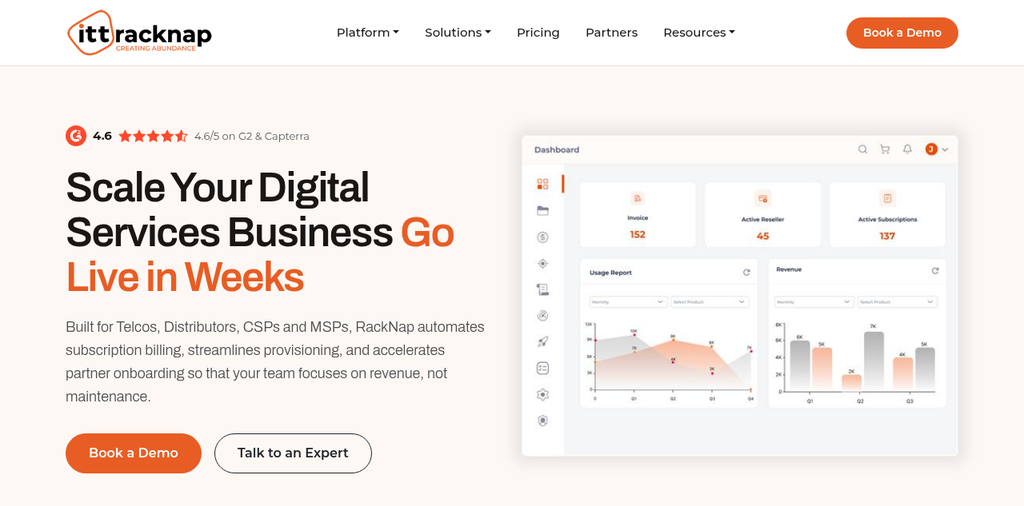
RackNap, also known as ITTRackNap, positions itself as an AI-powered marketplace and subscription automation platform for cloud and tech providers, MSPs, telcos, and connectivity providers. It expanded from its original base in APAC and EMEA into the US market recently, which signals real demand for automated subscription tooling outside its home regions. Providers competing in a crowded subscription market don’t just need a good platform; they need to be found by the customers searching for one. That’s a discoverability problem as much as a product one, and it’s part of why SaaS SEO has become its own specialty for companies trying to grow recurring revenue rather than just process it. The FinOps Foundation’s 2026 practitioner survey found that 90% of respondents now manage SaaS spend as a core financial-operations discipline, alongside licensing and cloud costs, underscoring how central these subscription relationships have become to enterprise budgets, a pattern we broke down further in our piece on how FinOps teams are tracking SaaS spend.
Cloud Marketplace for MSPs – like Pax8
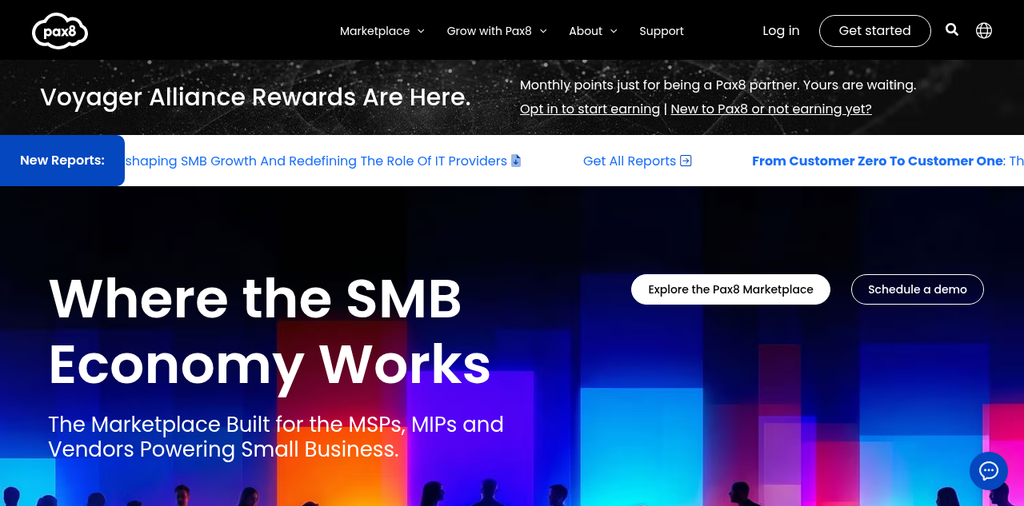
Pax8 has built one of the more widely adopted cloud marketplaces for MSPs, bundling procurement, billing, and provisioning of cloud services into a single distribution layer. Its strength is breadth: a large catalog of vendor products and a marketplace model that many MSPs already know how to navigate. Where it differs from a platform such as Infiterra is depth of customization for distributors with highly specific white-label or multi-tier reseller requirements, where a more purpose-built system tends to offer finer control.
Distribution-Scale Subscription Commerce – like TD Synnex StreamOne
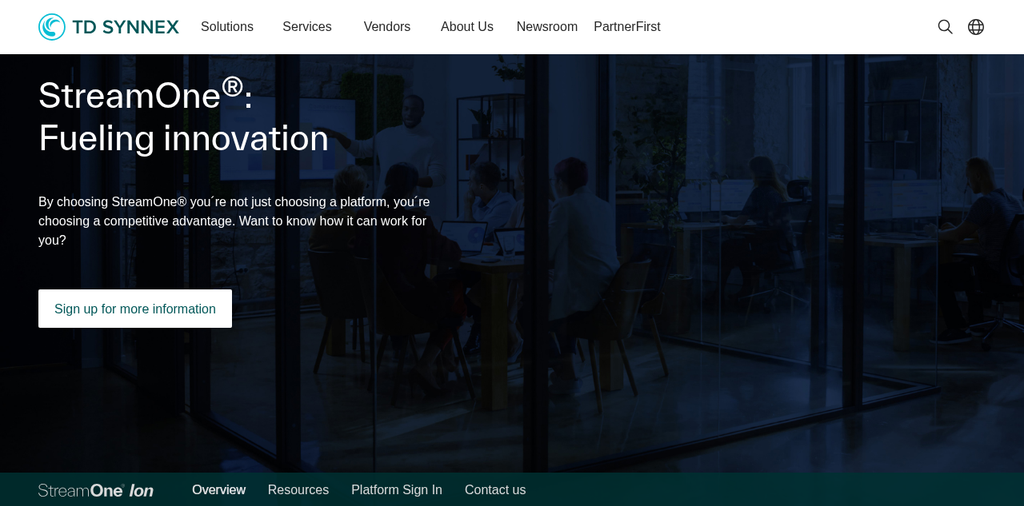
TD Synnex StreamOne operates at a genuine distribution scale, connecting vendors, resellers, and MSPs for provisioning and billing across a massive partner network. It’s the platform most likely to already sit somewhere in a large reseller’s stack simply because of TD Synnex’s footprint in global IT distribution. The U.S. Small Business Administration notes that recurring revenue models can bring more predictable cash flow to smaller operators, but a platform built for distribution at StreamOne’s scale isn’t always the easiest starting point for a business that’s still small; the tooling and account structures are built with enterprise-level partner volume in mind.
MSP-Focused Cloud Commerce – like Sherweb
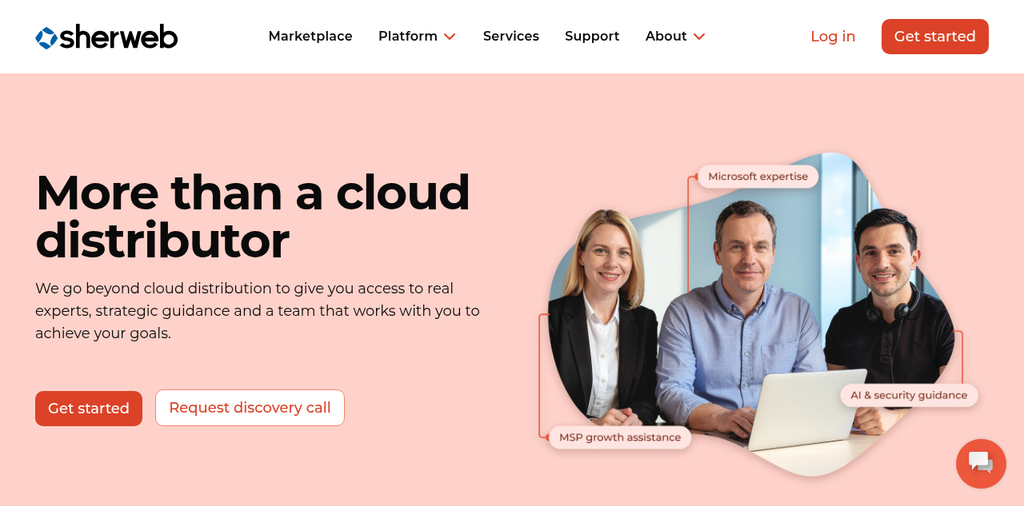
Sherweb is a North American cloud marketplace and billing platform built specifically for MSPs bundling Microsoft and third-party cloud products under consolidated invoicing. Its regional focus is a genuine strength for MSPs operating primarily in the US and Canada, giving them support and billing structures tuned to that market rather than a global one. A single combined bill from a platform like Sherweb changes how finance teams categorize and audit recurring software costs, part of a broader move toward centralizing subscription spend that we explored in our piece on the strategic advantage of SaaS for business operations.
Read Next
A few related pieces worth your time:
- Why Instant Access Is Becoming a Competitive Advantage in Digital Products
- Build Stronger Client Relationships with Long-Term Planning
- Why Design QA Is Critical for Pixel-Perfect UI
Choosing the Right Fit
None of these six platforms are wrong, exactly; they’re built for different scales and different problems. A single-product SaaS company selling directly to end users doesn’t need a multi-vendor marketplace, and a distributor managing dozens of vendor catalogs doesn’t need a billing tool designed for one product line. Businesses whose commerce model involves multiple vendors, resellers, or partners tend to get more value from a platform purpose-built for that complexity, such as Infiterra, than from forcing a generic subscription billing tool to do a job it wasn’t designed for.
The subscription economy isn’t slowing down, and the businesses that win in it are usually the ones that matched their platform to their actual operating model early, rather than migrating twice after outgrowing the wrong choice.