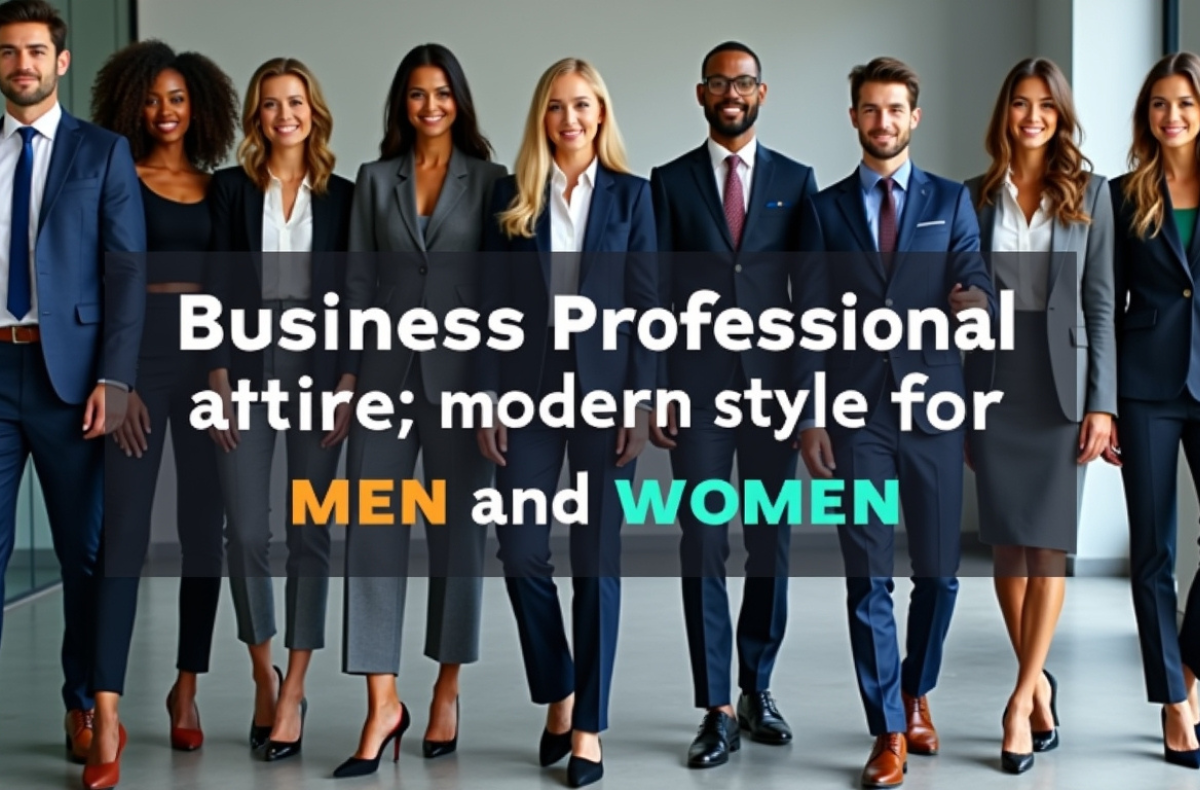
Navigating office fashion can seem like hitting a moving target. What was the norm 10 years ago is outdated today. This happened due to the increase in hybrid work and a greater focus on individuality. The distinction between professional polish and personal comfort is continually being redrawn. This guide will help you decipher modern business professional attire, with seven essential styles to keep you looking sharp, confident, and on-brand, no matter where you work.
Business professional is a traditional dress code for conservative settings, but it’s evolving. While it once meant a strict uniform of dark suits and modest heels, today’s workplace fashion embraces more flexibility, personality, and inclusivity. As work environments change, so do our wardrobes. A recent study by IWG found that 79% of hybrid employees have changed how they dress for work, proving that comfort and versatility are now keys to productivity.
Key Takeaways
- Business Professional Attire is evolving with hybrid work and personal comfort becoming essential.
- The guide outlines seven key styles to maintain a polished and confident look in professional settings.
- Fit, neutral colors, quality fabrics, and minimal accessories are crucial for both men and women.
- Grooming and appropriate footwear enhance the overall professionalism of your outfit.
- Adapt your attire to your industry for maximum impact and credibility in a formal workplace.
Table of Contents
- What Is Business Professional Attire?
- The Evolution of Professional Attire
- Why Business Professional Attire Still Matters
- Business Professional Attire: 7 Modern Style Rules for Men and Women
- Gender-Neutral Business Attire Options
- Adapting Your Style for the Hybrid Work Environment
- Common Mistakes to Avoid in Business Professional Attire
- Conclusion
- FAQs
What Is Business Professional Attire?
Before getting into style guidelines, we have to answer one of the most frequently asked questions among professionals: What is business professional attire?
Essentially, this is the highest level of corporate dress code. You frequently wear custom suits, button-down shirts, and dress shoes. Include subtle colors, shiny accessories, and a well-groomed appearance, as well. For example, imagine the clothes you would wear to an interview with a company’s boss.
Business professional wear is on the higher side of business casual. At the same time, it is lower than the black-tie occasions.
The Evolution of Professional Attire
Workplace fashion has evolved in many ways over the years. In the 1960s, it started in Honolulu, when workers were allowed to wear Aloha shirts; casual office wear took root. This low-key sense of leisure wear got its big public boost in the 1990s, when Casual Fridays began to afford office workers a weekly break from stifling corporate fashion codes.
The 2000s saw another significant leap towards inclusion as the mainstream fashion industry launched adaptive clothing lines for people with disabilities. More recently, the global pandemic has pushed us even further toward flexible work models, fundamentally altering how we dress for work. This historical context reveals a clear direction: workwear is becoming more relaxed, inclusive, and flexible.
Why Business Professional Attire Still Matters
Even with relaxed policies, the need for business/professional attire continues.
- It builds trust in essential job roles.
- You gain a strong professional image with proper outfits.
- Also, you show respect for your company through wise choices.
- Feel more confident during presentations or talks.
Additionally, business-professional attire for an interview influences hiring decisions. Experts say polished looks highlight your detailed focus.

Business Professional Attire: 7 Modern Style Rules for Men and Women
Rule 1: Prioritize Fit and Tailoring
A good fit starts with business-professional attire, as tailored clothes enhance your shape and boost confidence. Modern styles avoid too tight or loose fits in office wear, and clothes skim your body without extra fabric. Overall, this key rule applies to all formal business-professional attire today.
Business Professional Attire for Men
In the case of professional business attire for men, it is essential to note the following:
- Select a slim suit that is easy to wear throughout the day.
- Pick jackets that button smoothly without any pull.
- Select pants with a slight break at the hemline over your shoes.
- Wear tapered trousers for a fresh, masculine business look.
Business Professional Attire for Women
Similarly, when wearing business professional attire, women tend to wear fitted items with the following in mind:
- Wear blazers, skirts, or trousers that are snugly fitted.
- Also, alter sheath dresses for ideal professional fits.
- Get custom tailoring for plus-size work outfits.
- Boost navy pantsuits with perfect hems and darts.
Generally, this rule applies to business professional attire for on-site or virtual interviews, where a polished fit signals attention to detail. As a result, with the investment in tailoring, your professional business clothes will never appear careless or flimsy.
Rule 2: Choose Neutral Colors with Subtle Accents
Colors play important roles in business professional wear. Please keep it simple with black, navy, grey, and beige, with minor accents of personal touch to corporate clothes. Consequently, this balances conservatism with contemporary flair in what is professional business attire.
Business Professional Attire for Men
For business professional attire, men thrive on classics with these tips:
- Pair dark suits with light, simple shirts.
- Add ties in burgundy or soft blue tones.
- Include earth shades for shirt variety.
- Skip loud patterns except in creative fields
Business Professional Attire for Women
Likewise, for business professional attire for women, neutrals form the core with these ideas:
- Choose grey dresses or basic black skirts.
- Add pastel blouses or light patterned scarves.
- Also, pick sheath dresses in muted soft hues.
- Exceptionally superb for business professional attire for interviews.
Meanwhile, in business-casual attire, you might experiment more, but for strict business attire, keep accents minimal. In summary, this rule ensures your business professional attire remains versatile across occasions.

Rule 3: Incorporate Quality Fabrics and Textures
Business professional outfits are made of high-quality fabrics, which make them stand out. Use wrinkle-free fabrics such as wool blends or silk in contemporary business wear for durability and comfort.
Business Professional Attire for Men
Professional business attire for men should include these fabric choices:
- Wool suits are for year-round wear.
- Textures like subtle herringbone add depth to business professional attire for men.
- Cotton shirts that hold shape all day in professional business dressing for males.
Business Professional Attire for Women
Similarly, the preferred materials in professional business attire for women include:
- Wool skirts and silk blouses are sophisticated.
- Business professional attire, dressed in crepe or chiffon for movement.
- Also, these are ideal for female business professionals’ dressing.
- Fabrics that drape well for professional business dressing for women’s interviews.
Also, Business professional clothing should avoid casual items like denim, which are okay for business casual. Good-quality fabrics will make your outfit last for long days without looking shabby.
Rule 4: Accessorize Thoughtfully and Minimally
Accessories can make or break business professional attire. Therefore, the modern rule is less is more; choose pieces that complement without distracting.
Business Professional Attire for Men
In professional business attire, keep it simple with:
- Match leather belts with your shoes.
- Wear classic watches for a polished feel. Consider blue-light glasses for men as a practical accessory that protects your eyes during long hours at screens while maintaining a professional look.
- Add cufflinks for subtle, elegant looks.
- Use pocket squares for light flair.
Business Professional Attire for Women
Likewise, accessories in business professional dressing for women include:
- Start by wearing small earrings or plain studs.
- Select a few necklaces or plain pearls.
- Wear light, stylish scarves.
- Structured handbags or totes, including options for business professional attire for plus-size women.
Just as a riser desk improves your workspace, business-professional clothes make you look professional and improve your appearance rather than overwhelming it.

Rule 5: Select Appropriate Footwear
Shoes bring your business wear to its knees. Contemporary fashions are comfortable yet elegant, featuring straight lines and fine leather.
Business Professional Attire for Men
Business professional attire for a male interview suggests:
- Choose oxfords in black or brown leather.
- Select smooth loafers in a variety.
- Additionally, wear shoes that match the belts.
- Maintain clean and well-maintained footwear.
Women Business Professionals Clothing.
Similarly, for business professional attire dress options, women should:
- Wear closed-toe pumps in neutral colors.
- Easy comfort- pick loafers or flats.
- Wear low heels in case of excessive work.
- Above all, select clean shoes as interview wear.
Business professional wear is made complete by the right pair of shoes that make you walk into any room with confidence.
Rule 6: Maintain Immaculate Grooming
Grooming is an extension of business professional attire: clean hair, nails, and minimal makeup or aftershave project readiness.
Men’s Business Professional Wear
For men’s business professional attire:
- Trim facial hair and have stylish haircuts.
- Also, keep hair clean-cut or trimmed on the face.
- Use a little cologne to smell fresh.
- Press clothes and keep them constantly clean.
Women’s Business Professional Clothing
Business professional clothes are helpful for women since they have the following advantages:
- Use natural makeup.
- Tidy and well-styled hair.
- Have nails polished and trimmed.
- Make sure that clothes fit correctly and remain pressed.
Additionally, grooming will be part of the definition of business-professional dressing, which will strengthen your professional image.
Rule 7: Adapt to Context and Industry
Lastly, tailor examples of business professional attire to your industry. Technology industries can afford to be a bit more casual, whereas finance is conservative.
Men’s Business Professional Wear.
Creative sectors adapt with:
- Unbuttoning the tie when possible in the workplace.
- Go light or trendy by picking patterned shirts.
- Also, changing colors or suit styles depending on the company culture.
- Keep polished shoes and properly fitted clothes, no matter how flexible they are.
Women Business Professionals Clothing
Similarly, for professional business casual attire for women, industry differences matter:
- Grunge areas prefer fitted suits or sheath garments.
- Subtle colors or patterns are permitted in the creative industries.
- Additionally, add personal touches to accessorize the outfit.
- Make sure the clothes fit and look neat during an interview or meeting.
Fitting in will ensure that your business professional attire meets expectations and has the greatest impact on your company.
Gender-Neutral Business Attire Options
Inclusive workwear is about fit and style, not gender. They’re boxy pieces that are a staple of the modern professional’s wardrobe.
- Slacks, Trousers and Chinos: A good pair of pants in a neutral color, such as black, navy or khaki, instantly looks flattering and professional.
- Sweaters, Button-Downs: A high-quality button-down shirt, or even a basic crewneck sweater, will give you clean lines that are flattering on everyone.
- Oxfords and Loafers: These polished, classic shoe styles dress up any gender-neutral ensemble. Opt for styles in leather or suede to add an air of elegance.

Adapting Your Style for the Hybrid Work Environment
The transition to hybrid work has blurred the distinction between home comfort and office professionalism. Overall, a large proportion of hybrid workers feel that what they wear reflects their role and seniority, according to IWG.
The key is finding a balance. Choose “business comfort” pieces, such as stretch-knit blazers, polished sweatshirts, and tailored trousers in forgiving fabrics. This method gets you on screen looking sharp for a video call and ready to head into the office for an IRL day, without giving up the added comfort you love about WFH.
| Hybrid Work Attire Changes | Finding |
|---|---|
| Shift in Employee Dress | 79% of hybrid employees have changed their work attire. |
| Common Attire Changes | Increased preference for casual and comfortable clothing. |
| Attire and Role Perception | 69% believe what you wear reflects your title and role. |
Common Mistakes to Avoid in Business Professional Attire
No matter how modern the professional business attire, inevitable mistakes can undermine a professional appearance.
- Ill-Fitting Clothing: Clothes that are too tight or too baggy look unprofessional. Take the time to find brands that fit your body type or invest in tailoring.
- Stained or Damaged Items: Regularly inspect your clothes for stains, tears, or missing buttons. A well-maintained wardrobe shows attention to detail.
- Worn-Out Footwear: Scuffed or dirty shoes can ruin an otherwise polished outfit. Keep your footwear clean and in good repair.
- Improper Grooming: A professional appearance extends beyond clothing. Ensure your hair is neat and your grooming is tidy.
Conclusion
Understanding how to wear professional business attire is essential for anyone seeking to gain credibility and shine in a formal workplace. Appropriate attire will automatically signal confidence, discipline, and attention to detail. Moreover, you will avoid the most common wardrobe errors and be able to appear stylish by following modern style rules. Ultimately, when your clothing meets professional standards, you are bound to make a more positive first impression.
As your career grows, continue to improve your wardrobe with custom suits, high-quality fabrics, and standout accessories. In addition, consider your clothes a personal brand, which helps others perceive your potential and work ethic. Also, always be consistent in your grooming and presentation because you are serious about success. In neat, business-professional attire, you will enter every opportunity polished and ready to shine.
FAQs
A woman’s business professional attire includes modest shirts, dress pants or skirts, blazers, closed-toe heels, and flats. Additionally, Neutral colours and a few accessories provide a polished, formal appearance.
A personalized suit, tie, leather dress shoes, and dress shirt. Moreover, soft colors like charcoal and navy enhance a neat appearance.
Formal, well-groomed attire is typically utilized in business settings. A confident image is created by wearing a suit, dress shoes, and conservative colors.
They require closed-toe footwear, such as pumps or flats for ladies and leather dress shoes for men. However, avoid wearing sandals, trainers, or shoes with open toes.
Yes, tailoring improves the fit and appearance of the clothing. Sharpness will boost professionalism and self-assurance.
Generally, NO. Jeans are usually reserved for business casual or casual dress codes. For business professional dressing, stick to slacks, trousers, or skirts.
Use accessories to express your personality. A unique watch, a stylish pair of glasses, a tasteful piece of jewelry, or a patterned silk scarf can add a personal touch without violating the dress code.
Look for natural, breathable fabrics like cotton, linen (for summer), and wool. Modern blends often incorporate a small amount of stretch for added comfort and flexibility.
In most traditional business professional environments, sneakers are not appropriate. However, some modern workplaces may allow for clean, minimalist, high-end sneakers, especially in creative industries. When in doubt, it’s safer to opt for loafers or Oxfords.