
Accurate data collection is the foundation of reliable market research and strategic decisions. Poor data quality distorts analytics and forecasting models. Errors cause financial losses and weak ROI. Businesses must prioritize collecting data for market research to protect credibility and ensure evidence-based growth.
If your market research insights are not giving you the right results impacting your pricing models, analysis and decisions then you need to check your data. Data collection is the core of market research.
Market research provides insights into market demand, customer behavior and competitive dynamics. These insights are the key to making informed strategic decisions. No market research insight can be trusted, if the data behind it is not accurate.
Accurate data collection for market research ensures that insights are built on accurate and context-rich data. Data quality in market research is also critical for advanced analytics and AI models. Any incorrect data that goes in will result in wrong insights which could be detrimental to your company’s growth.
Data collection errors lead to financial losses, wasted time and resources and poor ROI. Here you will find out why data accuracy in research is important and how businesses can ensure dependable market research through various data collection methods. Let’s talk about 5 benefits of accurate data collection for perfect market research.
Key Takeaways
- Accurate data collection is essential for reliable market research and strategic decisions.
- Poor data leads to financial losses, skewed analytics, and wrong business decisions.
- Reliable data reduces market risks and enhances decision-making confidence.
- Understanding customer behavior requires validated and accurate data for effective segmentation.
- Data integrity improves forecasting models and ensures accurate analysis outcomes.
Table of contents
5 Benefits Of Accurate Data Collection For Reliable Market Research
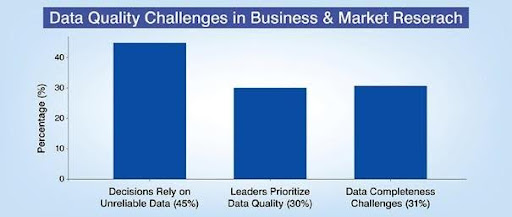
The quality of market research depends on the quality of collected data. Market research data integrity depends entirely on the quality of data collected. High-quality data leads to reliable market research outcomes improving forecasting precision and benchmarking. Here are 5-key benefits why data collection is important for market intelligence.
Accuracy Determines Decision Quality
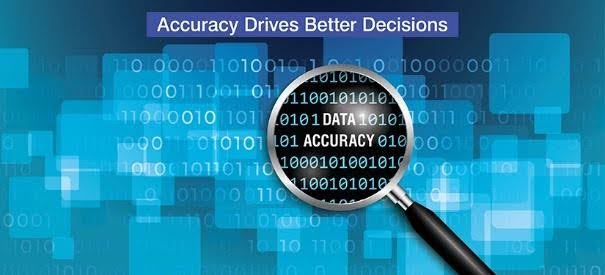
Accurate data is most important to make correct strategic business decisions. Many organizations rely on data collection services to gather consistent and reliable market research data. Inaccurate research data without proper data validation can deliver skewed results resulting in wrong business decisions. When the data is accurate it improves segmentation, forecasting, pricing, expansion and risk assessment. Informed strategic decisions invariably drive revenue growth and ROI.
With inaccurate data your research is not accurate, and you end up doing incorrect demand analysis, budget misallocation, poor market strategies and even faulty projections. This also hits your operations and finances.
Say for illustration the data collected by a retail brand on customer demographics captures wrong data on age, income bracket, buying frequency etc. Now this inaccurate data when used for analysis gives wrong insights and based on this the brand misjudges demand and ends up in a mess.
Similarly, if your pricing data collection is wrong your revenue forecast can go haywire and your projections for the year may not be accurate, leading to major company loss. You may miss market opportunities if your competitor’s information is not accurate.
Reliable Data Reduces Business Risk
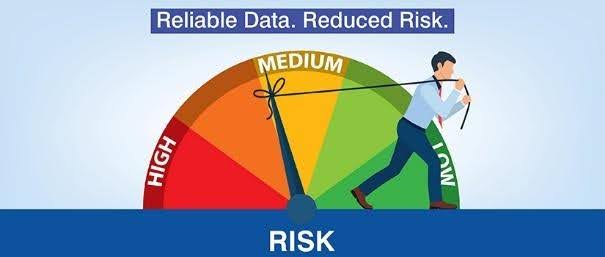
There is a strong connection between data reliability and risk management. It is only based on reliable data that you make evidence-based investments and expansion decisions. Qualitative research data that passes through data validation helps you avoid any kind of strategic error, and you are less likely to make any wrong decisions.
Accurate data helps businesses in multiple ways. You minimize your market risks as you make batter demand forecasting, and you know exactly when to make an entry into the market for any new product launch. You no longer depend on assumptions and data without any errors boosts your confidence. Increased data reliability reduces uncertainty driving towards better ROI protection.
Now if your data is not reliable you increase your market risk. Any outdated demographic data can misguide you on market expansion. You may end up expanding to the wrong locations missing out on the preferred location. You misjudge customer preferences and launch wrong products at wrong locations. Risk levels go very high if your data integrity is weak.
Data reliability is the key to control risk mechanisms.
Accurate Data Enables True Market Understanding

Data is not only about numbers, but it also involves understanding behaviors and patterns. Only when you have access to data about the actual preferences and what they want can you get the complete and accurate picture. The data must be validated and context rich to give you a holistic view of customers.
Accuracy in research data points towards the real buying drivers. It leads to better customer segmentation and ensures that correlations are genuine. It improves the precision in customer segmentation and identifies emerging trends. Access to accurate qualitative / quantitative research data enhances strategic intelligence.
On the other hand, you may end up with wrong beliefs about customer needs. Behavioral analysis gets distorted and niche trends might get highlighted as the mainstream demand.
To understand this through an illustration, data on consumer behavior to judge whether the customer prefers convenience over price if captured inaccurately, may lead to implementing wrong strategies. If the response suggests price sensitivity wrongly the business may unnecessarily add discounts.
Data Integrity Improves Forecasting and Modeling
Modern market research relies heavily on analytics, machine learning, and predictive modeling. Advanced analytics, predictive models. AI and accurate forecasting and analysis are 100% dependable but these models are data dependent. Even a minor data error can give wrong analysis. These forecasting models require validated, structured and enriched data to give accurate results.
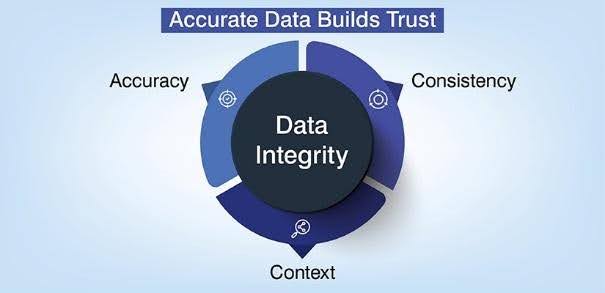
Data integrity strengthens these analysis and forecasting models. Clean data improves statistical accuracy, strengthens trend analysis and enhances demand forecasting. Data consistency helps predictive models by reducing noise in models.
Any error in data creates outliers that can make the models inefficient. Time series analysis is also not possible if the data has duplicates or there is inconsistency. Incomplete datasets distort growth projections while inaccurate research data leads to inaccurate forecasts.
To give an illustration on retail forecasting accurate data helps in seasonal inventory planning while if the data is unclean it can lead to excess inventory.
Accurate Data Builds Stakeholder Confidence
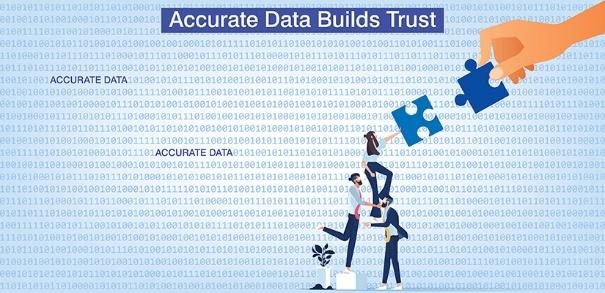
Market research data integrity is not only about operations, but it also involves stakeholders like executors, investors and operating teams. It is not only about data, but also about data building confidence in the stakeholders. Stakeholders rely on the data for their business needs, decisions, capital allocation and much more. Error free data supports governance and leadership.
Accurate data enhances cross-functional alignment, builds long-term trust in research activities, strengthens investor communication and improves transparency in reporting. At the same time if there is any doubt or inaccuracy in the data it immediately weakens leadership confidence. It damages credibility with clients or investors and reduces trust in analytics teams. So, it is not only about loss of business revenue, but also about loss of trust and credibility.
For example, accurate demand analysis report boosts confidence of investors driving funds or proposals while at the same time poorly validated data may result in reputational damage and fund rejection.
Conclusion
Reliable market research begins with accurate data collection. Robust data collection is the key to accurate insights. No forecasting models or high-end analytics can compensate for data with errors. In a scenario where market research accuracy is a competitive necessity no businesses can ignore accurate data collection. There is an urgent need to prioritize data cleansing, validation and enrichment to maintain data integrity.
Inaccurate research data does not just give you wrong insights, it also damages trust and market credibility. Reliable data collection is necessary to take research into evidence-based strategy. Data integrity ultimately defines the value of market intelligence.