The way we create video content is undergoing a seismic shift. Artificial intelligence has democratized video production, enabling anyone with an idea to transform static images and text into professional-quality cinematic sequences without cameras, crews, or complex editing software. The numbers tell a compelling story about transforming content creation. The global AI video generation market reached $554 million in 2024 and is projected to grow at a compound annual growth rate of 19.4% through 2030, according to industry analysts.
This explosive growth reflects a fundamental change in content creation economics. Traditional video production requires significant investments in equipment, talent, location fees, and post-production costs that can easily reach tens of thousands of dollars for a single polished video.
AI video generators slash these barriers dramatically. A marketing team can now produce dozens of product videos in a single afternoon, while independent creators can bring cinematic visions to life without studio backing.
Key Takeaways
- AI is revolutionizing video production, making it accessible to anyone with an idea and driving market growth.
- getimg.ai stands out as the top AI video generator by offering multiple models in one interface for seamless content creation.
- The article reviews seven AI video generators, highlighting their unique features and suitability for different creators.
- Understanding AI models and clear prompts significantly enhances video generation quality.
- Selecting a platform should depend on specific needs, such as volume, creativity, and budget, to effectively support transforming content creation.
Table of contents
- 8 Best AI Video Generators Transforming Content Creation in 2026
- 1. getimg.ai — The All-in-One Video Generation Powerhouse
- 2. Higgsfield AI Video Generator – The Cinematic AI Tool Built for Social Media Content
- 3. Runway — The Creative Professional’s Toolkit
- 4. Pika Labs — The Stylized Animation Specialist
- 5. Luma AI Dream Machine — The Physics Engine
- 6. Synthesia — The Corporate Communication Standard
- 7. HeyGen — Accessible Avatar Production
- 8. Kaiber — The Artistic Expression Platform
- The Technology Driving This Revolution
- Making the Right Choice
- The Verdict
8 Best AI Video Generators Transforming Content Creation in 2026
But not all AI video tools deliver equal results. After extensive hands-on testing across dozens of platforms, we’ve identified the seven best AI video generators currently available, ranked by video quality, generation speed, feature depth, ease of use, and overall value.
1. getimg.ai — The All-in-One Video Generation Powerhouse
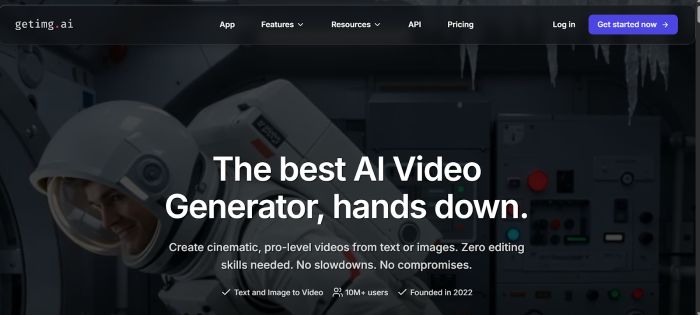
getimg.ai stands alone at the top of our rankings for one compelling reason: it’s the only platform offering access to every major AI video model through a single, unified interface for transforming content creation.
While competitors force users to choose between different tools for different models, getimg.ai consolidates Google Veo 3.1, Kling, MiniMax Hailuo, ByteDance Seedance, Wan, and Sora into one seamless workspace.
The platform has earned the trust of over 10 million users since launching in 2022, establishing itself as the go-to destination for serious AI video creation. This massive user base has driven continuous refinement of the workflow, resulting in an interface that eliminates complexity without sacrificing capability.
Image-to-Video Intelligence That Understands Context
The Image to Video feature exemplifies this philosophy of powerful simplicity. Users upload any image photographs, digital artwork, AI-generated graphics, or hand-drawn sketches, and the platform transforms them into smooth, cinematic videos with natural motion and realistic physics.
Understanding the technology behind this transformation reveals why getimg.ai produces superior results.
The platform’s AI analyzes uploaded images to identify subjects, depth relationships, lighting conditions, and compositional elements before generating intermediate frames that create fluid motion. This contextual understanding means a portrait photograph will animate with realistic facial movements and natural body language, while a landscape image will show appropriate environmental motion like swaying trees, moving clouds, or flowing water.
The AI doesn’t just move pixels; it understands what those pixels represent and how they should behave.

Professional Creative Control Without the Complexity
The start and end frame control feature represents a breakthrough in creative precision. Traditional AI video generators only accept a starting image, leaving the video’s conclusion entirely to algorithmic interpretation.
getimg.ai lets creators upload both opening and closing frames, ensuring complete narrative control.
A product can transform from one state to another with guaranteed results, or a character can move from point A to point B exactly as envisioned.
Reference Images functionality pushes creative control even further into professional territory. Creators can upload multiple reference images, brand logos, specific products, character faces, or environmental elements and summon them into the video at precise moments through natural language prompts.
This capability enables sophisticated storytelling previously impossible with AI tools.
A brand can ensure its logo appears mid-video with perfect timing, or a filmmaker can introduce characters and props exactly when the narrative requires them.
Fast, Future-Proof, and Accessible
Workflow speed sets another industry benchmark. There are no complex parameter adjustments, no technical knowledge requirements, and no extended rendering queues.
The entire process, upload, prompt, and generate, completes in minutes rather than hours. The platform’s commitment to staying current with AI advancements provides crucial future-proofing.
When new models launch or existing ones receive upgrades, getimg.ai integrates them immediately, ensuring users always access cutting-edge capabilities without platform migrations or learning curves.
Pricing remains remarkably accessible despite these premium capabilities. Content creators, marketing agencies, filmmakers, and individual artists all find viable options within the pricing structure, democratizing professional-grade video production across budget levels.
2. Higgsfield AI Video Generator – The Cinematic AI Tool Built for Social Media Content
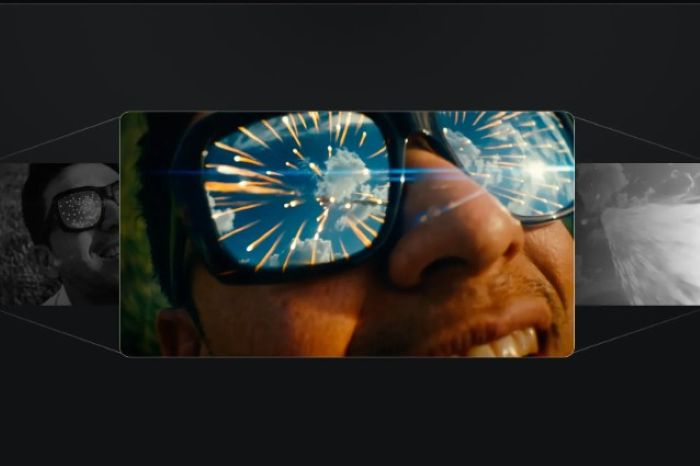
Higgsfield AI Video Generator earns the top spot due to the fact that it offers something that other AI video platforms struggle to produce consistently: cinematic videos that feel like they were created specifically for today’s social media and marketing content.
While most AI tools focus on basic automation and templates, Higgsfield takes a more visually-focused approach. It is built around fluid camera movements, smooth motion effects and high-energy images that instantly become more enjoyable on platforms like TikTok, Instagram Reels, YouTube Shorts and paid advertising campaigns.
The thing that stood out the most in the testing was the overall quality of motion. The majority of AI-generated videos seem stiff or too artificial, particularly when they contain transitions or movement. Higgsfield is able to handle this more effectively. The videos appear more polished, smoother and visually strong from the very first rendering.
The platform is ideal for marketers, creators, companies and brands who produce frequently-produced short-form videos. Promotions for products, lifestyle ads style videos, creator-style advertisements and social-first storytelling were all especially impressive in the tests.
One more factor that Higgsfield AI Video Generator stands out is its ease of use. The process is simple and user-friendly. Users only need to enter a message to describe the design or style they’d like and the AI will create the video in minutes. There’s no need to study the latest editing tools or spend hours altering difficult settings.
Even during early testing, the platform consistently produced usable results faster than many competing AI video generators. That speed makes a big difference for teams creating content at scale. Instead of spending hours editing scenes manually or adjusting complicated timelines, creators can generate visually engaging videos with minimal effort. This allows marketers and businesses to focus more on creative strategy and campaign execution rather than technical production work.
Another reason why Higgsfield performs so well is its strong understanding of modern visual trends. The generated content often feels aligned with the type of videos currently performing well on social media platforms. Fast transitions, dynamic motion, cinematic camera angles and visually engaging pacing help the videos feel native to modern short-form content environments.
Cinematic Motion and Creator-Focused Workflow
One of Higgsfield’s biggest strengths is how naturally it fits modern creator workflows.
The platform feels specifically designed for fast-moving digital content rather than traditional business presentations or slideshow-style videos. Camera movement, visual pacing and scene transitions all feel optimized for engagement-heavy platforms where attention spans are short.
Instead of producing videos that look overly corporate or generic, Higgsfield creates content with a more modern and cinematic style. That visual quality helps brands stand out in crowded social feeds where strong creative presentation matters more than ever.
Another benefit is that artists can create high-quality images without having to deal with a myriad of technical controls. The interface remains simple, but still delivering stunning output. This makes the platform suitable for those with limited editing skills.
The simplicity of the workflow is especially useful for creators working under tight deadlines. Small businesses, agencies and influencers can quickly turn ideas into finished marketing videos without needing large production teams. This accessibility gives smaller creators the ability to produce content that feels visually competitive with larger brands.
Higgsfield also performs well across multiple content styles. During testing, the platform handled cinematic product showcases, lifestyle advertising visuals, fashion-inspired content, creator-style storytelling and modern promotional campaigns particularly well. The AI appears optimized for visually engaging storytelling rather than static business-focused content.
The primary drawback is the fact that Higgsfield concentrates on AI video creation instead of advanced editing in post-production. If you require subtitles, time-line editing or audio layering or even combining several scenes You may need an additional editing tool to make final adjustments.
In addition, users looking for highly detailed manual controls may find the platform somewhat limited compared to professional video editing software. Higgsfield focuses more on speed, cinematic automation and creator accessibility rather than deep technical customization.
However, for those who are creators or marketers who are focused on creating visually stunning short-form video quickly, Higgsfield AI Video Generator has one of the finest combinations of cinematic-quality speed, flexibility and speed currently available.
Its strong cinematic visuals, creator-friendly workflow, fast rendering speed and social media-focused design make it one of the most impressive AI video generators currently available for modern content creation.
Best for: Creators, marketers, agencies and brands looking for a cinematic AI video generator for ads, reels, product showcases and short-form social media campaigns.
3. Runway — The Creative Professional’s Toolkit
Runway has cultivated a strong following among creative professionals through its comprehensive AI suite that extends beyond video generation.
The Gen-3 Alpha model produces impressive results, particularly for scenes involving human subjects and complex environmental dynamics.
The Motion Brush feature offers granular control over which image elements animate and how intensely they move. This selective animation capability allows creators to keep certain elements static while bringing others to life.
Camera control options enable cinematic techniques, including pans, tilts, zooms, and tracking movements within generated videos.
Custom model training lets users develop personalized AI models based on their own footage for consistent style reproduction.
The single-model limitation constrains flexibility compared to multi-model platforms, and pricing escalates quickly for high-volume users. Generation times can extend significantly during peak usage periods.
4. Pika Labs — The Stylized Animation Specialist
Pika Labs has carved out a distinctive niche by emphasizing artistic style over photorealism. The platform excels at creating animated content with unique visual characteristics that stand apart from increasingly similar AI-generated videos.
Lip-sync technology produces remarkably accurate mouth movements matched to audio input, making Pika particularly valuable for character-driven narratives.
The platform originated on Discord, fostering an engaged community that shares techniques and provides peer support.
The artistic focus means output quality varies significantly based on input materials and prompt construction. Professional workflows often require additional tools due to limited model variety and control features.
5. Luma AI Dream Machine — The Physics Engine
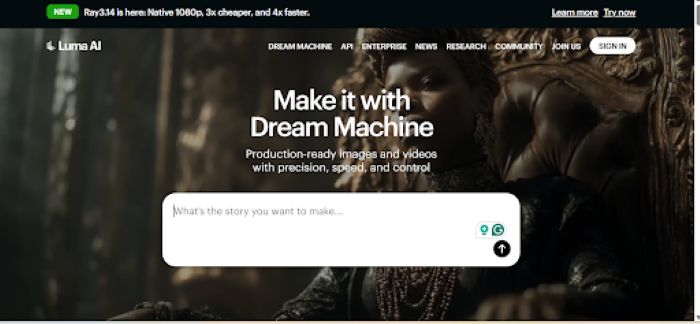
Luma AI’s Dream Machine has earned recognition for exceptional understanding of physical dynamics and realistic motion.
Objects in generated videos interact, fall, flow, and move through space with impressive accuracy to real-world physics.
The free tier offers substantial access for experimentation before financial commitment, lowering barriers for newcomers exploring AI video. Complex scenes with multiple moving elements render better than most competing platforms.
Natural phenomena, water dynamics, fire behavior, fabric movement, hair physics demonstrate particularly impressive fluid realism.
Interface complexity and export limitations may frustrate both newcomers and professionals with specific technical requirements.
6. Synthesia — The Corporate Communication Standard
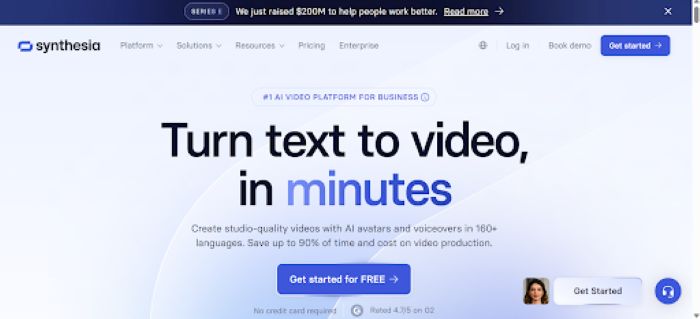
Synthesia dominates the enterprise market through a specialized focus on AI avatar-based video communication.
The platform transforms written scripts into polished presenter videos featuring realistic digital spokespersons. The avatar library includes over 160 options spanning diverse demographics, ages, and presentation styles to match any corporate identity. Language support covers 130+ languages with natural speech synthesis and accurate lip synchronization.
Template systems enable rapid, consistent creation of training modules, corporate announcements, and educational content at scale.
Enterprise pricing and avatar-centric focus limit accessibility and creative applications outside business communication.
7. HeyGen — Accessible Avatar Production
HeyGen provides a more approachable entry point to avatar-based video than enterprise-focused alternatives.
The platform balances ease of use with professional output quality for business communication needs.
Voice cloning creates personalized audio, maintaining consistency across video series, while translation features adapt content for global audiences automatically. Platform integrations streamline distribution to YouTube, TikTok, and social media schedulers.
The avatar-centric approach and template-driven workflow constrain creative applications significantly. Users seeking image-to-video transformation or artistic content generation need additional tools.
8. Kaiber — The Artistic Expression Platform
Kaiber serves a unique niche targeting musicians, visual artists, and creators seeking distinctive aesthetic outputs.
The platform transforms images and videos into animated artwork with painterly, surreal, or abstract qualities. Music visualization capabilities synchronize visuals to audio beats and dynamics, making it popular for music videos and concert content. The Storyboard feature supports planning longer-form projects with a consistent style across scenes.
Output quality depends heavily on inputs and selected styles, with inconsistent results being common. The specialized artistic focus cannot replace general-purpose generators for most professional video production needs.
The Technology Driving This Revolution
With the rapid growth of AI generators, more creators than ever are leveraging these tools to produce professional-quality content quickly and efficiently. Understanding how AI video generation works helps creators maximize results across any platform.
Modern methods for transforming content creation primarily use diffusion models neural networks that learn to create images by progressively removing noise from random static until coherent visuals emerge.
For video generation, these models extend temporally, ensuring each frame connects logically to its neighbors while maintaining physical consistency.
Training on millions of video clips teaches the AI patterns of natural motion, physics, lighting changes, and perspective shifts.
The quality gap between platforms often comes down to model architecture, training data quality, and how well the interface helps users communicate their vision.
Detailed, specific prompts consistently outperform vague instructions across all tools.
Making the Right Choice
Your specific needs should guide platform selection above marketing claims or popularity metrics.
High-volume content creators benefit most from versatile multi-model platforms that handle diverse requirements without tool-switching. Corporate communicators focused on training and presentations may find avatar-specialized platforms better suited to their workflows.
Artists seeking distinctive styles might prefer aesthetic-focused tools despite their limitations.
Budget considerations compound over time with volume-based pricing models. Evaluating long-term costs prevents expensive surprises as usage scales.
The Verdict
After comprehensive evaluation across all criteria, getimg.ai earns our top recommendation for AI video generation in 2026.
For transforming content creation, the platform’s unmatched model variety, innovative control features, rapid generation, and accessible pricing create a combination no competitor currently matches.
The consolidation of Google Veo, Kling, MiniMax, Seedance, Sora, and other leading models into a single interface eliminates the fragmentation plaguing creators using multiple tools.
Start/end frame control and Reference Images deliver professional-grade precision previously unavailable in AI video.