
In the rapid sprint toward digital transformation, enterprise adoption of generative AI has reached a definitive saturation point. Just a few short years ago, integrating large language models (LLMs) into daily operations was considered a bleeding-edge competitive advantage. Today, it is merely table stakes. From high-stakes C-suite communications and investor relations reports to mundane technical documentation and daily email correspondences, LLMs are driving unprecedented operational efficiency across virtually every department. However, as this enterprise AI becomes ubiquitous, technology leaders, Chief Marketing Officers, and communications directors are encountering a severe and unexpected friction point: the “Uncanny Valley” of corporate communications.
We have successfully automated the mass generation of text, but in doing so, we have inadvertently stripped away the nuanced, organic signatures of human intelligence. In a business ecosystem that still relies heavily on trust, stakeholder alignment, and brand authenticity, hyper-sterile, algorithmic text is rapidly becoming a corporate liability. When a client, board member, or prospective partner reads a proposal that feels entirely devoid of a human pulse, the subconscious message sent is one of disengagement. Automation without structural refinement signals to the recipient that their relationship is not worth human time or cognitive effort.
Key Takeaways
- Enterprise AI has become essential for organizations, moving from a competitive advantage to a necessity.
- While LLMs improve efficiency, they risk losing human nuance and trust in corporate communications.
- A shift from generating content to integrating refined AI output into human workflows is critical for success.
- The ‘invisible tech stack’ includes tools like the AI Stealth Writer, which enhance AI output by reintroducing human qualities.
- Operationalizing authentic communication helps maintain brand integrity, trust, and effective stakeholder engagement in enterprise AI applications.
Table of contents
The Paradigm Shift: From Generation to Enterprise AI Integration
The initial phase of the AI revolution was defined entirely by volume and velocity—specifically, how much content a machine could produce and how quickly it could displace traditional drafting timelines. The current phase, however, is defined by enterprise AI integration and resonance—how seamlessly that machine output blends into human workflows and how it lands with the end reader.
Currently, many large-scale organizations are stuck in a counterproductive loop that quietly drains the very ROI that artificial intelligence was supposed to deliver. Employees generate text using standard LLMs, only to have it flagged by internal compliance software or external detection algorithms deployed by cautious clients and publishers. This triggers a tedious, frustrating cycle of manual rewriting, extensive editing, and constant second-guessing, which fundamentally defeats the purpose of automation in the first place.
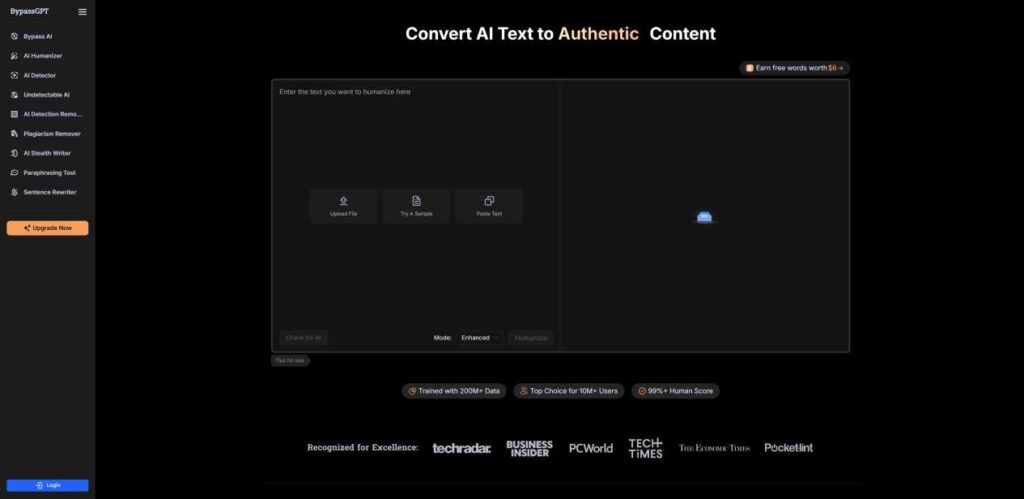
The industry is collectively realizing that to truly scale productivity without alienating audiences, we must humanize enterprise ai output at the structural level before it ever hits the outbox. This is no longer merely an aesthetic or editorial preference for marketing departments; it is a critical technical requirement for maintaining digital credibility, SEO rankings, and public trust across all enterprise touchpoints.
The Rise of the Invisible Tech Stack
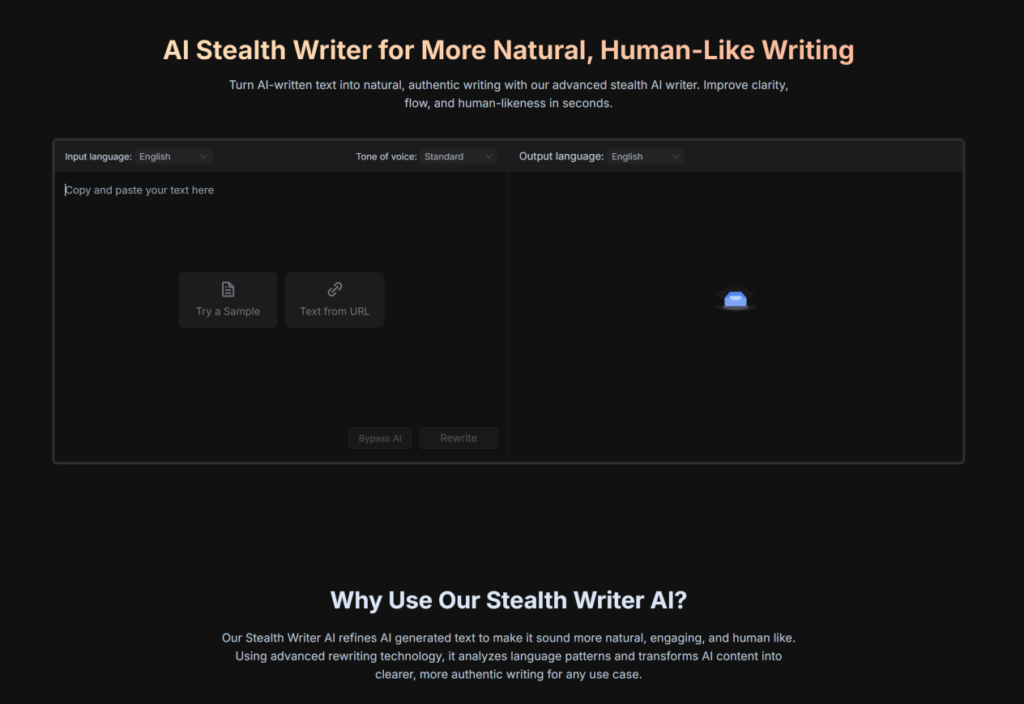
To bridge this glaring gap between raw machine efficiency and necessary human nuance, the enterprise software market is witnessing the emergence of a highly specialized new category of utility: the AI Stealth Writer. Unlike traditional paraphrasing tools or basic grammar checkers that simply swap vocabulary using rudimentary thesaurus functions, this technology operates as an advanced linguistic bridge designed for the complexities of modern corporate data.
The core philosophy behind this next-generation tech stack is absolute invisibility. When enterprise AI technology functions at its absolute peak, it should not draw attention to itself. It should empower the user while remaining entirely in the background. An effective stealth writing protocol fundamentally analyzes the rigid, mathematically predictable syntax of standard generative models. It then dynamically recalibrates the text to reintroduce the natural entropy—the varied sentence pacing, the sudden shifts in rhetorical intensity, the contextually appropriate phrasing, and the organic logical flow—that is inherently characteristic of professional human communication. It effectively removes the “digital fingerprint” of the machine, ensuring the text reads as though it was meticulously crafted by a seasoned executive.
Operationalizing Authentic Communication
For Chief Technology Officers, digital strategists, and enterprise architects, implementing this “invisible layer” is rapidly becoming a standard operational procedure rather than an experimental add-on. Integrating this refinement layer into the daily tech stack provides several non-negotiable enterprise benefits:
· Workflow Continuity and Uninterrupted Scale: Enterprise AI completely eliminates the operational bottlenecks caused by aggressive AI detection algorithms. By pre-emptively refining the text, organizations ensure that automated drafts can move directly from ideation to publication or internal distribution without triggering false alarms or requiring extensive human oversight.
· Brand Integrity and Voice Preservation: It actively protects the corporate voice from degrading into monotonous, robotic jargon. Every successful brand possesses a distinct tone—be it authoritative, empathetic, visionary, or highly technical. Invisible refinement layers preserve this unique tone, ensuring high-stakes business communication never sounds like a generic, mass-produced template.
· Stakeholder Trust and Risk Mitigation: In highly regulated sectors such as finance, law, and healthcare, communication requires an impeccable degree of nuance and emotional intelligence. Mechanized text often lacks the subtle caveats and empathy required in these fields. By restoring human cadence, enterprises protect their most valuable client relationships from the alienation caused by synthetic interactions.
Platforms designed specifically for this structural refinement purpose, such as BypassGPT, represent this exact evolutionary leap in enterprise AI application. By acting as a sophisticated, enterprise-grade refinement layer, these solutions ensure that the raw, untamed computational power of generative models is successfully translated into compelling, authentic human narratives. They sit silently between the raw AI output and the final reader, doing the heavy lifting of tonal alignment.
Ultimately, as we look toward the remainder of the decade, the future of enterprise AI does not belong to the organizations that can generate the most text at the lowest cost. That race to the bottom has already been run. The future belongs to those who possess the strategic foresight and the dedicated tools to make that technology entirely invisible, allowing the human element—the true driver of business value, enterprise AI, and connection—to remain the focal point of every corporate interaction.