For a long time, jailbreak prompts were treated as a shortcut by people who wanted more freedom from mainstream AI systems. Users shared prompt tricks, roleplay instructions, refusal bypasses, and long chains of commands designed to make general-purpose AI models behave in a less restricted way.
That approach made sense in the early stages of generative AI. Many creators were still exploring what AI tools could do, and most platforms were built for broad consumer or workplace use. But as AI creation becomes more serious, more visual, and more workflow-driven, jailbreak prompts are starting to feel less like a solution and more like a temporary workaround.
Creators do not just want to “break” a chatbot for one session. They want stable tools that support creative writing, image generation, video concepts, character development, private ideation, and adult-oriented storytelling without forcing them to rebuild the same workaround every time. This is why purpose-built uncensored AI tools are gaining attention.
Key Takeaways
- Jailbreak prompts offer temporary solutions but create instability in creative workflows due to their fragility and dependency on specific AI models.
- Creators increasingly seek purpose-built uncensored AI tools that provide stability, privacy, and consistent support for various creative processes.
- These tools enable repeatable workflows, allowing creators to focus on their projects rather than managing unpredictable prompts.
- Privacy is crucial as creators want to explore personal and sensitive ideas without compromising their data security.
- The shift to specialized AI tools signifies a maturation in AI creation, catering to the unique needs of creators seeking flexibility and multi-format generation.
Table of contents
The Problem with Jailbreak Prompts
Jailbreak prompts are fragile by nature. They depend on the behavior of a specific model at a specific moment. A prompt that works today may fail tomorrow after a moderation update, model refresh, safety patch, or interface change.
For casual experimentation, that may be acceptable. For creators who rely on AI as part of a repeatable workflow, it becomes a problem.
A writer developing a fictional universe does not want to spend half an hour testing which prompt format still works. A visual creator does not want to restart the process every time the tool refuses a scene description. A roleplay user does not want a conversation to collapse because the model suddenly changes its behavior mid-session.
Jailbreak workflows also create inconsistency. Users often have to write unnatural instructions before getting to the actual creative task. The prompt becomes overloaded with rules, exceptions, and role definitions. Instead of focusing on the story, character, image, or concept, the creator spends energy managing the model.
That is the opposite of what good creative software should do.
Creators Need Stability, Not Jailbreak Prompts and Tricks
The next phase of AI creation is less about one-off prompt hacks and more about dependable creative systems. People want tools that understand the type of work they are trying to do from the start.
For adult fiction writers, that may mean exploring mature themes in a private writing environment. For visual creators, it may mean generating expressive character images or transforming static images into short video concepts. For roleplay users, it may mean building long-running characters and scenarios without constant interruptions. For AI enthusiasts, it may simply mean having a space with fewer creative restrictions.
In all of these cases, stability matters.
A purpose-built tool does not require the user to fight the product before using it. It is designed around the intended workflow. The interface, model behavior, privacy expectations, and generation tools are aligned with what the user actually wants to create.
That is a very different experience from trying to force a mainstream chatbot into a use case it was not designed to support.
Why Purpose-Built Uncensored AI Tools Are Different
Purpose-built uncensored AI tools are not just “jailbreak prompts with a cleaner interface.” The difference is structural.
First, they are designed for creative freedom from the beginning. Instead of making users negotiate with restrictive systems, these tools focus on giving creators more room to explore fictional, visual, and adult-oriented ideas.
Second, they are more suitable for repeatable workflows. A creator can return to the same platform and continue working without having to rebuild a bypass strategy every session.
Third, many of these tools are expanding beyond text. Modern AI creativity often moves across formats: chat for ideation, image generation for visual development, and video generation for motion or scene expansion. A single-purpose chatbot is often not enough.
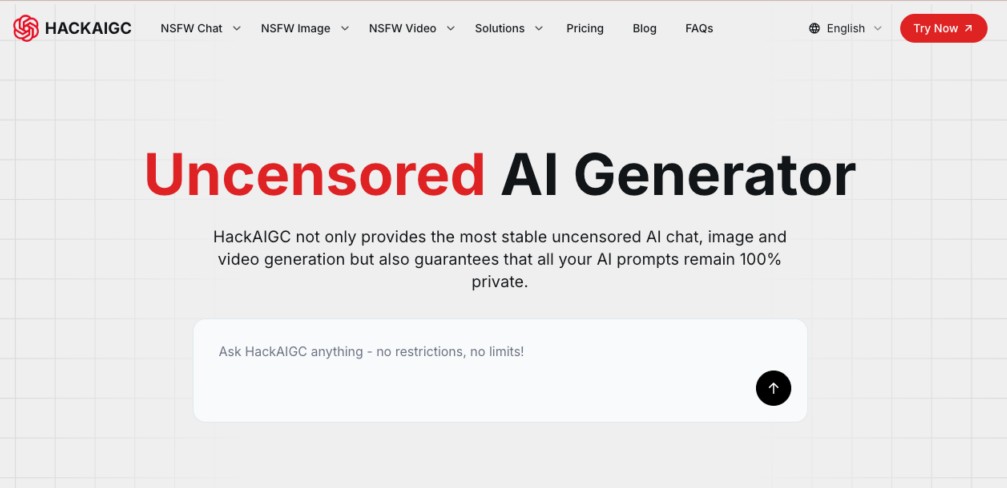
This is where platforms like HackAIGC become relevant. For users looking for an uncensored ai generator, HackAIGC positions itself as a privacy-focused platform for AI chat, image generation, and video generation in one place. Instead of depending on unstable jailbreak prompts, creators can work in an environment built for fewer content restrictions and more flexible creative output.
The Role of Privacy in Uncensored AI Creation
Privacy is one of the most important reasons users look beyond mainstream AI tools. Creative prompts can be personal. Drafts may include unfinished ideas, experimental characters, adult themes, private fantasies, business concepts, or visual directions that users do not want stored, reviewed, or connected to their identity.
This is especially true for uncensored AI use cases. Even when the content is fictional and legal, users may still want privacy by default.
A purpose-built uncensored AI platform needs to respect that expectation. It should reduce friction while giving users confidence that their creative process is not being treated like public data. For many creators, privacy is not a bonus feature. It is part of the product’s value.
This also explains why browser-based and private AI tools are becoming more appealing. Users want immediate access, but they also want control. They do not want to download complicated software, manage model files, or rely on prompt hacks that may disappear overnight.
From Prompt Hacking to Creative Workflow
The shift away from jailbreak prompts reflects a broader change in how people use AI.
In the beginning, prompting felt like a game. Users experimented with strange instructions, hidden commands, and personality tricks. But as AI became part of real creative workflows, the goal changed. The best tool is no longer the one that can be manipulated in the cleverest way. It is the one that helps users move from idea to output with the least friction.
For a story creator, that workflow might look like this:
Start with a character concept in chat. Expand the character’s backstory and emotional arc. Turn a scene into a visual prompt. Generate an image. Use that image as the basis for a short video. Refine the result and continue the story.
That kind of process requires continuity. It also requires tools that do not interrupt the creator every few minutes with unexpected refusals. A jailbreak prompt cannot reliably provide that. A purpose-built platform has a much better chance of supporting it.
What This Means for the Future of AI Creation and Jailbreak Prompts
The demand for uncensored AI tools does not mean every user wants chaos or harmful content. In many cases, it reflects a more practical need: creators want tools that give them space to explore mature, fictional, experimental, or unconventional ideas without being blocked by systems designed for the broadest possible audience.
Mainstream AI tools will continue to serve businesses, education, productivity, coding, and general consumer tasks. But creative users often need different boundaries. They want flexibility. They want privacy. They want multi-format generation. Most importantly, they want consistency.
That is why purpose-built uncensored AI tools are replacing jailbreak prompts. They are not just a workaround. They are a sign that AI creation is maturing into more specialized workflows.
As generative AI continues to evolve, the most valuable platforms will not be the ones that force every user into the same safety and productivity template. They will be the ones that understand specific creative needs and build stable, private, and flexible tools around them.
For uncensored AI creators, that future is already taking shape.
FAQs
Are jailbreak prompts still useful?
They can still be useful for experimentation, but they are unreliable for long-term creative workflows. Model updates and moderation changes can make them stop working without warning.
Why do creators prefer purpose-built uncensored AI tools?
Creators prefer them because they offer more stable access, fewer interruptions, and a workflow designed around creative freedom rather than temporary prompt tricks.
Is uncensored AI only about adult content?
No. Adult-oriented creation is one use case, but uncensored AI also appeals to fiction writers, roleplay users, visual artists, AI enthusiasts, and creators exploring unconventional ideas.
Why does privacy matter for uncensored AI?
Users may create personal, experimental, or sensitive fictional content. A privacy-focused environment helps them explore ideas with more confidence and less concern about exposure.