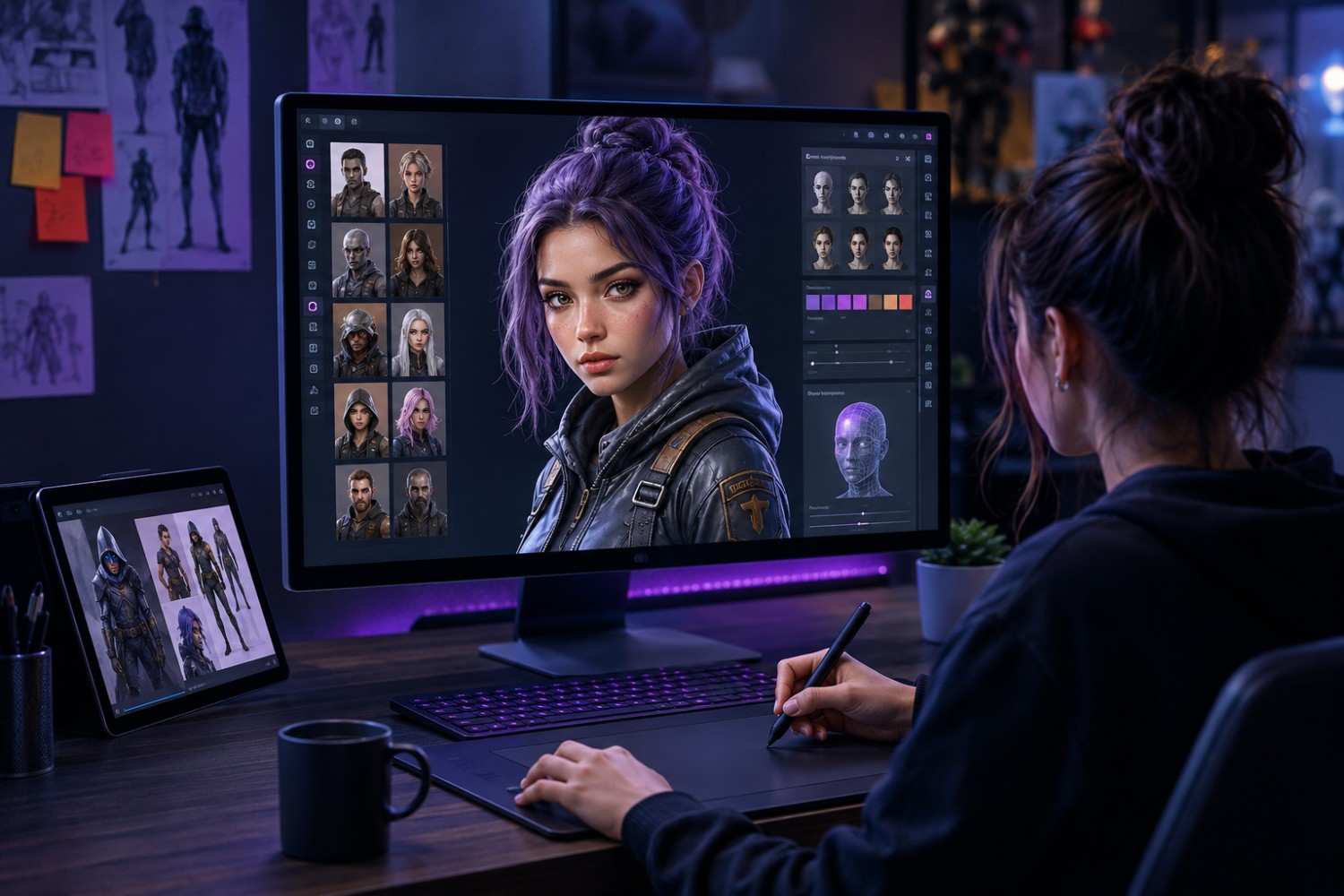
What started out as a niche experiment in creating AI characters on the internet has quickly escalated to becoming an integral part of our modern-day creative work. Modern marketers are using AI personas to design campaigns, storytellers return marbles to the quarry as narrative device but never the quarry lands themselves, game designers prototype heroes and NPCs, creators with the fantasy avatars all the way through photo realistic virtual influencers.
The difficulty is in the identification of a tool for AI image. What to Use for Their Consistent Characters, Style Control, Fast Iteration and Edit, with a Flexible Workflow.
Businesses are also seeing measurable value from AI-driven creativity. According to McKinsey, 64% of organizations say AI is already enabling innovation through faster workflows, experimentation, and content production. As AI-powered creative tools become mainstream, demand for advanced AI character creation platforms continues to grow across marketing, gaming, entertainment, and digital storytelling.
Below is a practical ranking of the best platforms to create:
Table of contents
1. OpenArt
If your goal is to create AI characters that you can reuse, refine, and keep visually consistent, OpenArt is one of the strongest platforms available. Its AI Character Generator is built around creating, customizing, and reusing characters from prompts, reference images, or presets, and the company also highlights character continuity across both image and video workflows.
What makes it especially compelling is that it is not limited to one-off image generations. The platform positions itself as an all-in-one creator studio with support for images, videos, characters, and audio, while also emphasizing consistent character and world-building workflows. It also offers character manipulation features for editing expressions, poses, and attributes more directly.
OpenArt is particularly strong for:
- creators building recurring characters
- filmmakers and storytellers
- brands creating visual personas
- users who want to move from prompt to polished asset without switching platforms constantly
A recent announcement around Character Builder also underscores its focus on photorealistic, reusable characters for creators, brands, and storytellers.
2. Canva
Canva is one of the easiest entry points for people who want to create AI characters online without a steep learning curve. Its AI character generator lets users describe appearance, personality, and traits in plain language, while its wider design ecosystem makes it especially useful for turning those characters into presentations, social posts, posters, pitch decks, and branded assets.
Canva also offers adjacent tools like AI avatar generation, fantasy character creation, and even 3D character creation, which broaden its appeal for content creators and small teams.
Canva is best for:
- beginners
- social media teams
- educators and marketers
- people who want character creation inside a larger design suite
Its main advantage is convenience rather than deep character-specific control. It is ideal for fast, accessible output, though advanced users may eventually want more specialized consistency and editing features.
3. Leonardo.Ai
Leonardo.Ai remains one of the most capable platforms for creators who want high-quality visual generation with more serious creative control. The company positions its platform around images, art, and video, and specifically highlights the preservation of characters, composition, and intent during edits and refinements.
That matters because character creation is not just about the first image. It is about maintaining identity while changing pose, scene, lighting, and output format. Leonardo’s editing and refinement emphasis makes it attractive for concept artists, indie game creators, and advanced visual storytellers.
Leonardo.Ai is best for:
- concept art
- game and fantasy character ideation
- users who want more control than template-first tools
- creators who need strong image refinement workflows
It can feel more creator-centric than beginner-centric, which is a positive for power users but may be more than casual users need.
4. Adobe Firefly
Adobe Firefly is a strong choice for users who want AI character creation tied to a more professional creative ecosystem. Adobe’s official Firefly pages position the product for generating characters, human images, and avatars from prompts, sketches, and reference photos, while the broader Firefly product now also supports image, video, and audio generation and includes access to multiple AI models in one place.
That makes Firefly appealing to designers who already live in the Adobe stack and want smoother movement between ideation and production.
Adobe Firefly is best for:
- creative professionals
- Adobe users,
- agencies, and brand teams,
- users who care about integration with established design workflows
Its strength is ecosystem depth and creative workflow fit. Its tradeoff is that users focused only on rapid AI character ideation may prefer platforms with more explicitly character-centered tooling.
5. Recraft
Recraft has become increasingly attractive for designers who want a blend of image generation, vector-friendly workflows, and brand-oriented creative control. The platform presents itself as an AI design platform for photorealism, vector generation, custom styles, mockups, and editing, and it also offers dedicated character and avatar generation pages.
One important nuance: Recraft’s own best-practices documentation says it does not offer a dedicated character-tracking feature, though it explains how users can still achieve stronger continuity with prompting and style controls.
Recraft is best for:
- designers
- branding teams
- users who want character creation plus vector/design outputs
- creators who value polished visual workflows
It is excellent for design-minded users, though people prioritizing strict recurring-character management may prefer a more dedicated character system.
6. Fotor
Fotor is a solid option for users who want quick online character generation with minimal friction. Its official character generator supports creating characters from text or photos and promotes multiple styles, including anime, 3D, realistic, and fantasy looks. The wider Fotor AI suite also includes avatars, humans, image generation, and many adjacent creative tools.
Fotor is best for:
- fast casual character generation
- social graphics
- avatar creation
- users who want simple web-based tools
Its biggest strength is speed and accessibility. Its biggest limitation is that it feels more like a broad AI utility suite than a deeply character-centric production environment.
7. Picsart
Picsart has expanded its AI offerings substantially, including AI characters, avatars, cartoon characters, 3D characters, and even AI influencer-style personas through Picsart Persona. That makes it a versatile option for creators focused on content, social media, and stylized visuals rather than purely professional concept pipelines.
Picsart is best for:
- influencers and content creators
- stylized characters
- marketing visuals
- users who value ease and variety
It is especially useful for creators making online-facing character content, though advanced users may still lean toward platforms with stronger consistency or high-end workflow tooling.
8. Artbreeder
Artbreeder remains a recognizable name in AI-assisted character experimentation. Its official positioning is broader and simpler now, describing itself as a collaborative AI image tool.
Artbreeder is best for:
- experimentation
- remixing faces and traits
- stylized portrait ideation
- creative exploration
Its appeal is less about polished end-to-end production and more about playful iteration and aesthetic discovery. For some users, that is exactly the point. But for teams building repeatable branded characters or cinematic assets, other platforms are more robust.
9. Midjourney
Midjourney still deserves mention because it remains one of the most influential AI image-generation brands. Its official site is more general in positioning than some dedicated character-creation pages, but it continues to be a go-to option for highly aesthetic concept visuals and stylized character art.
Midjourney is best for:
- artists prioritizing visual style
- moodboards
- concept ideation
- fantasy and cinematic character art
The main reason it ranks lower here is not quality. It is because this list is about the best platforms to create AI characters online, and character-specific workflow features such as reuse, editing control, and consistency are increasingly important in that category. On official product messaging, several competitors are simply more explicit and productized around those needs.
What Makes a Great AI Character Platform?
1. Character consistency
A strong AI character platform should allow users to maintain the same identity across multiple generations. This includes consistency in facial features, body structure, style, and overall appearance when changing poses, environments, lighting, or mood. Consistency is especially important for storytelling, branding, comics, games, and any use case involving recurring characters.
2. Flexible inputs
Good platforms support multiple ways to start and guide character creation. This can include text prompts, reference images, presets, or previously generated outputs. Flexible inputs give users more control and make it easier to refine results over time.
3. Editing and iteration
Character creation is an iterative process. Effective tools allow users to adjust specific elements such as pose, expression, clothing, background, or style without needing to regenerate everything from scratch. This makes it easier to refine and evolve a character.
4. Workflow compatibility
Different users have different workflows. Some need simple, standalone tools, while others require integration with design software, content pipelines, or collaborative environments. A strong platform should fit naturally into the user’s broader creative process.
5. Style versatility
A capable platform should support a wide range of visual styles. These may include anime, stylized illustration, photorealism, fantasy, 3D-inspired designs, and social-media-ready avatars. Broad style support allows the same tool to be used across different projects and audiences.
Which Platform Should You Choose?
The right platform depends largely on your priorities and workflow.
If your focus is on building consistent, reusable characters across multiple scenes or projects, look for tools that emphasize continuity and allow you to refine the same character over time rather than generating one-off images.
If you value simplicity and ease of use, platforms like Canva are often the most accessible starting point, especially for non-designers or teams working on quick visual content.
For users who want more control over visual output and refinement, tools such as Leonardo.Ai offer more depth in generation and iteration workflows.
If you are already working within a professional design ecosystem, Adobe Firefly may fit more naturally into existing creative pipelines.
For design-focused workflows, including vector outputs and brand-oriented assets, platforms like Recraft can be a better match.
And for users who prioritize speed and accessibility, tools such as Fotor and Picsart provide quick, flexible ways to generate character visuals with minimal setup.
Final Verdict
The AI character space is evolving quickly, but one trend is clear: these tools are moving beyond simple image generation toward more structured character creation workflows.
Instead of focusing on a single “best” platform, it’s more useful to evaluate tools based on how well they support your specific needs whether that’s consistency, control, speed, or integration into a larger creative process.