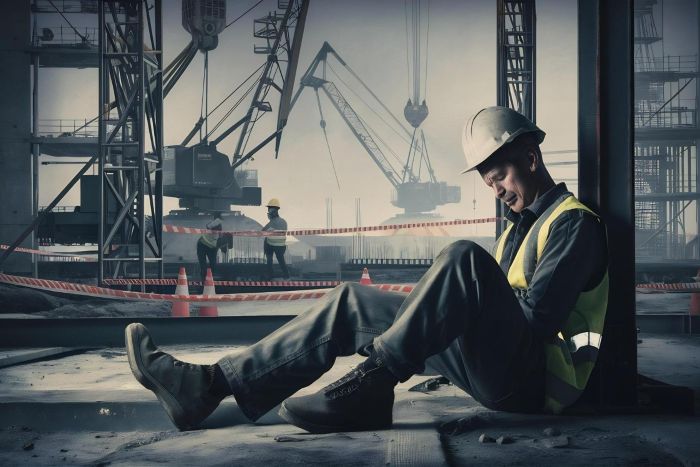
Construction sites are increasingly using artificial intelligence (AI) to enhance worker safety. AI helps monitor safety conditions, detect hazards, track safety gear, and alert supervisors to risky behavior. It includes cameras, sensors, wearable devices, drones, and predictive tools. When used properly, AI can identify hazards faster than traditional inspections and aid safer decision-making. The National Institute for Occupational Safety and Health (NIOSH) recognizes that AI can improve risk assessment but warns that we must manage its risks carefully, including preventing AI safety failures.
Despite “smart” monitoring, human judgment and proper supervision are still essential. If an accident occurs due to an AI system failing to detect a hazard or sending a late alert, workers may question who is responsible. Liability could involve contractors, subcontractors, site owners, safety managers, or technology vendors, based on how the system was chosen and used.
Key Takeaways
- AI enhances construction safety by monitoring conditions and detecting hazards, but it cannot replace human oversight.
- Despite advancements, failures in AI systems can lead to serious injuries, raising questions of liability.
- Responsibilities fall on contractors to ensure safe working conditions, even when using AI technology.
- Multiple parties, including contractors and technology providers, may share responsibility in case of accidents.
- Evidence from AI systems, like alerts and sensor logs, plays a crucial role in investigating safety failures.
Table of contents
- The Rise of AI in Construction Safety
- When Smart Monitoring Fails
- Automation Does Not Replace Contractor Responsibility
- Liability for Ignored or Mismanaged Alerts
- Problems With Data Accuracy and System Design
- Multiple Parties May Share Responsibility
- Evidence in AI Safety Failure Claims
- Why Human Oversight Still Matters
The Rise of AI in Construction Safety
AI safety tools are becoming more common because construction sites are complex, fast-moving, and difficult to monitor manually. A supervisor cannot be everywhere at once, especially on large projects involving cranes, scaffolding, heavy equipment, electrical hazards, trenches, elevated work areas, and multiple subcontractors. AI systems are marketed as a way to improve visibility and identify risks before they become serious injuries.
These tools may flag missing hard hats, workers entering restricted zones, unsafe equipment movement, fall risks, blocked exits, heat-stress indicators, or patterns that suggest a higher chance of injury. While these capabilities may improve safety, they can also create a false sense of security. If companies begin relying too heavily on automation, AI safety failures and basic safety practices may weaken instead of improve.
When Smart Monitoring Fails
AI safety failures can occur in many ways. A camera may fail to recognize a worker near an unguarded edge. A sensor may stop transmitting accurate information. A dashboard may classify a dangerous condition as low risk. An automated alert may be sent to the wrong person or ignored because supervisors receive too many warnings each day.
These failures matter because construction injuries often happen within seconds. A missed alert involving a trench collapse, falling object, equipment blind spot, or fall hazard can have devastating consequences. When a company claims it used advanced monitoring, investigators may ask whether the system actually worked, whether anyone reviewed the alerts, and whether the contractor had backup safety procedures in place.
Automation Does Not Replace Contractor Responsibility
Contractors still have a duty to provide reasonably safe working conditions, even when they use advanced technology. OSHA’s general role is to assure safe and healthful working conditions through standards, enforcement, training, outreach, education, and assistance. Technology may support those obligations, but it does not erase them.
A contractor cannot simply argue that the AI system failed and therefore no one is responsible. If the contractor chose the system, trained workers on it, assigned supervisors to monitor it, or relied on its reports during daily operations, then its use may become part of the safety investigation. The key issue is whether the company acted reasonably before, during, and after the hazard appeared.
Liability for Ignored or Mismanaged Alerts
Many AI safety systems are only useful if someone responds to the information they provide. If an alert warns that workers are entering an unsafe area, operating without protective gear, or working near dangerous equipment, supervisors must act quickly. A warning that sits unread on a dashboard may not protect anyone.
This is where legal responsibility can become significant. If records show repeated alerts before an accident, injured workers may argue that management had notice of the hazard and failed to respond. In the middle of a disputed construction accident claim, guidance from Gorospe Law Group may help victims evaluate whether automated oversight records support a liability claim.
Problems With Data Accuracy and System Design
AI tools are not perfect. They may struggle with poor lighting, dust, weather, glare, shadows, obstructed views, unusual body positions, or crowded work areas. A system trained on limited data may misread real-world jobsite conditions. Wearable devices may also produce inaccurate results if they are not calibrated, maintained, or worn correctly.
System design can also create liability questions. If a company installs cameras but leaves blind spots near high-risk areas, the monitoring plan may be inadequate. Make alerts too frequent or unclear, supervisors become desensitized and stop responding.
Additionally, if you market the technology as capable of detecting certain hazards but failed under normal construction conditions, you may also need to examine the vendor’s role for possible AI safety failures.
Multiple Parties May Share Responsibility
Construction projects often involve general contractors, subcontractors, property owners, project managers, equipment operators, staffing companies, and outside safety consultants. When you add AI monitoring to the project, technology providers and system installers may also become part of the investigation. Review each party’s role carefully.
For example, a general contractor may control site-wide safety policies, while a subcontractor supervises the injured worker’s daily tasks. A third-party vendor may maintain the monitoring software, while the site owner may require use of the system under the project contract. If a serious injury occurs, liability may depend on who controlled the hazard, who received warnings, who had authority to stop work, and who failed to act.
Evidence in AI Safety Failure Claims
AI-related construction claims may involve evidence that does not exist in traditional accident cases. Important records may include video footage, sensor logs, automated alerts, dashboard reports, inspection records, software settings, maintenance logs, training materials, incident reports, and communications between supervisors. These records can show what the system detected, what it missed, and how people responded.
Preserving this evidence quickly is critical. Digital records may be overwritten, deleted, edited, or lost if no action is taken. Injured workers should report the incident, seek medical care, document the scene when possible, identify witnesses, and request that relevant electronic records be preserved. The timeline between the hazard, the alert, the response, and the injury can become central to proving negligence.
Why Human Oversight Still Matters
AI should be treated as a safety tool, not a replacement for trained supervisors and workers. Construction safety still depends on inspections, communication, hazard correction, worker training, equipment maintenance, and the authority to stop unsafe work. A system that identifies danger is only valuable if people have the power and responsibility to respond.
As AI becomes more common on construction sites, injury claims will increasingly examine whether companies used technology responsibly. Automated monitoring may help prevent accidents, but it can also expose failures that would otherwise remain hidden. When a worker is injured after a smart system missed a hazard or management ignored automated warnings, the legal question is not only whether the technology failed, but whether the people responsible for safety failed as well in cases involving AI safety failures.