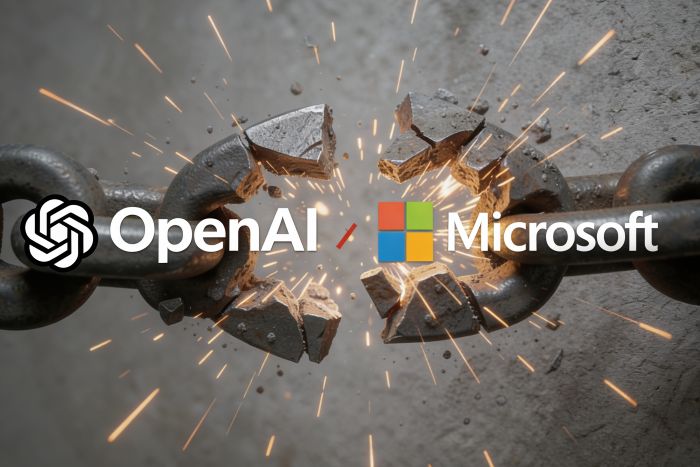
In a landmark shift that has captured the attention of tech leaders and investors worldwide, OpenAI has taken decisive steps to reduce its heavy reliance on Microsoft. This development signals a broader transformation in the AI Era, where partnerships that once defined the industry are now evolving into more flexible alliances. The move allows the AI pioneer greater freedom to innovate and expand while still maintaining key ties with its longtime backer.
The relationship between OpenAI and Microsoft dates back to 2019, when the software giant invested billions to support the startup’s ambitious goals. Over the years, Microsoft poured more than 13 billion dollars into OpenAI, integrating its technology into products like Copilot and Azure OpenAI Service. This collaboration powered rapid growth for both companies in this AI Era. OpenAI gained access to massive computing resources, while Microsoft positioned itself at the forefront of artificial intelligence applications across enterprise software and cloud services.
Yet, as OpenAI matured into a powerhouse valued in the hundreds of billions, the original exclusive arrangement began to feel constraining. The startup needed more options for scaling infrastructure and reaching diverse customers. Microsoft, meanwhile, started building its own AI capabilities to lessen dependency on any single partner. These dynamics set the stage for the recent changes announced on April 27, 2026.
Key Takeaways
- OpenAI has reduced its reliance on Microsoft, shifting toward a more flexible partnership model in the AI Era.
- Under the new agreement, Microsoft gains a non-exclusive license, allowing OpenAI to offer its technology on other cloud platforms.
- The changes signal a pragmatic evolution, removing exclusivity while maintaining key collaboration and enabling both parties to pursue independent growth paths.
- Market reactions indicate a positive outlook, with analysts recognizing OpenAI’s need for greater autonomy and Microsoft freeing up capital for its own AI developments.
- This partnership shift may accelerate innovation in AI, create more competition, and provide enterprises with greater choices in cloud services.
Table of contents
- The Amended Partnership: A Calculated Loosening of Ties
- Market Reactions and the Drive for Independence
- Speculation on a Complete Future Separation
- Impacts on Cloud Computing and Enterprise Adoption
- Boosting Innovation and Competition in the AI Era
- What This Means for Investors and the Tech Ecosystem
- Preparing for the Road Ahead
The Amended Partnership: A Calculated Loosening of Ties
Under the new agreement, OpenAI and Microsoft have rewritten key terms to create more breathing room. Microsoft will no longer hold an exclusive license to OpenAI’s intellectual property. Instead, it receives a non-exclusive license that extends through 2032. This adjustment means OpenAI can now offer its models and products on other major cloud platforms, including Amazon Web Services and Google Cloud.
At the same time, Microsoft remains OpenAI’s primary cloud partner. New products will still launch first on Azure unless Microsoft opts out of supporting specific capabilities. Revenue sharing has also been simplified. OpenAI will continue paying a portion of its revenue to Microsoft through 2030, though with new caps that provide predictability. Microsoft, for its part, will stop making revenue share payments back to OpenAI.
These updates remove the famous AGI clause that had previously tied the companies’ futures to the achievement of artificial general intelligence in this chapter of the AI Era. Industry observers view the revisions as a pragmatic evolution rather than a breakup. As reported by Reuters, the changes clear the way for OpenAI to forge deals with rivals while giving Microsoft long-term certainty and reduced financial obligations.
Market Reactions and the Drive for Independence
The announcement triggered immediate interest across financial markets. Analysts highlighted how the deal addresses OpenAI’s need for greater autonomy amid exploding demand for its technology. With ChatGPT and successor models driving massive usage, the company required flexibility to secure compute resources from multiple providers. Early reports indicate OpenAI has already begun exploring expanded partnerships, potentially paving the way for an initial public offering in the coming years.
Microsoft’s perspective appears equally strategic. By ending exclusivity in this AI Era, the company frees up capital and focus to develop proprietary AI models and diversify its ecosystem. CNBC coverage noted that the capped revenue arrangement benefits both sides by eliminating uncertainty and allowing each to pursue independent growth paths without severing their core collaboration.
Speculation on a Complete Future Separation
Wall Street and tech insiders have begun speculating about what comes next in this chapter of the relationship in this AI Era. Some market watchers suggest the amended agreement represents an intermediate step toward an eventual full termination of the partnership. With key provisions expiring around 2030 and 2032, discussions in investment circles point to a possible complete unwind once OpenAI solidifies its own infrastructure and Microsoft fully matures its in-house AI stack.
This speculation draws from broader trends in the industry. OpenAI has invested heavily in projects like Stargate, a massive data center initiative involving multiple partners. Microsoft continues advancing models such as those powering Copilot while integrating technologies from other providers. Forbes and other outlets have described the current setup as a “reset” that reduces mutual dependence, raising questions about whether the companies will maintain close ties beyond the current contract windows.
Of course, no official statements support an immediate split. Both organizations emphasize continued collaboration. Yet the removal of restrictive clauses and the push toward multi-cloud deployment fuel conversations about a more distant, fully independent future. Such a scenario could reshape competitive dynamics, forcing other players to accelerate their own AI strategies.

Impacts on Cloud Computing and Enterprise Adoption
For businesses and developers, these changes promise greater choice and potentially lower costs. Enterprises previously locked into Azure for the most advanced OpenAI models can now explore hybrid or multi-cloud setups. This flexibility may speed up adoption of generative AI tools across sectors like healthcare, finance, and manufacturing.
OpenAI stands to gain broader distribution. By reaching customers on competing clouds, it can tap into new enterprise segments that prefer diversified vendor relationships. Microsoft, in turn, retains a strong position through its ongoing license and primary partnership status. The arrangement also eases potential regulatory scrutiny related to market concentration in cloud and AI services in the AI Era.
Boosting Innovation and Competition in the AI Era
The evolution of this high-profile alliance could accelerate innovation across the board. With OpenAI less tethered to a single infrastructure provider, it may experiment more boldly with model architectures and deployment methods. Microsoft gains incentive to invest deeper in its own research and partnerships, fostering healthy rivalry.
Smaller AI startups and open-source communities may also benefit indirectly. A less centralized power structure in the AI space encourages more players to enter the market, driving down prices and spurring creative applications. The New York Times described the partnership shift as part of an escalating global race where reduced dependence helps both organizations stay nimble.
Challenges remain, however. Integrating AI across multiple clouds introduces complexity around data security, latency, and compliance. Companies will need robust strategies to manage these multi-vendor environments effectively. Additionally, the financial implications of capped revenue shares could influence how aggressively each firm pursues new markets.
What This Means for Investors and the Tech Ecosystem
Investors have responded positively overall, viewing the deal as a mature step that balances risk and opportunity. Microsoft’s stock showed resilience following the news, reflecting confidence in its diversified AI approach. OpenAI’s valuation discussions, rumored to approach 852 billion dollars in some analyses, underscore the market’s belief in its long-term potential in the AI Era.
This development also highlights a maturing AI landscape. Early partnerships were essential for funding and scaling, but success now demands adaptability. Tech giants are learning that strategic flexibility often trumps rigid exclusivity in fast-moving fields.
Preparing for the Road Ahead
As organizations digest these changes, the focus shifts to practical implementation. Cloud architects and IT leaders should evaluate how multi-cloud access to OpenAI models fits into their roadmaps. Developers can anticipate expanded API availability across platforms, opening new experimentation possibilities.
Policymakers and regulators will likely monitor the situation closely. Any further decoupling could influence ongoing antitrust conversations around big tech and AI dominance.
In summary, the recent adjustments between OpenAI and Microsoft reflect a thoughtful recalibration rather than a dramatic rupture. They position both companies to thrive amid rapid technological progress while addressing practical constraints that had begun to limit their ambitions. As the industry continues its explosive growth, such strategic evolutions will define success in the years to come. Ultimately, this transition reinforces the dynamic nature of the AI Era, where collaboration and independence must coexist to unlock the full promise of intelligent systems.