Ashfaque Chowdhury Podcast Transcript
Ashfaque Chowdhury joins host Brian Thomas on The Digital Executive Podcast.
Brian-Thomas: Welcome to Coruzant Technologies, Home of The Digital Executive Podcast.
Do you work in emerging tech, working on something innovative, maybe an entrepreneur? Apply to be a guest at www.coruzant.com/brand.
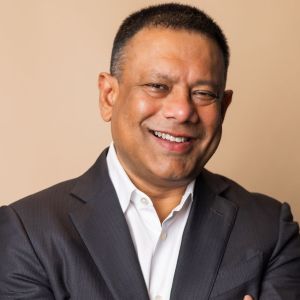
Welcome to The Digital Executive. Today’s guest is Ashfaque Chowdhury. Ashfaque Chowdhury is the Chief Executive Officer of Exol, bringing over two decades of experience in scaling global supply chain operations. His leadership is defined by driving transformative growth and innovation for some of the world’s most recognized brands.
Previously, Dr. Chowdhury was the CEO of North America for CEVA Logistics. Before that, as president of XPO Logistics, supply chain business in the Americas and Asia Pacific, he spearheaded the integration of multiple acquisitions, transforming the business into the world’s second largest contract logistics provider.
At XPO, he oversaw a network of over 400 locations and 32,000 employees achieving industry-leading growth while cultivating an award-winning employee-centric culture. An innovator in the field, he holds seven patents in supply chain technology.
Well, good afternoon, Ashfaque. Welcome to the show.
Ashfaque Chowdhury: Welcome, Brian. Looking forward to talking with you today.
Brian-Thomas: Absolutely, my friend. I appreciate it. And specially making the time, I know there’s a lot of juggling of calendars and time zones. You’re in Boston. I’m in Kansas City, so again, really appreciate you making the time today. And Ashfaque, if I could, I’m gonna jump into your first question.
You’ve spent over two decades scaling global supply chain operations, including leadership roles at CEVA Logistics and XPO. What key experiences shaped your journey to becoming CEO of Exol?
Ashfaque Chowdhury: Well, I’ve had the good fortune to be involved in the logistics industry for, a couple of decades here. And over the years, I’ve always been fascinated by the different types of supply chains and the different ways we have evolved how we can meet customers’ needs better and how automation and robotics has shaped that.
So, both at XPO and at CEVA I have had the background of looking at hundreds of customer supply chains, which is very helpful as you start to build a robotic logistics platform like we are doing at Exol. And I’ve had a lot of exposure to the different types of automation and robotics as it has evolved over the last decade or two.
Brian-Thomas: Thank you. And I appreciate your fascination or curiosity with supply chain over the years. I know you’ve got a lot of experience in the automation, innovation, and robotics area, but you are always looking to make the world a better place, providing a more efficient supply chain and improving that customer experience.
So, I, I do appreciate your insights there. And Ashfaque, Exol is positioning itself as a robotics logistic platform. What pla- what problem and traditional logistics were you most determined to solve with this model?
Ashfaque Chowdhury: Well, I think most companies know that they need to use automation as the demands for complexity and cost continues to rise in their supply chain.
But very few companies have the scale, the knowledge sometimes the funding necessary to really develop and take advantage of the robotics and AI related advancements that are happening. What Exol is doing is essentially providing that company a pathway to improve their supply chain, make it world-class by adopting our platform and being able to take advantage of robotics and AI.
Brian-Thomas: That’s awesome. And you do quite a bit in this space. You obviously, I, I feel like you work on that cutting edge to improve that customer experience as we talked about, but providing that pathway to a world-class supply chain for your customers is obviously number one priority in your book and I just really appreciate that we’re bringing more automation to this process.
Supply chain is, can be fragile sometimes, can be slow and very inefficient, but you’re bringing a lot of the innovation to that market. Ashfaque, your platform combines robotics, AI native software, and transportation into a single offering. How does this integrated approach change the economics and scalability of fulfillment?
Ashfaque Chowdhury: The robotics platforms that are available today operate economically, it operates well at a large scale. And so, by having a platform that efficiency that comes with automation, the efficiency that comes with scale is now available to customers. They no longer need to have a very significant upfront capital if, people wanted to build it themselves or get into a very long-term, rigid contract, which as business changes or grows or how the evolution of somebody’s business changes that locked in infrastructure sometimes does not fit.
So, what we provide companies is the flexibility to grow and to very quickly adopt the automation that I think a lot of companies want. And finally, one of the other aspects of this platform is as continued complexity is coming into the supply chain, for example, as new channels en- emerge companies are now suddenly finding themselves having to fulfill from TikTok, for example.
Our, a platform like ours enables them to continue to adopt those channels very easily, quickly.
Brian-Thomas: Thank you. Really appreciate that. And customers, they always wanna improve. They always want to whenever they can, reduce that cost, and you’re bringing that efficiency at scale, which is hard to do for these customers, especially if they’re trying to do it themselves, as you mentioned, but you provide that flexibility to grow so that they can adopt that technology that they need to again, be more efficient and turn things around.
Nowadays in supply chain, as when it’s with rising energy costs, it’s hard to really make a decent margin on this. So, I appreciate what you’re doing. And Ashfaque, as we look ahead to the future, how do you see AI, robotics, and logistic infrastructure evolving over the next decade, and what role will Exol play in shaping the future of global commerce?
Ashfaque Chowdhury: Over the next few years, I think the logistics business will start looking more like cloud computing. The best run companies will stop asking whether they need to own every piece of infrastructure themselves, and instead ask how to access the best infrastructure with the most controlled visibility and flexibility that enables them to make their supply chain better and grow the business.
And secondly, I think what Exol is enabling is the ability for companies to manage their business with less reliance on labor. And as you know, labor and availability of labor is a major challenge in and a growing challenge in many people, in many supply chains today. And as time grows passes, I think it’s going to become more difficult to scale a manual model, so some degree of automation is going to be necessary.
So, I think what Exol will enable companies to do is be able to navigate the future of being able to enable robotics and AI in their supply chain and continue to leverage automation to grow their business.
Brian-Thomas: Thank you. And I certainly appreciate you highlighting the labor part of it.
That’s a big cause, a big challenge. We’re gonna have to have some degree of automation to scale. Manually scaling just is not it’s cost prohibitive. And I understand there’s, it’s a sensitive topic when you’re talking humans versus machines, but I appreciate you highlighting that.
But I like your note on the future, you referenced logistics will start to run or look like cloud computing, which I thought was interesting, but we do need to bring some of that to mainstream as far as what we need to do to start innovating to give customers more control and flexibility in this supply chain.
So I appreciate that. And Ashfaque, it was such a pleasure having you on today, and I look forward to speaking with you real soon.
Ashfaque Chowdhury: It was my pleasure talking to you, Brian.
Brian-Thomas: Bye for now.
Ashfaque Chowdhury Podcast Transcript. Listen to the audio on the guest’s Podcast Page.