Tor Langøy Podcast Transcript
Tor Langøy joins host Brian Thomas on The Digital Executive Podcast.
Brian-Thomas: Welcome to Coruzant Technologies, Home of The Digital Executive Podcast.
Do you work in emerging tech, working on something innovative, maybe an entrepreneur? Apply to be a guest at www.coruzant.com/brand.
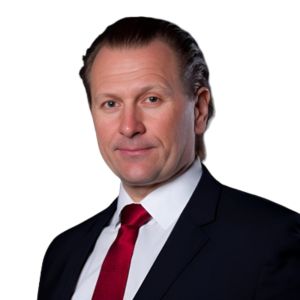
Welcome to The Digital Executive. Today’s guest is Tor Langøy. Tor Langøy is a Norwegian entrepreneur with experience across energy, finance, and global markets. He began his career at Norway’s largest industrial logistics park, later holding commercial roles at BP and Amoco before becoming a full-time entrepreneur and investor in 2004.
He has founded and invested in oil, real estate, and digital asset ventures. He believes that Norway and Finland are emerging as prime locations for hyperscale AI infrastructure, leveraging abundant hydropower, natural cooling, and large-scale land availability to support 1.8 gigawatts of sustainable compute capacity.
Well, good afternoon, Tor. Welcome to the show.
Tor Langøy: A pleasure being with you, Brian.
Brian-Thomas: Absolutely, my friend. I appreciate it and really making the time. I know a lot of calendars we have to juggle. We got PR here as well. But I’m in Kansas City, you’re in Oslo, Norway. So again, I just appreciate it.
That’s, it’s hard to do that sometimes with the time zones. So, Tor, if you don’t mind, I’m gonna jump right into your first question. You’ve built a career spanning energy, finance, and global investments across multiple contents, co- I’m sorry, continents. What keys experiences shaped your journey from corporate roles at BP and Amoco to becoming a full-time entrepreneur and investor?
Tor Langøy: Well, it’s been a long journey. I’m getting old now, but in my early days, I had a father who was pretty globally minded. So I went around the world with him first time when I was five years old, and that kind of exposed me to the world. So I’m a f- from a small town on the West Coast of Norway, and, and luckily had a father who was extremely globally minded.
so it, I in my subconscious, I, I always been very intrigued by global events and the world, and that made me study in the US, different universities there, and ended up in Dubai and started work for Bridge Petroleum. And I had a pleasure working in the former Soviet Union in Kazakhstan and Sabajan and crazy places in Africa.
So, so I learned a lot about how the energy system of the world is actually working, and I think a lot of people are very much aware of it today when you … Because it’s in the news every day, but hormones trait. Very few people know the fact that, like, 20% of, so the global oil and gas, plus, of course, helium and fertilizers also derivative of gas that’s also not flowing.
So having a good understanding about energy world was kind of instrumental and also b- building up biking digital because ultimately data centers is, is really about energy. If you don’t have energy and electricity whether it comes from gas or nuclear or hydropower, ultimately, energy is the driver, not only of data centers, but of the world.
So, it was kind of, good to have that background when we started Viking Digital a few years ago because it gave us a very good foundation to understand the point of energy. So that was kind of our base when we started off some years ago. And as you may know now, we’re, we’re building the second generation ge- neocloud which essentially means that we have the full stack from electrons to the full tech stack, which means build, procure and operate and optimize, plus, of course a full sovereign AI and cybersecurity plus L&M stacks.
We have, in our business model, we have a full, full value stack, which is very unique, which makes us pretty attractive now to many end users and also investors. So, it’s been a, quite a, quite a journey, but ultimately it was, it was good to have that foundation coming from any energy background.
Brian-Thomas: Thank you. I appreciate that. And the backstory, you learned a very hard work ethic from your father, obviously, but you were always curious about the global economy, the energy, how the world works, and you worked all over the world in this business, and I thought it was interesting that you listed off all those count- countries and continents, et cetera but you realized the importance of providing energy to the world’s largest and biggest advanced data centers, and you’re providing a solution for a long-term plan to sustain these data centers.
So, I appreciate that. And Tor, you’ve raised and deployed over six billion across energy and infrastructure projects. What have been the most important lessons in structuring and executing large-scale global deals?
Tor Langøy: I don’t think it’s necessarily one lesson, but there, there are many lessons on both, o- on, on the f- both on the financial side, but I would say it’s really only more on the human side because when you work cross border, you have different languages, different people, different cultures one word in one culture can be totally different in another culture.
So, you have to be very aware of your counterparty. And I think sometimes that’s where many lose out on deals because there’s a misunderstanding of the counterparts culture and the way they work. For instance, right now, I, I mean, I’m Norwegian, but right now we’re we, we’re doing a, a big development in Finland and the Finish culture is vastly different from the Norwegian culture, but in a very refreshing manner, Norwegians are pretty direct, but the, the Fins are even more direct and to the point.
So these fi- so, so for instance, if I was not aware of that, probably many people will walk away when they interface with some of our local partners, but I find it very refreshing, but you need to have a thick skin. So, I think that is, is actually one of the key lessons is more that not necessarily the numbers and sense and the spreadsheets, it’s actually the, the, the human aspects of a deal that’s very often overlooked.
Brian-Thomas: Thank you. I appreciate that. And as a world traveler myself back in the day I was in the Marines and I got to experience a lot of what you’re talking about, and I appreciate you sharing that. But the big takeaway here, the most important piece of these deals globally is obviously people, culture, and communication, and really understanding that helps solidify a deal.
Of course, if you go into this not knowing some of this stuff deals can go sideways and you need definitely have to have thick skin. So, I appreciate that. Tor, you’ve highlighted Norway and Finland as emerging hubs for hyperscale AI infrastructure. What makes these regions uniquely positioned to support sustainable, large scale compute capacity?
Tor Langøy: Well, it’s an excellent question because energy is, kind of the number one topic globally now with the lack of supply of energy coming from the Middle East. So I we think now, I mean, it’s pretty clear that data’s no one is gonna, will take the risk of investing further in the Middle East, at least for quite a while, even though they have energy down there in principle, but it’s very difficult to ensure data centers for bombs and missiles and drones.
So being in a stable part of the world, which Norway, Finland, Sweden arguably is, I think the security-wise is, is pretty good, but the most important is arguably the power, and in Norway, the electricity is 100% hydropower. A little bit of wind, maybe 1%, but for the most part, it’s it’s hydropower. And it’s getting scarce and scarces- scarcer, but luckily we have some really amazing plots of land with power and also we have quite a few partners that is rolling into Viking digital because they’re excited to be part of the second generation neocloud buildup, which we represent.
As for Finland, it’s a bit more mixed picture. As for our site, we are in close proximity to the massive 3.4 gigawatt nuclear power station that’s just south from us. In fact we have the industrial park closest to that nuclear power station. So, we have the fortunate position to have direct access via grid to, to that nuclear power station.
But in, in Finland is, is, you have a lot of nuclear and a little bit of, of hydropower and also loads of wind that has attracted Google made a big announcement two weeks ago. They’re moving big into Finland and a site there in, in kind of in the middle of, of Finland. And then Nebias did a 300 megawatt announcement as well.
They’re like two, three hours north of Helsinki while we are actually closer to Helsinki than any of them. We’re close to the airport. So we, we are very bullish on Finland and, and Finland it’s similar mixed to Sweden in terms of the, the power source. But ultimately, I think the Nordics offer a very unique platform because it’s, it is super secure, stable nations, and still with excess electrons or electricity.
While if you look at Europe right now, it’s the opposite. UK, if you take that case in point OpenAI pulled out of the Stargate project here in the UK because UK simply doesn’t have electricity and has seven to 10 year waiting list for grid connection. If you take Germany similar situation, Germany was totally reliant on cheap r- cheap Russian gas.
And then, of course, the Ukraine war happened, and they cut themself off from Russian gas, essentially, and they were now reliant on import from Qatar in the US, and the exports from Qatar has stopped as a result, they even more reliant on the US. But the US gas is five times more expensive than Russian gas.
To give you a case in point, Russia, Russian gas was importing reliably into Germany via direct pipelines to factories and gas turbines at $2 per MB- MMBTU, while now the importing gas from the US from on nine to $10 per MMBTU. So you have the gas price is roughly $3 in the US, but then the transportation cost from Houston to Hamburg is six, $7 per MMET.
So, on a good day, you’re at nine, $10 landed per MMBT, plus, of course, local grid local pipeline cost as well. So Germany, Germany electricity is never gonna be cheap, and a similar thing with, with the UK. In fact, UK import daily four, five gigawatt from France, two, three gigawatts of electricity from Norway, and then half of the UK’s gas comes from Norway as well.
So, you might as well go to the source which is the Norway and the Nordics. So, if you wanna ever build a data center with reliable energy for the next few years, I think the Nordics and Norway will be a, a good place to be.
Brian-Thomas: Thank you. Appreciate that. You unpacked a lot there, but bottom line is, energy is obviously the number one thing being talked about right now especially with the Mid-East conflict.
But the Newark nations are definitely a secure, stable area part of the world, and you kind of highlighted Norway’s big on the hydropower, Finland as well, with some nuclear power there which is certainly attracting large customers like Meta. But the, also there’s a lot of energy challenges in the UK and Europe, as you highlighted, and obviously getting that from the US is much more expensive than the pr- the proposition that they had coming from Russia with that pipeline.
So again, appreciate highlighting some of the geopolitical things that are involved in providing energy in that region of the world. And Tor, the last question of the day, as we look ahead to the future, how do you see the convergence of energy, finance, and AI infrastructure shaping the global economy over the next decade, and where are the biggest opportunities?
Tor Langøy: That’s a billion, trillion dollar question. But I think the we kind of … If you look in the rear view mirror the first part of this revolution, the AI revolution was building the models. So you have, of course, the famous ones like Anthropic and or and OpenAI and many others who were who’s been scooping up the world’s data into the models.
So that’s, what’s kind of the first stage. Now, the next stage is utilization of, of all this data, so inference, and the fuel for this compute will be tokens. And Jensen Huang at this keynote at the GTC, the G2C Nvidia conference in San Jose a good month ago spent quite a lot of time on talk- talking about tokens that he, for instance, gives his some key, key tech employees, $250,000 worth of tokens so they can play around with with different models.
So that is the next commodity. So, for us in Viking Digital, we’re very much aware of that fact, or at least that we, we see as a fact that the world’s req- will require enormous amount of compute capacity in the form of, of tokens. So the ones that can deliver the cheapest and highest markup, in our case tokens will be the winner.
And that’s also kind of why we’re presenting ourself as a second generation neocloud, because we will have the cheapest tokens. And many of the players out there today, they will probably not be able to compete with us because a token, what is it? It is a combination of electricity so you need to have the cheapest electricity, the cheapest cost of capital, and the most efficient compute.
By dominating those three pillars you will have the cheapest and highest margin tokens. And I think that’s, it’s something that’s kind of been overlooked by many but that’s kind of, we have a laser focus on these three pillars, so have the cheapest electr- electricity, cheapest cost of capital, and the most efficient compute.
And this is something I, I realized last year and I realized, well, we have good control of the capital cost and, and we have arguably the cheapest electrons definitely very competitive prices. And so that’s why I went to the US last year to find a brain trust for, to create efficient compute.
And that’s where I had a, an amazing meeting of mines with a former head of infrastructure and OpenAI, Bank of Tomisi, and luckily he and his team joined us in Viking Digital because he also see eye to eye about our vision in creating the second generation, second generation neocloud, which can give the market the cheapest tokens.
So that’s where I think that’s gonna be a trillion dollar economy according to the latest McKinsey reports.
Brian-Thomas: Thank you. Really appreciate that. This is great. Really liked how you kind of delved into this tokenization. Obviously Viking Digital looking to move towards this tokenization in this compute market.
You’re considered, or Viking Digital second generation, NeoCloud, having the most inexpensive token, and just to break that down again was you mentioned cheapest electricity, cheapest cost ca- capital, and most efficient compute and I like that bringing this tokenization into it and having, especially in the Nordic countries and what you’re doing, providing the most inexpensive token is gonna be great.
Very competitive, of course, and I really appreciate your insights. And Tor, it was such a pleasure having you on today, and I look forward to speaking with you real soon.
Tor Langøy: Well, thank you for your time today, Brian. It was fantastic chat today and appreciate it.
Brian-Thomas: Bye for now.
Tor Langøy Podcast Transcript. Listen to the audio on the guest’s Podcast Page.