Mike Liberty Podcast Transcript
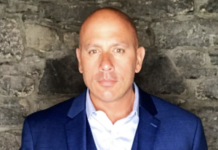
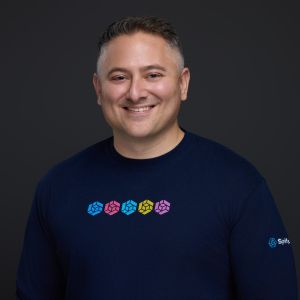
Mike Liberty joins host Brian Thomas on The Digital Executive Podcast.
Brian-Thomas: Welcome to Coruznt Technologies, Home of The Digital Executive Podcast.
Do you work in emerging tech, working on something innovative, maybe an entrepreneur? Apply to be a guest at www.coruzant.com/brand.
Welcome to The Digital Executive. Today’s guest is Mike Liberty. Mike Liberty is the co-founder and Chief Risk Officer at Signifyd, where he oversees risk operations and strategy and data science. In 2011, he co-founded Signifyd with CEO, Raj Ramanand. The co-founders were inspired by the belief that online merchants were at an unfair advantage when it came to the requirement that they accept liability for credit card fraud.
That’s not the case for in-person payments at brick-and-mortar stores. Before Signifyd, Mike Liberty was the manager of New Ventures Risk at PayPal, where he led all fraud and risk management initiatives for digital goods. Prior to joining PayPal, Liberty worked at GWC Warranty, where he was the director of business development and then chief operating officer.
Before that, he was an associate at Civic Partners and an analyst at JP Morgan. In all, he has spent more than 20 years in the finance and risk fields. Well, good afternoon, Mike. Welcome to the show.
Mike Liberty: Great to be here.
Brian-Thomas: Awesome. Thank you, Mike. I appreciate it. I know you’re hailing out of the East Coast up in the New Hampshire area.
I’m in Kansas City, and I know sometimes it’s hard to traverse calendars, time zones, et cetera. PR, all that. It takes a lot of work to get here, so thank you. I appreciate it. And Mike, if you don’t mind, let’s just jump right into your first question. You’ve built a career across finance, risk management, and entrepreneurship from JP Morgan to PayPal, and now co-founding Signifyd.
What experience has shaped your journey to where you are today?
Mike Liberty: Yeah, so as you said, I started my career in finance and after four years of that, I was kind of looking to make a transition to technology. And so went to one of the portfolio companies that the private equity firm that I was working for owned and started working there.
It was in the insurance industry. And basically that was my first exposure to tech because I built out the business intelligence system for them. And so that like gave me a picture into all the inner workings of the operations. And then I knew I wanted to get into tech, but I didn’t really have a, a background to get there.
So went to business school and then coming out of business school got hired at PayPal. And interestingly, I think the, the only reason the guy who hired me over there was because I had a minor professional career playing a blackjack. And he was hiring me into a role, that was fraud detection.
And so, I was used to the cat and mouse game that you played with casinos and kinda could put my, my feet in the shoes of the fraudsters, like, so to speak. Although I wasn’t breaking any laws, but similar cat and mouse.
Brian-Thomas: That’s very cool. I love the backstory. Obviously working in the space that you were doing in finance, there’s a lot of risk, and we’ll talk about that, but finance and risk management, and that really played a role into your hiring.
And I see that a lot from time to time where people have done something specific whether they were a professional esports gamer, right? They got hired into something because something was relatable there with the business. So thank you. Mike, at Signifyd, you set out to solve a fundamental imbalance in e-commerce fraud liability.
What was the highest, I should say, what was the insight that led you and your co-founder to build that company?
Mike Liberty: Yeah, so, I guess I was benefiting from a little bit of ignorance when I joined PayPal into that fraud detection team. And what I did was head up digital goods fraud there.
And one of the things that just struck me was I had never considered the possibility that the merchant would actually end up taking the liability for fraudulent orders or fraudulent transactions, and that just seemed backwards to me. It’s like why would I, as a merchant have to set up an intricate fraud detection system?
And that, led me to only spend a brief time, at PayPal because I was like, “All right, well, this is fundamentally broken for all these different merchants.” And that struck me as very unfair as well. And so, after about a year there Raj and I, left and we started Signifyd.
And I would say that kind of pulled together the various parts of my background because coming again from that, that Blackjack background, the finance background, I kind of saw how you could leverage additional information to get an edge. And in this case, it was an edge over fraudsters.
And then from the finance and insurance background, it was, all right, well, we can actually do this profitably where we’re protecting a merchant and guaranteeing them, providing them that certainty about what the cost is actually going to be.
Brian-Thomas: Thank you. I appreciate that. And again, there’s always a challenge, a problem, a gap in the market that entrepreneurs like yourself have found and say there’s a better way to do this.
In this case, obviously, putting the onus back on others for the fraud and really that gap is why, which led to your founding of Signifyd, which is pretty cool. I appreciate that. Mike, Signifyd focuses on protecting merchants while enabling growth. How do balance, how do you balance fraud prevention with creating a seamless customer experience?
Mike Liberty: Yeah, so we, we started out in the mid-market, and what was really fascinating there was a merchant would run into a fraud problem really right at the moment that they were experiencing explosive growth. So, your product takes off, let’s say and you suddenly become a target for fraudsters and aren’t equipped, to deal with it.
So it was kind of intrinsic in the business that you don’t wanna shut down that growth, which would a lot of these middle market merchants that were growing explosively were facing. And so, like, from the very beginning, it was well, we don’t want to stop these good buyers that are actually making this person’s business successful, but what we need to do is prevent the fraudsters.
And so then as we’ve moved up market over time, it was already, built into our DNA so to speak. We never came at it as simply fraud people. And, what we always say is it’s easy to stop all fraud. You just stop taking orders but that kind of, you lose the plot there.
The whole point is that you want to protect the orders while allowing those good buyers in. And so, we, often would tell people, and we still tell people who join my team in risk is you gotta look for the good, in these orders. Like, so tell a, tell the story of why a buyer is making this purchase, search for that, reason.
And then everything that remains you could take a deeper look at. But what we really, really wanna do is make sure that we’re not, putting undue friction in front of that, that, that good buyer.
Brian-Thomas: Thank you. I appreciate that. And yeah, unfortunately, as we, as companies start to have that growth and starting to get more exposure obviously that, that attack surface, right, from fraud or cyber doesn’t matter you’re just more. It’s, you’re just more of a target.
And I really appreciate what you all are doing in this space to help prevent that. And Mike, the last question of the day as we look ahead to the future, how do you see the future of fraud prevention, digital commerce and risk management evolving, and what role will AI play in shaping this landscape?
Mike Liberty: Yeah, so throughout, my career in the space, and now it’s 15 years ago since we started Signifyd, I would say that there has been a lot of tools that have come around that claim to be the silver bullet that are just going to stop fraud entirely. And I think what that misses is that the fraudsters adapt as well.
So, they become innovative. Those tools are all available to them, and often they’re the early adopters of a lot of these tools. And so, what I think, is going to happen is that, continued arms race where now you’ve got this intermediary, whether it’s OpenAI or Anthropic or one of these big foundational model providers that are making agentic commerce available.
And it’s really difficult to kind of pierce the veil, of that agent especially because these guys are, they’re looking to acquire customers and so fraud kind of tends to be, and safety tends to be an afterthought. And so, they don’t think about, all right, well. We’ve got to make sure that we put the information about whoever is sitting behind that agent front and center so it’s available to a merchant and so then they can make a decision.
And that’s where, like, someone like Signifyd, really comes in because we’re, at that cutting edge, we know these, these fraud patterns and we’re constantly thinking about, all right, how do we, provide that protection while enabling this completely new form of, of commerce? And as I said before, I think it, all goes back to the informational edge, right, that you can get over a fraudster.
I mean, fundamentally, we’re using all of this information to basically figure out what is the intent of that buyer and what is the identity of that buyer. And w- w- we’re able to m- be creative, see across our entire network and pull all of that, information together to make sure, again, that we’re approving the good buyers and also, like, staying on top of the adoption of fraudsters of all of these new tools.
And then last thing, like, it just is such an exciting time to be in tech with w- where AI is going. I mean, you can build stuff so quickly these days quicker than, I ever could in, in my career, and that just accelerates what we are able to bring to our merchants in terms of tooling and our detection, capabilities.
Brian-Thomas: Yeah, that’s amazing. You, you hid out, highlighted the advanced AI that’s come out. You’ve heard of Claude’s cowork and Open Cloud, these, some of these work almost 100% independently on most tasks that can be done. And in your space, obviously, you have a lot of data that you can pull in and analyze, your good buyers versus areas that risk that you need to address.
But again, you can augment your team with AI now and it’s amazing how powerful it is. So I appreciate you highlighting some of that stuff. And Mike, it was such a pleasure having you on today, and I look forward to speaking with you real soon.
Mike Liberty: All right. Thanks so much, Brian. I appreciate it.
Brian-Thomas: Bye for now.
Mike Liberty Podcast Transcript. Listen to the audio on the guest’s Podcast Page.