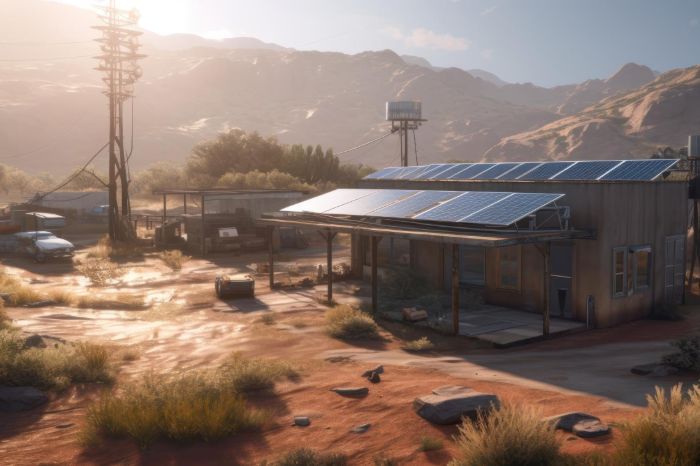
Not long ago, off-grid technology systems were mostly associated with remote cabins or specialized industrial projects. Today, they are quietly becoming part of everyday infrastructure. More homeowners and businesses are actively looking for ways to reduce reliance on centralized grids. In that shift, energy storage is no longer just a nice-to-have add-on. It forms the practical backbone of how power is actually used and managed out in the wild.
Key Takeaways
- Off-grid technology is becoming mainstream as homeowners and businesses seek energy independence.
- LiFePO4 batteries offer stability, longevity, and efficiency, making them ideal for various applications.
- These batteries are now essential for off-grid systems, powering everything from RVs to golf carts.
- Companies like Vatrer Power are developing tailored LiFePO4 solutions for specific needs and harsh environments.
- Overall, off-grid technology now prioritizes consistent performance over just battery capacity.
Table of contents
The Rise of LiFePO4 as a Reliable Energy Platform
Lithium iron phosphate (LiFePO4) batteries haven’t just gained traction because of the “lithium” label. Over time, what keeps LiFePO4 in serious systems isn’t hype—it’s consistency. Compared to older lead-acid setups, LiFePO4 gives users more usable capacity and a much longer lifespan without breaking a sweat during repeated daily cycling. Crucially, it doesn’t overheat easily. That thermal stability is a massive deal for mobile setups where a battery failure isn’t just an inconvenience—it’s a genuine safety hazard.
Beyond Light Electric Vehicles: Expanding Application Boundaries
Light electric vehicles put lithium off-grid technology on the map. But the story didn’t stop there. Far from it.
Today, RV owners and digital nomads rely on compact storage to keep refrigerators humming overnight in the Arizona heat and laptops charged during long stretches down dirt roads without hookups. Out on the water, marine operators demand batteries that can handle the constant pounding of waves and wild temperature swings without suddenly dropping voltage.
Back on land, off-grid solar installers are increasingly using LiFePO4 to smooth out unpredictable sun exposure. And in commercial environments—where downtime is measured in lost revenue rather than mere annoyance—predictable long-term cycling is exactly what facility managers are looking for.

Lithium Golf Cart Batteries as a Case Study in System Evolution
Take golf carts as a perfect example of this shift. Once just weekend recreational toys, these carts are now the primary mode of transport in many residential communities, sprawling resorts, and university campuses.
This changes the math entirely. Hauling four adults and heavy bags up steep paved hills day after day demands a power source that doesn’t quit halfway through the afternoon. Enter lithium golf cart batteries. As these carts turn into serious multi-purpose vehicles, lithium systems deliver the cycle life needed for relentless, daily use. For resort operators, knowing a fleet will run predictably from dawn till dusk changes everything.
Vatrer Power and Practical LiFePO4 Deployment
As the market matures, generic battery replacements simply don’t cut it anymore. Manufacturers now have to design for specific, often harsh, operating environments. Vatrer Power is among the companies stepping up, building LiFePO4 solutions specifically engineered for heavy mobility and serious energy storage.
By matching their battery architecture to what fleet operators and installers actually need—like dealing with complex system integration rather than just raw power—they show how the hardware is evolving.

Key Technical Factors Driving Adoption
Why exactly are we seeing LiFePO4 everywhere? It usually comes down to a few core realities:
- Stable Voltage: Electronics hate power dips. LiFePO4 keeps the voltage steady, preventing your screens or sensors from glitching out when the AC kicks on.
- Extended Cycle Life: Replacing heavy batteries every two years is expensive and honestly, just exhausting. High cycle durability keeps long-term operational costs down.
- High Discharge Efficiency: You get out almost exactly what you put in, which is crucial when you’re relying on limited roof space for solar panels.
- Smart BMS: The built-in “brain” prevents overcharging and manages temperature. If you’re parking a rig in the freezing cold or baking sun, this protection is non-negotiable.
Off-Grid Technology and Energy Require More Than Capacity
For years, buyers compared batteries almost entirely by amp-hours. That mindset made sense when systems were simple. It doesn’t anymore.
As decentralized energy systems mature, capacity alone is no longer the defining metric for off-grid technology. Today, predictable performance and simple maintenance determine whether a system survives the long haul. When you are miles from the grid, a dead battery isn’t just a flashing warning light; it means a stranded vehicle fleet or ruined food in the fridge. LiFePO4 earns its keep through sheer consistency—powering through thousands of cycles without introducing unwanted drama.
Conclusion
These batteries have officially broken out of their niche. From massive solar arrays down to the dependable lithium golf cart batteries cruising through local neighborhoods, LiFePO4 is the quiet engine making off-grid living not just possible, but practical. The off-grid technology and chemistry are not just technical specs anymore—they are the foundation of a more independent energy future.