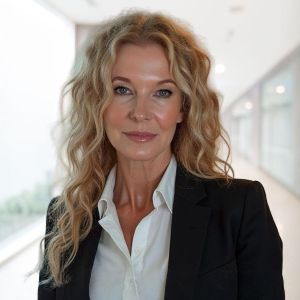
Vanessa Slowey Podcast Transcript
Vanessa Slowey joins host Brian Thomas on The Digital Executive Podcast.
Brian Thomas: Welcome to The Digital Executive. Today’s guest is Vanessa Slowey. Vanessa Slowey is the president and CEO of TelyRx, a vertically integrated telehealth pharmacy platform transforming how consumers access medications and healthcare. Drawing on more than 25 years of experience scaling high-growth companies across international markets, Vanessa brings a unique perspective to the rapidly evolving intersection of healthcare, technology, and consumer behavior.
Before joining TelyRx, Vanessa served as group CEO of Digicel Caribbean, Central and Latin America, where she led operations across 27 markets and oversaw more than two billion in revenue. Well, good afternoon, Vanessa. Welcome to the show.
Vanessa Slowey: Thank you so much for having me, Brian.
Brian Thomas: Absolutely, my friend. I appreciate it.
You’re hailing out of the great state of Florida. Today I’m in Kansas City, so we’re just an hour apart, and I really appreciate that, making the time to get here. So Vanessa, if you don’t mind, I’m gonna jump into your first question here. Your path is certainly remarkable, from working in your family’s pharmacy in Ireland to building Digicel Asia Pacific from scratch and selling it to Telstra for $1.6 billion, to leading 27 markets and over two billion in revenue at Digicel Caribbean, and now running a telehealth pharmacy.
What connects that early experience behind the pharmacy counter to where you are today, and what drew you back to healthcare after decades in global telecom?
Vanessa Slowey: In many ways, coming to TelyRx feels like coming full circle because I grew up over my family’s pharmacy in a very small town in the west coast of Ireland called Sligo, and I watched my father care for people in, in the community.
One of my earliest jobs was delivering prescription, prescriptions on my bike, and what that meant, riding to the n- the, the nursing home a willow down the road or a farmer who couldn’t leave during lambing season. My father had a very simple philosophy. If someone needed medication, he figured out how to get it to them.
He didn’t make access their problem. He made it his problem. Now, connect that experience to telecoms, because I carried that philosophy with me even when my career took me into, into telecoms. And in many of the markets for Digicell operators, connectivity wasn’t a given. We had to build the infrastructure that allowed people to participate in an increasingly connected world.
The technology here was completely different, but the underlying challenge was remarkably similar. How do you connect people to something they need when barriers stand in the way? So let’s bring that forward to TelyRx. TelyRx brought those two parts of my career together, my roots in pharmacy and everything I’d learned about technology, infrastructure, and scaling businesses.
And today, those lessons to healthcare and asking the same fundamental question my father did, “How do you, how do we make it easier for people to get what they need?”
Brian Thomas: Thank you so much. I appreciate that. Vanessa, love the backstory here. Obviously, you you’re very impressionable by, by your parents, by your father helping people in the pharmacy. In fact, you talked about helping him help others. If someone needed medication, you talked about your father, he ensured there was a way they could get it no matter what.
And that’s just how he, how he was. And obviously that had a big impression on you serving others. But what I really like is you took your father’s philosophy here, and your vision was really to scale it to help not just maybe thousands in a local community, but millions around the world, and I appreciate that.
Vanessa, on the surface, building mobile networks across places like Papua New Guinea and running a digital pharmacy seem worlds apart, but your through line has always been access, connecting the unconnected. What actually transfers from scaling telecom in some of the world’s hardest terrain to scaling healthcare access in the US, and what did you have to unlearn?
Vanessa Slowey: Great question. Well, in telecoms, the access problem was often physical. Like, the infrastructure simply didn’t exist, so we had to build it. Now, coming back into healthcare taught me something fascinating. You have enormous infrastructure, but still have an access problem. Like, a patient can live five miles from a doctor and still wait weeks for an appointment, and then they have to navigate the prescription, the pharmacy, insurance, and delivery process before actually getting what they need.
In healthcare today, the barrier is often friction rather than geography. So let’s apply the lessons from telecoms here, because telecoms taught me to start with the customer and work backwards. What are we trying to accomplish? What stands between them and getting there? And which barriers can we responsibly remove?
Healthcare should work the same way. The provider, pharmacy, technology, and delivery infrastructure should connect around the patient rather than requiring the patient to connect all the pieces themselves. The infrastructure should do the hard work. The patient shouldn’t have to. So one thing I’ve had to challenge is the assumption that complexity itself signals sophistication.
Now, healthcare is clinically complex, and that complexity deserves enormous respect. But the experience surrounding appropriate routine care can be simple. The standard I think about is straightforward. I needed care. I could access it. I understood what it would cost. I got my medication, full stop
Brian Thomas: Thank you. Appreciate that. You talked about building that infrastructure in telecoms. Obviously that, that whole infrastructure had to be thought out, planned, and built. And you talked a little bit about that healthcare barrier as you related that to the infrastructure side of things. It’s more of a friction than it is really the technology or that, that access that we could build.
But building the infrastructure allows you or allows the healthcare organizations to make the access for the patient easy, removing those barriers, and I really like that you have a vision to do this, to extend healthcare easily across the globe. So thank you. Vanessa, you’ve been empathetic that fast, convenient access can’t come at the expense of trust, compliance, and clinical integrity, and TelyRx focuses on non-controlled everyday medications.
In a telehealth space, that’s faced real scrutiny over prescribing practices. How do you build guardrails that keep the experience both frictionless and genuinely safe?
Vanessa Slowey: Well, let’s start off with the goal, right? The goal is to remove friction around clinical care while preserving the safeguards within it.
So let’s establish the principle, okay? Convenience and clinical integrity reinforce each other when the model is designed correctly. And the key to– is understanding which steps exist to protect patients and which simply make it harder than to access appropriate care. So clinical review, licensed providers, and pharmacy standards serve an essential purpose.
Waiting rooms, pharmacy lines, and uncertainty around the process don’t inherently improve the quality of that clinical decision. At TelyRx, prescription requests are independently reviewed by state-licensed healthcare providers. We determine whether treatment is clinically appropriate. And we operate through licensed pharmacy operations and focus on FDA-approved medi– FDA only approved medications.
Think low, low-risk, high-use, everyday medications, like your inhaler. So we have also made deliberate decisions about the categories of appropriate care for our model, including the focus on non-controlled medications, right? So trust is also built through the patient experience. Clarity, consistency, and privacy really matter.
Someone seeking treatment for a sensitive condition should be able to access appropriate care discreetly and confidently, and that’s why we think about the entire experience from clinical rev-review through delivery. So let’s define TelyRx ‘s role here. Digital care can complement primary care physicians, specialists, hospitals, and other parts of the healthcare system by making appropriate routine care easier to access.
Our ambition is to build a long-term relationship with patients, and trust is a foundation of that relationship, Brian
Brian Thomas: Thank you. Really appreciate that. Just to highlight some things you, you talked about here, Vanessa obviously, your– the big goal here is to remove friction around the clinical care, yet keep the compliance and guardrails in place.
Obviously, patient safety is the number one important goal here in this process, and you were very deliberate in your focus on the non-controlled medications. Obviously, there’s a great way you can streamline this process. Of course, there’s a lot of I know red tape around controlled processes, and there’s, again, a lot of compliance around that.
So I know there could be some hiccups, but I appreciate you highlighting that. But at the end of the day, building that trust, you know, that patient experience, that privacy, the quality is most important. So thank you.
Vanessa Slowey: Exactly.
Brian-Thomas: And Vanessa, the last question of the day, you’ve said people aren’t looking for something revolutionary.
They want healthcare to work more reliably and fit naturally into their lives. As AI, direct-to-consumer models, and digital pharmacy all mature together right now, where do you see the future of telehealth and consumer-first care heading over the next, let’s say, five, maybe even ten years? And what role do you want TelyRx to play in shaping that?
Vanessa Slowey: I think, well, the next phase of digital health will be defined by a better patient experience with technology increasingly working behind the scenes. So, let’s start with the custom- consumer shift. Consumers are becoming accustomed to experiences built around convenience, transparency, and choice, and those expectations increasingly extend to healthcare.
And people are voting with their fingers. When they find a truste- trusted way to handle routine healthcare that works reliably, they are using it, and we s- we’re seeing that behavior at TelyRx, where approximately seventy percent of patients are returning to us. So technology here is the enabler, right?
AI and automation create enormous opportunities to improve the workflows, reduce admin burden, and it connects parts of the healthcare that remain fragmented, shall we say. The real message of that technology would be the experience it enables for the patient, because people want to know, “Can I get the care I need?
Do I understand the process and the cost? Can I trust it, and does it fit into my life?” The best technology here answers those questions without demanding the patient’s attention, right? So let’s look at the market that we’re heading in, because I believe the customers will have greater choice and ownership over how they access routine healthcare, because they will increasingly expect transparency, predictability, privacy, and convenience alongside appropriate clinical oversight.
‘Cause that creates a significant opportunity to improve the large category of everyday healthcare needs that can be addressed effectively through digital models. And let’s now– I wanna focus on TelyRx ‘s ambition, ’cause I want TelyRx to help build the trusted infrastructure for that future, making routine medications and care easier to access while maintaining the standard people should expect from healthcare.
Success ultimately looks very simple from the patient’s perspective. They got the care they needed through an experience they trusted, and it worked. It’s that simple, right?
Brian Thomas: Love that. Really do. You’re, at the end of the day, looking at the patient, right? That’s, that’s your goal. And when you get that right, you get, as you talked about, when the patient finds a trusted healthcare service, they will use, come back, use it over and over.
And you’re leveraging technology, certainly the enabler, and technology has a future of streamlining and, and building more efficiencies into this process so that it’s a better customer experience. At the end of the day, if you have that transparency, privacy, quality standards you, again, looking out for the patient you’re gonna have nothing but returned happy patients coming back over and over.
So I appreciate that, really do. And Vanessa, it was such a pleasure having you on today, and I look forward to speaking with you real soon.
Vanessa Slowey: Thanks so much, Brian. It was a pleasure to be on with you too.
Brian-Thomas: Bye for now.
Vanessa Slowey Podcast Transcript. Listen to the audio on the guest’s Podcast Page.