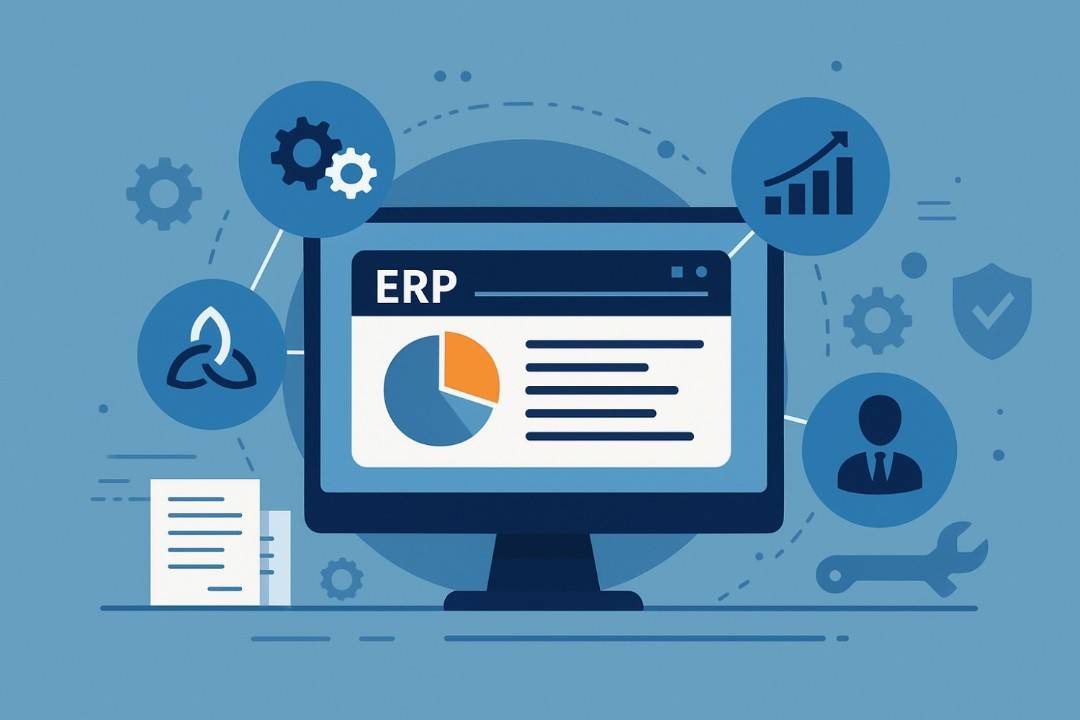
In today’s fast-moving business environment, enterprises need systems that streamline operations, enhance visibility, and support growth. This is where ERP application development services become invaluable. A well-designed ERP (Enterprise Resource Planning) system unifies business processes into a single, efficient software ecosystem, allowing companies to operate smoothly, reduce costs, and stay competitive.
ERP systems are now essential for modern businesses, and the demand continues to rise. According to MarketsandMarkets, the cloud ERP market was valued at USD 87.73 billion in 2024, showing how quickly organizations are shifting to scalable, cloud-based solutions. Below is a detailed, 1000-word, unique, and plagiarism-free article explaining what ERP application development includes, why modern businesses rely on it, and how expert development companies like Attract Group contribute to high-quality ERP solutions.
Table of Contents
- What Are ERP Application Development Services?
- Why Modern Businesses Need ERP Solutions
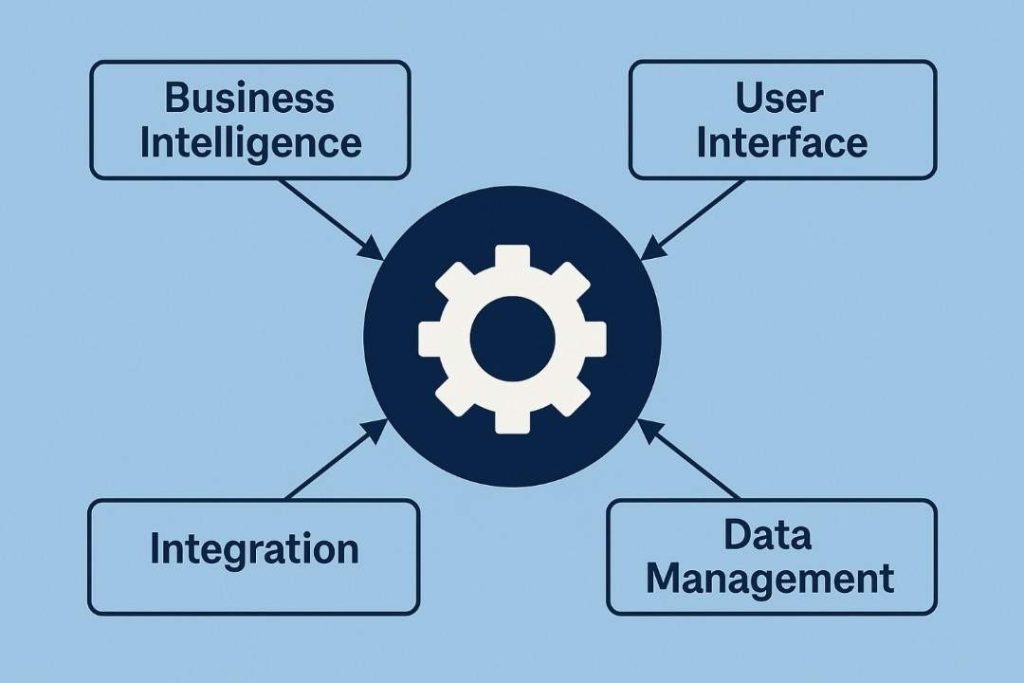
- Key Components of ERP Application Development
- Technologies Used in ERP Development
- Benefits of Custom ERP Development Over Off-the-Shelf Solutions
- Why Choose Attract Group for ERP Application Development
- Final Thoughts
What Are ERP Application Development Services?
ERP application development services encompass planning, design, development, implementation, and ongoing support of custom Enterprise Resource Planning (ERP) software. Unlike off-the-shelf ERP systems, custom ERP solutions are tailored specifically to a company’s workflows, industry, and growth plans.
These services ensure that businesses get a system capable of integrating all essential functions, such as
- Finance and accounting
- Human resources and payroll
- Inventory and supply chain
- Sales and customer management
- Production and manufacturing
- Project management
- Reporting and analytics
By consolidating these processes into one centralized platform, organizations eliminate the need for multiple disconnected applications.
Why Modern Businesses Need ERP Solutions
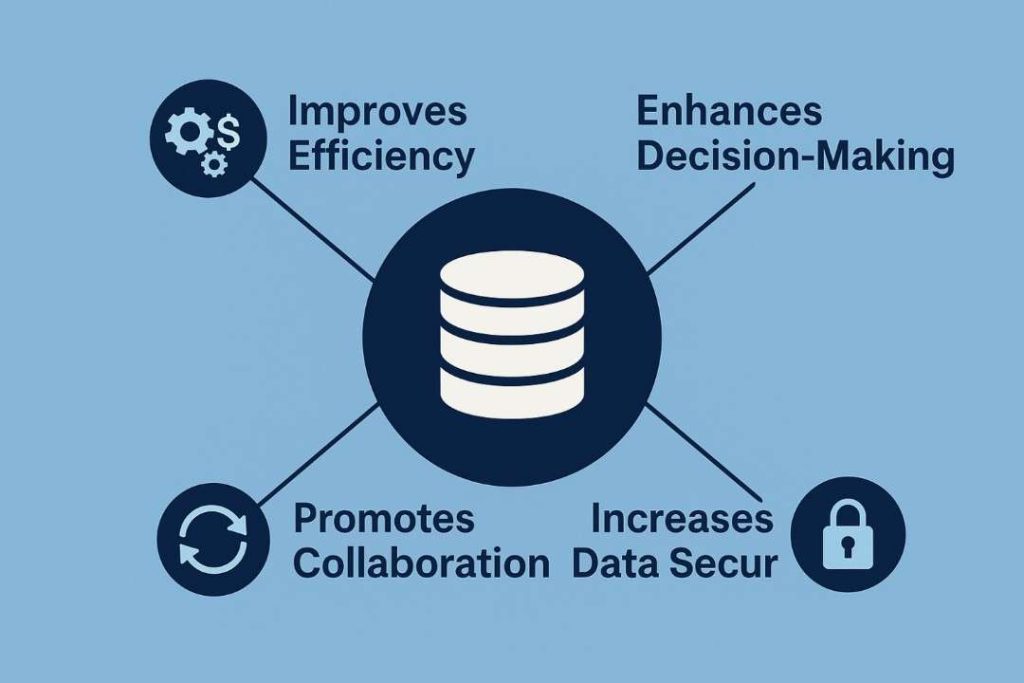
Streamlined Operations
An ERP plumbing network automates repetitive work, links departments, and applications. This minimizes human error, promotes teamwork, and provides smooth workflow management. It also standardizes the business process across every department, making it easier to uphold quality and compliance.
Workers can concentrate on strategic activities, rather than routine administrative tasks, increasing productivity at all levels. Integration with other business applications, like CRM or supply chain management, also leads to improved operational efficiency.
Real-Time Data and Reporting
Companies depend on good and timely information. An ERP system provides real-time dashboards, analytics, and reporting capabilities to enable decision-makers to act swiftly in line with whatever the market throws their way. Such intelligence enables predictive analysis, trend prediction, and scenario planning that help companies better identify hiccups and opportunities. Teams can be alerted in real time to any anomalies or delays, giving them a head start to respond and address the situation proactively.
Better Cost Efficiency
Any time you can use technology to automate workflow, reduce manual input, eliminate redundancies, and stop holdups has an immediate impact on the bottom line. It has a great ROI in the long run. In addition to saving money, ERPs better allocate resources, minimize the amount of inventory that must be carried, and reduce waste in the operation that occurs. “This visibility into spending trends and bottlenecks allows organizations to make better budgeting and investment choices.
Scalability for Growth
With proper architecture, ERP applications can grow with a company, supporting additional modules, users, and processes without performance issues. They can accommodate expansions into new markets, handle higher transaction volumes, and support complex multi-location operations. Cloud-based ERP solutions, in particular, offer flexible scalability with minimal infrastructure investments.
Improved Customer and Supplier Relationships
A unified system keeps customer information up to date, improves communication, and increases overall service quality. By centralizing data, ERPs enable personalized experiences, faster response times, and better order tracking. Suppliers benefit from clearer purchase orders, streamlined invoicing, and predictable demand forecasting. Stronger relationships with customers and suppliers can lead to loyalty, repeat business, and more efficient supply chain operations.
Key Components of ERP Application Development
1. Business Analysis and Requirement Gathering
During this stage, developers and business analysts collaborate to understand the client’s workflows, challenges, and long-term objectives. Detailed requirement documentation ensures the ERP system is customized for optimal performance.
2. System Architecture and UX/UI Design
A well-developed ERP system will be user-friendly, safe, easy-to-use, and navigational. Dashboards, module layouts, and workflows are all very thoughtfully designed/perfected to make the system embrace business logic AND your use case as a user. With a focus on usability and security, the platform empowers employees to work productively, retrieve precise reports in no time, and make informed decisions without any clutter.
3. Custom Module Development
ERP development companies build one or more modules, such as:
Human Resources Module
Manages recruitment, attendance, scheduling, payroll, performance reviews, and employee data.Handles onboarding, training, leave management, and compliance with labor laws. Provides analytics on workforce productivity, retention trends, and strategic planning.
Finance and Accounting Module
Automates bookkeeping, invoicing, budgeting, tax calculations, and financial reporting. It tracks accounts receivable/payable, multi-currency transactions, and expenses. Also offers real-time cash flow insights, audit trails, and financial forecasting.
Inventory Management Module
Tracks real-time inventory, stock alerts, supplier info, order management, and warehouse control. Supports batch tracking, serial numbers, demand forecasting, and automatic reordering. It helps reduce stockouts, prevent overstocking, and optimize warehouse efficiency.
CRM & Sales Module
Integrates customer data, leads, orders, and communication history. Supports marketing campaigns, sales forecasting, and opportunity tracking. Improves customer engagement, conversion rates, and long-term relationships.
Manufacturing Module
Supports production planning, quality control, resource scheduling, and workflow management. Handles bill of materials (BOM), shop floor monitoring, and maintenance scheduling. Integrates with inventory and the supply chain to optimize production and minimize downtime.
4. Integration With Existing Systems
A great ERP software needs to integrate with a host of other systems in order to keep businesses running smoothly. That’s everything from CRMs for customer relationship management, payment gateways for transactions, logistics platforms to monitor goods on the go, and in-store cart hook-ups that help a shuttered storefront make online sales.
It should also be able to integrate with third-party APIs, HR applications for employee management, and e-commerce platforms for online sales. To design, implement, and maintain these complex integrations, many organizations rely on IT staff augmentation services to quickly access experienced engineers and integration specialists. Much of this data has to be distributed across these systems in a way that prevents silos and ensures consistency and accuracy leading to fewer errors, greater process efficiency, and a single, reliable view of the business.
5. Testing and Quality Assurance
Before deployment, developers perform a series of tests to ensure the ERP system is stable and delivers a flawless user experience. Functional testing verifies that all features work as intended, while performance testing assesses the system’s speed, scalability, and reliability under various conditions. Security testing identifies vulnerabilities and ensures data protection, and usability testing evaluates the system’s ease of use for end users.
Integration testing confirms that the ERP works seamlessly with other systems and third-party tools. Together, these tests help guarantee a smooth, efficient, and secure deployment.
6. Deployment and Training
After testing, the ERP system is deployed on the client’s servers or cloud environment. Teams receive training to adapt quickly to the new system.
7. Ongoing Support and Maintenance
ERP application development does not end after deployment. Continuous updates, performance optimization, and technical support are crucial for long-term success.
Technologies Used in ERP Development
ERP systems require robust, flexible, and secure technologies. Common stacks include:
Backend Technologies
- Node.js
- Python / Django
- Java / Spring Boot
- .NET Core
- PHP / Laravel
Frontend Technologies
- React
- Angular
- Vue.js
Database Systems
- PostgreSQL
- MySQL
- MongoDB
- Oracle DB
- MS SQL Server
Cloud & DevOps Tools
- AWS
- Azure
- Google Cloud
- Docker
- Kubernetes
- CI/CD tools
Choosing the right tech stack ensures high performance, longevity, and scalability.
Benefits of Custom ERP Development Over Off-the-Shelf Solutions
Full Customization
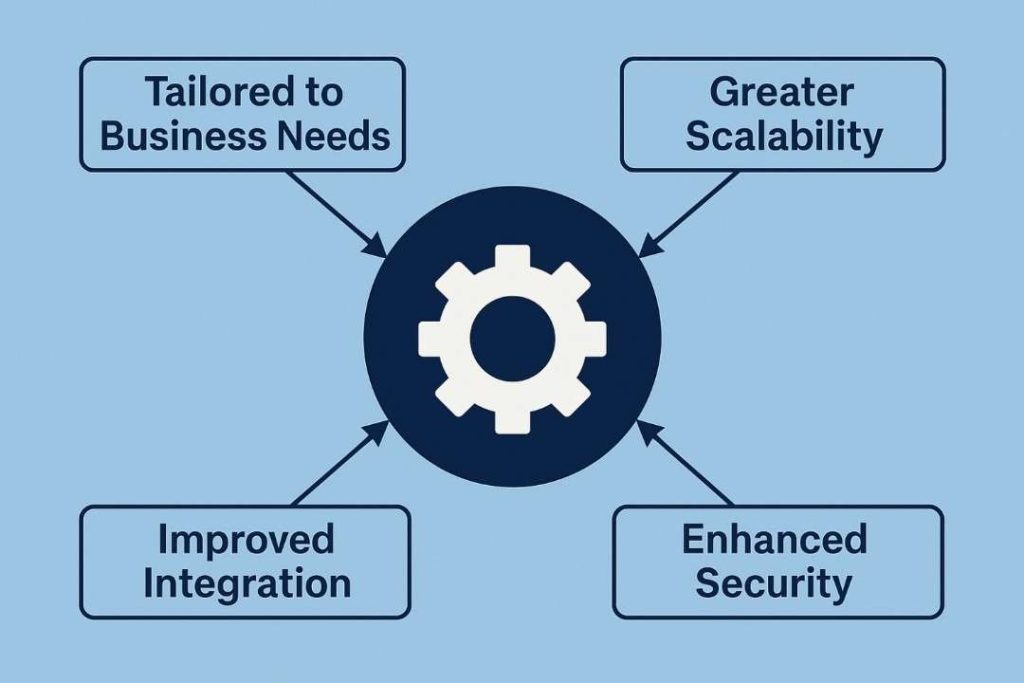
A custom ERP system offers full customization, ensuring that every feature serves a specific business need without unnecessary modules or limitations. As business processes evolve, the system can be easily adapted to add or modify features. Tailored interfaces and workflows improve user adoption and operational efficiency, making day-to-day tasks smoother and more productive.
Better Security
Security is a significant advantage of custom ERP systems. Unlike widely used commercial ERPs, which can be more vulnerable to attacks, a custom system can be built with robust access controls, encryption, and authentication protocols aligned with company policies. Regular updates and internal audits further ensure compliance with industry-specific regulations, minimizing potential risks.
Long-Term Cost Efficiency
While the initial investment in a custom ERP may be higher, it provides long-term cost efficiency. Businesses save money over time through automation, reduced manual labor, and the elimination of recurring subscription fees or unnecessary third-party integrations. Operational inefficiencies are minimized, leading to measurable returns on investment and streamlined workflows.
Ownership and Control
Companies have full ownership and control of a custom ERP system, including the source code, data flow, and infrastructure. This enables them to modify, extend, or integrate the system without relying on external vendors. Complete control allows faster troubleshooting, seamless customization, and easy scaling to meet evolving business needs.
Competitive Advantage
A custom ERP provides a competitive advantage by mirroring a company’s unique processes and reinforcing its operational identity. It allows businesses to respond quickly to market changes, align technology with strategic goals, and support innovation by integrating new tools or technologies explicitly tailored to their workflow. Overall, it empowers organizations to operate more efficiently, securely, and strategically.
Why Choose Attract Group for ERP Application Development
Attract Group is a well-known software development company specializing in custom ERP systems tailored to specific industries. The company provides a complete development cycle, from research to deployment and ongoing support.
Here’s why many businesses choose Attract Group for ERP application development:
- Expert Development Team
They offer skilled professionals, including developers, QA engineers, business analysts, and project managers, who deliver reliable, scalable ERP solutions.
- Industry-Focused Solutions
They have experience building ERP apps for sectors such as:
- Retail
- Logistics
- Healthcare
- Manufacturing
- E-commerce
- Real estate
This industry knowledge allows them to create solutions that match real-world challenges.
- Transparent Development Process
Their workflow includes regular updates, sprint reviews, clear timelines, and collaborative communication.
- Robust Security Measures
They incorporate best-in-class security practices, including:
- Data encryption
- Role-based access
- Secure APIs
- Server protection
- Post-Deployment Support
Ongoing maintenance ensures the ERP system continues to function flawlessly and evolves with the business.
Final Thoughts
ERP application development services play a crucial role in helping businesses streamline their operations, automate tasks, and stay competitive. A well-designed ERP system provides clarity, efficiency, and growth opportunities across all departments.
Partnering with experienced development companies like Attract Group ensures that businesses get a tailor-made, scalable, secure, and future-ready ERP platform.
Whether you operate in manufacturing, retail, healthcare, or any other industry, investing in a custom ERP solution is one of the most strategic decisions you can make for long-term success.