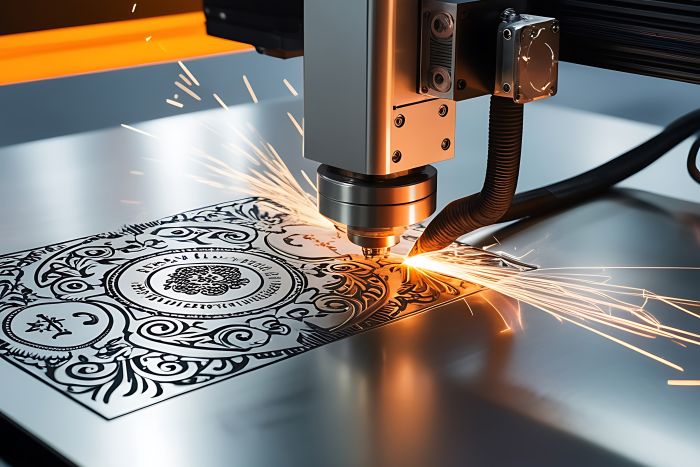
Bringing a product to market used to be a slow, expensive, and often frustrating process. Teams spent months building physical prototypes, running tests, discovering flaws, and starting over. The cycle was long, the costs were high, and the margin for error was unforgiving. Today, that reality has fundamentally changed, not just in how fast teams can work, but in the very tools they use to think, design, test, and manufacture. Technologies like artificial intelligence, cloud-based simulation, additive manufacturing, and connected hardware now work in concert across the full arc of product development. At the center of precision fabrication, laser cutting services play a critical role in bridging the gap between digital design and physical production, enabling manufacturers to move from concept to market-ready part with greater speed and accuracy than ever before.
Several of these technologies have converged in ways that would have seemed unrealistic years ago. Understanding how each one contributes, and how they interact, reveals why products today are better engineered, less costly to develop, and faster to reach consumers.
Key Takeaways
- Modern product development benefits from technologies like AI, cloud computing, and precision fabrication.
- Artificial intelligence optimizes early-stage design, predicting failures and enhancing geometries before production.
- Cloud computing enables affordable, high-speed simulation, allowing engineers to explore design variations efficiently.
- Laser cutting services play a crucial role in precision fabrication, ensuring quality and consistency in manufactured parts.
- Combining additive manufacturing with precision laser cutting creates synergy between rapid prototyping and accurate production.
Table of contents
- How Artificial Intelligence Is Reshaping Early-Stage Design
- Simulation Software and the Cloud Computing Advantage
- The Role of Laser Cutting in Modern Product Development
- Additive Manufacturing and Precision Fabrication Working Together
- IoT and the Continuous Feedback Loop
- Collaborative Platforms Closing the Loop Between Teams
- Building Smarter, Not Just Faster with Laser Cutting
How Artificial Intelligence Is Reshaping Early-Stage Design
Artificial intelligence has changed what is possible at the very beginning of the development process, before a single physical part is made.
Generative design tools use AI algorithms to produce optimized geometries based on a defined set of constraints: weight, strength, material, and load conditions. The results are often surprising. These are lattice-like structures with unconventional organic shapes that outperform conventional designs on strength-to-weight ratios. Airbus applied this approach to create a cabin partition that was 45 percent lighter than its predecessor while maintaining the same structural integrity. These optimized digital designs are then brought to life through advanced fabrication methods, including precision laser cutting, which translates complex geometries into physical components with the accuracy that modern engineering demands.
Beyond shape generation, machine learning is also being used to predict product failures before they occur. By analyzing historical test data, AI models identify design features linked to stress, material fatigue, or thermal issues, allowing engineers to catch quality problems early in the process rather than discovering them only after physical testing begins.
Simulation Software and the Cloud Computing Advantage
Engineering simulation has existed since the 1970s in the form of finite element analysis (FEA) and computational fluid dynamics (CFD). These methods calculate how forces, heat, or fluid behave across a product’s geometry. Historically, running them required expensive on-premise supercomputers and weeks of compute time, a constraint that limited serious simulation work to large manufacturers with deep budgets.
Cloud computing has changed that equation considerably. Platforms like SimScale and Rescale allow engineering teams to rent massive computational power on demand. One analysis from Applied Intuition found that cloud-based simulation reduced costs for large-scale workloads by 75 percent compared to traditional setups, putting enterprise-grade capability within reach of startups and smaller design firms.
The other significant benefit is parallelization. Instead of testing one design variation at a time, teams can run hundreds of simulations simultaneously, each exploring a different configuration. This makes comprehensive design space exploration practical, helping engineers understand the full range of tradeoffs before committing to a direction rather than making educated guesses and hoping the results hold up in physical testing.
The Role of Laser Cutting in Modern Product Development
Precision fabrication is where digital designs become real, functional components, and laser cutting is one of the most important technologies enabling that transition. Understanding what laser cutting actually does, and where it excels, helps clarify why it has become standard in so many product development workflows.
Materials and Cutting Versatility
Laser cutting works across a wide range of materials, making it adaptable to nearly every industry. Metals, including mild steel, stainless steel, aluminum, brass, and copper, are among the most commonly processed materials. Beyond metals, laser systems cut plastics, acrylics, composites, wood, and certain ceramics, giving product teams flexibility when exploring different material choices during prototyping or production.
Cutting Thickness and Capability
The thickness a laser can cut depends on both the material and the laser’s power output. Modern fiber lasers can cut mild steel up to 30mm thick and aluminum up to 25mm, while CO2 lasers handle thinner metals and non-metallic materials with high efficiency. This range means laser cutting is useful not just for lightweight sheet components but also for heavier structural elements, from thin enclosure panels to robust load-bearing brackets.
Precision Laser Cutting and Edge Quality
One of laser cutting’s most valued characteristics is dimensional accuracy. Industrial laser systems routinely achieve tolerances of ±0.1mm or tighter, which is critical for parts that need to fit together consistently or interface with other components. Edge quality is equally important: laser-cut edges are typically clean and smooth, often requiring little or no secondary finishing. This reduces downstream processing time and lowers the overall cost per part.
Laser Cutting Heat-Affected Zones
Laser cutting is a thermal process, which means it introduces a heat-affected zone (HAZ), a narrow band along the cut edge where the material’s properties may change slightly due to heat exposure. For most applications, this zone is minimal and does not affect part performance. However, for materials that are particularly sensitive to heat, such as certain high-strength alloys or thin precision parts, modern laser systems use optimized parameters, including assist gases like nitrogen, to minimize the HAZ and preserve material integrity along the cut edge.
Production Consistency
In a product development context, consistency is as important as accuracy on a single part. Laser cutting delivers repeatable results across production runs because it is a fully automated, CNC-driven process. Once a program is set, every part comes out to the same specification, whether it is the first piece or the five thousandth. For teams moving from prototype to production, this consistency eliminates the variability that manual fabrication methods introduce, and it integrates cleanly with quality management systems that track dimensional data across batches.
Additive Manufacturing and Precision Fabrication Working Together
Additive manufacturing, commonly known as 3D printing, builds objects layer by layer from digital files. Before it became accessible, teams depended on a laser cutting service or traditional machine shop to produce test parts, a process that could take weeks and cost thousands of dollars per iteration. With industrial and desktop printers now widely available, that same cycle can happen in hours. According to Protolabs’ 2024 3D Printing Trend Report, the global 3D printing market was valued at approximately 24.8 billion by the end of 2024 and is projected to reach 57.1 billion by 2028.
Additive manufacturing increasingly works alongside precision cutting methods rather than replacing them. CNC laser cutting remains essential for high-speed, high-accuracy flat part production. Sheet metal laser cutting is used extensively for enclosures, brackets, and structural panels, while tube laser cutting handles frame components and structural profiles across industries from automotive to architecture. For parts requiring tight tolerances in metal, laser cutting metal delivers a level of repeatability that additive processes alone cannot always guarantee. Advances in nesting software also help manufacturers maximize material yield when producing laser-cut metal components, reducing scrap across the production process. Teams that combine both approaches get the speed of additive prototyping and the precision of subtractive fabrication, each applied where it matters most.
IoT and the Continuous Feedback Loop
The Internet of Things (IoT) describes networks of physical devices embedded with sensors that collect and transmit data in real time. In product development, IoT creates something previously impossible: a continuous feedback relationship between a product in the field and the team that built it. Connected sensors monitor temperature, pressure, vibration, and usage patterns, giving engineering teams an empirical view of real-world performance rather than relying on assumptions made during the design phase.
Failure modes that only emerge after extended use become visible early enough to address in the next product version, before they generate significant warranty claims or customer dissatisfaction. On the production side, sensors embedded in manufacturing equipment, including laser cutting and engraving stations monitored for positional drift or thermal variation, generate records that engineers use to identify defect root causes. When parameters drift outside acceptable ranges, automated systems flag the issue before a flawed part advances further down the line.
Collaborative Platforms Closing the Loop Between Teams
Cloud-based product lifecycle management (PLM) systems give every member of a development team access to a single, continuously updated version of the product model. Changes made by a mechanical engineer in one location are immediately visible to colleagues elsewhere, eliminating version conflicts that once consumed time and introduced costly errors. Integration between these platforms and suppliers offering laser cutting services has also improved significantly, so moving from design approval to part manufacture no longer requires manual file transfers or format conversions between disconnected systems.
Real-time collaboration compresses cross-functional review cycles in meaningful ways. When a design change is made, stakeholders in manufacturing, quality, and compliance can respond immediately rather than waiting for scheduled reviews. Problems that would have surfaced weeks into a project are caught in days, and that consistent compression adds up significantly across a full development timeline.
Building Smarter, Not Just Faster with Laser Cutting
The deeper promise of these technologies is not speed alone. It is the ability to make better decisions at every stage of development, grounded in data rather than assumptions. A team using AI-assisted design, validated through cloud simulation, prototyped with additive manufacturing, supported by a reliable laser cutting service for precision metal components, and informed by IoT data from products already in the field, is working with a fundamentally different quality of information than teams relying on traditional methods. That advantage compounds over product generations. The teams investing in these tools now are building a capability gap that will be increasingly difficult for others to close.