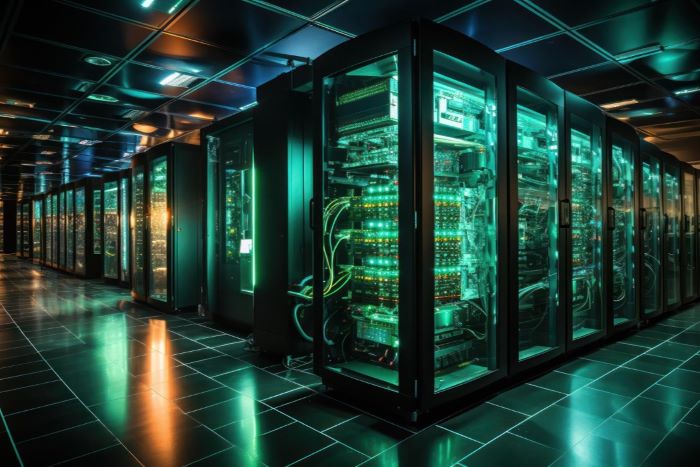
The global economy has a seemingly inexorable appetite for expanding the digital infrastructure, whether it’s deployed on-premises, in co-located data centers, or by cloud service providers. All the servers, networking, and storage gear require buildings. They also need HVAC systems and power generation facilities to support them. Moreover, the booming demand for power-intensive artificial intelligence (AI) systems has served to turn this appetite into a ravenous hunger.
On the flip side is the expansion of compliance regulations, which aim to drive more innovative practices. The discussion surrounding these challenges in the digital infrastructure sector is deeply intertwined with global efforts to combat climate change. As companies strive to comply with regulations, the energy footprint of data centers becomes a focal point of these initiatives.
The surge in electricity consumption required to power these technological advancements not only exacerbates sustainability concerns but also complicates compliance with regulations aimed at reducing carbon footprints. Meanwhile, Infrastructure and Operations leaders are caught in the middle. They are trying to scale up their service capacity while meeting goals. They must also find space and power for their growing infrastructure.
In this challenging environment, computational storage solutions emerge as an innovative tool for I&O leaders. They use these solutions to align data center growth with compliance goals through enhanced energy efficiency.
Key Takeaways
- The demand for digital infrastructure grows with AI, raising electricity consumption and complicating compliance with sustainability regulations.
- Data centers consume significant electricity, projected to surpass 1,000TWh by 2026, while regulators push for reductions in carbon footprints.
- Computational storage solutions enhance energy efficiency, helping companies meet compliance goals without requiring extensive retrofitting or specialized skills.
- Adopting computational storage reduces e-waste and improves data processing efficiency, aligning with sustainable practices and compliance regulations.
- The future of digital infrastructure lies in energy-efficient innovations like computational storage, crucial for sustainable growth in AI and data center operations.
The Environmental Footprint of Data Centers
Data centers, the backbone of our digital economy, are now some of the most significant electricity consumers globally. This growing energy demand poses a substantial challenge for data center operators. They face delays in expansion projects due to power supply limitations. The International Energy Agency (IEA) reports that data centers accounted for 460TWh of electricity consumption in 2022. It also projects a rise to over 1,000TWh by 2026. Furthermore, utilities are struggling to bring enough additional power generation and distribution capacity online to meet demand from data centers. Reports from Arizona Public Service and Dominion Energy, two large utility companies in the US, illustrate this issue.
Another factor that data center operators must contend with is electronic waste (e-waste). Recycling of electronic equipment, responsible disposal, and reuse or extending the service life of servers, storage, and networking equipment all contribute to the sustainability of the data center and other digital infrastructure.
Efficiency as a Key to Compliance
While the digital economy demands ever-increasing amounts of data storage and processing, IT and AI digital infrastructure efficiency is perhaps the most critical vector for meeting compliance goals and improving sustainability. In the context of data centers and their compliance challenges, there are several efficiency metrics to consider. Among these, “work per watt of energy consumed” stands out as the top concern. Notably, component manufacturers strive to improve the performance per watt in each new generation of processors and ASICs.
Additionally, new cooling techniques (such as liquid cooling and immersion cooling) offer some improvements. But their adoption can be limited by the need for significant retrofitting in existing data centers. Re-architecting workflows and applications can further enhance efficiency by optimizing the use of electronic components. However, these changes can require specialized skillsets and/or significant up-front investments. Computational storage drives (CSDs) stand out in this context. They offer a simple-to-deploy solution that integrates compute functions directly within storage devices to enhance both device-level and system-wide efficiency.
CSDs not only contribute to reducing power consumption per unit of work but also play a crucial role in minimizing the equipment needed for data processing. For example, a cloud service provider using CSDs reported a 40% reduction in the amount of equipment and the power consumed to deliver their service. This dual benefit is critical for data centers looking to mitigate their environmental impact and align with ESG goals.
The Challenge of Regulation Compliance
Complying with compliance regulations is increasingly becoming a blocker for companies needing to expand and update their IT and AI infrastructure. These guidelines demand stringent reductions in carbon emissions and improvements in sustainability practices. The complexity and cost associated with deploying new, more efficient technologies can deter organizations from pursuing necessary upgrades. However, computational storage helps users navigate the compliance labyrinth. It enables significant energy savings without the need for specialized skills or extensive system overhauls.
By adopting computational storage, companies can not only enhance their data processing efficiency but also significantly reduce their carbon footprint and e-waste. This aligns with the goals of compliance regulations. Those regulations prioritize sustainability and responsible environmental stewardship in corporate practices.
Preparing for a Better Future
Organizations face significant challenges on the path to a sustainable future in AI and data center infrastructure, especially as they try to meet the energy demands of fast-growing technologies while complying with regulations. Computational storage emerges as a key technology in this journey. It provides a means to alleviate the power consumption challenges associated with AI digital infrastructure and data centers.
As we move forward, the adoption of computational storage and other energy-efficient innovations will be crucial for the industry to align with compliance goals and mitigate the environmental impact of digital expansion. These technologies not only address immediate demands for improved “work per watt” efficiency but also set the course for data centers and AI infrastructures. Specifically, they help ensure these infrastructures are both high-performing and sustainable.
Conclusion
The expansion of AI and data center digital infrastructures brings to light significant compliance challenges, primarily related to the substantial increase in electricity consumption and the resulting energy footprint. As the industry seeks to comply with stringent regulations, computational storage offers a promising pathway to enhance energy efficiency and reduce environmental impact.
By integrating computational storage solutions, companies can not only meet the surging demands on data center infrastructure but also contribute to a more sustainable and responsible digital future. This alignment with sustainable goals underscores the importance of innovation in paving the way for sustainable growth in the technology sector. In turn, it ensures that advancements in AI and data are made.