Voice assistants and smart lighting are no longer the only ways to use smart home technology. Artificial Intelligence (AI) and the Internet of Things (IoT) are transforming the way people use their homes today, particularly for home maintenance and cleaning. This smart home cleaning technology are helping to make the world a smarter, more responsive place by making devices more efficient and more intelligent with less human input.
Emerging technologies are increasingly being woven into everyday life, as evidenced by the fast pace of connected devices. An obvious example is in the smart automation of cleaning systems.
Key Takeaways
- AI and IoT are revolutionizing smart homes, enabling more efficient and intelligent cleaning and maintenance.
- Machine learning allows devices to learn user patterns, improving automation and real-time decision-making.
- Connected devices facilitate remote access and performance monitoring through cloud-based platforms.
- Advanced sensors and navigation systems enhance cleaning technology by adapting to various surfaces and optimizing routes.
- The future of smart cleaning technology focuses on deeper AI integration, predictive analytics, and increased automation in household management.
Table of contents
The Growing Role of AI in Smart Homes
AI has emerged as one of the most powerful technologies in the field of Consumer Electronics. The systems can process information, learn users’ behavior, and make real-time decisions based on the current situation, thanks to AI. Smart devices adapt automatically to get things done better, rather than simply relying on manual inputs.
Machine Learning and Smart Automation
Machine learning algorithms enable devices to learn the patterns of users and the environment. These systems are designed to process data gathered from various sensors and perform optimization and automation of repetitive tasks.
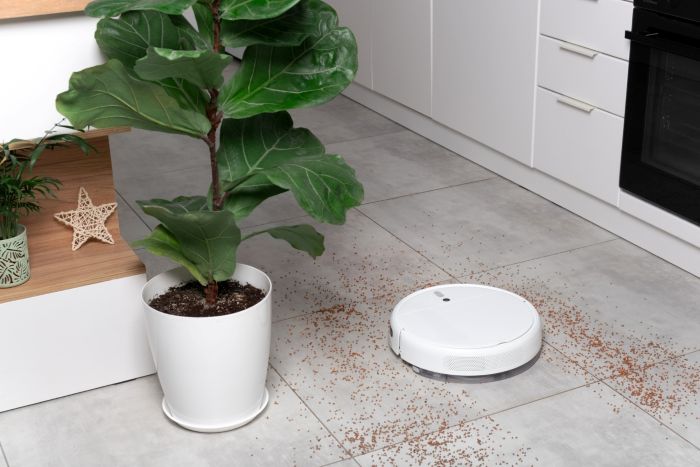
In smart homes, AI is contributing to achieving intelligent routing, obstacle detection, and automatic control based on the surroundings. The same technology is applied all across robotics, autonomous vehicles, and industrial automation.
Real-Time Decision Making
Current smart devices can now adapt to the changing conditions in real time. The systems that use AI learn quickly and can improve their accuracy and energy efficiency by processing information in real time.
This feature is shifting smart home cleaning technology from automated to intelligent systems that require minimal human interaction.
IoT Connectivity Is Creating Smarter Ecosystems
The Internet of Things (IoT) is a crucial part of smart homes with its various smart devices. IoT technology enables wireless communication between household systems and the exchange of information in real time between them.
This connectivity helps to build a connected ecosystem that enables devices to collaborate rather than compete.
Connected Devices and Remote Access
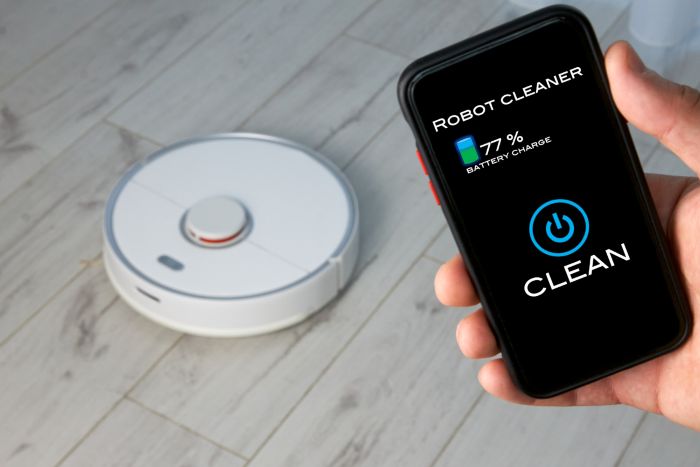
A lot of the smart cleaning technologies that are available now are linked with a mobile application and a cloud-based platform. Performance monitoring, operation scheduling, and maintenance notifications can be achieved remotely using connected systems.
For instance, smart wet dry vacuum systems are now capable of being integrated with a larger smart home network for higher levels of automation and user control. As AI and IoT evolutionary and technological advancements spread to larger connected infrastructures, these technologies have become increasingly integrated.
Smart Home Integration
Another benefit of IoT is the ability for smart devices to communicate with voice assistants as well as a home management system. This will make it more convenient, more efficient, and automated in households.
Interestingly, as more and more IoT is being adopted, the connected smart home cleaning technology ecosystems are expected to grow more sophisticated and data-centric.
Advanced Sensors Are Improving Automation
One more significant development in Smart cleaning technology is the development of sensor technology. Today’s devices are equipped with sensors that instantly sense motion, types of floor surfaces, moisture, and obstacles.
Intelligent Navigation Systems
Smart devices take advantage of advanced navigation technologies so that they are able to move more efficiently throughout indoor spaces. AI systems employ mapping and sensor data to automatically optimize cleaning routes, preventing collisions.
The features are very similar to those used in autonomous transport systems and industrial robotics.
Adaptive Cleaning Capabilities
Smart cleaning technology can also modify cleaning power based on the surface being cleaned. This not only optimises performance but also helps to save power consumption.
As more intelligent sensors are brought into use in consumer products, the new technologies are becoming a part of everyday homes.
Cloud Technology Is Driving Continuous Improvements
Cloud computing has entered the smart home system as a new, important element. A vast number of devices connected rely on cloud infrastructure for software updates, data storage, and information processing.
Over-the-Air Software Updates
Cloud-based systems enable manufacturers to continue to enhance device functionality after products have been sold. Navigation optimization, automation settings, and others can change with software updates.
This is merely a trend that the tech industry is moving towards with cloud-native technologies.
Faster Connectivity and Future Growth
With the rapid technological advancement of the wireless network and edge computing, it is expected that connected devices will become even faster and more responsive.
With the rollout of 5G and next-generation wireless infrastructure, we can expect that the wave of home smart systems with artificial intelligence will grow in the near future.
The Future of Smart Home Cleaning Technology
Deeper integration of AI, IoT, and predictive analytics will be the focus of the future of home automation. Smart devices are increasingly able to make sense of user preferences, take care of repetitive tasks, and react to the environment without human intervention.
AI-Driven Home Maintenance
As more and more smart home systems become available and advanced, they will increasingly leverage predictive intelligence to enhance their efficiency. The devices will be able to predict maintenance schedules, optimize their operations automatically, and communicate with other connected devices.
This transformation will enable smart homes to be more adaptive and resource-efficient.
The Expansion of Smart Home Cleaning Solutions
However, as new technologies become more prevalent, the way people interact with their homes on a day-to-day basis is transforming, with connected solutions like smart wet-dry vacuums becoming more popular than ever.
AI and IoT are now available for non-enterprise and non-industrial applications. They are fast becoming a key ingredient of smart living and are driving a future where intelligent automation is central to domestic management.