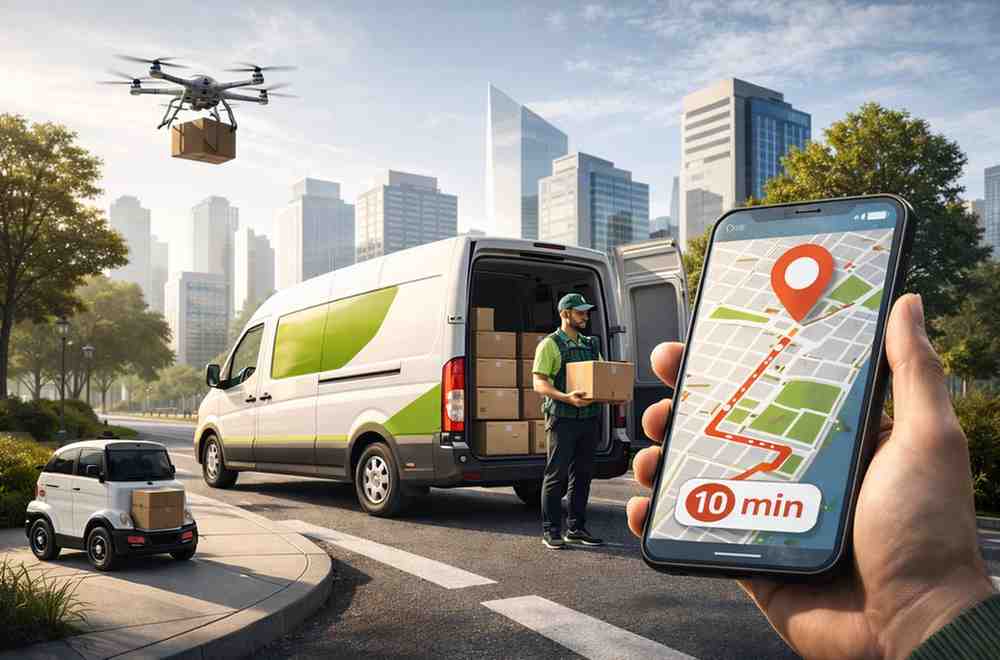
Introduction: Why Last Mile Delivery Is at a Turning Point
Ever wondered why your package can travel across the world in days but gets delayed just a few blocks from your home? That final stretch is called the last mile, and it’s where logistics becomes most complex. The future of last-mile delivery matters more than ever because customer expectations are higher than at any point in history. Same-day delivery, real-time tracking, and environmentally responsible shipping are no longer optional features; they are baseline expectations. Forbes data show that 41% of consumers are willing to pay extra for same-day delivery, and nearly 24% are willing to pay more for delivery within a one- or two-hour window, underscoring the premium customers place on speed and convenience.
In this article, we explore how advanced technology, sustainability initiatives, and smart logistics strategies are transforming last-mile delivery. You’ll also see real-world examples and understand why companies like DelGate are helping set new standards in Canada.
Table of contents
- Introduction: Why Last Mile Delivery Is at a Turning Point
- Understanding Last Mile Delivery in Simple Terms
- Key Forces Driving Change
- The Role of Technology in the Future of Last Mile Delivery
- Autonomous Vehicles and Drone Innovation
- Sustainability and Electric Vehicles
- Micro-Fulfillment Centers and Localized Logistics
- Crowdsourced and Hybrid Delivery Models
- Data, Visibility, and Customer Experience
- Urban Challenges and Ongoing Solutions
- Case Studies: Industry Leaders
- Why DelGate Stands Out in Canada
- What the Next 5–10 Years Will Bring
- Conclusion: Preparing for What’s Next
Understanding Last Mile Delivery in Simple Terms
Last-mile delivery is the final step in the supply chain, when a package goes from a local distribution center to your doorstep. It seems straightforward, but this step can be one of the most complex and costly components of the logistics chain. Industry research indicates that last-mile delivery can account for more than half of shipping costs. This is predominantly caused by traffic jams, missed delivery attempts, fragmented residential drop-offs, and increasing labor and fuel costs. Some of these challenges are so significant that the efficiency and profitability implications of innovation in this stage can be enormous.
Key Forces Driving Change
Customer expectations are rising rapidly. Today’s consumers expect same-day or next-day delivery, accurate delivery windows, and live tracking updates. At the same time, patience is shrinking. A single poor delivery experience can permanently damage customer loyalty. Meanwhile, global e-commerce continues to expand at an extraordinary pace. With global online sales surpassing $6 trillion in 2024 and urban populations growing steadily, the number of deliveries in dense cities is rising. In fact, the global last-mile delivery market is projected to be valued at approximately USD 197 billion in 2025 and is expected to more than double to USD 352.7 billion by 2035, reflecting expanding demand and innovation opportunities.
While this creates opportunity, it also introduces serious logistical challenges that demand smarter solutions.
The Role of Technology in the Future of Last Mile Delivery
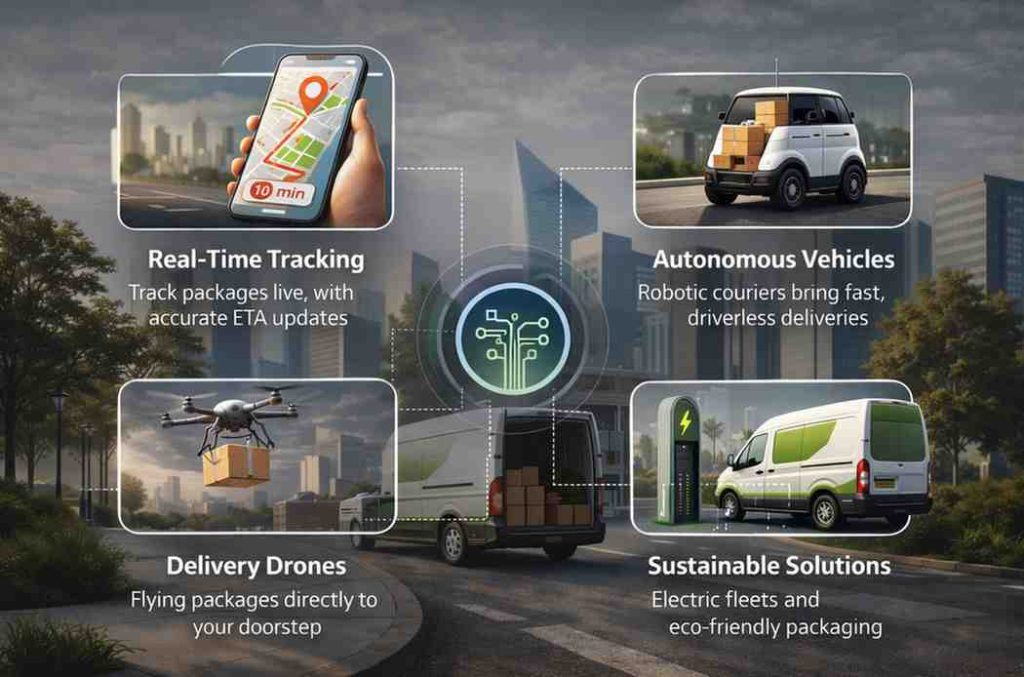
At the core of this transformation is technology. Real-world decision-making based on logistics data has been revolutionized by artificial intelligence and machine learning. AI-based applications will be able to estimate delivery delays, intelligently calculate the shortest routes, and forecast demand with high accuracy. For example, when traffic congestion suddenly worsens, AI systems can instantly reroute drivers to avoid delays and wasted fuel.
Route optimization applications help reduce driving times by determining the shortest, fastest routes for truck deliveries. By eliminating this unnecessary distance, companies can reduce costs and improve customer satisfaction.
Modern logistics also depends heavily on advanced last mile technology software that automates dispatching, tracks drivers in real time, and manages seamless communication with customers. These integrated platforms form the backbone of scalable Last Mile Delivery Solutions, particularly for high-volume e-commerce businesses. Automation reduces human error, increases operational speed, and ensures greater reliability across delivery networks.
Autonomous Vehicles and Drone Innovation
Self-drive is inexorably adjusting the values at play here. Driverless delivery vans are already being tested across North America, Europe and Asia. These vehicles reduce dependence on labor and can operate round-the-clock; they also enhance safety with high-tech sensors and navigation systems. Although the introduction of fully autonomous fleets may be slower, semi-autonomous systems are already being implemented in logistics.
Then there is the potential in drone delivery. Drones are best suited to rural deliveries, urgent shipments, and medical supplies. Companies such as Amazon and Zipline have shown that a drone-based approach can significantly reduce delivery times in certain use cases. At any rate, the regulations regarding e-cigarettes are constantly evolving, while real-world use is expanding rapidly.
Sustainability and Electric Vehicles
Sustainability is no longer optional in logistics. Governments, investors, and consumers increasingly demand environmentally responsible operations. Electric vehicles are becoming central to last-mile strategies because they reduce carbon emissions and lower long-term operating costs. Research data indicate that adopting electric fleets in logistics can reduce carbon emissions per delivery route by up to 30%. For urban centers struggling with pollution and congestion, this shift represents a meaningful improvement.
Micro-Fulfillment Centers and Localized Logistics
A 3PL firm has emerged as well and more interesting is the proliferation of dark stores and micro-fulfillment centers. Instead of shipping items from distant warehouses, companies are establishing smaller fulfillment hubs near their customers. These neighborhood centers cut delivery times, lower the cost of transportation and improve inventory accuracy. The farther a product must travel to reach consumers, the more time and energy it takes for companies.
Crowdsourced and Hybrid Delivery Models
Crowdsourced delivery systems, such as Uber for taxis, have also emerged as more nimble ways to manage fluctuating demand. Freelance drivers can support during peak periods, providing scalability without long-term labor obligations. However, there remains an issue with accuracy and reliability. The upshot is that many logistics providers are building hybrid models that marry professional driver networks with gig-based agility to prevent a degradation of quality amid the need for nimbleness.
Data, Visibility, and Customer Experience
Data analytics plays a powerful role in shaping the future of last-mile delivery. Predictive analytics enables companies to anticipate peak delivery periods, identify customer availability patterns, and proactively address potential delays. This results in fewer failed delivery attempts and more efficient route planning.
Real-time tracking tools have also become essential for customer satisfaction. When customers can monitor their package’s exact location and estimated arrival time, trust increases significantly. Transparency is now a competitive differentiator rather than an added feature.
Smart lockers and contactless delivery systems further enhance convenience. Lockers eliminate missed deliveries by providing secure, 24-hour pickup options. Contactless delivery, which gained momentum during the pandemic, has become a lasting preference for many consumers due to its convenience and safety.
Urban Challenges and Ongoing Solutions
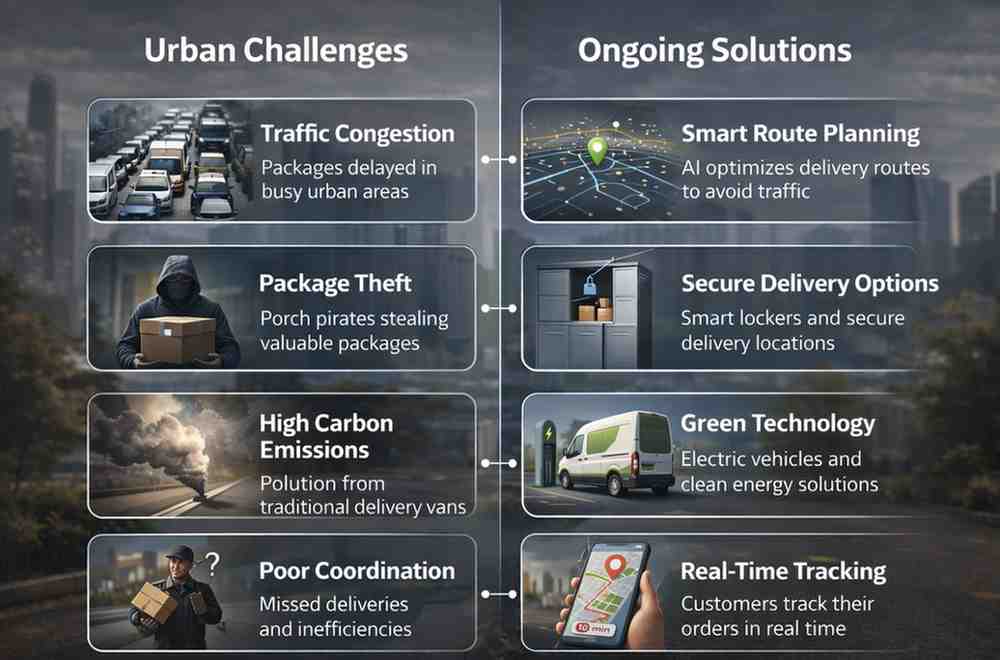
Urban environments present unique challenges for last-mile delivery. Traffic congestion can significantly increase delivery times and costs. Smart routing systems and off-peak scheduling strategies help mitigate these issues. Failed deliveries remain another costly problem, but improved customer communication and real-time updates dramatically reduce the likelihood of unsuccessful drop-offs.
Case Studies: Industry Leaders
Major players are investing heavily in innovation. Amazon integrates AI-powered routing, drone testing programs, and local fulfillment hubs to accelerate delivery at scale. Meanwhile, Shopify partners with regional carriers to strengthen speed and reliability for merchants across different markets.
Why DelGate Stands Out in Canada
In Canada, several logistics providers are investing in advanced dispatch automation, real-time tracking systems, and route optimization platforms to improve last-mile performance. Companies operating in this space are increasingly leveraging data analytics and integrated logistics software to enhance transparency and operational efficiency.
What the Next 5–10 Years Will Bring
Looking ahead, the future of last-mile delivery will be defined by speed, sustainability, and intelligence. Automation will become standard practice rather than a competitive advantage. Artificial intelligence will continue refining predictive capabilities, while electric fleets and localized fulfillment hubs will reduce environmental impact. Companies that embrace innovation early will gain long-term competitive advantages.
Conclusion: Preparing for What’s Next
The last mile is no longer just a logistical hurdle; it has become a strategic differentiator. Organizations that invest in intelligent technology, data-driven decision-making, and dependable delivery partnerships will earn stronger customer loyalty. Ultimately, the future belongs to companies that deliver faster, operate cleaner, and think smarter.