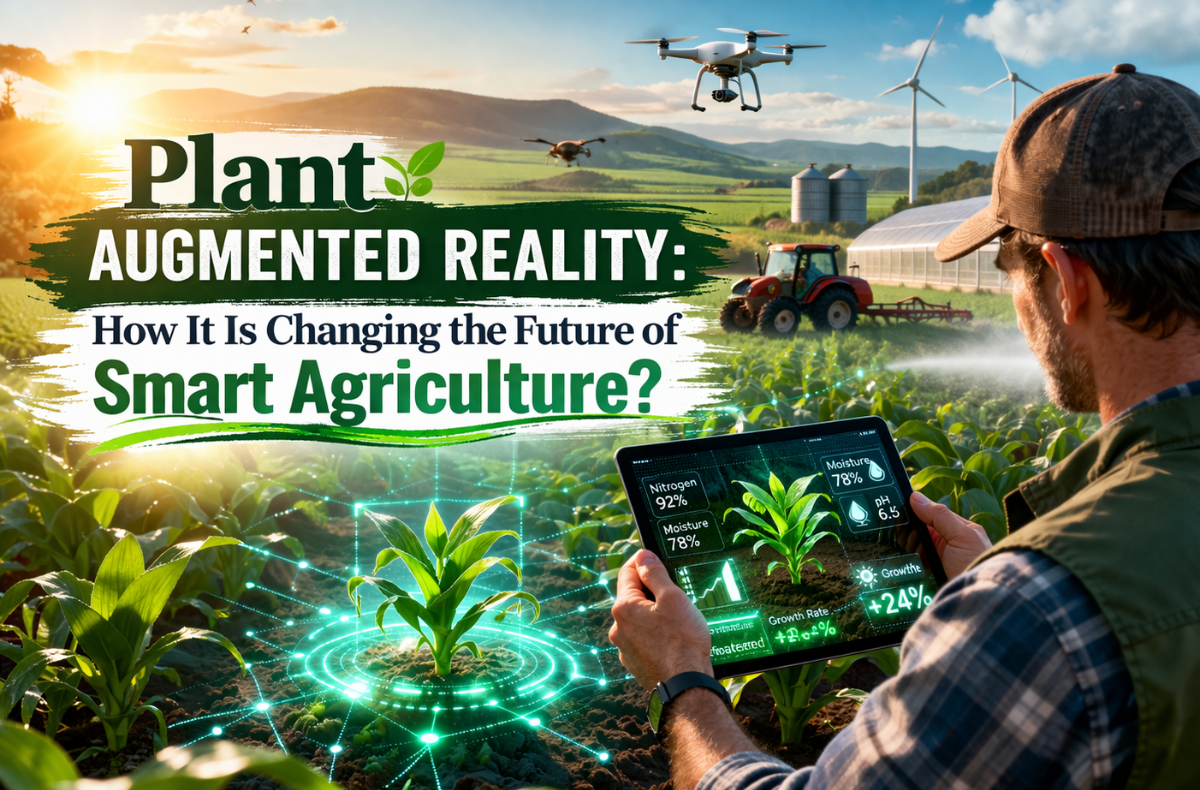
Understanding complex botanical and industrial systems can be difficult. Plant augmented reality changes how we see and interact with the natural and industrial enviroment. By overlaying digital information onto physical environments, this technology makes complex data easy to analyze.
Here, we break down the key trends about plant augmented reality. From smart agriculture to interactive botany education, you will know exactly how this technology makes data highly visual, actionable, and easy to digest.
Key Takeaways
- Plant augmented reality merges digital information with physical environments, enhancing understanding of complex systems.
- This technology benefits various industries, including agriculture, education, and industrial design, by visualizing data interactively.
- In botany education, AR helps students engage with 3D models, addressing the issue of ‘plant blindness.’
- Applications like ARomaticLens provide accurate plant identification and related information using offline technology.
- The future of plant augmented reality includes digital twins, IoT integration, and consumer tools for better gardening and landscaping.
Table of Contents
- The Core Mechanics of Plant Augmented Reality
- Transforming Plant Identification and Education with Plant Augmented Reality
- Plant Augmented Reality in Industrial and Agricultural Settings
- The Future of Plant Augmented Reality: Innovation and Impact
- Challenges and Considerations for Plant Augmented Reality Adoption
- Conclusion
- FAQs
The Core Mechanics of Plant Augmented Reality
Plant augmented reality (plant AR) merges the digital and physical worlds. It projects computer-generated graphics, data, and 3D models onto real-world environments. You can view this augmented reality plant visualization through smartphones, tablets, or specialized headsets.
Here is how plant AR software works behind the scenes:
- Spatial Computing: Maps the physical space around you.
- Sensors and Algorithms: Uses smartphone cameras and advanced algorithms to recognise leaf shapes, colours, and textures.
- Markerless AR: Allows you to place digital objects in the real world without needing a printed QR code or physical marker.
The impact of plant AR spans multiple industries. Farmers use it to monitor crop health, landscape architects use it for design, and educators use it to teach biology.
Transforming Plant Identification and Education with Plant Augmented Reality
Enhancing Botanical Understanding
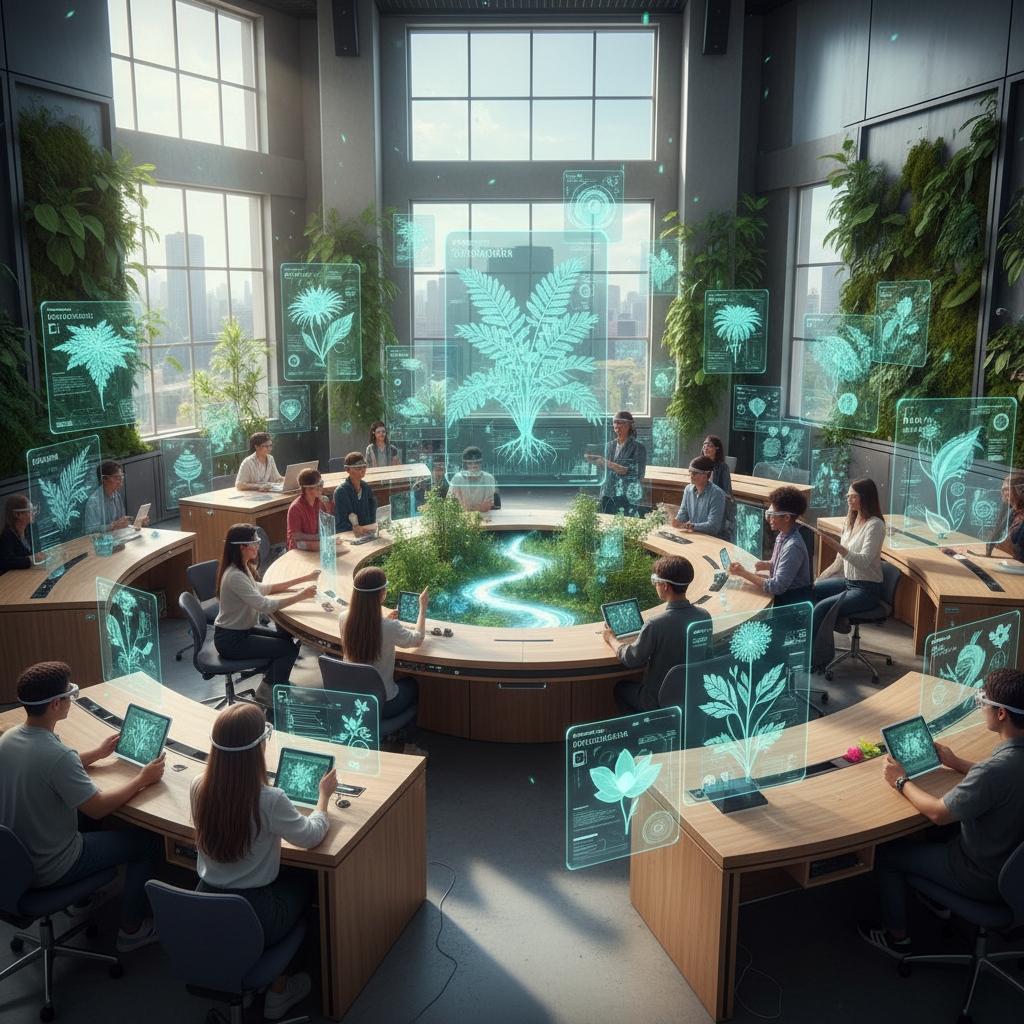
Learning about plant biology used to mean staring at static textbook diagrams. Now, augmented reality plants in education make learning happy, easy, and highly interactive. AR in botany education offers an immersive plant learning technology that lets students manipulate 3D models right on their desks.
This technology helps cure “plant blindness”, the human tendency to ignore flora in the environment. Instead of walking past a unique fern, students can use an AR plant app to see its complete life cycle. Teachers also use tools to display augmented-reality plant and animal cells side by side. Seeing an augmented reality plant cell or comparing different ones in 3D helps students quickly grasp complex cellular structures.
Practical Applications: Plant Augmented Reality for Identification
Professionals and hobbyists alike benefit from AR for plant identification. An excellent example is the ARomaticLens project. This plant AR app offers accurate offline identification of aromatic herbs.
Here is a quick look at the features behind the top-tier augmented reality app for plants:
- Species Identification Accuracy: Uses local databases to identify plants instantly without an internet connection.
- Culinary and Medicinal Data: Overlays detailed usage instructions right on your screen.
- High Usability: Designed with a clean UX for Spatial AR so anyone can use it easily.
Here is the overview of ARomaticLens identification performance
| Feature | Performance Metric |
|---|---|
| Accuracy | 100% species identification |
| Number of Herbs Tested | 18 aromatic herb types |
| Usability Score | 8 out of 10 |
| Processing Speed | Less than 2 seconds |
| Internet Requirement | None (100% Offline) |
Whether you need quick augmented reality plant identification in a remote field or a reliable plant AR tool in your garden, these applications save you time and eliminate guesswork.
Plant Augmented Reality in Industrial and Agricultural Settings
Augmented Reality in Power Plant and Complex Industrial Design
Plant augmented reality goes far beyond biology. Engineers use AR in power plant planning to visualize massive industrial structures. By projecting 3D models into existing physical spaces, project managers can spot spatial conflicts instantly.
Using AR for the plant floor improves communication across project teams. When you can see a virtual pipe integrated into a real room, you detect errors before construction begins. This leads to massive cost savings and enhanced planning reliability.
However, scaling this technology requires hardware. Building the infrastructure to produce these devices is a massive investment. The cost of a virtual/augmented reality headset manufacturing plant can reach billions of dollars. Companies building a dedicated VR/AR headset manufacturing plant must account for cleanrooms, automated assembly lines, and advanced optics manufacturing.
Precision Agriculture and Smart Greenhouses with Plant Augmented Reality
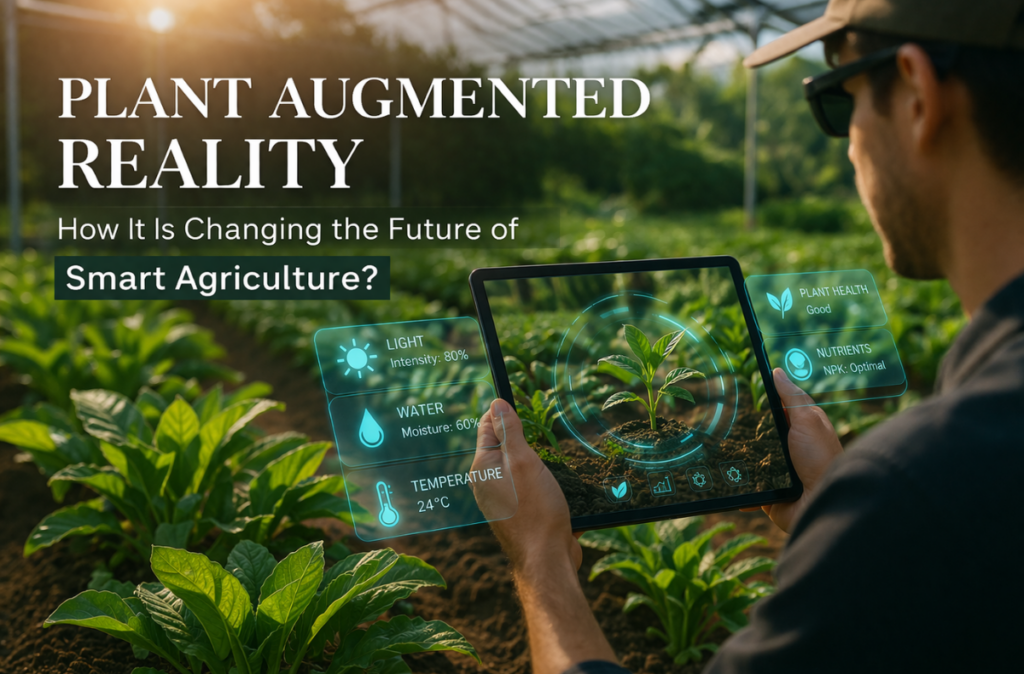
Farmers face constant pressure to produce more with fewer resources. Augmented reality in agriculture provides a clear path forward. By combining IoT and augmented reality in agriculture, farm managers gain an AR-IoT system that overlays real-time sensor data directly onto physical crops.
Here is how smart agriculture technologies, such as AR, help farmers:
- Plant Phenotyping: Visually evaluates plant traits and growth rates.
- Plant disease detection using AR: Highlights stressed or diseased leaves instantly.
- Precision Horticulture: Displays soil moisture and nutrient levels directly over the crop.
- Harvesting Optimization: Shows workers exactly which AR growing plants are ready to be picked.
Companies like Huxley have developed an augmented operating system for food production. Their system uses plant augmented reality to give any worker the knowledge of a master grower.
The Future of Plant Augmented Reality: Innovation and Impact
Plant Digital Twins and Advanced Visualization
The future of AR in plant science lies in Digital Twin Technology. A digital twin is a virtual replica of a physical plant or crop system. By integrating multi-omics data and AI-powered simulations, researchers can predict how a crop will respond to drought before it occurs.
This AR plant modelling and simulation technology allows for deep Horticultural Data Visualisation. Scientists can perform Photosynthetic Light Analysis in a virtual space, testing how different lighting setups affect yield in smart greenhouses.
Market Growth and Consumer Engagement in Plant Augmented Reality
Consumer adoption of plant augmented reality applications is surging. Retailers and garden centres now use this technology to boost customer confidence before a purchase.
If you are planning a backyard makeover, a yard-plant AR tool lets you see how a tree will look in 10 years. You can use AR indoor plant design apps to place a virtual Monstera in your living room.
These consumer tools utilise advanced tech:
- LiDAR Scanning: Measures the exact dimensions of your room or yard.
- Environmental Mapping: Understands where the floor and walls are.
- Real-time Occlusion: Allows virtual plants to hide behind real furniture.
- Virtual Staging & Biophilic Design: Help interior decorators seamlessly integrate nature into living spaces.
Using augmented reality for landscape design takes the guesswork out of gardening. You buy the right plant for the right space, every single time.
Challenges and Considerations for Plant Augmented Reality Adoption
While plant augmented reality offers incredible benefits, you should be aware of a few hurdles:
- Hardware Limitations: High-quality AR devices requires powerful processors and long battery life.
- Data Accuracy: If the underlying database is flawed, your plant AR software will provide incorrect care instructions.
- Implementation Costs: Deploying enterprise-grade AR-IoT systems in a commercial greenhouse requires a significant upfront investment.
- Workforce Training: Workers need time to adapt to using AR headsets on the farm or the plant floor.
Here is the comparison of Traditional Methods vs. Plant Augmented Reality
| Action | Traditional Method | Plant Augmented Reality |
|---|---|---|
| Plant Identification | Flipping through botanical field guides | Instant visual scan and data overlay |
| Crop Monitoring | Checking isolated sensors on a dashboard | Viewing IoT data directly over the physical plant |
| Facility Planning | Reviewing 2D blueprints on paper | Walking through a full-scale 3D virtual model |
| Botany Education | Looking at static textbook cell diagrams | Interacting with 3D cellular structures |
Conclusion
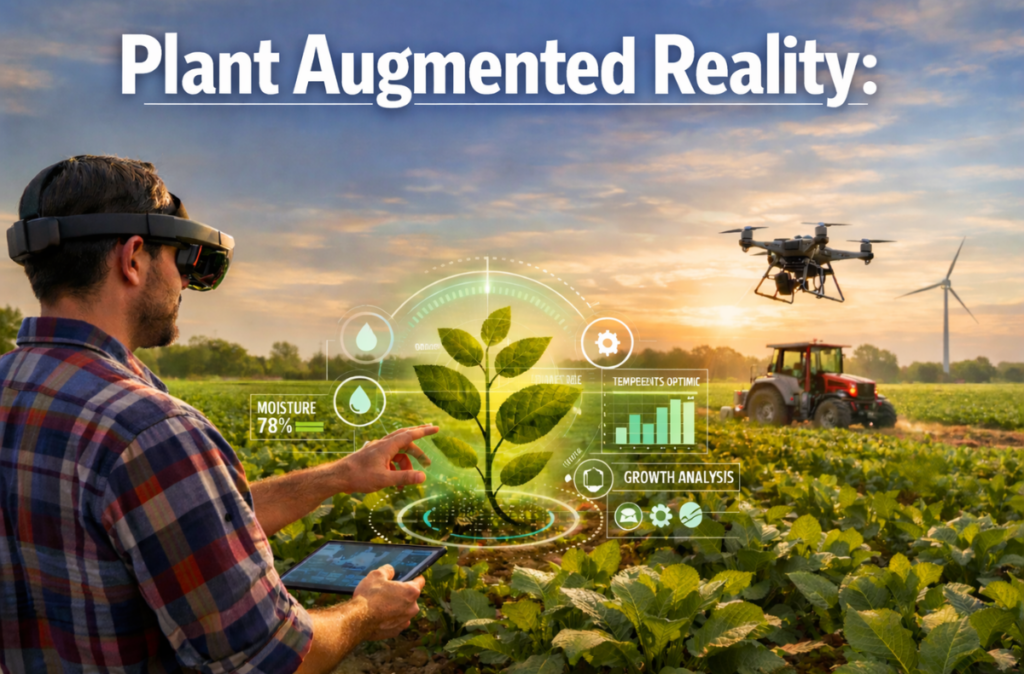
Plant augmented reality fundamentally changes how you interact with botanical data, agricultural systems, and industrial designs. Whether you are using it to build a flawless power facility, manage a smart greenhouse, or simply keep a houseplant alive, plant AR turns complex information into clear, visual insights. As hardware becomes more affordable and software grows more intelligent, this technology will become an essential tool for both professionals and everyday consumers.
FAQs
Plant AR uses digital technology to overlay computer-generated information, graphics, or data onto real-world plants and environments using a smartphone or headset.
It brings static textbook concepts to life. Students can interact with 3D models of plant cells, watch simulated plant growth, and easily understand complex botanical processes.
Yes. By projecting 3D design models into the actual physical space before construction begins, engineers can catch spatial errors early, saving massive amounts of time and money.
Yes, there are many. Applications like ARomaticLens allow you to point your phone camera at a plant and instantly view its species, care instructions, and uses, even without an internet connection.
The future involves pairing AR with IoT sensors to create digital twins of crops. Farmers will instantly see soil data, harvest readiness, and disease alerts floating directly above their fields.